Transverse Process of the Vertebrae: What Patients Need to Know
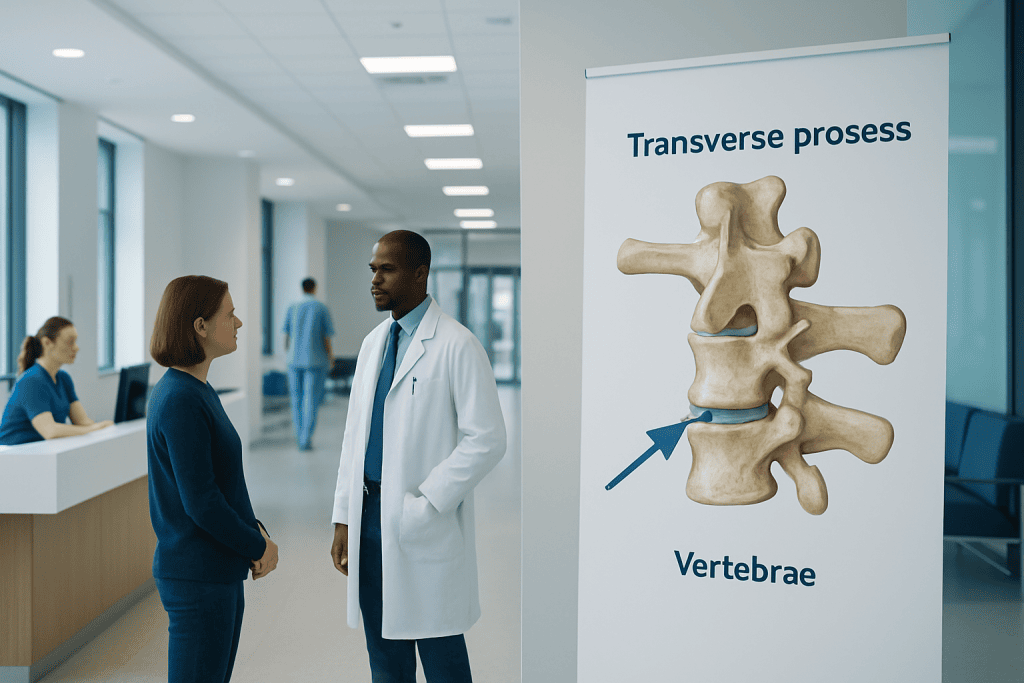
Each vertebra typically has two transverse processes, one on either side of the vertebral arch. Transverse processes act mainly as attachment and leverage points for muscles and ligaments.
Key Takeaways
- Each vertebra typically has two transverse processes, one on either side of the vertebral arch.
- Transverse processes act mainly as attachment and leverage points for muscles and ligaments.
- A transverse process fracture may occur after substantial force, such as a fall, collision, or sports injury.
- These fractures are often stable, but medical assessment is important because associated injuries can occur.
- New severe back pain after trauma, weakness, numbness, or bowel or bladder changes needs prompt medical attention.
The transverse process of the vertebrae is a small bony projection on each side of most spinal bones. It provides attachment points for muscles and ligaments, supporting posture, movement, and spinal stability; injury to it is usually assessed in the context of trauma and nearby structures.
Overview: What Is the Transverse Process of the Vertebrae?
The transverse process of the vertebrae is a wing-like bony projection that extends from each side of a vertebra, the individual bone that makes up the spine. Most vertebrae have a right and left transverse process. These structures are part of normal spinal anatomy rather than a disease or diagnosis.
Its main role is to provide secure attachment points for muscles and ligaments. By giving these tissues a place to pull against, the transverse processes help the neck, middle back, and lower back move in controlled ways while contributing to spinal stability.
The appearance and function of transverse processes differ slightly by spinal region. In the neck, they have openings that normally carry vertebral blood vessels in most cervical vertebrae. In the chest and lower back, they are important leverage points for muscles involved in breathing, posture, trunk rotation, and side-bending.
Where These Structures Are Located and What They Do
The spine contains cervical vertebrae in the neck, thoracic vertebrae in the upper and middle back, lumbar vertebrae in the lower back, and fused bones in the sacrum and coccyx. Transverse processes project outward from the vertebral arch, to the side of the spinal canal. They should not be confused with the spinous process, which is the bony prominence that can often be felt in the midline of the back.
Muscles that attach around the transverse processes include deep spinal muscles that support alignment and coordinate small movements between vertebrae. Larger muscles of the back and trunk also connect to these areas through related bony and connective-tissue attachments. Ligaments in this region further help limit excessive movement.
Because the transverse processes lie outside the spinal canal, an isolated injury to one does not usually directly compress the spinal cord. However, the location matters. In the lower back, nearby muscles, ribs, kidneys, and abdominal structures may also be affected by the force that caused an injury, so clinicians assess the full situation rather than focusing only on the bone.
Transverse Process Fractures and Other Concerns
A transverse process fracture is a break in one of these side projections. It most often results from a direct blow or strong pull from attached muscles. Motor vehicle collisions, falls, contact sports, workplace accidents, and high-energy trauma are common causes. Fractures may involve one process or several, and may occur on one or both sides.
In many cases, an isolated transverse process fracture is considered mechanically stable because it does not involve the main weight-bearing portion of the vertebra or necessarily disrupt spinal alignment. Even so, pain can be significant, particularly with bending, twisting, coughing, or moving from sitting to standing.
Not all pain near a transverse process indicates a fracture. Muscle strain, ligament irritation, facet joint pain, rib injury, arthritis, and other causes of back or neck pain can produce similar symptoms. A clinician uses the injury history, examination, and imaging when needed to distinguish among these possibilities.
After major trauma, a transverse process fracture can serve as a clue that substantial force was involved. The medical team may therefore look for injuries to other parts of the spine, chest, abdomen, pelvis, or urinary system, based on the person’s symptoms and the mechanism of injury.
Symptoms and Signs That May Occur
Symptoms depend on whether there is an injury and on the spinal level involved. A person with a transverse process fracture may have localized pain and tenderness to one side of the spine, muscle spasm, stiffness, bruising, or pain that worsens with movement. Lower-back injuries may make walking, turning in bed, or lifting uncomfortable.
Neck-related symptoms can include pain with head movement and tenderness in the side or back of the neck. In the thoracic region, discomfort may be felt in the upper or middle back and can be aggravated by deep breathing or trunk rotation. These symptoms are not specific to transverse process injury and should be interpreted by a healthcare professional.
Neurologic symptoms such as numbness, tingling, weakness, poor coordination, or changes in bowel or bladder control are not typical of an uncomplicated isolated transverse process fracture. Their presence can suggest nerve involvement or another spinal problem and requires urgent assessment.
- Localized one-sided back or neck pain after an injury
- Tenderness, swelling, or bruising over the affected area
- Muscle tightness or reduced range of motion
- Pain with coughing, twisting, bending, or deep breaths
- In more serious situations, abdominal pain, blood in the urine, or neurologic symptoms
How Doctors Assess a Possible Injury
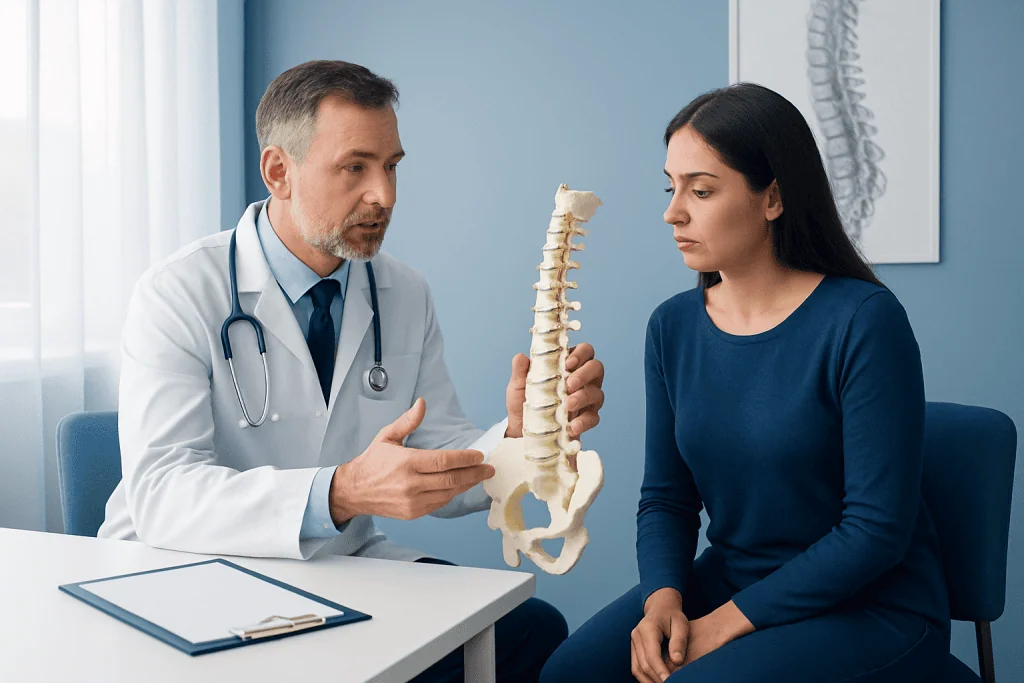
Assessment begins with a careful history. A clinician will ask how the pain began, whether there was a fall, collision, sports impact, or other trauma, and whether symptoms such as abdominal pain, breathing difficulty, weakness, or urinary changes are present. The examination may include checking posture, movement, tenderness, sensation, strength, reflexes, and walking ability.
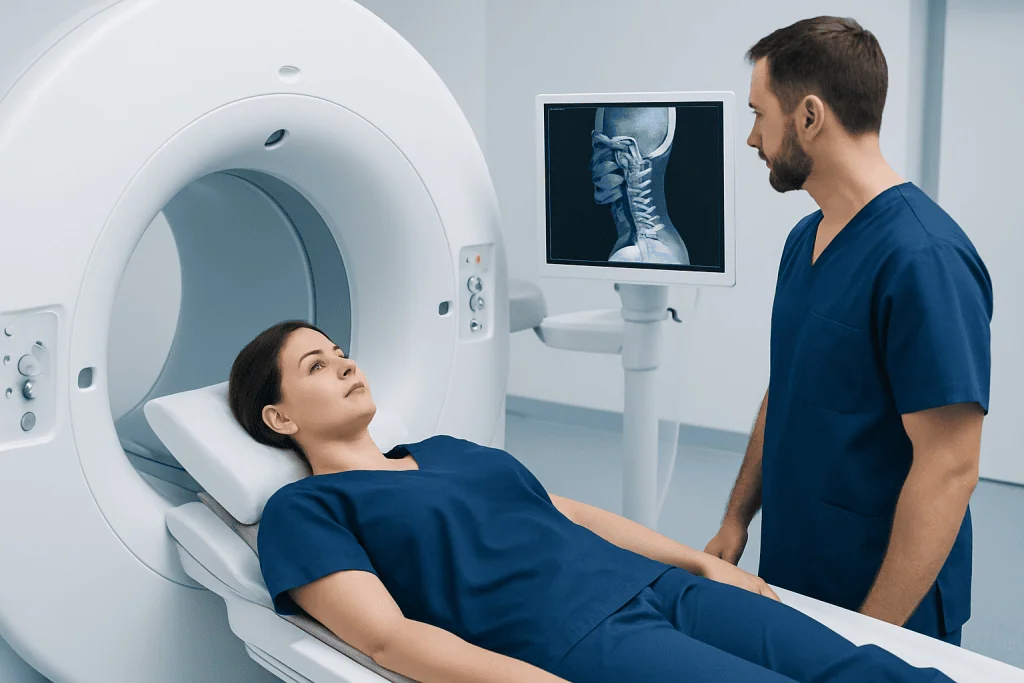
Imaging is not needed for every episode of back pain. When a fracture is suspected, or when the injury was high impact, imaging may help clarify the diagnosis. A computed tomography (CT) scan is particularly useful for showing bony fractures and may be performed during trauma evaluation. X-rays can identify some injuries but may miss small fractures, while magnetic resonance imaging (MRI) is more useful when clinicians need to evaluate nerves, discs, ligaments, or soft tissues.
The clinician may request urine tests, blood tests, or imaging of the abdomen or pelvis if the mechanism of injury or symptoms raise concern for associated internal injuries. This approach is designed to identify important problems early while avoiding tests that are unlikely to change care.
Treatment, Recovery, and Returning to Activity
Treatment depends on the exact injury, symptoms, overall health, and whether other injuries are present. Isolated transverse process fractures are commonly managed without surgery. Care may include relative rest for a short period, pain-relief measures recommended by a clinician, gentle movement as tolerated, and gradually returning to usual activities.
A brace is not routinely required for every transverse process fracture, although it may occasionally be considered for comfort or when another spinal injury is present. Prolonged complete bed rest is generally avoided because it can worsen stiffness and reduce conditioning. Instead, activity is adjusted to pain and medical guidance.
Physical therapy may be helpful after the acute pain improves. Rehabilitation can focus on restoring comfortable movement, strengthening trunk and hip muscles, improving posture, and learning safe ways to return to work, sport, or lifting. A clinician can advise when it is appropriate to resume higher-impact activities.
Surgery is uncommon for an isolated transverse process fracture. It may be considered only when there are additional spinal injuries, instability, significant nerve compression, or other complications requiring specialist care. People with persistent pain should be reassessed rather than continuing activities that repeatedly worsen symptoms.
Protecting the Spine in Daily Life
It is not possible to prevent every accident, but regular habits can support spinal health and reduce the chance of some musculoskeletal injuries. Maintaining general fitness, including core, back, hip, and leg strength, can improve control during everyday movement. Flexibility and balance exercises may also be useful when appropriate for the individual.
Safe lifting technique matters: keeping an object close to the body, bending at the hips and knees rather than rounding the back, avoiding twisting while carrying weight, and asking for help with awkward loads can reduce strain. Using seat belts, appropriate protective equipment for sports, and fall-prevention measures at home are also practical protective steps.
For back or neck discomfort not related to major trauma, gentle movement, ergonomic adjustments, adequate sleep, and avoiding sudden increases in physical workload may be beneficial. Persistent or recurrent pain deserves professional assessment, especially if it limits daily activities or is associated with unexplained symptoms.
When to Seek Medical Care
Medical evaluation is recommended after a significant fall, collision, direct blow to the back or neck, or sports injury that causes ongoing spinal pain. It is also sensible to seek care for pain that is severe, worsening, prevents normal movement, or does not begin to improve with appropriate rest and self-care.
Urgent medical care is needed for weakness, numbness around the groin or legs, difficulty walking, loss of bowel or bladder control, severe headache or neck pain after trauma, trouble breathing, fainting, severe abdominal pain, or blood in the urine. These symptoms can indicate injuries that need prompt assessment.
Acibadem International’s multidisciplinary specialists and JCI-accredited hospitals evaluate spine and trauma-related concerns for international patients. A qualified clinician can determine whether symptoms relate to the transverse process of the vertebrae, another spinal structure, or a condition outside the spine.
Frequently asked questions
Is the transverse process of the vertebrae part of the spinal cord?
No. The transverse process is bone on the side of a vertebra, while the spinal cord runs through the spinal canal. Although they are close anatomical structures, they have different roles.
Can a transverse process fracture heal without surgery?
Many isolated transverse process fractures heal with nonsurgical care, such as activity modification, pain management, and gradual rehabilitation. The treatment plan depends on the injury pattern and whether other injuries are present.
How long does pain from a transverse process fracture last?
Recovery varies with the severity of the injury, overall health, physical demands, and associated soft-tissue damage. Pain often improves gradually over weeks, but a clinician should review symptoms that remain severe, worsen, or interfere with recovery.
Can a transverse process fracture cause paralysis?
An isolated fracture is usually outside the spinal canal and is less likely to injure the spinal cord directly. However, significant trauma can cause additional injuries, so new weakness, numbness, or bowel or bladder changes require urgent medical evaluation.
Is imaging always necessary for pain near the transverse process?
No. Many cases of back or neck pain are muscular and do not need imaging. Imaging may be appropriate after significant trauma, when a fracture is suspected, or when there are neurologic symptoms or other warning signs.
What should someone avoid after a suspected transverse process injury?
Until assessed by a clinician, it is reasonable to avoid heavy lifting, forceful twisting, contact sports, and activities that clearly worsen pain. If an injury followed major trauma, the person should seek medical advice rather than trying to push through symptoms.
This article is for general information only and is not a substitute for professional medical advice. Please consult a qualified doctor about your individual situation.
Joint and spine care in Turkey — expert assessment & treatment
JCI-accredited · board-certified surgeons · reply within 24h
Add us as a Preferred Source to see more of our trusted health content across Google Search, AI Overviews and Discover.

More from the Health Library

Head Hurting in Back — Explained by Medical Evidence, Not Myths

Best Exercises for Balance: An Evidence-Based Guide for Patients

Face Mask Using Honey: An Evidence-Based Guide for Patients

Dehiscence: An Evidence-Based Guide for Patients

Alendronate: What Patients Need to Know

Dead Hangs: A Complete Medical Overview
Orthopedic Surgery & Traumatology Specialists at Acibadem

Fzt. Ahsen Ercan
Physical Medicine & Rehabilitation
Fzt. Ali Furkan Gürler
Physical Medicine & Rehabilitation
Dr. Ali Koç
Orthopedic Surgery & Traumatology
Dr. Ali Osman Çiçek
Orthopedic Surgery & Traumatology