Treating Baldness in Females: What Patients Need to Know

Female baldness is often treatable, especially when the cause is identified early. Common causes include female pattern hair loss, hormonal changes, stress-related shedding, nutritional deficiencies, and some medical conditions.
Key Takeaways
- Female baldness is often treatable, especially when the cause is identified early.
- Common causes include female pattern hair loss, hormonal changes, stress-related shedding, nutritional deficiencies, and some medical conditions.
- Diagnosis usually involves a medical history, scalp examination, and sometimes blood tests or other evaluations.
- Treatment may include topical or oral medicines, correction of deficiencies, management of hormone-related conditions, and selected procedures.
- A doctor should assess sudden shedding, patchy hair loss, scalp symptoms, or hair loss with menstrual, skin, or weight changes.
Treating baldness in females depends on the reason for hair loss, not just the appearance of thinning. Many women improve with a careful diagnosis, treatment of underlying triggers, and a personalized plan that may include medications, lifestyle measures, or hair restoration procedures.
Overview: what treating baldness in females usually involves
Treating baldness in females usually begins with identifying why the hair is thinning or shedding. In many cases, treatment can slow hair loss, support regrowth, or improve hair density, but the right approach depends on the cause, how long it has been present, and whether the scalp itself is healthy.
Female hair loss is not a single condition. Some women develop gradual widening of the part line over time, which is common in female pattern hair loss. Others notice sudden increased shedding after illness, childbirth, emotional stress, weight loss, or medication changes. Patchy loss may point to an inflammatory or autoimmune condition, while breakage can result from hair shaft damage rather than true loss from the root.
This difference matters because the best treatment is not the same for every person. A plan may include monitoring, laboratory testing, treatment for hormonal or nutritional problems, medicines to support hair growth, or procedural options when appropriate. Early evaluation is helpful because some types of hair loss respond better before follicles are severely affected.
How female baldness can appear
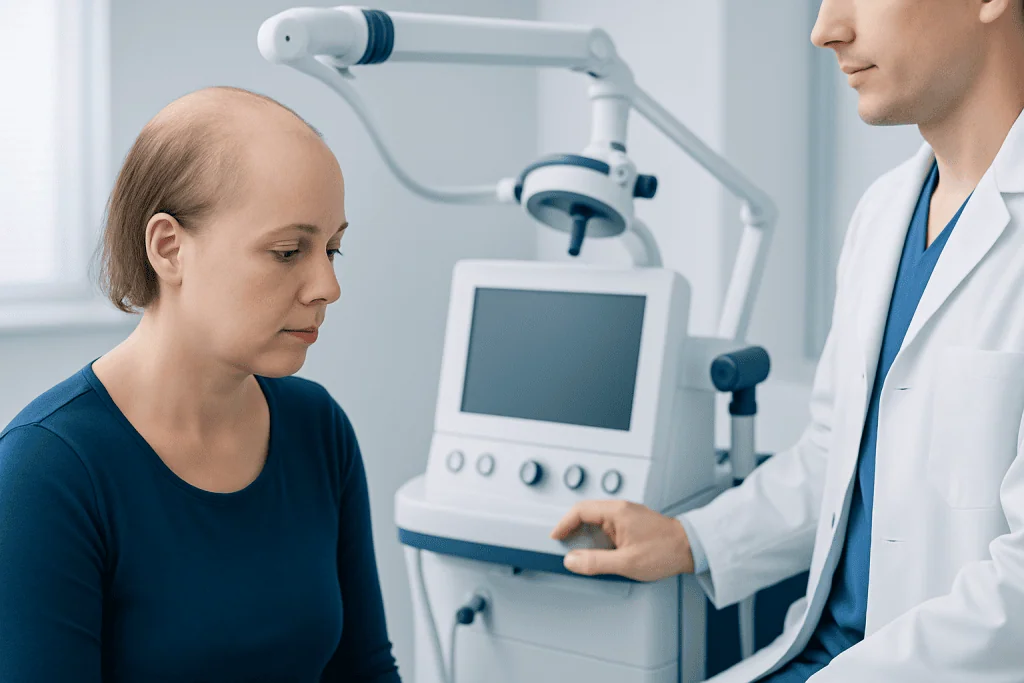
Women often describe hair loss as a thinner ponytail, more visible scalp, extra hair in the shower, or a part that seems wider than before. Unlike many men, women with female pattern hair loss often keep the frontal hairline but notice diffuse thinning over the top of the scalp. The change may be gradual and easy to miss at first.
Other patterns suggest different causes. Telogen effluvium typically causes diffuse shedding from all over the scalp, often a few weeks to months after a trigger such as fever, surgery, childbirth, a major diet change, or severe stress. Alopecia areata more often causes smooth, round patches of hair loss. Scalp disorders can also bring itching, burning, tenderness, flaking, or redness.
Hair changes outside the scalp can provide clues. Thinning eyebrows or body hair, acne, unwanted facial hair, irregular periods, fatigue, or brittle nails may suggest a broader hormonal, autoimmune, or nutritional issue. Because these signs can overlap, a medical assessment is more useful than trying to guess the cause from appearance alone.
- Gradual widening part: often seen in female pattern hair loss
- Sudden heavy shedding: may suggest telogen effluvium
- Patchy loss: may suggest alopecia areata or scarring conditions
- Breakage with short hairs: may reflect styling damage or hair shaft fragility
Common causes and risk factors
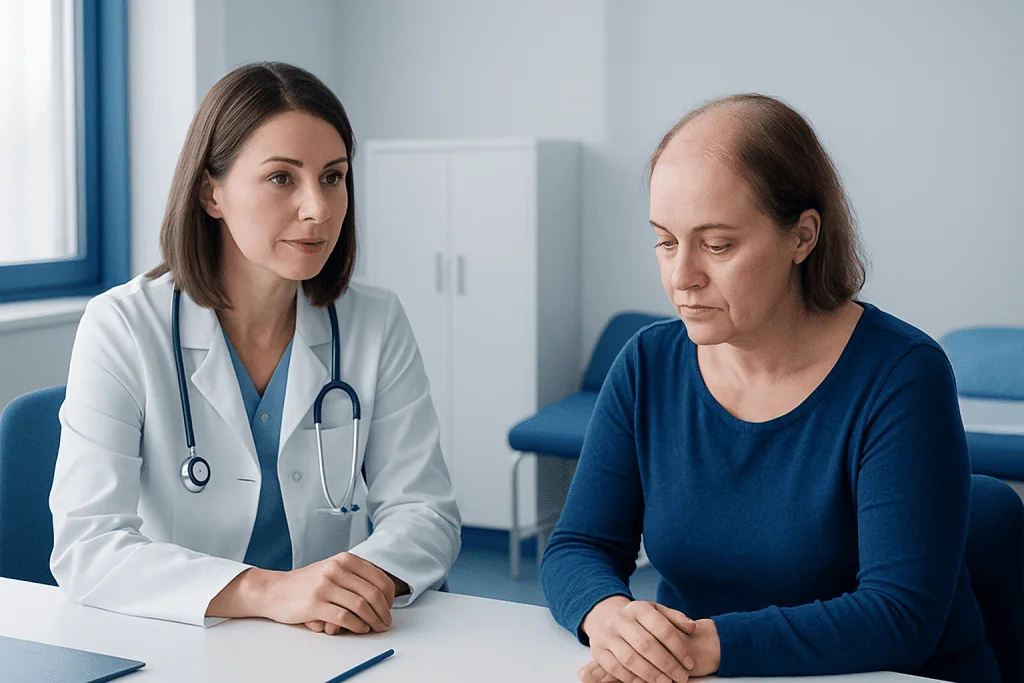
The most common long-term cause of female baldness is female pattern hair loss, also called androgenetic alopecia. This tends to run in families and may become more noticeable with age, especially around menopause, when hormonal changes can make inherited thinning more visible. Some women with this pattern also have signs of excess androgens, but many do not.
Another common cause is telogen effluvium, a condition in which more hairs than usual enter the shedding phase. It can follow physical or emotional stress, acute illness, high fever, childbirth, major surgery, rapid weight loss, restrictive diets, or certain medications. In many cases it improves once the trigger is removed, although recovery may take several months because hair growth is slow.
Medical conditions can also contribute to hair loss. Iron deficiency, thyroid disease, low protein intake, vitamin or mineral deficiencies, and polycystic ovary syndrome may play a role in selected patients. Autoimmune disorders can cause patchy loss, and inflammatory scalp disorders may damage follicles if untreated. In some women, traction from tight hairstyles, frequent heat styling, or harsh chemical processing adds mechanical stress that worsens thinning.
Because the possibilities are broad, doctors often evaluate female hair loss as a symptom rather than a diagnosis by itself. If symptoms suggest hormonal imbalance or another underlying disorder, it may be helpful to assess related conditions such as polycystic ovary syndrome.
How doctors diagnose the cause
Diagnosis starts with a detailed history. A doctor will usually ask when the hair loss began, whether it is shedding or thinning, whether it came on suddenly or gradually, and whether there were recent illnesses, pregnancy, new medications, dietary changes, or stressful events. Family history is also important because inherited hair thinning is common.
The scalp examination helps distinguish different types of hair loss. The doctor may look for miniaturized hairs, the distribution of thinning, signs of inflammation, scarring, scale, or broken hairs. A pull test may be used to see whether active shedding is occurring. In some cases, dermoscopy or close scalp magnification helps reveal patterns that are not obvious to the eye.
Blood tests may be recommended if the history suggests an underlying medical issue. These can include tests related to iron status, thyroid function, and selected hormonal or nutritional factors. If the diagnosis remains uncertain, or if a scarring condition is suspected, a dermatologist may recommend additional assessment, and occasionally a scalp biopsy. This stepwise approach helps avoid unnecessary treatment and focuses care on the most likely cause.
Treatment options for female hair loss
Treatment depends on the diagnosis. For female pattern hair loss, doctors often recommend therapies designed to support active hair follicles and reduce further miniaturization. Topical treatments are commonly used first, while oral medications may be considered for selected patients after review of age, pregnancy plans, overall health, and potential side effects. Meaningful improvement usually takes time, often several months, because hair grows slowly.
When shedding is caused by telogen effluvium, the main treatment is correcting the trigger if possible. That may mean allowing time for recovery after illness or childbirth, improving nutritional intake, addressing iron deficiency or thyroid disease, or reviewing medications with a physician. Supportive hair care and reassurance are important because this form of loss can be very distressing even when it is temporary.
Procedure-based options may help women with established thinning that does not respond enough to medical care. Depending on the pattern of loss and donor hair availability, some patients may benefit from hair transplant evaluation. In selected cases, doctors may also discuss supportive dermatologic procedures such as platelet-rich plasma therapy as part of a broader plan, although suitability varies and evidence may differ by patient group.
Women whose hair loss is related to hormone imbalance, scalp inflammation, or another medical condition may need targeted treatment for that issue as well. If the symptoms point toward a reproductive hormonal disorder, assessment through gynecology care may be part of the workup. The most effective plan is usually individualized rather than based on a single product or trend.
Self-care and prevention: what can help day to day
Daily habits cannot cure every cause of female baldness, but they can protect existing hair and support recovery. Gentle hair care is usually advised: avoiding tight braids or ponytails, limiting frequent heat styling, being cautious with bleaching or chemical straightening, and handling wet hair carefully to reduce breakage. Using a mild shampoo and treating scalp conditions such as dandruff or irritation can also help the hair environment stay healthier.
Nutrition matters because hair growth depends on adequate protein, iron, and overall energy intake. Crash dieting and very restrictive eating patterns may worsen shedding. Rather than taking large numbers of supplements without guidance, it is generally safer to correct confirmed deficiencies under medical advice. Excessive supplementation can be unhelpful or, in some cases, harmful.
Stress management can also play a supportive role. Stress does not cause every type of hair loss, but it can contribute to shedding in some people and may make coping harder. Sleep, balanced meals, regular physical activity, and realistic expectations all matter. Because visible regrowth is slow, taking monthly photographs in the same lighting can be more useful than checking the mirror every day.
- Choose looser hairstyles and reduce traction on the roots
- Limit harsh chemical and heat exposure when possible
- Eat a balanced diet with enough protein and iron-rich foods
- Only use supplements if a clinician recommends them
- Track progress over months, not days or weeks
When to seek medical care
A medical evaluation is important if hair loss is sudden, severe, patchy, or associated with scalp pain, redness, scaling, or scarring. These features can suggest conditions that need prompt treatment to protect the follicles. Children, pregnant women, and people with complex medical histories should also seek professional advice rather than self-treating.
It is also wise to consult a doctor if hair loss is accompanied by fatigue, weight change, acne, unwanted facial hair, irregular periods, cold intolerance, or other symptoms that could reflect a hormonal or metabolic problem. Medical review is especially helpful if over-the-counter products have not helped after several months or if hair thinning is causing significant distress.
Specialist care may involve dermatology, endocrinology, gynecology, or plastic surgery depending on the cause and the treatment being considered. Near the end of the diagnostic and treatment pathway, some patients may also want to discuss restoration procedures in experienced centers. Acibadem International’s multidisciplinary specialists in JCI-accredited hospitals evaluate and treat hair loss for international patients when a more comprehensive assessment is needed.
Frequently asked questions
Can female baldness be treated successfully?
In many cases, yes. Success depends on the cause, how early treatment begins, and whether the hair follicles are still active. Some women regain density, while others mainly achieve slower loss and improved appearance.
What is the most common cause of baldness in women?
Female pattern hair loss is one of the most common long-term causes. It often develops gradually and may be influenced by genetics, age, and hormonal changes. However, sudden shedding is often caused by telogen effluvium rather than inherited thinning.
How long does treatment take to show results?
Hair treatments usually require patience because hair grows slowly. Many women need several months before they notice reduced shedding or visible regrowth. Doctors often reassess progress over time rather than expecting quick changes.
Should women take vitamins for hair loss?
Vitamins and minerals may help if a true deficiency is contributing to hair loss. They are not a universal solution, and taking supplements without testing is not always useful. A clinician can decide whether blood tests or targeted supplementation are appropriate.
Is hair transplant an option for women?
It can be an option for selected women, especially when hair loss is stable and there is enough suitable donor hair. Not every pattern of female hair loss is ideal for transplant. A specialist evaluation is needed to determine whether it is likely to help.
When is female hair loss a sign of another health problem?
Hair loss may reflect an underlying issue when it appears suddenly, is patchy, or comes with symptoms such as irregular periods, fatigue, weight change, scalp inflammation, or signs of hormonal imbalance. These situations deserve medical assessment. Treating the underlying problem is often an important part of improving the hair loss.
References
- American Academy of Dermatology
- National Institutes of Health
- Mayo Clinic
- British Association of Dermatologists
- Cleveland Clinic
This article is for general information only and is not a substitute for professional medical advice. Please consult a qualified doctor about your individual situation.
Hair transplant in Turkey — costs, graft counts & a free assessment
JCI-accredited · board-certified surgeons · reply within 24h
Add us as a Preferred Source to see more of our trusted health content across Google Search, AI Overviews and Discover.
Check your numbers in seconds
BMI, calories, due date, blood pressure and 30+ more clinical calculators — free, instant, doctor-reviewed ranges.