Treatment for Duchenne Muscular Dystrophy: How It Works, Results and What to Expect

Duchenne muscular dystrophy is a genetic condition that causes progressive muscle weakness because dystrophin is absent or severely reduced. Corticosteroids and mutation-specific therapies may help slow loss of muscle function for eligible patients.
Key Takeaways
- Duchenne muscular dystrophy is a genetic condition that causes progressive muscle weakness because dystrophin is absent or severely reduced.
- Corticosteroids and mutation-specific therapies may help slow loss of muscle function for eligible patients.
- Regular heart, breathing, bone and mobility assessments are essential parts of treatment for Duchenne muscular dystrophy.
- Physiotherapy, stretching, assistive devices and planned surgery can help maintain comfort, independence and participation.
- Outlook has improved with proactive multidisciplinary care, especially monitoring and treatment of heart and respiratory complications.
Treatment for Duchenne muscular dystrophy does not currently cure the genetic condition, but it can help preserve muscle function, delay complications and support quality of life. Care is individualized and usually involves neuromuscular, cardiac, respiratory, rehabilitation, orthopedic and psychosocial specialists.
Overview: what treatment for Duchenne muscular dystrophy involves
Treatment for Duchenne muscular dystrophy is a long-term, coordinated care plan rather than a single procedure. It aims to slow the decline in muscle strength where possible, prevent or manage complications, maintain mobility and independence, and support the person and family at every stage of the condition.
Duchenne muscular dystrophy (DMD) is an inherited neuromuscular condition caused by changes in the DMD gene. These changes lead to little or no functional dystrophin, a protein that helps protect muscle cells. DMD most often affects boys, although girls and women who carry a DMD gene change may sometimes have symptoms and should receive appropriate assessment.
Care changes over time. Early treatment may focus on movement, stretching, learning and school support. Later, heart monitoring, respiratory support, management of scoliosis, assistive technology and planning for adult services become increasingly important. A neuromuscular team can help families understand which options are appropriate at a given time.
How does Duchenne muscular dystrophy work?
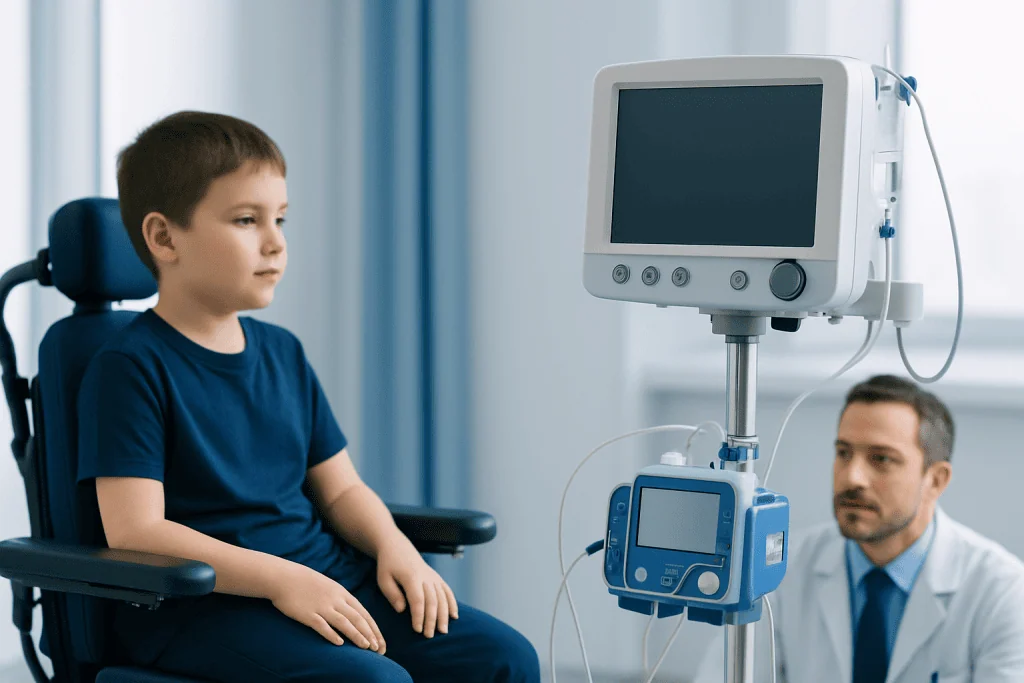
In DMD, muscle cells are more vulnerable to damage because they lack enough working dystrophin. Everyday muscle use can therefore cause repeated injury to muscle fibers. Over time, damaged muscle is replaced partly by fat and connective tissue, leading to worsening weakness and reduced movement.
Weakness commonly begins in the hips, thighs and shoulders. A child may have delayed motor milestones, frequent falls, difficulty running or climbing stairs, enlarged-looking calf muscles, or use their hands to push up from the floor. DMD also affects the heart muscle and the muscles used for breathing, so it is not only a condition of the arms and legs.
The speed and pattern of progression vary. Genetic testing identifies the underlying DMD gene change, helps confirm the diagnosis and may determine whether a mutation-specific medicine could be considered. It may also inform family genetic counseling and testing.
How is Duchenne muscular dystrophy treated?
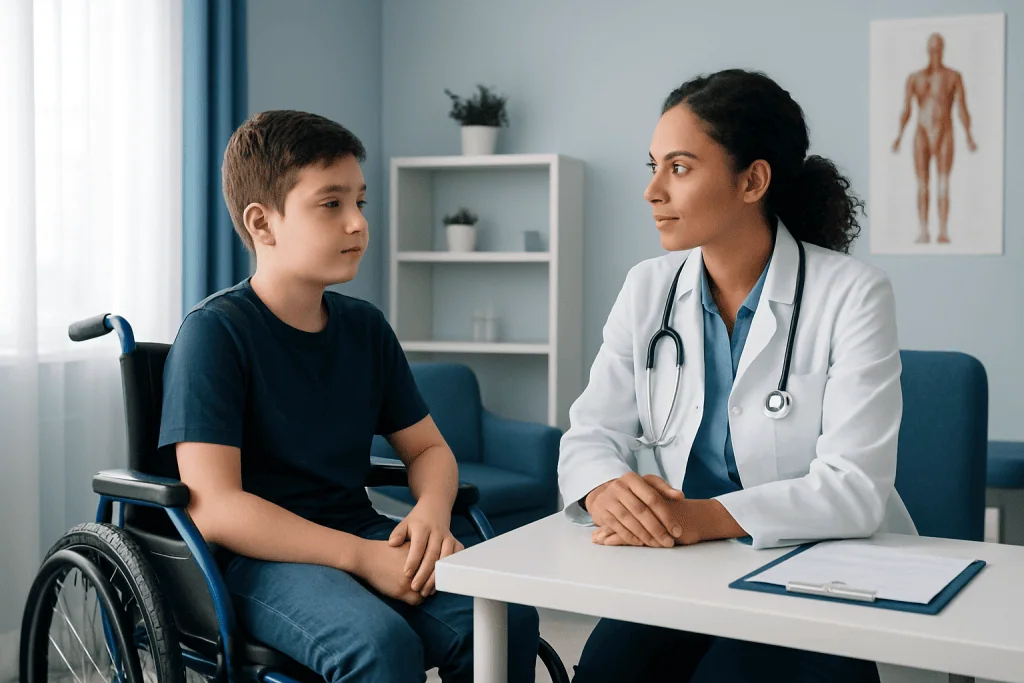
Treatment usually begins with corticosteroid therapy, when clinically appropriate. These medicines can improve strength and function for a period of time and may delay loss of walking ability. Because long-term use can have important side effects, including weight changes, effects on growth, bone health, behavior and the eyes, clinicians monitor each person closely and discuss the balance of benefits and risks.
Some people may be eligible for mutation-specific therapies that act on particular types of DMD gene changes. Examples include exon-skipping medicines and therapies designed to help the body produce a limited amount of dystrophin. Eligibility depends on the exact genetic result, age, local regulatory approval, medical status and treatment goals. These treatments require specialist evaluation and ongoing monitoring.
Supportive treatment is equally important. Physiotherapy helps preserve joint range of motion and reduce contractures, while occupational therapy supports daily activities, seating and adaptive equipment. Speech and language support, nutrition guidance, psychological care and educational planning may also be helpful. Low-impact activity and gentle stretching may be advised, but strenuous exercise that causes marked muscle pain or exhaustion is generally avoided.
Heart care includes regular electrocardiograms and echocardiograms or cardiac MRI, with medication introduced when indicated. Respiratory specialists monitor cough strength, sleep and breathing tests; cough-assist devices, vaccinations, airway clearance techniques and non-invasive ventilation may be recommended when needed. Orthopedic care may address contractures, fractures, foot positioning or scoliosis.
- Neuromuscular review and genetic counseling
- Medication assessment and safety monitoring
- Physiotherapy, stretching and mobility planning
- Regular cardiac and respiratory surveillance
- Bone health, nutrition, emotional wellbeing and family support
Candidacy and the treatment pathway: what to expect
There is no single invasive procedure that is suitable for everyone with DMD. The most appropriate plan depends on age, symptoms, walking ability, genetic result, heart and lung function, bone health, family priorities and access to approved treatments. A comprehensive baseline assessment helps the team make recommendations that are practical and individualized.
The first steps commonly include confirming the diagnosis with genetic testing, documenting strength and function, reviewing growth and nutrition, and arranging cardiac and respiratory assessments. The clinician may also discuss carrier testing and genetic counseling for relatives, as DMD can be inherited or arise from a new genetic change.
When a medicine is being considered, the team reviews the expected benefit, possible adverse effects, monitoring schedule and how treatment is given. Some therapies are taken by mouth, while others may require regular infusions. Families should ask how treatment success will be assessed, what changes should be reported between visits and whether clinical trials are relevant.
Recovery timelines differ because DMD care is ongoing rather than a one-time intervention. After starting a medication, follow-up may be more frequent to monitor tolerance and function. Rehabilitation plans are adjusted as needs change, while respiratory and cardiac reviews continue throughout childhood and adulthood.
Benefits, limits and possible risks of treatment
The potential benefits of treatment for Duchenne muscular dystrophy include maintaining muscle function for longer, supporting safer mobility, reducing stiffness, improving comfort and identifying heart or lung problems before they cause significant symptoms. Proactive care can also help people remain involved in education, work, relationships and community life.
It is important to have realistic expectations. Available treatments may slow aspects of progression, but they do not restore normal dystrophin throughout the body or eliminate the need for long-term monitoring. Response varies between individuals, including among people with similar genetic changes.
Each intervention has possible risks. Corticosteroids can affect weight, appetite, behavior, growth, blood pressure, blood sugar, bones and cataract risk. Mutation-specific therapies may have infusion-related or laboratory-monitoring considerations, depending on the product. Surgery and anesthesia require careful planning because DMD can affect the heart, lungs and response to certain anesthetic medicines.
Families should not stop prescribed medicines abruptly or start supplements, exercise programs or alternative treatments without discussing them with the neuromuscular team. A clinician can help assess safety, possible interactions and whether a proposed approach has evidence of benefit.
What is the result of muscular dystrophy?
Muscular dystrophy describes a group of genetic conditions that progressively weaken muscles. The result depends greatly on the specific type. In Duchenne muscular dystrophy, weakness usually becomes more noticeable over time and can affect walking, arm function, posture, breathing and heart function.
Many children with DMD eventually need mobility equipment, and some require powered wheelchairs as leg strength decreases. This change can increase independence when seating, positioning, environmental access and assistive technology are planned well. Loss of walking ability does not mean loss of participation, learning, communication or personal goals.
Without monitoring, complications such as cardiomyopathy, scoliosis, sleep-related breathing problems, respiratory infections and fractures can have a major effect on health. Regular surveillance makes it possible to treat many of these concerns early. Emotional adjustment is also an important part of care for the individual, parents, siblings and caregivers.
How long can a person live with Duchenne muscular dystrophy?
Life expectancy in Duchenne muscular dystrophy varies considerably between individuals. It is influenced by the underlying genetic change, heart health, respiratory function, access to specialized care and how effectively complications are prevented and treated. It is not possible to predict an individual lifespan from diagnosis alone.
Advances in corticosteroid use, cardiac medicines, respiratory monitoring, cough support and non-invasive ventilation have improved survival for many people with DMD. Increasingly, people with DMD live into adulthood, although they need regular expert care and may have complex medical needs.
Rather than focusing only on a predicted number of years, clinicians work with individuals and families to plan for each life stage. This includes education, transition from pediatric to adult healthcare, independent living supports, employment goals, relationships, mental wellbeing and advance care planning when appropriate.
When to seek medical care
A child should be assessed promptly if they have persistent difficulty running, rising from the floor, climbing stairs or keeping up with peers; frequent falls; unexplained high muscle enzyme results; or a family history of DMD. Early referral to a pediatric neurologist or neuromuscular specialist can allow genetic testing, support and treatment planning to begin sooner.
A person already diagnosed with DMD should seek urgent medical advice for new or worsening shortness of breath, breathing difficulty during sleep, repeated chest infections, chest pain, fainting, palpitations, a weak cough, fever with respiratory symptoms, or a sudden decline in function. New severe back pain, leg pain after a fall, or suspected fracture also needs assessment, particularly if corticosteroid treatment may affect bone strength.
Regular scheduled reviews remain important even when the person feels well, as heart and breathing changes may initially have few symptoms. Acibadem International’s multidisciplinary specialists and JCI-accredited hospitals provide diagnostic assessment and coordinated care for international patients with neuromuscular conditions.
Frequently asked questions
Can Duchenne muscular dystrophy be cured?
There is currently no cure that completely corrects Duchenne muscular dystrophy in all body tissues. However, medications, rehabilitation, heart and respiratory care, and assistive technologies can slow some effects of the condition and help manage complications. Research into new genetic and disease-modifying approaches is ongoing.
At what age does treatment for Duchenne muscular dystrophy begin?
Treatment planning should begin as soon as DMD is suspected or confirmed. Some therapies are considered in early childhood, while rehabilitation, cardiac monitoring, respiratory assessment and family support are useful from diagnosis onward. The timing of specific medicines depends on the child’s clinical situation and genetic test result.
Does physiotherapy make Duchenne muscular dystrophy worse?
Appropriately planned physiotherapy is an important part of DMD care and is intended to maintain flexibility, comfort and function. The program should be tailored by clinicians experienced in neuromuscular conditions. High-intensity or exhausting exercise may be unsuitable because damaged muscle may have difficulty recovering.
Why are heart and lung checks needed in DMD?
DMD can affect the heart muscle and the muscles that support breathing, sometimes before noticeable symptoms appear. Regular checks allow clinicians to detect changes early and introduce treatment or breathing support when appropriate. Ongoing surveillance is a key part of improving long-term health.
Can girls have Duchenne muscular dystrophy?
DMD mainly affects boys, but girls and women with a DMD gene change can occasionally develop muscle weakness, heart involvement or other symptoms. They may be described as manifesting carriers and should discuss individualized screening with a clinician. Genetic counseling can help families understand inheritance and testing options.
Is gene therapy suitable for every person with DMD?
No. Gene-based treatments have specific eligibility criteria and availability varies by country and regulatory approval. A specialist must review genetic findings, age, medical status, potential benefits, safety considerations and monitoring requirements before discussing whether a particular option may be appropriate.
References
- Centers for Disease Control and Prevention
- Muscular Dystrophy Association
- National Institute of Neurological Disorders and Stroke
- World Health Organization
- Parent Project Muscular Dystrophy
This article is for general information only and is not a substitute for professional medical advice. Please consult a qualified doctor about your individual situation.
Joint and spine care in Turkey — expert assessment & treatment
JCI-accredited · board-certified surgeons · reply within 24h
Add us as a Preferred Source to see more of our trusted health content across Google Search, AI Overviews and Discover.