Treatment for Neuromuscular Scoliosis: How It Works, Results and What to Expect

Neuromuscular scoliosis develops because muscle weakness, altered muscle control, or reduced trunk stability affects spinal alignment. Regular monitoring is important because curves may progress, particularly during growth and in people who do not walk independently.
Key Takeaways
- Neuromuscular scoliosis develops because muscle weakness, altered muscle control, or reduced trunk stability affects spinal alignment.
- Regular monitoring is important because curves may progress, particularly during growth and in people who do not walk independently.
- Bracing may support sitting and comfort but usually does not permanently stop curve progression in neuromuscular scoliosis.
- Spinal fusion may be considered for progressive curves that impair posture, care, comfort, breathing, or function.
- Treatment planning involves orthopedic spine specialists, neurologists, rehabilitation professionals, anesthesiologists, and respiratory and nutrition teams.
Treatment for neuromuscular scoliosis is individualized and may include supportive positioning, rehabilitation, management of the underlying neurological condition, and spinal surgery when a curve is progressive or affects sitting, comfort, breathing, or daily care. The aim is usually not to create a perfectly straight spine, but to improve balance, comfort, function, and quality of life while reducing complications linked to severe spinal curvature.
Overview: How Treatment for Neuromuscular Scoliosis Works
Treatment for neuromuscular scoliosis focuses on the whole person, not only the curve seen on an X-ray. It may include regular observation, customized seating and wheelchair support, physical and occupational therapy, pain and spasticity management, nutritional and respiratory assessment, and surgery when the spinal curve is worsening or causing meaningful difficulties.
Neuromuscular scoliosis is a side-to-side spinal curve associated with conditions that affect the brain, spinal cord, nerves, or muscles. Examples include cerebral palsy, muscular dystrophy, spinal muscular atrophy, myelomeningocele, and some genetic or neuromuscular disorders. Because the underlying condition can affect mobility, muscle balance, cough strength, swallowing, and bone health, care is typically coordinated by a multidisciplinary team.
The goals of care are individualized. For some people, the priority is maintaining balanced sitting and making transfers or personal care easier. For others, treatment is intended to reduce pain, protect skin from pressure areas, improve chest space for breathing, or support standing and mobility. A specialist can explain whether spinal fusion surgery is appropriate as part of a broader care plan.
What Is the Difference Between Scoliosis and Neuromuscular Scoliosis?
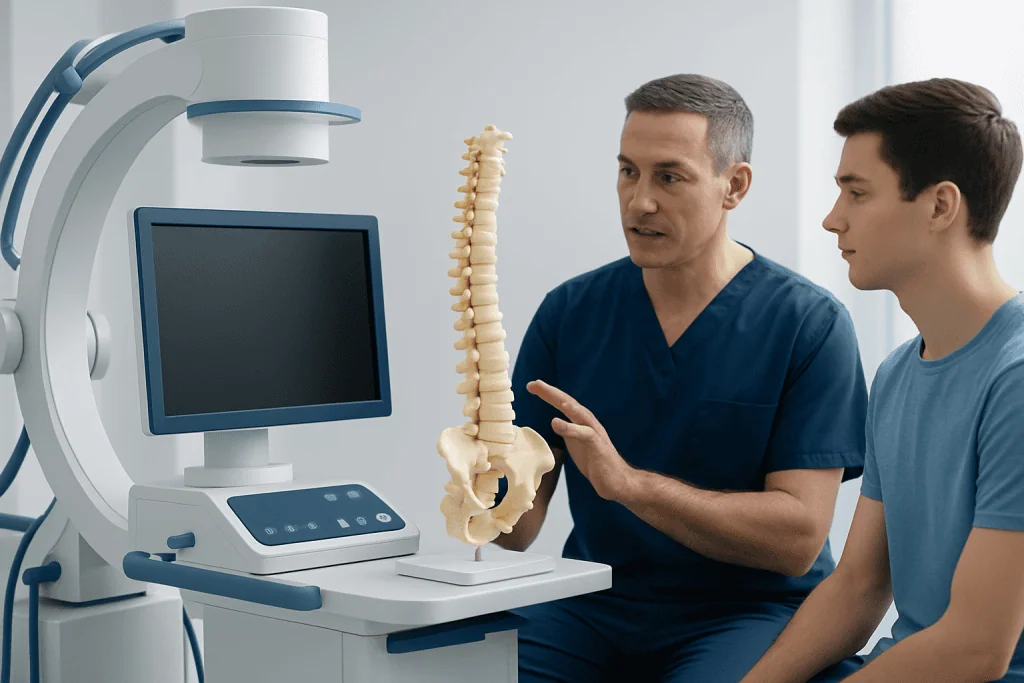
Scoliosis is a general term for a three-dimensional spinal curvature that includes a sideways curve and rotation of the vertebrae. It has several possible causes. The most common form in otherwise healthy adolescents is idiopathic scoliosis, meaning that no single cause is identified.
Neuromuscular scoliosis is a specific type of scoliosis caused by an underlying condition that affects muscle strength, muscle tone, coordination, or voluntary movement. When the muscles supporting the trunk are weak, tight, unbalanced, or poorly controlled, the spine may gradually curve and rotate.
Compared with idiopathic scoliosis, neuromuscular curves are more likely to be long, flexible at first, and progressive over time. They may include pelvic obliquity, in which one side of the pelvis sits higher than the other. This can make sitting uneven and may contribute to discomfort, pressure injuries, and challenges with wheelchair positioning or hygiene.
What Causes Neuromuscular Scoliosis?
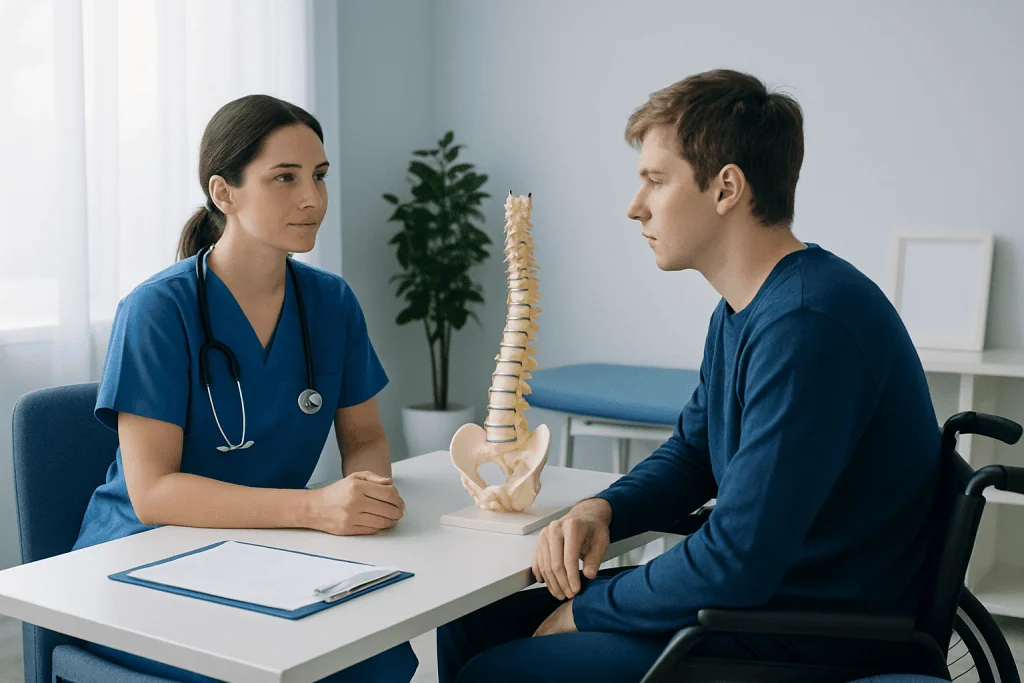
Neuromuscular scoliosis is caused by impaired muscle control or reduced muscular support around the spine. A person may have low muscle tone, muscle weakness, spasticity, involuntary movements, contractures, or difficulty maintaining an upright posture. These factors can create uneven forces on the growing spine and pelvis.
It is commonly associated with cerebral palsy, muscular dystrophies, spinal muscular atrophy, spinal cord injury, spina bifida, and certain inherited or metabolic conditions. The risk and pattern of curvature vary depending on the diagnosis, level of mobility, growth stage, and severity of trunk control impairment.
The curve is not caused by poor posture, carrying a heavy bag, or a family member’s actions. However, growth spurts can make a curve more noticeable or lead to faster progression. In some individuals, curve progression can continue after skeletal maturity because the underlying muscle imbalance remains present.
What Are the Common Symptoms of Neuromuscular Scoliosis?
Early neuromuscular scoliosis may be noticed as leaning to one side in a wheelchair, uneven shoulders, a rib prominence, or an asymmetrical waist. A caregiver may observe that a person needs more support to remain centered when sitting or that the pelvis is tilted.
As the curve becomes more pronounced, symptoms may include difficulty sitting comfortably, fatigue, back or hip discomfort, problems with transfers, clothing fit changes, or challenges with bathing and personal care. A tilted pelvis can also increase pressure on one side of the body, raising the risk of skin irritation or pressure sores.
Severe curves may reduce the space available for the lungs or make coughing less effective, especially in people who already have respiratory muscle weakness. Breathing symptoms can have more than one cause, so they should be assessed by the person’s treating clinician rather than assumed to be due to scoliosis alone.
- Uneven sitting balance or persistent leaning
- One shoulder, hip, or side of the rib cage appearing higher
- Increasing difficulty with wheelchair positioning or transfers
- Discomfort, skin pressure areas, or reduced tolerance for sitting
- Changes in breathing, sleep, cough strength, or endurance
Assessment and Candidacy for Treatment
Assessment begins with a clinical examination and a review of the underlying neurological or muscular diagnosis. The care team considers mobility, sitting ability, pain, skin health, contractures, feeding and swallowing, seizure control where relevant, respiratory function, and the individual’s goals. Caregivers are important partners in this discussion because they can describe changes in comfort, function, and daily care needs.
Standing or sitting spine X-rays are usually used to measure the curve and monitor change over time. The Cobb angle is a standard measurement of curvature. Additional imaging is not always needed, but it may be recommended if clinicians need to assess anatomy in more detail before surgery.
Surgery is generally considered when a curve is progressive despite non-surgical support, becomes large, interferes with sitting balance or care, causes pain or skin problems, or may affect breathing. There is no single curve measurement that determines surgery for every person. Decisions should balance expected benefits with the person’s medical complexity, functional level, and surgical risks.
Procedure: Step-by-Step Spinal Fusion for Neuromuscular Scoliosis
When surgery is recommended, the most common operation is posterior spinal fusion. It aims to correct and stabilize the spine using metal implants such as screws, hooks, or rods, together with bone graft material that encourages the treated vertebrae to fuse into one stable section. In many cases, the fusion extends to the pelvis to improve pelvic balance and provide a stable sitting base.
Before surgery, the team performs detailed planning. This may include blood tests, nutritional review, respiratory and cardiac evaluation, medication planning, anesthesia assessment, and discussion of infection prevention and blood conservation. Some people benefit from preoperative optimization of nutrition, bowel routines, skin care, spasticity management, or airway clearance.
During the operation, the patient receives general anesthesia. The surgeon makes an incision along the back, places planned implants, gradually corrects the curve within safe limits, and secures the spine in a more balanced position. Monitoring of nerve function may be used when appropriate. The exact surgical technique and length of surgery vary with the curve, pelvic position, bone quality, and underlying condition.
The intention is safe, meaningful correction rather than complete straightening. For international patients, Acibadem International’s multidisciplinary specialists and JCI-accredited hospitals can assess and treat complex spinal conditions with coordinated orthopedic, neurological, anesthesia, rehabilitation, and supportive care planning.
Recovery Timeline, Benefits, and Possible Risks
Recovery begins in hospital, where the team monitors pain control, breathing, circulation, wound healing, bowel and bladder function, and safe positioning. The hospital stay varies according to the individual’s health needs and recovery. Early movement, transfer practice, respiratory care, and individualized seating adjustments are commonly introduced with support from rehabilitation professionals.
Over the following weeks, activity is gradually increased under the surgeon’s guidance. Families and caregivers may need instruction on transfers, positioning, wound care, equipment use, and signs of complications. Follow-up visits and X-rays help confirm that alignment and fusion are progressing as expected. Full recovery and return to the person’s usual routines can take several months.
Potential benefits include improved sitting balance, more even pelvic alignment, easier personal care and transfers, reduced pain in some people, and better tolerance of wheelchair seating. Surgery may also help preserve chest and abdominal space, although its effect on lung function depends on the underlying condition and should be discussed individually.
All major spinal operations carry risks. These include bleeding, infection, wound healing problems, blood clots, implant-related problems, loss of correction, nonunion, nerve injury, and complications related to anesthesia or breathing. Individuals with complex neuromuscular conditions may have additional risks related to nutrition, seizures, reflux, aspiration, or reduced respiratory reserve. A specialist team can explain how risks are reduced and what they mean for a particular patient.
What Is the Prognosis for Neuromuscular Scoliosis?
The prognosis for neuromuscular scoliosis depends mainly on the underlying condition, the person’s growth and mobility, the size and flexibility of the curve, pelvic alignment, respiratory health, and access to ongoing supportive care. Curves can progress during childhood and adolescence, and in some conditions they may continue to progress in adulthood.
Non-surgical measures can improve comfort, sitting alignment, skin protection, and daily care. However, they may not prevent progression in every person. When appropriately selected, spinal fusion can provide long-term structural stability and may improve sitting balance and caregiving. It does not cure the underlying neurological or muscular condition.
Long-term follow-up remains valuable after either non-surgical or surgical treatment. This may include review of wheelchair seating, bone health, breathing, nutrition, physical comfort, and functional needs as a child grows or an adult’s needs change. The most useful outcome measures are often practical: greater comfort, improved balance, easier care, and participation in daily life.
When to Seek Medical Care
A person with a known neuromuscular condition should have regular spinal monitoring, especially during periods of rapid growth or when sitting balance changes. Families should arrange medical review if they notice new leaning, uneven shoulders or hips, worsening wheelchair fit, increased discomfort, changes in transfer ability, or skin redness over pressure points.
Prompt medical advice is important for new or worsening shortness of breath, recurrent chest infections, reduced cough strength, severe back pain, fever, or concerns about a pressure injury. These symptoms do not always mean the scoliosis has worsened, but they deserve assessment.
Following spinal surgery, urgent medical evaluation is needed for fever with wound concerns, drainage or increasing redness around the incision, sudden severe pain, new weakness or altered sensation, persistent vomiting, breathing difficulty, or other unexpected deterioration. The surgical team should provide specific post-discharge contact instructions.
Frequently asked questions
Can a brace correct neuromuscular scoliosis?
A brace can sometimes improve sitting support, comfort, and positioning. In neuromuscular scoliosis, it usually does not permanently correct the curve or reliably stop progression. The care team may recommend bracing as part of a wider plan that includes seating, therapy, and regular monitoring.
When is surgery recommended for neuromuscular scoliosis?
Surgery may be considered when the curve is progressing and affects sitting balance, comfort, personal care, skin health, breathing, or daily function. The decision is individualized and considers the underlying condition, overall health, curve characteristics, and the goals of the person and family. A specialist team weighs the expected benefits against surgical risks.
Does spinal fusion cure neuromuscular scoliosis?
Spinal fusion stabilizes the part of the spine that is treated and can improve alignment and pelvic balance. It does not cure the neurological or muscular condition that contributed to the scoliosis. Ongoing rehabilitation, equipment review, and medical follow-up may still be needed.
Can neuromuscular scoliosis affect breathing?
A severe spinal curve can reduce chest space and may make breathing or coughing more difficult in some people. However, respiratory symptoms can also result from the underlying neuromuscular condition, infections, sleep-related breathing problems, or aspiration. Any change in breathing should be discussed promptly with a qualified clinician.
How long does recovery after neuromuscular scoliosis surgery take?
Initial recovery occurs in hospital and varies according to the person’s health, respiratory needs, and ability to resume safe sitting and transfers. Activity and caregiving routines are gradually adjusted over the following weeks. Full recovery commonly takes several months, with follow-up imaging and rehabilitation support tailored to the individual.
Can adults have treatment for neuromuscular scoliosis?
Yes. Adults may benefit from assessment when scoliosis causes pain, loss of sitting balance, pressure-related skin problems, difficulty with care, or functional decline. Treatment may include non-surgical supports or surgery, depending on the person’s medical condition, bone health, curve pattern, and personal goals.
References
- Scoliosis Research Society
- American Academy of Orthopaedic Surgeons
- American Academy of Pediatrics
- National Institute of Neurological Disorders and Stroke
- Orphanet
This article is for general information only and is not a substitute for professional medical advice. Please consult a qualified doctor about your individual situation.
Joint and spine care in Turkey — expert assessment & treatment
JCI-accredited · board-certified surgeons · reply within 24h
Add us as a Preferred Source to see more of our trusted health content across Google Search, AI Overviews and Discover.