

Treatment for Polyp: How It Works, Results and What to Expect

Most colon polyps can be removed during colonoscopy using minimally invasive techniques. Removed polyps are usually sent to a laboratory to identify their type and check for abnormal or cancerous cells.
Key Takeaways
- Most colon polyps can be removed during colonoscopy using minimally invasive techniques.
- Removed polyps are usually sent to a laboratory to identify their type and check for abnormal or cancerous cells.
- Recovery is often quick after routine endoscopic polyp removal, but instructions vary by procedure and sedation.
- The chance of new polyps depends on the original polyp type, number, size and personal risk factors.
- Severe abdominal pain, fever, heavy rectal bleeding or persistent vomiting after a procedure needs urgent medical assessment.
Treatment for polyp depends on where the polyp is located, its size, appearance and whether it causes symptoms. Many polyps can be removed during an endoscopic examination, while larger, difficult-to-reach or suspicious polyps may need a more advanced procedure or surgery.
Overview: How Treatment for Polyp Works
Treatment for polyp generally means removing an abnormal tissue growth and examining it under a microscope. Polyps may develop in several organs, including the colon, stomach, nose, uterus and cervix. This article focuses mainly on colon polyps, because they are common and are often found and treated during colonoscopy.
Most colon polyps are not cancer. However, certain types can develop abnormal changes over time, which is why removal is an important form of prevention. A gastroenterologist can often remove a polyp during the same procedure used to find it, avoiding the need for an additional operation.
The right approach is individual. It is based on the polyp’s location, size, shape, number and appearance, as well as the person’s health, medicines and family history. The laboratory result, called pathology, helps guide whether follow-up colonoscopy is needed and when it should take place.
For more information about the procedure used to inspect the large bowel and remove many polyps, see colonoscopy and polyp removal.
Who May Need Polyp Removal and How It Is Assessed
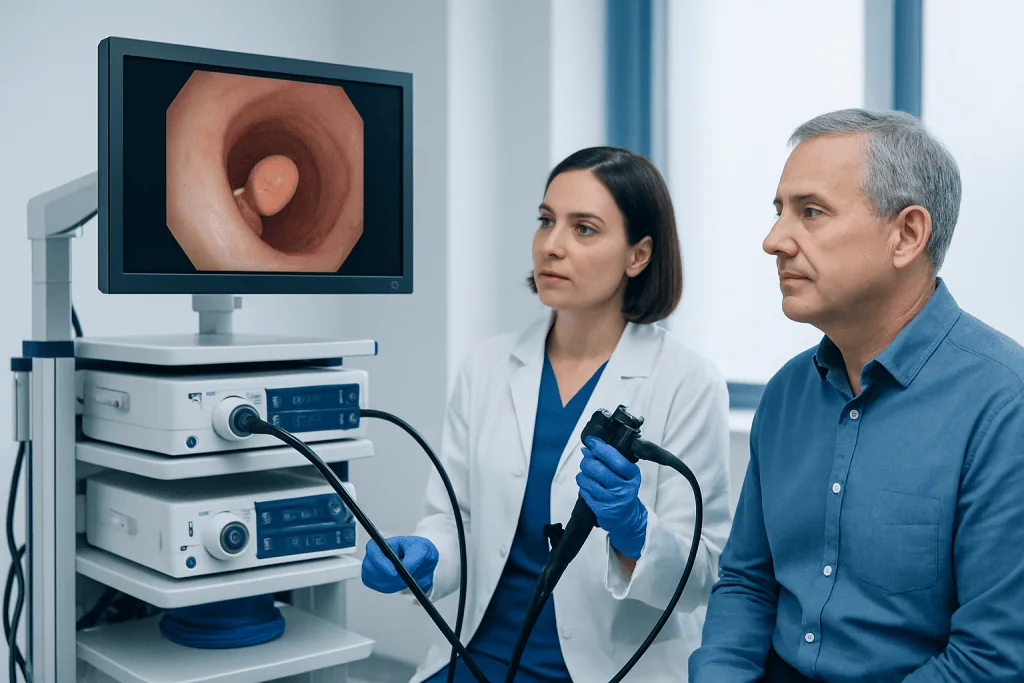
Polyp removal may be recommended when a polyp is found during screening, after symptoms prompt an examination, or during surveillance for a previous history of polyps. Symptoms such as rectal bleeding, unexplained iron-deficiency anemia, a persistent change in bowel habits or abdominal discomfort can lead a clinician to investigate, although many polyps do not cause symptoms.
Before treatment, the clinician reviews medical history, allergies and medicines. Blood-thinning medicines, diabetes treatments and some supplements may need special planning before an endoscopic procedure. Patients should not stop prescribed medication without instructions from the clinician who manages it.
Colonoscopy is the main test for assessing and treating polyps in the colon. It allows direct examination of the bowel lining and enables tissue sampling or removal. In some situations, imaging tests can identify a suspected lesion, but a colonoscopy may still be needed to confirm the finding and remove it.
People with a strong family history of colorectal cancer or inherited cancer syndromes may need earlier or more frequent screening. The care team can explain whether genetic counseling, closer surveillance or a different treatment plan is appropriate.
Step by Step: What Happens During Polyp Removal

For colon polyp treatment, bowel preparation is needed so that the lining of the colon can be seen clearly. This usually involves a temporary diet change and a prescribed laxative preparation before the procedure. Clear preparation instructions are important because inadequate cleansing can make small polyps harder to detect.
During colonoscopy, a flexible camera is gently passed through the rectum and around the colon. Sedation is often used to help the patient remain comfortable and relaxed. If a small polyp is identified, it may be removed with a small forceps instrument or a wire loop, often called a snare.
Larger or flatter polyps may need advanced endoscopic techniques. These can include lifting the lesion away from the bowel wall before removal, removing it in sections, or dissecting beneath it in selected cases. The specialist may use clips or other methods to reduce bleeding risk after removal.
Occasionally, a polyp cannot be removed safely during a standard colonoscopy. This may occur when it is very large, deeply suspicious, located in a difficult area or has features suggesting cancer. The gastroenterologist may refer the patient for advanced endoscopic treatment or colorectal surgery. Every removed specimen is normally sent for pathology testing.
Benefits, Risks and What the Results Mean
The main benefit of removing a colon polyp is that it provides a diagnosis and can prevent certain polyps from progressing to colorectal cancer. Removal can also address bleeding caused by some polyps. For most people, endoscopic removal is less invasive than abdominal surgery and does not require an incision.
Polypectomy is generally safe, but no procedure is risk-free. Possible complications include temporary bloating or cramping, bleeding from the removal site and, rarely, a tear in the bowel wall called perforation. Sedation can also cause short-term side effects and requires monitoring.
Bleeding may happen immediately or several days after a polyp is removed. It is more likely with larger polyps, certain locations and use of blood-thinning medication. The team gives individual instructions about restarting medicines, eating, activity and warning symptoms before the patient goes home.
Pathology results usually describe whether a polyp is non-neoplastic, such as a hyperplastic polyp, or a type that can develop precancerous changes, such as an adenoma or serrated lesion. Findings such as size, number and cellular changes help determine the timing of future surveillance. A pathology report does not automatically mean cancer; the treating clinician can explain the result in context.
Recovery Timeline and Self-Care After Polyp Surgery
After a routine colonoscopy with polyp removal, many people go home the same day after the effects of sedation have worn off. A responsible adult should usually accompany the patient home, and driving, operating machinery, signing important documents and drinking alcohol should be avoided for the period advised by the care team.
Mild gas, bloating and brief abdominal cramps are common after colonoscopy because air or carbon dioxide is used to expand the bowel. Eating light meals, drinking fluids and resting can help. The clinician may advise avoiding strenuous exercise, heavy lifting or certain foods for a short time, especially after removal of a large polyp.
Recovery needs vary. A small polyp removed with a simple technique may require little change in routine beyond the day of sedation. More extensive removal can require several days of modified activity and closer follow-up. Patients should follow the specific discharge instructions given for their procedure rather than relying on a general timeline.
Acibadem International’s multidisciplinary specialists and JCI-accredited hospitals can assess polyps, perform endoscopic or surgical treatment when needed, and coordinate follow-up care for international patients.
How Fast Do Polyps Grow After Removal?
A removed polyp does not grow back in the same place once it has been completely excised. However, some polyps can be incompletely removed, particularly if they are large or flat, and new polyps can develop elsewhere in the colon over time. This is why follow-up surveillance is important.
There is no single growth rate for all polyps. Some remain small for years, while others may change more quickly depending on their type and a person’s risk factors. In general, the transformation of many precancerous colon polyps into cancer is thought to take years, but this varies and should not be used to delay recommended screening.
The next colonoscopy interval is determined by the pathology result and procedure report. Factors include how many polyps were removed, their size, whether they were completely removed, their microscopic type and whether there is a family history or inherited syndrome. The clinician will provide an individualized follow-up plan.
How Painful Is Polyp Surgery?
Most patients do not feel pain during colon polyp removal because sedation is commonly used during colonoscopy. They may not remember the procedure clearly. The level of sedation varies according to local practice, medical history and the complexity of the planned treatment.
Afterward, mild bloating, gas or cramping can occur and usually settles within hours to a day. Removing a larger polyp or using an advanced technique may lead to more temporary discomfort, but severe or worsening pain is not expected and should be assessed promptly.
Patients should ask the procedural team what type of sedation or anesthesia is planned, what discomfort is normal afterward and which symptoms should trigger a call. Clear communication before the procedure can make the experience more predictable and reassuring.
How Many Polyps Are Normal on a First Colonoscopy?
There is no number of polyps that is considered “normal” on a first colonoscopy. Many people have no polyps, while others have one or more. The clinical significance depends more than the count alone on the size, location and microscopic type of each polyp.
A small number of low-risk polyps may simply lead to a routine surveillance recommendation after several years. Finding multiple polyps, large polyps, advanced cellular changes or certain serrated polyps may lead to an earlier follow-up examination. A very high number of polyps can sometimes prompt assessment for an inherited condition.
The endoscopy and pathology reports should be reviewed together. Patients can ask which type of polyp was found, whether it was completely removed and when the next colonoscopy is recommended. These details give a more useful picture than the number of polyps alone.
How Many Days Should I Rest After Polyp Surgery?
After a standard colonoscopy with simple polyp removal, most people need to rest for the remainder of the day because of sedation. Many return to usual non-strenuous activities the following day if they feel well. The exact guidance may differ based on the procedure and the person’s general health.
If a large polyp was removed, the procedure was prolonged, clips were placed or a more advanced endoscopic technique was used, the specialist may advise avoiding heavy lifting, intense exercise and long-distance travel for longer. Patients should also follow specific advice about work, driving, diet and medicines.
It is sensible to arrange a lighter schedule after the procedure and to contact the clinical team if symptoms do not improve as expected. Rest is important, but prolonged bed rest is not usually necessary after an uncomplicated endoscopic polypectomy unless a clinician advises otherwise.
When to Seek Medical Care
Before a planned procedure, medical advice is important for new rectal bleeding, black stools, persistent changes in bowel habits, unexplained weight loss, ongoing abdominal pain or unexplained anemia. These symptoms have many possible causes, but they should be assessed rather than self-treated.
After polyp removal, urgent medical assessment is needed for severe or worsening abdominal pain, a hard or swollen abdomen, fever, fainting, chest pain, shortness of breath, repeated vomiting or heavy rectal bleeding. Passing a small amount of blood may occasionally occur, but any significant, persistent or increasing bleeding needs prompt advice.
Patients should contact their care team if they have questions about pathology results, follow-up timing or restarting medicines. Keeping the procedure and pathology reports is useful for future healthcare visits, especially when changing doctors or traveling internationally.
Frequently asked questions
What is the usual treatment for a colon polyp?
The usual treatment is removal during colonoscopy, often with forceps or a snare. Larger or complex polyps may require advanced endoscopic removal or, less commonly, surgery. The removed tissue is examined in a laboratory to identify its type.
Can colon polyps be treated without removal?
Most polyps that can be safely removed are removed because this provides a diagnosis and may prevent future cancer development. Medication does not reliably eliminate typical colon polyps. In some cases, removal may be delayed or a different approach chosen if a person’s health risks are high.
How fast do polyps grow after removal?
A completely removed polyp does not regrow at the same site, but new polyps can form elsewhere in the colon. Growth rates vary widely by polyp type and individual risk factors. Follow-up colonoscopy is scheduled according to the pathology findings and procedure details.
How painful is polyp surgery?
Most colon polyp removals are performed under sedation, so patients typically do not feel pain during the procedure. Mild gas, bloating or cramps afterward are common and usually short-lived. Severe or worsening pain should be assessed urgently.
How many polyps are normal on a first colonoscopy?
There is no single normal number. Some people have no polyps, and others have one or more. The type, size, number and pathology findings are all used to decide whether earlier follow-up is needed.
How many days should I rest after polyp surgery?
After a simple polyp removal, most people rest on the procedure day and resume ordinary light activities the next day. Larger or more complex removals may require a longer period without strenuous exercise or heavy lifting. The procedural team’s discharge instructions should guide recovery.
References
- American Society for Gastrointestinal Endoscopy
- American College of Gastroenterology
- National Institute of Diabetes and Digestive and Kidney Diseases
- National Cancer Institute
- World Health Organization
This article is for general information only and is not a substitute for professional medical advice. Please consult a qualified doctor about your individual situation.
Persistent digestive symptoms? Get evaluated in Turkey
JCI-accredited · board-certified surgeons · reply within 24h
Add us as a Preferred Source to see more of our trusted health content across Google Search, AI Overviews and Discover.

More from the Health Library


Related Specialists

Prof. Dr. Ayşen Timurağaoğlu
Hematology
Dr. Melodi Dinçel
Pediatric and Adolescent Psychiatry
Prof. Dr. M. Faruk Köse
Gynecology & Obstetrics
Assoc. Prof. Dr. Selçuk Görmez
Cardiology