

Treatment for Sever’s: How It Works, Results and What to Expect
Sever's disease is a temporary overuse condition affecting the heel growth plate in growing children. Treatment is usually non-surgical and includes relative rest, supportive shoes or heel inserts, stretching and pain-relief measures when appropriate.
Key Takeaways
- Sever's disease is a temporary overuse condition affecting the heel growth plate in growing children.
- Treatment is usually non-surgical and includes relative rest, supportive shoes or heel inserts, stretching and pain-relief measures when appropriate.
- A child may sometimes continue modified sport if pain is mild and does not cause limping, but painful activity should be reduced.
- Symptoms often improve over several weeks, although they can return during growth spurts or periods of intensive activity.
- Persistent, severe or atypical heel pain should be assessed to rule out injury, infection or another cause.
Treatment for Sever's disease usually focuses on reducing repeated stress on a child’s heel growth plate while easing pain and maintaining safe movement. Most children improve with temporary activity changes, heel support, stretching and a gradual return to sport; surgery is not used for this condition.
Overview: How Treatment for Sever's Works
Treatment for Sever’s disease aims to reduce irritation at the heel growth plate, relieve pain and help a child return safely to usual activities. Sever’s disease, also called calcaneal apophysitis, occurs when the growth area at the back of the heel is stressed by repeated pulling from the calf muscles and Achilles tendon. It is common in active children and adolescents whose bones are still growing.
The condition is not a permanent disease of the heel and does not usually cause long-term damage. It is treated without surgery in almost all cases. The plan is tailored to the child’s symptoms, sports participation, footwear, muscle flexibility and examination findings.
Because heel pain can have several causes, a clinician may first confirm whether symptoms fit Sever’s disease. Care commonly involves relative rest rather than complete inactivity, ice after activity, comfortable supportive footwear, heel cups or inserts, calf stretching and a gradual increase in activity once pain settles.
Who May Benefit and How Sever's Disease Is Diagnosed
Sever’s disease most often affects children roughly between 8 and 14 years old, particularly during a growth spurt. Running, jumping and field or court sports can increase repeated loading through the heel. It may affect one or both heels and often causes pain at the back or underside of the heel that is worse during or after activity.
A clinician usually diagnoses the condition from the child’s history and a physical examination. They may check for tenderness around the back of the heel, calf tightness, walking changes, foot alignment, footwear wear patterns and pain with certain movements. Imaging is often not required when the presentation is typical.
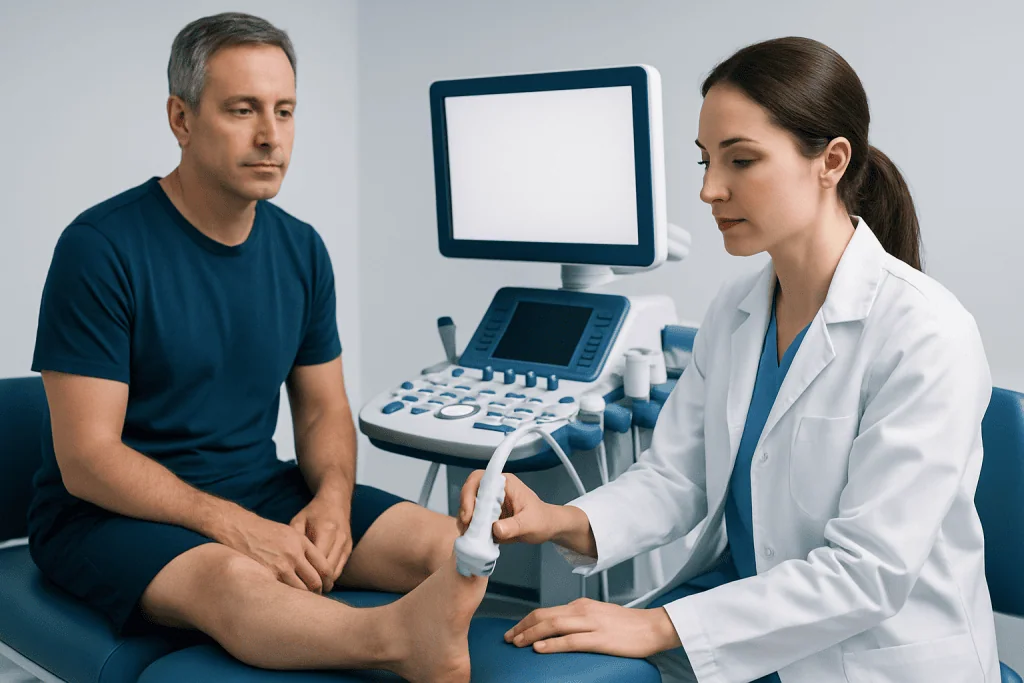
An X-ray, ultrasound or other imaging test may be considered if there was a significant injury, symptoms are unusual, pain is severe, or the child does not improve as expected. These tests do not diagnose every case of Sever’s disease, but they can help exclude conditions such as a fracture or another source of heel pain.
Children with heel pain may also need assessment for broader musculoskeletal concerns, including flat feet, tendon problems or inflammatory joint conditions when their symptoms suggest these possibilities.
Step-by-Step Treatment Plan: What to Expect
Initial treatment starts with reducing the activities that reproduce heel pain. This may mean temporarily cutting back on running, jumping, hill training or multiple sports sessions rather than stopping all movement. Low-impact options, such as swimming or cycling, may be suitable if they are comfortable, but the choice should be guided by the child’s clinician.
Ice wrapped in a cloth can be used for short periods after activity or when pain flares. A clinician may also advise an age-appropriate pain-relief medicine if needed. Parents and caregivers should follow advice from a doctor or pharmacist, especially if the child has another medical condition or takes regular medication.
Footwear is an important part of treatment. Well-fitting sports shoes with cushioning and heel support may reduce strain. Heel cups, heel lifts or shoe inserts can sometimes make walking and sport more comfortable by cushioning the heel and reducing pull through the Achilles tendon. A clinician, physiotherapist or podiatry professional can help determine whether an insert is appropriate.
Gentle stretching of the calf muscles and Achilles tendon is often introduced once it can be done comfortably. In some cases, a physiotherapist provides a structured programme that includes flexibility, foot and ankle strength, balance and gradual loading. Physical therapy and rehabilitation can be particularly helpful for recurring symptoms, marked muscle tightness or difficulties returning to sport.
- Reduce painful high-impact activity temporarily.
- Use supportive, properly fitted footwear and consider a heel cup if advised.
- Apply ice after activity for symptom relief.
- Begin gentle flexibility and strengthening work as pain allows.
- Return to running and jumping gradually, not all at once.
Recovery Timeline, Benefits and Possible Setbacks
Many children feel noticeably better within a few weeks when the activities causing pain are adjusted. Full recovery can take several weeks to a few months, depending on symptom severity, how much activity must be modified, calf flexibility and whether the child is still in a rapid growth phase. Symptoms can recur if sport intensity rises too quickly or during a later growth spurt.
The main benefit of conservative care is that it relieves discomfort while allowing the heel growth plate time to settle. Treatment also gives families practical ways to maintain general fitness and reduce the chance of repeated flare-ups. There is no evidence that a child needs to “push through” heel pain in order to recover.
Most treatment measures have low risk when used correctly. However, prolonged complete rest can reduce fitness and may not be necessary for mild cases. Poorly fitted inserts may be uncomfortable, and stretches should not cause sharp pain. Braces, walking boots or casts are reserved for selected children with severe pain or symptoms that do not respond to simpler measures, under specialist direction.
After the heel growth plate closes in later adolescence, Sever’s disease resolves and does not continue into adulthood. Even so, a child with persistent pain should be reassessed rather than assuming every episode is caused by Sever’s disease.
How Long Does It Take to Get Rid of Severs Disease?
There is no identical recovery time for every child. With appropriate activity modification and supportive care, symptoms commonly improve within several weeks. Some children need a few months before they can return fully to their previous training volume without pain.
Sever’s disease can flare again while the child is growing, especially after a rapid increase in training, a sports season change or a growth spurt. This does not usually mean that treatment has failed; it often means the heel needs another period of reduced loading and a slower progression back to impact activity.
Recovery should be judged by function as well as time. A child should be able to walk normally, climb stairs and perform sport-specific movements without heel pain or limping before resuming unrestricted high-impact sport. A clinician or physiotherapist can individualize this progression.
Can You Continue to Play Sports With Severs Disease?
Some children can continue modified sports participation, but this depends on pain level and function. Activity that causes limping, significant pain during play, pain that lasts into the next day, or worsening symptoms should be reduced or paused. Continuing through substantial pain may prolong irritation and delay recovery.
A practical approach is to reduce the amount of running and jumping first, rather than automatically stopping every activity. Training frequency, duration, intensity and playing surface may all need adjustment. Non-impact exercise can help maintain fitness when it does not trigger pain.
Return to full sport should be gradual. A child may start with short, low-intensity sessions and increase only if they remain comfortable during activity and afterward. Warm-up, calf flexibility work, appropriate shoes and avoiding sudden jumps in training load can support a safer return.
What Can Be Mistaken for Severs Disease?
Several conditions can cause heel pain in children, which is why an accurate assessment matters. A heel bruise, Achilles tendon irritation, plantar fascia pain, a stress fracture and an acute fracture after an injury can produce symptoms that overlap with Sever’s disease. Pain from poorly fitting shoes or altered foot mechanics can also contribute.
Less common but important causes include infection, inflammatory arthritis, bone lesions and nerve-related pain. These are not the usual explanation for active children with typical Sever’s disease, but a clinician will consider them if the pattern does not fit. Night pain, fever, redness, marked swelling, inability to bear weight or pain unrelated to activity need prompt medical review.
Children who have pain in multiple joints, prolonged morning stiffness, skin rashes or unexplained fatigue may need assessment for an inflammatory condition. If symptoms persist despite a suitable treatment plan, further examination or imaging may be appropriate.
How to Heal Severs Fast and When to Seek Medical Care
The safest way to heal Sever’s disease as efficiently as possible is not to search for a quick fix, but to consistently reduce painful impact, use comfortable supportive shoes, follow stretching or rehabilitation guidance and return to sport gradually. Trying to train through pain or returning to intense activity too soon is a common reason symptoms last longer.
Parents and caregivers should arrange medical assessment if heel pain is severe, follows a fall or collision, causes a limp, prevents normal walking, or does not begin to improve with reduced activity. Urgent assessment is appropriate if the heel is hot, red or very swollen, if the child has fever or feels unwell, or if there is sudden inability to bear weight.
For ongoing or recurrent symptoms, a pediatric orthopedics, sports medicine or rehabilitation assessment can help clarify the diagnosis and create a return-to-activity plan. Acibadem International’s multidisciplinary specialists and JCI-accredited hospitals assess and treat musculoskeletal conditions for international patients.
Families should seek individualized advice before using braces, boots, prescription medication or intensive training programmes. The goal is a comfortable, confident return to normal childhood movement and sport while protecting the growing heel.
Frequently asked questions
What is the best treatment for Sever's disease?
The best treatment is usually a combination of temporary reduction in painful impact activity, supportive footwear or heel cushioning, ice for symptom relief and calf stretching. A clinician may recommend physiotherapy when symptoms are recurrent, severe or slow to improve. Surgery is not a treatment for Sever's disease.
How long does it take to get rid of Severs Disease?
Many children improve within a few weeks, but full recovery may take several weeks to a few months. The time varies with the child’s growth stage, symptoms and activity level. Symptoms can return during growth spurts or after a rapid rise in sports training.
Can you continue to play sports with Severs Disease?
A child may sometimes continue modified sport when pain is mild and they can walk and run without limping. Activities that cause significant pain, limping or next-day soreness should be reduced or stopped temporarily. A gradual return is safer than resuming full training immediately.
What can be mistaken for Severs Disease?
Heel bruising, Achilles tendon problems, plantar fascia pain and stress or acute fractures can resemble Sever's disease. Less commonly, infection or inflammatory conditions can cause heel pain. A medical assessment is important when symptoms are severe, unusual or do not improve.
How to heal severs fast?
The quickest safe approach is consistent relative rest from painful running and jumping, supportive footwear, heel cushioning if advised and a gradual rehabilitation plan. Avoiding the temptation to play through substantial pain can prevent prolonged symptoms. A clinician can advise whether a child needs physiotherapy or temporary immobilization.
Does Sever's disease need an X-ray?
An X-ray is not always needed when symptoms and examination findings are typical. It may be used when there has been a significant injury, pain is severe, symptoms are atypical or the child is not improving. Imaging can help rule out a fracture or another cause of heel pain.
References
- American Academy of Orthopaedic Surgeons
- American Academy of Pediatrics
- OrthoInfo
- National Health Service
- Mayo Clinic
This article is for general information only and is not a substitute for professional medical advice. Please consult a qualified doctor about your individual situation.
Joint and spine care in Turkey — expert assessment & treatment
JCI-accredited · board-certified surgeons · reply within 24h
Add us as a Preferred Source to see more of our trusted health content across Google Search, AI Overviews and Discover.

More from the Health Library


Related Specialists
Dr. Burcu Uprak
Internal Medicine
Prof. Dr. Mustafa Herdem
Orthopedic Surgery & Traumatology
Prof. Dr. Murat Kemal Atahan
General Surgery
Prof. Dr. Ayça Erşen Danyeli
Pathology