Treatment of Albinism: How It Works, Results and What to Expect
Albinism is a genetic condition that reduces or changes melanin pigment in the skin, hair and eyes. Treatment focuses on managing vision differences, preventing sun-related skin damage and supporting emotional and practical needs.
Key Takeaways
- Albinism is a genetic condition that reduces or changes melanin pigment in the skin, hair and eyes.
- Treatment focuses on managing vision differences, preventing sun-related skin damage and supporting emotional and practical needs.
- Eye care may include glasses, contact lenses, tinted lenses, low-vision aids and, in selected cases, eye muscle surgery.
- Daily sun protection and regular skin examinations are important because skin with little pigment burns more easily.
- Most people with albinism can study, work, form relationships and lead full, independent lives.
Treatment of albinism does not currently restore melanin production, but it can effectively address vision needs, protect the skin from sun damage and support everyday wellbeing. Care is personalized and may involve eye specialists, dermatologists, genetic counselors and other healthcare professionals.
Overview: How Treatment of Albinism Works
Treatment of albinism is designed to manage the effects of reduced pigment rather than cure the underlying genetic change. Albinism is present from birth and affects the production or distribution of melanin, the pigment that contributes to skin, hair and eye color and helps protect skin from ultraviolet (UV) light. The most important areas of care are vision support, sun protection and regular follow-up.
Different forms of albinism can affect people in different ways. Some people have very light hair and skin, while others have more visible pigment. Eye findings, including reduced sharpness of vision, sensitivity to light and involuntary eye movements, are common in many forms. A personalized plan helps address the individual’s symptoms, daily activities and long-term health needs.
Care is not usually a single procedure or a one-time treatment. Instead, it is an ongoing approach that may combine ophthalmology, dermatology, pediatric care, genetics and practical support at school or work. With appropriate care and adaptations, many people with albinism lead active and independent lives.
How Does Albinism Work?
Albinism is caused by inherited changes in genes involved in making or handling melanin. Melanin helps color the skin, hair and eyes. In the eyes, it also has an important role during early visual development. When melanin is reduced, the retina and pathways that carry visual information from the eyes to the brain may develop differently.
Oculocutaneous albinism affects the eyes, skin and hair. Ocular albinism mainly affects the eyes and may produce subtler skin and hair changes. Some rare syndromic forms of albinism occur alongside other health concerns, such as immune system, bleeding or lung problems. This is why an accurate diagnosis and appropriate follow-up are valuable.
Typical eye-related features can include light sensitivity, nystagmus (involuntary eye movement), crossed or wandering eyes, reduced depth perception, refractive errors and reduced visual acuity. These features are not caused by something a person did, and they are not contagious. A clinical assessment can help distinguish albinism from other causes of low vision or pigment changes.
What Is the Treatment for Albinism?

There is no established treatment that permanently corrects the genetic cause of albinism or makes the body produce typical amounts of melanin. However, treatment can substantially improve comfort, function and safety. The plan is tailored to the person’s eye findings, skin type, age, activities and any associated medical condition.
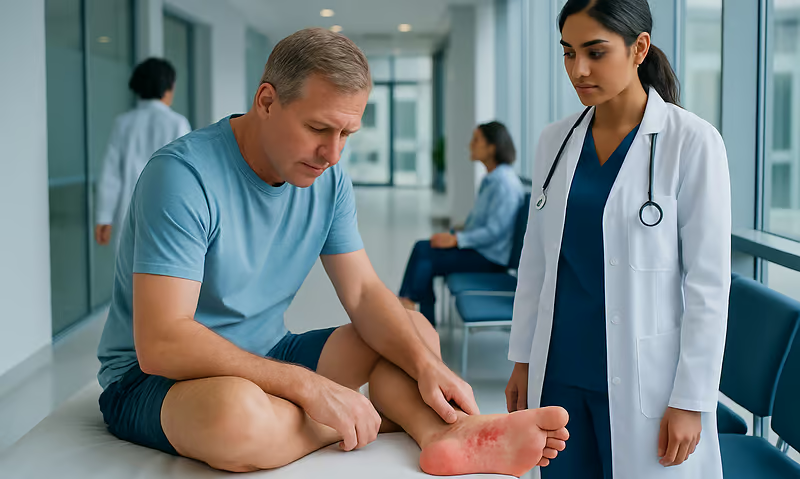
For vision, an ophthalmologist may prescribe glasses or contact lenses to correct nearsightedness, farsightedness or astigmatism. Tinted glasses, filters, wide-brimmed hats and other light-control strategies can reduce glare and photophobia. Magnifiers, large-print materials, electronic reading tools and seating closer to visual information may help at school, home or work. These approaches are part of comprehensive eye examination and vision care.
Some people may benefit from treatment for strabismus or a significant head turn used to reduce nystagmus. Eye muscle surgery can sometimes improve eye alignment or head posture, although it does not usually make vision normal and is not appropriate for everyone. A specialist explains the expected functional goals before any procedure is considered.
- Prescription glasses, contact lenses or tinted lenses for refractive errors and glare
- Low-vision rehabilitation and assistive technology for reading, learning and work
- Eye muscle surgery in selected cases of strabismus or abnormal head posture
- Daily sun protection and regular dermatology reviews
- Genetic counseling for affected people and families planning a pregnancy
Candidacy and the Care Pathway: What to Expect
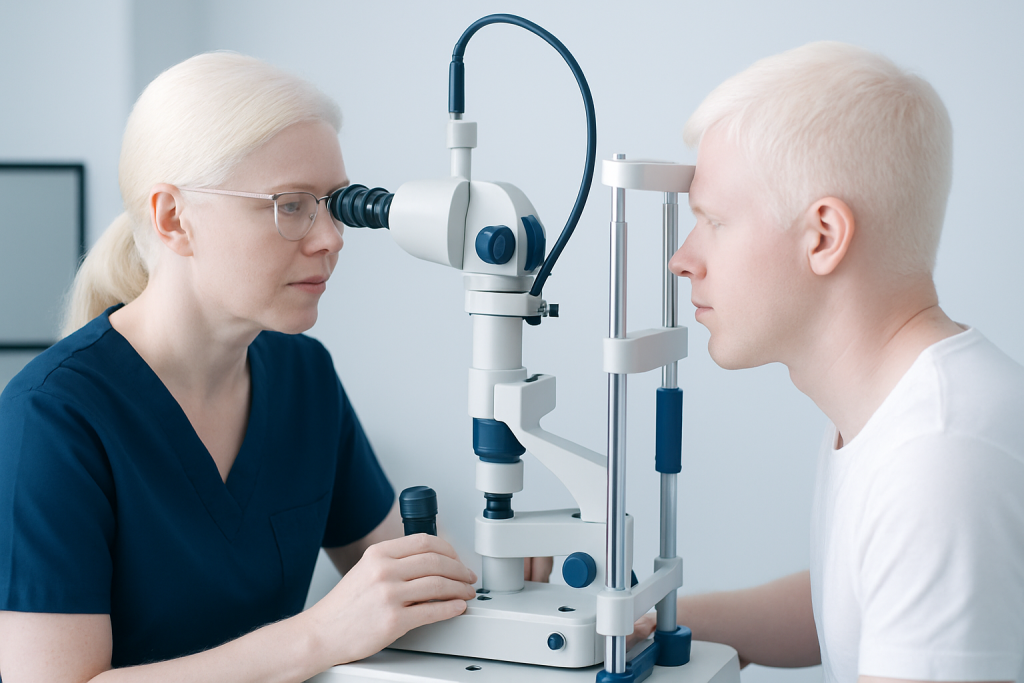
Anyone with suspected or confirmed albinism can benefit from an assessment, especially infants and children whose vision is still developing. The care pathway often begins with a detailed medical and family history, examination of the skin and eyes, and testing of vision. Eye specialists may examine the retina and optic nerve and assess eye movements, alignment and refractive error.
Genetic testing may be offered when it can clarify the type of albinism, identify a syndromic form or help with family planning. Genetic counseling explains inheritance in understandable terms, discusses what a result may mean and supports informed decisions. Testing is voluntary and should be interpreted in the context of clinical findings.
When a procedure such as eye muscle surgery is being considered, candidacy depends on the eye alignment, head posture, vision pattern, general health and personal goals. The specialist will discuss whether non-surgical measures are likely to be enough, what surgery may improve and what it cannot change. Children, adults and families should have an opportunity to ask questions and make a shared decision.
At Acibadem International, multidisciplinary specialists and JCI-accredited hospitals can assess and treat albinism-related eye and skin needs for international patients. Care may also include skin cancer prevention and surveillance when an individual’s sun exposure and skin findings require dermatology support.
Step by Step: Vision Support, Procedures and Recovery
Most albinism care is non-surgical and begins with a complete eye assessment. Following testing, the clinician may prescribe corrective lenses, recommend filters for bright light and discuss low-vision devices. It can take time to find the combination of lenses, lighting adjustments and visual aids that feels most useful, so follow-up appointments are an expected part of care.
If eye muscle surgery is recommended, the surgeon first measures eye alignment and evaluates whether a head turn or nystagmus-related posture may be improved. Surgery is generally performed under anesthesia and involves adjusting selected eye muscles to improve alignment or move the preferred eye position closer to straight ahead. It does not treat the underlying genetic condition or replace the need for glasses and ongoing eye care.
Recovery after eye muscle surgery commonly includes temporary redness, discomfort, tearing or a scratchy sensation. The surgical team provides individualized instructions about eye drops, activity, bathing, school or work and follow-up visits. Healing and the timing of visual or alignment changes vary, and some people may need further monitoring or treatment.
Skin care is continuous rather than procedural. A dermatologist may review the skin for sun-related changes, advise on protective routines and evaluate any new or changing lesion. Dermatology consultation can help create a practical plan that fits a person’s climate, daily schedule and skin history.
Benefits, Limitations and Possible Risks
The main benefits of treatment are better use of remaining vision, greater comfort in bright environments, reduced risk of sunburn and earlier detection of concerning skin changes. Supportive measures can also make reading, driving eligibility assessments, school participation, workplace tasks and outdoor activities more manageable. The best outcomes are often achieved when care begins early and is adjusted as needs change.
It is important to have realistic expectations. Glasses and low-vision aids may improve visual function, but they may not fully correct vision because some changes related to albinism occur during development of the eye and visual pathways. Tinted lenses can reduce glare, but very dark lenses may not be comfortable or useful in every setting.
Eye muscle surgery has the usual risks associated with surgery and anesthesia, including infection, bleeding, discomfort, undercorrection or overcorrection of alignment, and a need for additional treatment. Serious complications are uncommon, but should be discussed directly with the surgical team. Sun-protection products can occasionally irritate sensitive skin; a clinician can suggest alternatives if this occurs.
Emotional support can be just as important as clinical treatment. Children and adults may benefit from education about albinism, peer support, low-vision services and advocacy for reasonable accommodations. These resources can build confidence while helping families respond to practical challenges.
Daily Protection, Long-Term Follow-Up and When to Seek Medical Care
Sun protection is an essential part of treatment of albinism. Practical measures include seeking shade where possible, wearing protective clothing, a broad-brimmed hat and UV-blocking sunglasses, and applying broad-spectrum sunscreen as directed on the product label. Sunscreen should complement, rather than replace, clothing and shade. People should avoid deliberate tanning and take particular care during prolonged outdoor exposure.
Regular eye reviews help ensure prescriptions and low-vision strategies remain appropriate. Children may need support from eye specialists, teachers and families to access learning materials. Adults may benefit from workplace lighting changes, screen magnification and other accommodations. A dermatologist can advise how often skin checks are needed based on personal risk factors and prior skin findings.
Medical care should be sought promptly for a new, changing, bleeding, painful or non-healing skin spot; severe sunburn; a sudden change in vision; eye pain; flashes of light; a curtain-like shadow in vision; or a new marked change in eye alignment. Babies and children with suspected albinism should be evaluated by a qualified clinician so vision and overall health needs can be assessed early.
Can You Live a Normal Life With Albinism?
Yes. Most people with albinism can live full, meaningful lives, including education, employment, relationships, family life, sports and hobbies. The exact experience varies because visual ability, sensitivity to light, skin pigmentation and access to care differ from person to person. Early support and practical adaptations can make a meaningful difference.
Some activities may require planning. For example, outdoor activities may involve sun-protective clothing and scheduled shade breaks, while reading or computer work may be easier with good contrast, glare control and magnification. Driving rules depend on local regulations and a person’s measured vision, so an eye specialist can provide individualized guidance.
Family members, schools and employers can support independence by understanding that albinism is not an intellectual disability and does not define a person’s abilities. Clear communication about visual needs, accessible materials and respectful inclusion are often the most helpful adjustments.
Is Albinism Due to Inbreeding?
No. Albinism is not caused by inbreeding. It is a genetic condition that can occur in any population and in families with no known history of albinism. Many forms follow an autosomal recessive inheritance pattern, meaning a child inherits a non-working copy of a relevant gene from each parent.
Parents who carry one altered gene copy are usually healthy and may not know they are carriers. When both parents carry changes in the same gene, there can be a chance of having a child with albinism in each pregnancy. The exact inheritance pattern depends on the specific type of albinism.
Genetic counseling can help individuals and families understand inheritance, testing options and the meaning of family history without blame or judgment. A genetics professional can provide information tailored to the diagnosed form of albinism and the family’s questions.
Frequently asked questions
Is there a cure for albinism?
There is currently no cure that changes the underlying genetic cause of albinism or restores typical melanin production. Treatment focuses on vision care, protection from UV exposure, skin monitoring and support for daily activities. These measures can greatly improve comfort, safety and independence.
Can glasses improve vision in albinism?
Glasses or contact lenses can correct refractive errors such as nearsightedness, farsightedness and astigmatism. They may improve visual clarity, but they may not fully correct reduced vision related to development of the retina and visual pathways. An ophthalmologist can recommend lenses and low-vision aids based on individual needs.
Does albinism get worse with age?
Albinism itself is a lifelong genetic condition and does not usually progressively reduce pigment over time. Visual needs can change as a person grows or develops common age-related eye conditions, so regular eye care remains important. Skin damage from UV exposure can accumulate, which makes consistent sun protection especially valuable.
Can people with albinism go outside safely?
Yes, people with albinism can enjoy outdoor activities with careful sun protection. Protective clothing, hats, UV-blocking sunglasses, shade and broad-spectrum sunscreen help reduce sunburn and long-term skin damage. A dermatologist can give personalized advice for outdoor work, travel or sports.
Is eye surgery necessary for albinism?
No, eye surgery is not necessary for everyone with albinism. It may be considered for selected people with significant strabismus or an abnormal head posture related to nystagmus. A specialist will explain the likely benefit, limitations and possible risks before recommending surgery.
Can albinism be detected before birth?
In some families, prenatal or preimplantation genetic testing may be possible when the specific genetic change causing albinism is known. These options require careful discussion with a genetics specialist because testing availability and suitability vary. Genetic counseling can help families understand their options and make informed choices.
References
- National Eye Institute
- American Academy of Ophthalmology
- National Organization for Rare Disorders
- MedlinePlus Genetics
- American Academy of Dermatology Association
This article is for general information only and is not a substitute for professional medical advice. Please consult a qualified doctor about your individual situation.
Hair transplant in Turkey — costs, graft counts & a free assessment
JCI-accredited · board-certified surgeons · reply within 24h
Add us as a Preferred Source to see more of our trusted health content across Google Search, AI Overviews and Discover.