

Treatment of Urinary Retention: How It Works, Results and What to Expect

Sudden inability to pass urine with painful lower-abdominal fullness needs urgent medical assessment. Catheter drainage is often the fastest way to relieve acute urinary retention and protect the bladder and kidneys.
Key Takeaways
- Sudden inability to pass urine with painful lower-abdominal fullness needs urgent medical assessment.
- Catheter drainage is often the fastest way to relieve acute urinary retention and protect the bladder and kidneys.
- Long-term treatment is tailored to the cause and may include medication changes, treatment of prostate enlargement, pelvic-floor care, intermittent catheterization, or surgery.
- Drinking extra water does not usually resolve urinary retention and may worsen discomfort when the bladder cannot empty.
- Prompt evaluation is important because untreated retention can lead to infection, bladder damage, or kidney problems.
Treatment of urinary retention begins by safely emptying the bladder when needed, then identifying and treating the cause. Recovery and long-term results depend on whether retention is acute or chronic and whether it is related to blockage, medication effects, nerve problems, infection, or weakened bladder muscle.
Treatment of Urinary Retention: How It Works
Treatment of urinary retention aims to empty the bladder safely, relieve discomfort, and address the reason urine is not passing normally. In acute urinary retention, a person suddenly cannot urinate or can pass only a very small amount. The immediate treatment is usually bladder drainage with a catheter, followed by assessment for the underlying cause.
Chronic urinary retention develops gradually and may cause a weak stream, straining, frequent small voids, a persistent feeling that the bladder is not empty, or repeated urinary infections. Some people have few symptoms despite retaining a large volume of urine. Care is individualized because the cause may be a physical blockage, reduced bladder-muscle activity, nerve dysfunction, pelvic organ prolapse, constipation, medication effects, or a condition such as benign prostatic hyperplasia.
The outlook is often good when the cause is identified and treated early. A urologist may coordinate care with primary-care clinicians, neurologists, gynecologists, pelvic-floor specialists, or other professionals when needed.
Why Urinary Retention Happens and Who May Need Treatment
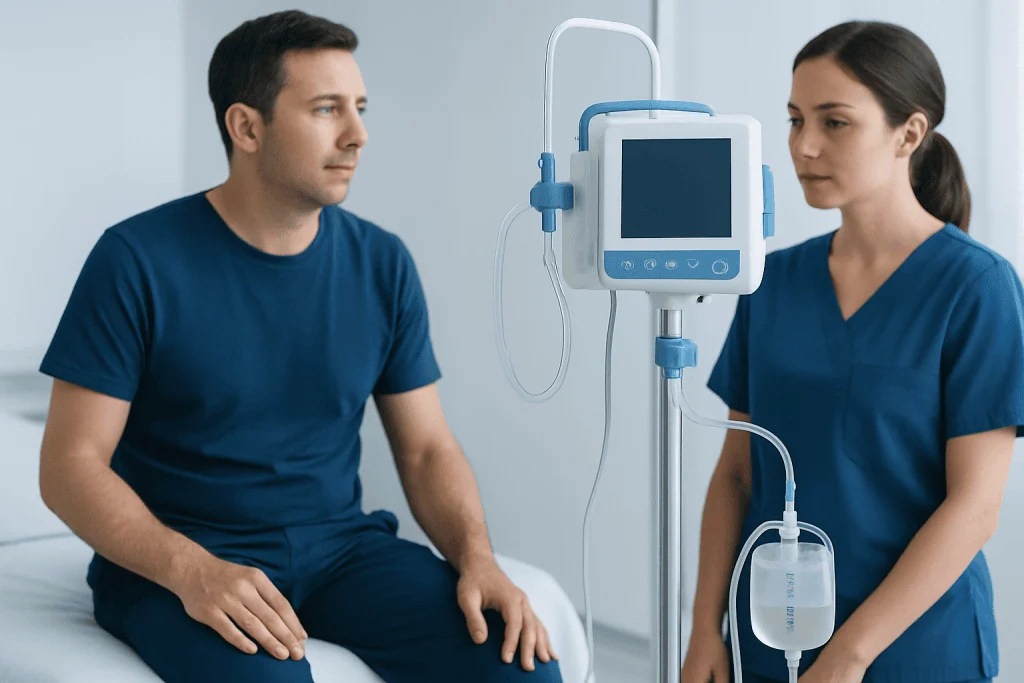
Urinary retention can affect people of any sex and age, although the causes differ. In men, prostate enlargement is a common cause because the prostate surrounds part of the urethra, the tube that carries urine out of the body. Urethral narrowing from scarring, bladder stones, constipation, and certain pelvic masses can also obstruct urine flow.
In women, pelvic organ prolapse, a narrowed urethra, prior pelvic surgery, or severe constipation may contribute. Pregnancy and the period after childbirth can occasionally affect bladder emptying. Both men and women can develop retention after surgery or anesthesia, particularly after procedures involving the pelvis, abdomen, or spine.
Nerve conditions such as diabetes-related nerve damage, spinal cord injury, multiple sclerosis, stroke, or Parkinsonian disorders may interfere with the signals between the bladder and brain. Medicines can also contribute, including some antihistamines, decongestants, antidepressants, opioids, and medications used for bladder symptoms. People should not stop prescribed medicine on their own; a clinician can review safer alternatives when appropriate.
- New difficulty starting urination, a slow stream, straining, or dribbling should be assessed.
- Previous urinary retention, prostate symptoms, neurologic disease, pelvic surgery, or use of contributing medicines may increase risk.
- Infection can worsen bladder symptoms, although urinary retention itself is not always caused by infection.
Assessment, Candidacy and the Treatment Plan

Anyone with a sudden inability to urinate is a candidate for urgent clinical assessment. The first priority is determining whether the bladder is overfull and draining it if necessary. Clinicians will ask about symptom timing, pain, fluid intake, previous urinary problems, bowel habits, recent operations, medical conditions, and medicines.
Testing may include an abdominal and pelvic examination, a rectal examination when appropriate, urinalysis, kidney-function blood tests, and a bladder scan. A post-void residual test measures how much urine remains in the bladder after an attempt to urinate. Depending on the situation, clinicians may recommend ultrasound, cystoscopy, urodynamic testing, or imaging to look for obstruction, stones, prostate enlargement, or nerve-related bladder dysfunction.
The best treatment is based on the cause, severity, kidney function, risk of recurrent retention, and the person’s ability to manage follow-up care. For example, a person with temporary retention after anesthesia may need brief catheter drainage and observation, while someone with long-standing obstruction may need medication or a procedure to restore urine flow.
Step by Step: How Urinary Retention Is Treated
For acute retention, a clinician typically inserts a flexible catheter through the urethra into the bladder. Urine drains into a collection bag, reducing pressure and discomfort. Local anesthetic gel may be used. If the catheter cannot pass safely because of severe blockage, injury, or narrowing, a urology specialist may place a suprapubic catheter through the lower abdomen into the bladder.
After drainage, the clinical team monitors symptoms and may measure the amount of urine released. In some cases, especially after a severely overfilled bladder is drained, monitoring is needed for increased urine output or changes in fluid balance. Urine may be tested for infection, and clinicians review medicines and treat contributing constipation or other reversible factors.
Next steps vary. A short-term catheter may remain in place for several days before a supervised trial without catheter, in which the person attempts to urinate after removal. Some people learn clean intermittent self-catheterization, which involves passing a single-use or reusable catheter at scheduled times to empty the bladder. This can be an effective option for selected people with chronic retention and is taught by a trained clinician.
When retention is caused by enlarged prostate, treatment may include medicines that relax the prostate and bladder outlet, medicines that reduce prostate size over time, or procedures for obstruction. Options can include prostate surgery when clinically appropriate. A urethral stricture may require dilation or reconstructive treatment, while prolapse, stones, or another pelvic cause may require targeted management.
Benefits, Risks and Recovery Timeline
The main benefit of prompt drainage is relief of bladder pressure and prevention of complications from prolonged overdistension. Treating the underlying condition can improve urine flow, reduce repeated infections, preserve kidney function, and lessen the need for long-term catheter use. However, no single treatment is right for every person, particularly when nerve-related bladder dysfunction is involved.
Catheterization is generally a routine procedure, but it can cause temporary discomfort, minor bleeding, bladder spasms, or infection. Less commonly, it may injure the urethra or create a false passage, particularly when insertion is difficult. Long-term indwelling catheters carry a higher risk of infection, blockage, leakage, and stone formation, so clinicians usually consider alternatives where safe and practical.
Recovery depends on the reason for retention. People with temporary retention after surgery, medication effects, constipation, or a short-lived inflammation may regain normal emptying within hours to days after the cause is addressed. Recovery from long-standing obstruction or nerve-related retention may take longer and may be incomplete, especially if the bladder muscle has been stretched or weakened over time.
After a catheter is removed, mild burning or urgency may occur briefly. Patients should follow their clinician’s instructions on fluids, catheter hygiene, medicine, and the timing of a trial without catheter. They should contact the care team if they cannot urinate, have increasing lower-abdominal pain, fever, chills, heavy bleeding, or a blocked catheter.
Can Drinking More Water Help Urinary Retention?
Drinking more water does not usually resolve urinary retention because the problem is incomplete bladder emptying, not simply low urine production. If the bladder is blocked or unable to contract effectively, extra fluid can increase bladder filling and discomfort.
People should generally drink fluids according to their usual health needs unless a clinician advises otherwise. Those with heart failure, kidney disease, or other conditions that require fluid limits should follow their individualized plan. It is sensible to avoid deliberately restricting fluids for long periods, as concentrated urine can irritate the bladder and increase dehydration risk.
For mild urinary symptoms without acute retention, regular hydration, avoiding excessive alcohol, and moderating caffeine may reduce irritation for some people. These measures do not replace assessment when there is a weak stream, straining, repeated incomplete emptying, or pain.
When to Seek Medical Care
Seek urgent medical care immediately if there is a sudden inability to urinate, especially with severe lower-abdominal pain, swelling, or distress. Emergency assessment is also important for urinary retention with fever, chills, vomiting, confusion, visible blood in the urine, new leg weakness, numbness around the groin or buttocks, or loss of bowel control. These symptoms can indicate a serious infection, neurological emergency, or another condition requiring prompt treatment.
A non-urgent appointment should be arranged for a new weak stream, hesitancy, frequent small voids, nighttime urination, recurrent urinary infections, persistent dribbling, or a sensation of incomplete emptying. Early assessment can identify treatable causes before complications develop.
Acibadem International’s multidisciplinary specialists and JCI-accredited hospitals assess and treat urinary retention for international patients, including care for underlying urological and neurological causes. A qualified clinician can explain which diagnostic tests and treatment options are appropriate for the individual situation.
Frequently asked questions
How long does it take to recover from urinary retention?
Recovery can take hours to days when urinary retention is temporary, such as after anesthesia, constipation, or a medication effect. If retention has developed gradually from prostate enlargement, a urethral narrowing, or a nerve condition, recovery may take weeks or longer and may require ongoing treatment. The likelihood of full recovery depends partly on how long the bladder has been unable to empty normally.
What is the fastest way to get rid of urinary retention?
For sudden, painful inability to urinate, the fastest and safest treatment is medical bladder drainage with a catheter. Trying to force urination, drinking large amounts of water, or using unproven home remedies can delay needed care and increase discomfort. After drainage, a clinician investigates and treats the cause to reduce recurrence.
How serious is urinary retention?
Urinary retention ranges from temporary and treatable to medically urgent, depending on its cause and severity. Acute retention can be very painful and needs prompt assessment, while untreated chronic retention can increase the risk of urinary infection, bladder damage, and kidney problems. Early evaluation is the best way to protect urinary health.
Can drinking more water help urinary retention?
Extra water does not remove a blockage or correct poor bladder-muscle contraction. It may make pain and bladder fullness worse if a person cannot pass urine. Normal hydration is usually appropriate, but sudden inability to urinate needs urgent medical care rather than increased fluid intake.
Will urinary retention go away on its own?
Temporary retention can improve when a reversible trigger, such as anesthesia, constipation, or a contributing medicine, is addressed. However, it is not possible to know the cause without medical assessment, and persistent or recurrent symptoms should not be ignored. Sudden inability to urinate should be treated as urgent.
Can urinary retention cause kidney damage?
Yes, significant or prolonged retention can sometimes raise pressure in the urinary tract and affect kidney function. The risk is higher when retention is chronic, severe, or associated with obstruction. Clinicians may check kidney function and use imaging when there is concern about back pressure on the kidneys.
References
- National Institute of Diabetes and Digestive and Kidney Diseases
- American Urological Association
- European Association of Urology
- NHS
- Mayo Clinic
This article is for general information only and is not a substitute for professional medical advice. Please consult a qualified doctor about your individual situation.
Urinary Retention in Turkey — costs, top hospitals & a free quote
JCI-accredited · board-certified surgeons · reply within 24h
Add us as a Preferred Source to see more of our trusted health content across Google Search, AI Overviews and Discover.

More from the Health Library



Related Specialists

Dr. Arzu Aslan
Dermatology
Assoc. Prof. Dr. Gülfem Başol
Gynecology & Obstetrics
Assoc. Prof. Dr. Filiz Gülustan
Ear Nose & Throat
Prof. Dr. Eyüp Murat Ökten
Cardiovascular Surgery