Trigeminal Neuralgia: Electric Facial Pain and Neuromodulation Options

Trigeminal neuralgia usually causes brief, electric shock-like attacks of facial pain in areas supplied by the trigeminal nerve. A neurological examination and MRI help confirm the diagnosis and check for causes such as blood vessel compression, multiple sclerosis, or tumors.
Key Takeaways
- Trigeminal neuralgia usually causes brief, electric shock-like attacks of facial pain in areas supplied by the trigeminal nerve.
- A neurological examination and MRI help confirm the diagnosis and check for causes such as blood vessel compression, multiple sclerosis, or tumors.
- First-line treatment is usually medication that calms nerve firing, while surgical procedures may be considered when medicine is ineffective or poorly tolerated.
- Microvascular decompression can relieve pressure on the trigeminal nerve in selected patients, while percutaneous procedures and radiosurgery are other options.
- Neuromodulation may be considered for carefully selected people with refractory facial pain, but it is not the standard first treatment for classic trigeminal neuralgia.
- People with new, severe, changing, or persistent facial pain should seek medical evaluation rather than assuming it is dental or sinus-related.
Trigeminal neuralgia is a nerve pain condition that causes sudden, shock-like pain on one side of the face, often triggered by everyday activities such as chewing, talking, or brushing the teeth. With careful diagnosis, many people can reduce pain through medication, targeted procedures, surgery, or selected neuromodulation approaches.
Overview
Trigeminal neuralgia is a chronic pain disorder involving the trigeminal nerve, the main sensory nerve of the face. It is best known for causing sudden, intense, electric shock-like pain that usually affects one side of the face. Attacks may last only seconds to a few minutes, but they can recur many times a day and may strongly affect eating, speaking, dental care, sleep, and quality of life.
The trigeminal nerve has three main branches. The first serves the forehead and eye area, the second serves the cheek and upper jaw, and the third serves the lower jaw and part of the mouth. Pain may occur in one branch or more than one branch, most commonly in the cheek, jaw, teeth, gums, or lips. Because of this distribution, some people first consult a dentist or ear, nose, and throat specialist before seeing a neurologist.
Classic trigeminal neuralgia is often linked to pressure from a nearby blood vessel on the nerve root near the brainstem. Other forms may be associated with conditions such as multiple sclerosis, a tumor, facial trauma, or previous surgery. In some people, no clear cause is found. Treatment is individualized and may involve medication, procedures to interrupt pain signals, surgery to relieve pressure, and, in selected refractory cases, neuromodulation.
Symptoms and Pain Triggers
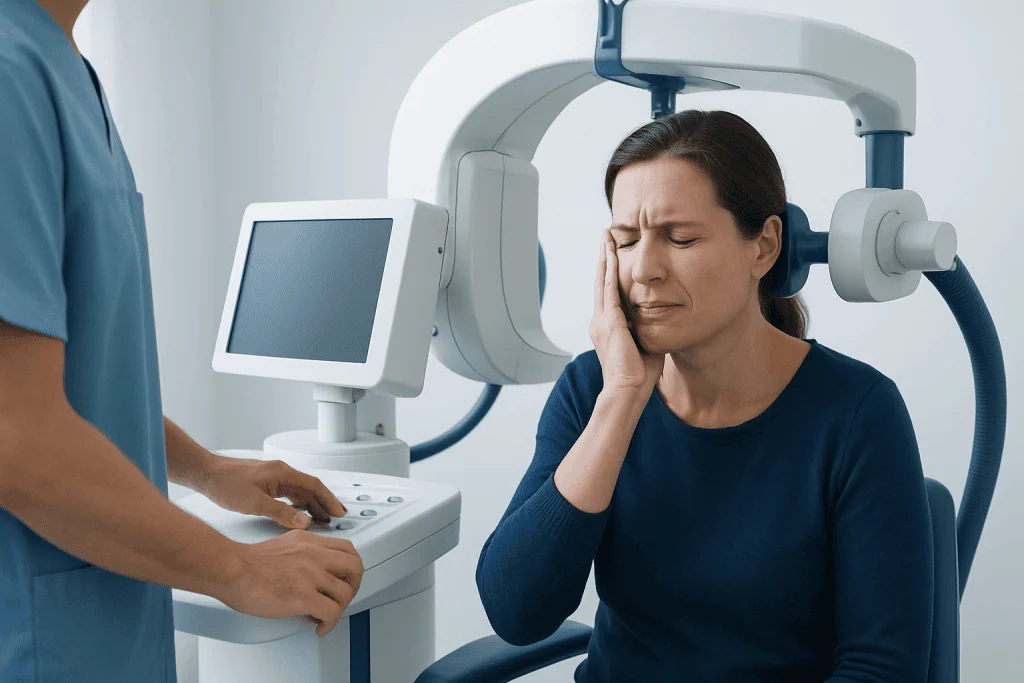
The hallmark symptom of trigeminal neuralgia is sudden, severe facial pain described as electric, stabbing, burning, or like a lightning bolt. The pain typically appears in short bursts and may stop as quickly as it begins. Between attacks, some people feel completely normal, while others have aching, burning, or heightened sensitivity in the same area.
Attacks are often triggered by light touch or ordinary daily actions. Common triggers include washing the face, shaving, applying makeup, brushing the teeth, chewing, talking, smiling, drinking cold or hot beverages, or exposure to wind. A very small area of the face, known as a trigger zone, may set off pain when touched.
Symptoms can vary from person to person, but common patterns include:
- Pain on one side of the face, rarely on both sides at the same time
- Brief, repeated attacks lasting seconds to a few minutes
- Pain in the upper jaw, lower jaw, cheek, teeth, gums, lips, nose, or around the eye
- Periods of remission followed by flare-ups
- Avoidance of eating, speaking, or face washing because of fear of triggering pain
Trigeminal neuralgia does not usually cause facial weakness, numbness, fever, or swelling. When these symptoms are present, a doctor will consider other conditions as well. Dental problems, sinus disease, temporomandibular joint disorders, migraine, cluster headache, shingles, and other nerve pain conditions can sometimes mimic facial neuralgia.
Causes and Risk Factors

The trigeminal nerve carries sensations such as touch, temperature, and pain from the face to the brain. In classic trigeminal neuralgia, a nearby artery or vein may press against the nerve near its entry into the brainstem. Over time, this pressure can irritate the protective covering of the nerve, called myelin, making the nerve more likely to send abnormal pain signals.
Secondary trigeminal neuralgia occurs when another medical condition affects the nerve. Multiple sclerosis can damage myelin in the brainstem and may cause trigeminal neuralgia, sometimes at a younger age than usual. Less commonly, tumors, vascular malformations, infections, inflammatory conditions, or facial injuries may irritate or compress the trigeminal nerve.
Risk factors and associated features can include:
- Increasing age, particularly middle age and older adulthood
- Female sex, as the condition is reported more often in women
- Multiple sclerosis or other disorders affecting myelin
- A history of facial trauma or procedures involving the trigeminal nerve area
- Structural compression of the nerve by a blood vessel or, rarely, a mass
Having facial pain does not mean a person has trigeminal neuralgia. The pattern of pain, neurological examination, dental assessment when needed, and imaging results all help the care team identify the most likely cause and select a safe treatment plan.
Diagnosis
Diagnosis begins with a detailed medical history. The doctor asks about the exact location of pain, how long attacks last, what the pain feels like, whether triggers are present, and whether there are symptoms such as numbness, weakness, hearing changes, rash, fever, or headache. The pattern of very brief, shock-like, triggerable pain in a trigeminal nerve distribution is strongly suggestive of trigeminal neuralgia.
A neurological examination checks facial sensation, reflexes, jaw movement, eye movements, coordination, and other signs that may point to an underlying neurological condition. Because facial pain can have dental or sinus causes, some patients may also need dental evaluation, jaw assessment, or ear, nose, and throat review depending on symptoms.
MRI of the brain and trigeminal nerve region is commonly recommended. MRI can help look for blood vessel contact, multiple sclerosis plaques, tumors, or other structural causes. Special MRI sequences may provide more detail about the relationship between the trigeminal nerve and nearby blood vessels, although imaging findings must always be interpreted together with the clinical picture.
There is no single blood test that confirms trigeminal neuralgia. If symptoms are unusual, bilateral, associated with numbness, or occur at a younger age, doctors may investigate for secondary causes. A precise diagnosis matters because treatment for trigeminal neuralgia differs from treatment for dental pain, sinus pain, migraine, or temporomandibular joint disorders.
Medication and Standard Treatment Options
Medication is usually the first treatment for trigeminal neuralgia. Drugs that reduce abnormal nerve firing, especially anticonvulsant medicines, are commonly used. Carbamazepine and oxcarbazepine are widely recognized first-line options, while other medicines such as gabapentin, pregabalin, baclofen, lamotrigine, or combinations may be considered depending on the patient, other illnesses, interactions, and side effects.
These medicines require medical supervision. Doctors may adjust the dose gradually, monitor for side effects such as dizziness, sleepiness, nausea, low sodium, allergic reactions, or blood count and liver changes, and consider blood tests when appropriate. Patients should not stop or change prescribed medicines suddenly without medical advice, because pain may return and some medicines require tapering.
If medication does not provide enough relief, causes unacceptable side effects, or becomes less effective over time, procedural treatments may be discussed. Microvascular decompression is a neurosurgical operation that moves or cushions a blood vessel pressing on the trigeminal nerve, aiming to treat the source of compression while preserving nerve function. It is usually considered for medically fit patients with imaging and symptoms suggesting vascular compression.
Other options include percutaneous procedures and stereotactic radiosurgery. Percutaneous techniques, such as radiofrequency thermocoagulation, balloon compression, or glycerol rhizotomy, target the trigeminal nerve through a needle-based approach and aim to reduce pain signals. Stereotactic radiosurgery delivers focused radiation to the trigeminal nerve root. These treatments can be useful for selected patients, particularly when open surgery is not preferred or carries higher risk, but they may cause facial numbness and pain can recur.
Neuromodulation Options for Refractory Facial Pain
Neuromodulation means using electrical or magnetic stimulation to change how the nervous system processes pain. In trigeminal neuralgia, neuromodulation is generally not the first-line treatment for classic, brief, electric attacks caused by vascular compression. It may be considered in carefully selected cases when standard medication, microvascular decompression, radiosurgery, or percutaneous procedures are unsuitable, ineffective, or have not provided durable relief.
Several neuromodulation approaches have been used for difficult facial pain conditions. Peripheral nerve stimulation places small electrodes near branches of the trigeminal nerve, such as the supraorbital or infraorbital nerves, to reduce pain signals in a defined facial area. Motor cortex stimulation involves placing electrodes over the brain surface area that represents the face and is usually reserved for severe neuropathic facial pain in specialized centers. Deep brain stimulation has also been explored for highly refractory pain, but it is uncommon and considered only after extensive evaluation.
Non-invasive stimulation techniques, such as transcranial magnetic stimulation or transcranial direct current stimulation, may be used in research or specialized pain programs for certain neuropathic pain syndromes. Their role in classic trigeminal neuralgia remains less established than medication and surgical procedures. Patients should be cautious about treatments presented as guaranteed solutions and should ask about expected benefits, risks, alternatives, follow-up, and the level of evidence for their specific pain type.
For neuromodulation, careful patient selection is essential. The care team usually reviews the diagnosis, prior treatments, imaging, pain distribution, psychological health, medication use, and expectations. In many implantable neuromodulation systems, a temporary trial may be considered before permanent implantation, although the approach depends on the technique and local practice.
Prevention, Self-care, and Living With Trigeminal Neuralgia
Trigeminal neuralgia cannot always be prevented, especially when it is related to anatomy or another neurological condition. However, self-care can reduce avoidable triggers and support overall wellbeing during treatment. Keeping a pain diary can help identify triggers, attack frequency, medicine timing, side effects, and patterns that should be discussed with the doctor.
Practical strategies may include using lukewarm water for face washing, protecting the face from cold wind, eating softer foods during flare-ups, chewing on the less painful side, and using a soft toothbrush. Good dental care remains important, but patients should tell their dentist about trigeminal neuralgia so examinations and cleaning can be planned gently. Skipping dental care because of fear of pain may allow treatable dental problems to develop.
Living with recurrent facial pain can be emotionally tiring. People may avoid social meals, conversations, or outdoor activities because they worry about attacks. Support from family, a pain specialist, neurologist, psychologist, or patient support group can help with coping strategies, sleep, anxiety, and daily planning. Relaxation methods do not cure trigeminal neuralgia, but they may reduce stress-related amplification of pain and improve resilience.
Patients should take medicines only as prescribed and report side effects promptly. Alcohol, sedating medicines, or certain other drugs may interact with neuralgia medicines, so a doctor or pharmacist should review all prescriptions, supplements, and over-the-counter products. Regular follow-up helps ensure that treatment remains effective and safe over time.
When to See a Doctor
Medical evaluation is recommended for any new, severe, recurrent, or unexplained facial pain, especially when it feels electric or is triggered by light touch. A person should also seek care if facial pain is accompanied by numbness, weakness, vision changes, balance problems, fever, rash, swelling, weight loss, or a new type of headache. These features do not necessarily mean something serious is present, but they deserve timely assessment.
People already diagnosed with trigeminal neuralgia should contact their doctor if attacks become more frequent, medicines stop working, side effects interfere with daily life, or pain changes in character. Follow-up is also important if pain becomes continuous, affects both sides of the face, or appears with new neurological symptoms. Treatment can often be adjusted, and additional imaging or specialist review may be appropriate.
Emergency care is needed for sudden facial drooping, arm or leg weakness, speech difficulty, confusion, severe sudden headache, or symptoms suggesting stroke. These signs are different from typical trigeminal neuralgia attacks and should not be managed at home.
International patients who need evaluation for complex facial pain may seek care from multidisciplinary specialists. Acibadem International provides diagnosis and treatment for neurological pain conditions, including trigeminal neuralgia, in JCI-accredited hospitals with coordinated neurology, neurosurgery, pain medicine, imaging, and rehabilitation services.
Frequently asked questions
What does trigeminal neuralgia pain feel like?
Trigeminal neuralgia often feels like a sudden electric shock, stabbing pain, or lightning-like jolt on one side of the face. It usually lasts seconds to a few minutes and may repeat many times. The pain is commonly triggered by light touch, chewing, talking, brushing teeth, or wind on the face.
Is trigeminal neuralgia the same as facial nerve pain?
The phrase facial nerve pain is often used casually, but trigeminal neuralgia specifically involves the trigeminal nerve, which carries facial sensation. The facial nerve is a different nerve that mainly controls facial movement. A doctor can distinguish trigeminal neuralgia from other causes of facial pain through history, examination, and imaging when needed.
Can dental problems be mistaken for trigeminal neuralgia?
Yes. Because trigeminal neuralgia can affect the teeth, gums, and jaw, it may feel like dental pain. However, dental pain often has different triggers and may be associated with tooth sensitivity, swelling, infection, or findings on dental examination. Persistent or unusual facial or tooth pain should be assessed carefully before invasive dental treatment is performed.
What is the first treatment for trigeminal neuralgia?
Medication that reduces abnormal nerve firing is usually the first treatment. Carbamazepine and oxcarbazepine are commonly used first-line medicines, while other options may be considered based on response and side effects. Treatment should be supervised by a qualified doctor because monitoring and dose adjustments may be needed.
When is surgery considered for trigeminal neuralgia?
Surgery or a procedure may be considered when medication does not control pain well, causes troublesome side effects, or is not suitable for the patient. Options include microvascular decompression, percutaneous procedures, and stereotactic radiosurgery. The best choice depends on age, general health, MRI findings, pain pattern, previous treatments, and patient preferences.
Can neuromodulation cure trigeminal neuralgia?
Neuromodulation is not generally considered a cure and is not the standard first treatment for classic trigeminal neuralgia. It may help selected patients with refractory facial pain, especially when other treatments have not worked or are unsuitable. A specialist pain or neurosurgery team should explain the evidence, risks, alternatives, and realistic goals before treatment.
Does trigeminal neuralgia go away on its own?
Some people have periods of remission when pain decreases or disappears for weeks, months, or longer. However, attacks can return, and untreated pain may become difficult to manage. Medical evaluation helps confirm the diagnosis, identify any underlying cause, and choose a treatment plan that reduces attacks safely.
References
- National Institute of Neurological Disorders and Stroke
- International Headache Society
- American Association of Neurological Surgeons
- European Academy of Neurology
- Mayo Clinic
This article is for general information only and is not a substitute for professional medical advice. Please consult a qualified doctor about your individual situation.
Neuromodulation in Turkey — costs, top hospitals & a free quote
JCI-accredited · board-certified surgeons · reply within 24h
Add us as a Preferred Source to see more of our trusted health content across Google Search, AI Overviews and Discover.