

Tulsa Prostate Treatment: How It Works, Results and What to Expect
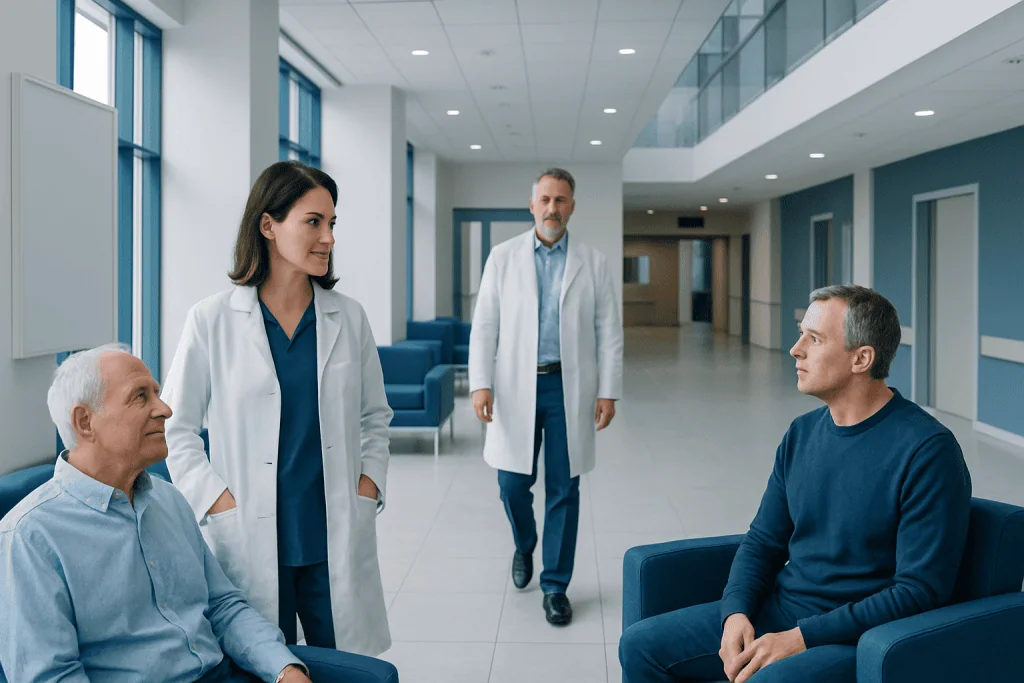
TULSA-PRO uses ultrasound energy delivered through the urethra and monitored with real-time MRI temperature imaging. It can treat part or all of the prostate while aiming to limit injury to nearby structures.
Key Takeaways
- TULSA-PRO uses ultrasound energy delivered through the urethra and monitored with real-time MRI temperature imaging.
- It can treat part or all of the prostate while aiming to limit injury to nearby structures.
- Suitability depends on cancer features, prostate anatomy, urinary symptoms, previous treatments and personal goals.
- A urinary catheter is usually needed temporarily after treatment, and recovery varies between individuals.
- Follow-up PSA tests, MRI scans and sometimes prostate biopsies are important after focal or whole-gland ablation.
Tulsa prostate treatment, also called TULSA-PRO, is a minimally invasive MRI-guided procedure that uses directional ultrasound heat to destroy targeted prostate tissue. It may be considered for selected people with localized prostate cancer or certain benign prostate enlargement problems, following detailed assessment by a urology team.
Overview: what is Tulsa prostate treatment?
Tulsa prostate treatment is a minimally invasive procedure formally known as TULSA-PRO, or transurethral ultrasound ablation. It uses controlled ultrasound energy to heat and destroy planned areas of prostate tissue. The treatment is performed with magnetic resonance imaging (MRI), which helps the clinical team plan the treatment area and monitor tissue temperature during the procedure.
The procedure may be used to ablate cancer within the prostate in carefully selected patients, particularly when the cancer is localized and there is no evidence that it has spread elsewhere. In some settings, it may also be considered for benign prostatic hyperplasia (BPH), a non-cancerous enlargement of the prostate that can obstruct urine flow. It is not appropriate for every prostate condition, and a specialist evaluation is essential.
Unlike external radiation therapy, ultrasound ablation does not use ionizing radiation. Unlike open or robotic prostate surgery, it does not involve removing the prostate through incisions. However, it remains a significant medical intervention and requires ongoing monitoring because prostate tissue, urinary function and cancer control must all be assessed over time.
How the TULSA-PRO procedure works
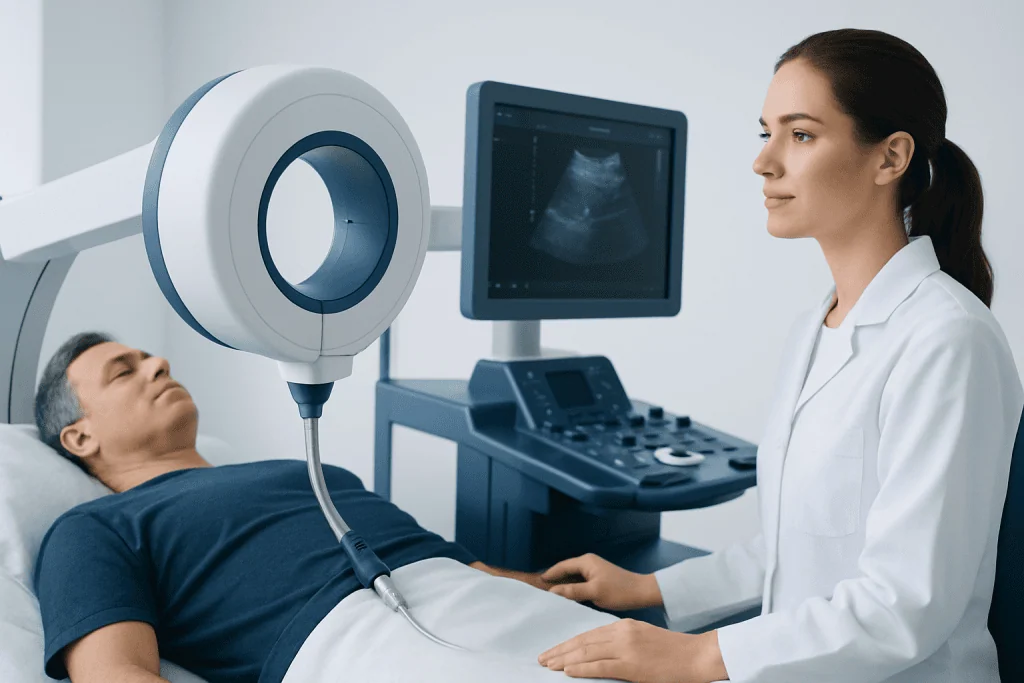
During TULSA-PRO, a slim ultrasound device is placed through the urethra, the natural passage that carries urine from the bladder out of the body. The device emits directional ultrasound energy toward selected areas of prostate tissue. A cooling device placed in the rectum helps protect the rectal wall, while cooling fluid within the treatment system helps protect the urethra.
Real-time MRI thermometry is a key part of the procedure. It shows the team where heat is being delivered and helps them adjust the treatment plan during ablation. The aim is to reach temperatures that destroy the intended tissue while reducing unnecessary heating of structures nearby, including the urinary sphincter, bladder neck, rectum and nerves involved in erectile function.
The treatment plan can be tailored. A clinician may target one area of known cancer, a larger portion of the gland, or the whole prostate, depending on the disease pattern and the treatment objective. This individualized planning is one reason MRI scans, biopsy findings, PSA results and prostate anatomy are reviewed carefully before treatment.
TULSA-PRO is one option within the broader field of prostate cancer care. A urologist and oncology team can explain how it compares with active surveillance, surgery, radiotherapy and other focal therapies for the individual situation.
Who may be a candidate for Tulsa prostate treatment?
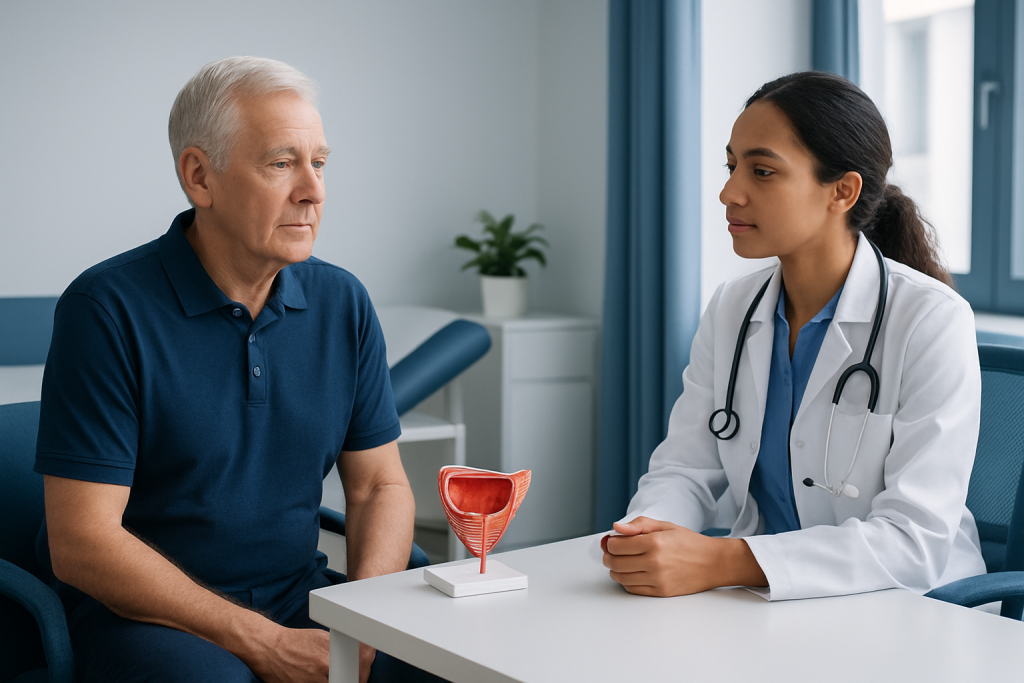
Potential candidates usually have cancer that appears confined to the prostate on imaging and clinical assessment. The best candidates vary by center and local clinical practice, but assessment commonly includes PSA testing, multiparametric MRI, prostate biopsy results, digital rectal examination and review of medical history. In some cases, advanced imaging may be used to clarify whether cancer has spread.
Clinicians consider the cancer grade and volume, the number and location of biopsy-positive areas, prostate size and shape, urinary symptoms, previous prostate procedures, and baseline erections and continence. People who have a very large prostate, certain calcifications, an implanted device incompatible with MRI, severe urinary obstruction, active infection or disease outside the prostate may not be suitable.
Focal therapy, which treats only the cancer-containing area and a margin around it, may be considered when clinically significant cancer is localized to a defined region. Whole-gland ablation may be discussed in other circumstances. Because prostate cancer can be multifocal, meaning it can occur in more than one location, careful mapping and follow-up are particularly important.
A treatment decision should reflect both cancer-control priorities and quality-of-life concerns. Discussing the full range of prostate cancer treatment options with an experienced multidisciplinary team helps patients make an informed choice.
What happens before, during and after the procedure?
Before treatment, the team reviews scans and pathology, confirms MRI suitability and checks for urinary infection or other issues that may need treatment first. Instructions may include temporary changes to certain medicines, especially blood-thinning medicines, but this should only be done under guidance from the prescribing clinician. Patients also receive directions about fasting, anesthesia and arranging support after discharge.
The procedure is generally performed under general anesthesia, so the patient is asleep and does not feel the treatment. Once the MRI-guided plan is finalized, the ultrasound device is positioned in the urethra and treatment begins. Procedure time can vary with prostate size and the planned ablation area, as well as MRI setup and anesthesia requirements.
Afterward, a urinary catheter is commonly left in place because swelling can temporarily make urination difficult. Many patients go home the same day or after a short period of observation, depending on recovery from anesthesia, urinary drainage and individual clinical needs. The care team provides instructions on catheter care, fluid intake, activity, pain relief and symptoms that require prompt contact.
Follow-up is not optional after ablation. It often includes PSA testing at planned intervals, review of urinary and sexual function, repeat MRI and, in selected cases, a follow-up biopsy. These checks help identify remaining or recurrent clinically significant cancer and guide whether additional treatment is needed.
Benefits, limitations and possible risks
A potential benefit of Tulsa prostate treatment is its precision. MRI-guided temperature monitoring and directional ultrasound may allow a planned area of tissue to be treated while aiming to preserve surrounding structures. For some patients, this can offer a shorter hospital stay and less invasive recovery than major surgery. It may also preserve urinary continence and erectile function better than whole-gland treatments for some individuals, although outcomes vary.
It is important to understand the limitations. TULSA-PRO is not proven to be the best treatment for every person with prostate cancer, and long-term comparative evidence is still developing. Focal treatment can leave untreated prostate tissue in place, so surveillance remains necessary. Further treatment, including repeat ablation, surgery or radiotherapy, may be needed if cancer persists, recurs or is found elsewhere in the prostate.
Possible side effects include burning or discomfort when urinating, blood in the urine, pelvic discomfort, urinary urgency, urinary tract infection, temporary difficulty passing urine and erectile changes. Less commonly, complications can include prolonged urinary retention, urethral narrowing, incontinence, injury to nearby tissue or a need for another procedure. The individual risk depends on the treatment extent, anatomy, baseline function and other health conditions.
Patients should ask their urologist which outcomes are most relevant to their own case, including the likelihood of needing additional cancer treatment. A balanced discussion should cover both potential functional advantages and the uncertainty that can accompany newer or focal treatment approaches.
What is the success rate of Tulsa prostate treatment?
There is no single success rate for Tulsa prostate treatment because success can mean different things: no clinically significant cancer found in the treated area, stable PSA results, preserved urinary control, maintained erections, or avoiding further treatment. Outcomes also differ between focal treatment and whole-gland ablation, and they depend on cancer grade, tumor location, prostate anatomy and the quality of pre-treatment assessment.
Published studies have shown that TULSA-PRO can reduce prostate tissue and control targeted cancer in many appropriately selected patients. However, some people have residual cancer on follow-up biopsy or develop cancer elsewhere in the remaining prostate tissue. This is why PSA changes alone cannot confirm success after focal therapy.
Before choosing treatment, patients should request center-specific information about follow-up duration, how success is defined, biopsy results after treatment, rates of additional treatment and functional outcomes. Longer-term evidence is more established for standard options such as surgery and radiotherapy, while evidence for MRI-guided ablation continues to evolve.
What are the disadvantages of the TULSA-PRO procedure?
The main disadvantage is that not all prostate cancer is visible or confined to one clearly treatable area. Prostate cancer may occur in several parts of the gland, and small areas can be missed by imaging or biopsy. Treating only part of the prostate can therefore require careful ongoing surveillance and may not provide the reassurance some people seek from whole-gland treatment.
Another limitation is uncertainty around long-term cancer control compared with established treatments. TULSA-PRO may be a reasonable choice for selected patients, but the available evidence base is smaller and follow-up is generally shorter than for surgery or radiotherapy. Insurance coverage, access to MRI-guided treatment systems and local expertise may also vary.
There can still be urinary, sexual and infection-related side effects, as well as a temporary need for a catheter. In addition, needing a later biopsy, repeat ablation or definitive treatment can be physically and emotionally demanding. A patient should not assume that a minimally invasive procedure is risk-free or that it removes the need for future prostate monitoring.
How long does it take to recover from the Tulsa procedure?
Initial recovery commonly takes days to a few weeks, but complete urinary recovery can take longer. A catheter is often needed for several days and sometimes longer, depending on the degree of swelling and the planned treatment area. When the catheter is removed, temporary burning, urgency, frequent urination, weaker stream or minor blood in the urine can occur.
Light walking is usually encouraged soon after discharge if the clinical team agrees, while strenuous activity, cycling, heavy lifting and sexual activity may need to be avoided for a period recommended by the treating urologist. Many people can resume desk-based work relatively soon, but timing should be individualized according to symptoms, catheter needs and the physical demands of work.
Urinary control and sexual function may improve gradually over weeks to months. Baseline function, age, medical conditions and the amount and location of treated tissue all influence recovery. Follow-up appointments are important even when recovery seems smooth, because they assess both healing and the effect of treatment on the prostate condition.
What is the 2 week rule for prostate cancer?
The phrase “2 week rule” is commonly used in some healthcare systems to describe an urgent referral pathway rather than a universal prostate cancer treatment deadline. It generally means that a person with symptoms, examination findings or test results that may suggest cancer should be assessed promptly, often within about two weeks where that pathway is used.
It does not mean that every person diagnosed with prostate cancer must start treatment within two weeks. Many prostate cancers grow slowly, and safe care often involves time for MRI, biopsy review, staging, second opinions and a discussion of options. The appropriate timing depends on the cancer’s grade, stage, symptoms and overall health.
For aggressive or advanced disease, clinicians may recommend quicker assessment and treatment planning. For low-risk localized cancer, active surveillance may be an appropriate approach. The treating team can explain whether urgency applies in an individual case and why.
When to seek medical care
A person should arrange medical assessment for persistent urinary symptoms such as difficulty starting urination, a weak stream, frequent urination, waking often at night to urinate, pain during urination or blood in the urine. These symptoms are common and often caused by non-cancerous conditions, including benign prostate enlargement or infection, but they deserve proper evaluation.
Urgent medical care is needed for inability to pass urine, fever or chills with urinary symptoms, severe pelvic pain, large amounts of blood or blood clots in the urine, or worsening symptoms after a prostate procedure. These can indicate urinary retention, infection or bleeding and should not be managed alone at home.
After TULSA-PRO, patients should follow the specific advice provided by their treatment team. Acibadem International’s multidisciplinary specialists and JCI-accredited hospitals support diagnosis and treatment planning for international patients with prostate conditions.
Frequently asked questions
Is Tulsa prostate treatment the same as surgery?
No. TULSA-PRO is an MRI-guided ultrasound ablation procedure performed through the urethra, while prostatectomy is an operation to remove all or part of the prostate. Both can be used in prostate care, but they have different goals, evidence bases, side effects and follow-up needs.
Is TULSA-PRO used only for prostate cancer?
No. Depending on local approval and clinical practice, it may also be used to treat selected cases of benign prostatic hyperplasia, or non-cancerous prostate enlargement. The assessment and treatment planning differ depending on whether the aim is cancer control or relief of urinary obstruction.
Will PSA become zero after Tulsa prostate treatment?
Not necessarily. PSA may fall after treatment, but it may not become undetectable because prostate tissue can remain, particularly after focal treatment. Clinicians interpret PSA trends alongside MRI findings, examinations and sometimes biopsy results.
Can prostate cancer return after TULSA-PRO?
Yes. Cancer can remain in the treated area, recur there, or be found elsewhere in untreated prostate tissue. Regular follow-up is therefore essential, and additional treatment may be recommended if clinically significant cancer is detected.
Does TULSA-PRO cause erectile dysfunction?
It can affect erectile function, although the risk may be lower for some patients than with treatments that remove or treat the entire prostate. The likelihood depends on baseline erections, age, other health conditions and how close the treatment area is to nerves involved in erections.
Can a person have surgery or radiation after TULSA-PRO?
In some cases, further treatment such as surgery, radiation therapy or repeat ablation may be possible after TULSA-PRO. The options depend on the treatment area, healing, cancer location and the treating team’s assessment. This possibility should be discussed before the first treatment is chosen.
References
- European Association of Urology
- National Cancer Institute
- American Urological Association
- National Comprehensive Cancer Network
- U.S. Food and Drug Administration
This article is for general information only and is not a substitute for professional medical advice. Please consult a qualified doctor about your individual situation.
Oncology care in Turkey — second opinion and treatment plan
JCI-accredited · board-certified surgeons · reply within 24h
Add us as a Preferred Source to see more of our trusted health content across Google Search, AI Overviews and Discover.

More from the Health Library
Related Specialists

Dt. Gözde Anıl Gürbüz
Oral & Dental Health
Dr. Aynur Göksel
Physical Medicine & Rehabilitation
Prof. Dr. Ahmet Oytun Baykan
Cardiology
Fzt. Merve Cingöz
Physical Medicine & Rehabilitation