Uds Medical Abbreviation: What Patients Need to Know

UDS most commonly stands for urine drug screen or urine drug test. In urology, UDS usually means urodynamic studies, which evaluate bladder storage and emptying.
Key Takeaways
- UDS most commonly stands for urine drug screen or urine drug test.
- In urology, UDS usually means urodynamic studies, which evaluate bladder storage and emptying.
- A screening result does not always confirm substance use; some medicines, foods, and laboratory factors can affect results.
- Confirmatory laboratory testing may be needed after an unexpected urine drug screen result.
- Patients should tell their healthcare team about prescribed medicines, over-the-counter products, and supplements before testing.
The UDS medical abbreviation most often means a urine drug screen, a test used to look for certain medications or drugs in urine. However, UDS can also refer to urodynamic studies, which assess bladder function, so the meaning depends on where it appears in a medical record.
What does UDS mean in medical terms?
The UDS medical abbreviation most commonly means urine drug screen (also called a urine drug test). This laboratory test checks a urine sample for selected drugs, medications, or their breakdown products. Clinicians may request it to support safe prescribing, assess a possible overdose or poisoning, monitor treatment plans, or help evaluate symptoms in urgent care settings.
UDS can have another important meaning in urology: urodynamic studies. These are tests that measure how the bladder, urethra, and pelvic floor store and release urine. The surrounding words in the medical note usually clarify the intended meaning. For example, “UDS positive for…” generally refers to a urine drug screen, while “referred for UDS due to urinary leakage” usually refers to urodynamic studies.
Less commonly, abbreviations may vary between hospitals, countries, and specialties. Patients who see “UDS” on a portal result, referral, or discharge summary should feel comfortable asking the ordering clinician what it means in their particular care plan.
Urine drug screen: why it may be ordered
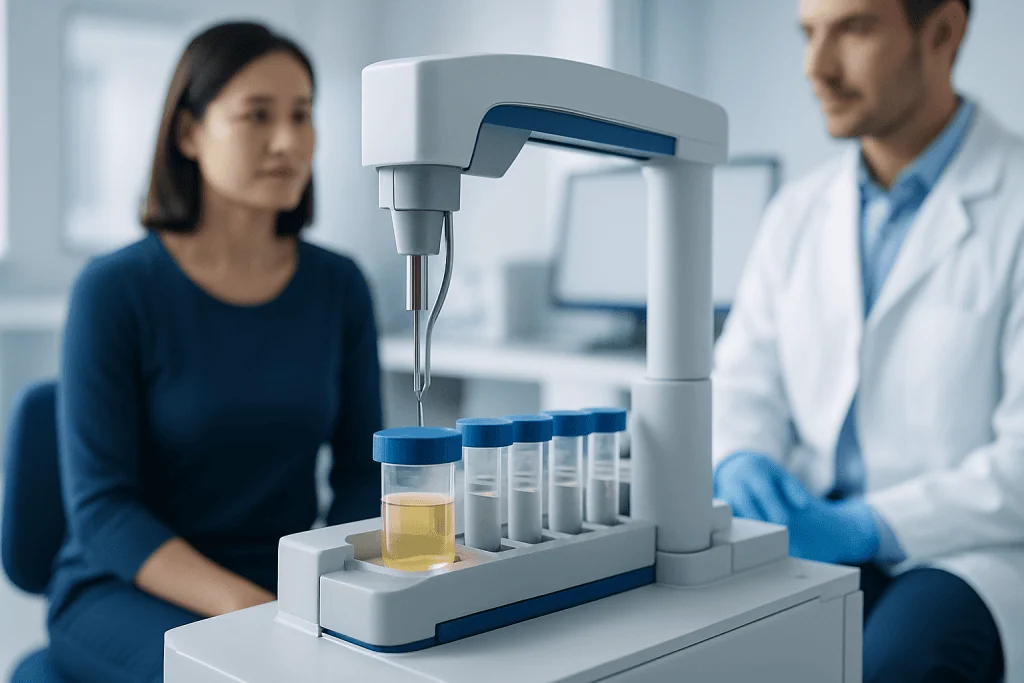
A urine drug screen is a practical way to detect whether certain substances have been used recently enough for them, or their metabolites, to be present in urine. It may be used in emergency medicine when a person has unexplained drowsiness, confusion, breathing problems, seizures, chest symptoms, or suspected poisoning. It can provide one piece of information alongside symptoms, examination findings, and other laboratory tests.
In ongoing care, clinicians may use urine testing when prescribing medications that require careful monitoring, including some controlled medicines. The goal is generally to improve safety: to confirm that medication is being taken as agreed, identify possible interactions or unreported substances, and guide a supportive conversation if concerns arise.
A UDS may also be part of assessment or follow-up for substance use disorders. It is not, by itself, a diagnosis of addiction, impairment, or a person’s overall health status. A healthcare professional interprets the result in context, including the person’s prescriptions, medical history, timing of medication use, and reason for testing.
- Emergency assessment of possible intoxication, overdose, or poisoning
- Monitoring during treatment with selected controlled medications
- Support for substance use treatment and recovery plans
- Evaluation of unexplained clinical symptoms when drug exposure may be relevant
How a urine drug screen is performed and interpreted

For most urine drug screens, a person provides a urine sample in a clean container. The sample may be tested at the point of care or sent to a laboratory. Some settings have specific collection procedures to reduce the risk of sample mix-ups or contamination. Patients should follow the instructions provided and ask if they are unsure how to prepare.
Initial screening tests often use immunoassay technology. These tests are fast and useful for detecting broad categories of substances, but they can sometimes produce false-positive or false-negative results. A positive screen means the test detected a substance or related compound above its reporting threshold; it does not automatically establish the exact drug, dose, timing, or reason for exposure.
If a result is unexpected or could affect an important medical, legal, workplace, or treatment decision, clinicians may request confirmatory testing. More specific methods, such as mass spectrometry-based testing, can identify particular substances more accurately. Patients should not stop a prescribed medicine or assume an unexpected result is final before discussing it with the clinician who ordered the test.
Detection times vary widely. They can be affected by the substance involved, amount and frequency of use, metabolism, kidney function, hydration, the test method, and the time between use and collection. Urine test results therefore cannot reliably determine whether someone is currently impaired.
Medicines and other factors that can affect results
Before a urine drug screen, patients should provide an up-to-date list of prescription medicines, non-prescription products, vitamins, herbal remedies, and supplements. This information helps the healthcare team interpret results appropriately. It is especially important to mention medicines taken for pain, anxiety, sleep, attention-related conditions, coughs and colds, or allergies.
Some screening assays may react with substances that are chemically similar to the drug category being tested. Certain medications and, less often, foods or supplements can contribute to an unexpected screening result. Laboratory procedures and sample handling can also influence results. This is why a screening result should be reviewed carefully rather than treated as a conclusion without context.
Patients should not attempt to alter a sample by drinking excessive fluids, using products marketed as “detox” solutions, or changing medicines without medical advice. Such actions can make results difficult to interpret and may be unsafe. An open discussion with the care team is the safest approach if a person is worried about a result or believes it may not match their medication history.
When UDS means urodynamic studies
In a urology or pelvic health setting, UDS generally means urodynamic studies. This group of tests evaluates how the bladder fills, stores urine, senses fullness, and empties. It may be recommended when urinary symptoms are persistent, complex, or not fully explained by a physical examination and routine urine testing.
Urodynamic testing can be useful for people with urinary leakage, frequent urination, urgency, difficulty starting urine flow, weak stream, incomplete emptying, recurrent urinary retention, or certain neurologic conditions. It may also help clinicians plan treatment before selected bladder or pelvic-floor procedures. The test is not needed for every urinary symptom; the decision depends on the individual situation.
Testing may include measuring the urine flow rate, checking how much urine remains after voiding, and recording pressure in the bladder during filling and emptying. Thin tubes called catheters may be used. The procedure can feel unfamiliar or briefly uncomfortable, but the clinical team explains each step and aims to protect privacy. Related urinary concerns may be assessed through urinary incontinence evaluation when appropriate.
Results are interpreted by a clinician with the person’s symptoms, bladder diary, examination, and other tests in mind. They may help distinguish problems related to bladder muscle activity, outlet obstruction, pelvic-floor coordination, or nerve signaling. A result guides next steps; it does not always point to one single cause.
Preparing for a UDS appointment
Preparation depends on which UDS has been ordered. For a urine drug screen, patients should bring or provide a complete medication and supplement list. They should ask the clinic whether they need to avoid any nonessential products before testing, but they should not stop prescribed treatment unless their clinician specifically advises it.
For urodynamic studies, the clinic may ask the patient to arrive with a comfortably full bladder, complete a bladder diary beforehand, or pause particular bladder medicines for a defined period. Instructions differ based on the tests planned and the person’s health conditions. Patients should tell the team if they have symptoms of a urinary tract infection, are pregnant, use a catheter, or have had recent urinary procedures.
It can be helpful to write down questions in advance, such as what the test is intended to clarify, when results will be available, and whether the result may change treatment. For bladder symptoms, conservative measures such as fluid-timing changes, bladder training, pelvic-floor therapy, or medication may be considered depending on the diagnosis. In some cases, clinicians may discuss pelvic floor rehabilitation as part of a personalized plan.
When to seek medical care
People should contact a healthcare professional if they have persistent urinary urgency, leakage, pain with urination, difficulty emptying the bladder, blood in the urine, or new changes in urinary control. These symptoms can have many causes, and prompt assessment can help identify whether urine testing, imaging, urodynamic studies, or another evaluation is appropriate.
Urgent medical care is important for an inability to pass urine with painful lower-abdominal swelling, severe confusion or extreme sleepiness after possible substance exposure, slow or difficult breathing, seizures, chest pain, or a suspected overdose. Emergency services should be contacted immediately if a person is unresponsive or has trouble breathing.
Anyone who receives an unexpected urine drug screen result should arrange a conversation with the ordering clinician. They can review prescribed medicines and discuss whether confirmatory testing is needed. Acibadem International’s multidisciplinary specialists and JCI-accredited hospitals can assess urinary concerns and medication-related testing needs for international patients.
Frequently asked questions
Is UDS the same as a urine drug test?
Often, yes. In many medical records, UDS means urine drug screen or urine drug test. However, in urology, UDS commonly means urodynamic studies, so the clinical context is important.
Can a urine drug screen be wrong?
An initial screening test can occasionally be falsely positive or falsely negative. Medications, supplements, test limitations, and timing may contribute. An unexpected result may be checked with a more specific confirmatory laboratory test.
Does a positive UDS mean a person is impaired?
No. A positive urine drug screen indicates that a tested substance or metabolite may be present in urine. It does not reliably show current impairment, the amount taken, or the exact time it was used.
How long do substances remain detectable in urine?
There is no single answer because detection windows differ by substance and test method. Frequency of use, dose, metabolism, hydration, kidney function, and time since use can all affect results. The ordering clinician can explain what a specific result may mean.
What happens during urodynamic studies?
Urodynamic studies assess bladder filling and emptying, often using urine flow measurements, bladder scans, and pressure testing. A small catheter may be placed in the bladder for part of the evaluation. The care team explains the procedure and provides individual preparation instructions.
Should prescribed medicines be stopped before a UDS?
Patients should not stop prescribed medicines on their own. They should tell the clinician about all medicines and supplements they use and follow any test-specific instructions. For urodynamic studies, a clinician may occasionally recommend temporarily pausing a bladder medicine, but only when it is safe and appropriate.
References
- MedlinePlus
- National Institute on Drug Abuse
- American Urological Association
- Mayo Clinic Laboratories
- Substance Abuse and Mental Health Services Administration
This article is for general information only and is not a substitute for professional medical advice. Please consult a qualified doctor about your individual situation.
Explore treatments in Turkey — costs, top hospitals & a free quote
JCI-accredited · board-certified surgeons · reply within 24h
Add us as a Preferred Source to see more of our trusted health content across Google Search, AI Overviews and Discover.

More from the Health Library


Related Specialists

Dr. Emre Sahillioğlu
Anesthesiology
Asst. Prof. Dr. Neval Yurttutan Uyar
Clinical Laboratory
Assoc. Prof. Dr. Önder Doksöz
Pediatric Cardiology
Prof. Dr. Ilgaz Doğusoy
Thoracic Surgery