Ulcerated Sores on Skin — Explained by Medical Evidence, Not Myths

Ulcerated sores on skin are open wounds that often need medical assessment if they do not heal promptly. Common causes include pressure, poor circulation, diabetes, infection, inflammation, trauma, and some skin cancers.
Key Takeaways
- Ulcerated sores on skin are open wounds that often need medical assessment if they do not heal promptly.
- Common causes include pressure, poor circulation, diabetes, infection, inflammation, trauma, and some skin cancers.
- Warning signs such as increasing pain, redness, swelling, drainage, bad odor, fever, or black tissue need timely care.
- Treatment depends on the cause and may include wound care, pressure relief, infection treatment, and improving blood flow.
- Good skin care, blood sugar control, movement, and early attention to small wounds can help prevent complications.
Ulcerated sores on skin are open areas where the surface of the skin has broken down and the deeper tissue is exposed or slow to heal. They are not a single disease but a sign that factors such as pressure, poor blood flow, infection, inflammation, diabetes, or injury may be interfering with normal healing.
What ulcerated sores on skin usually mean
Ulcerated sores on skin are areas where the skin has broken open and does not heal as expected. In simple terms, an ulcer is more than a minor scrape. It often extends beyond the top layer of skin and may stay inflamed, drain fluid, form a crust, or expose deeper tissue.
This finding can happen for different reasons. Some ulcers develop because the skin has been under pressure for too long, while others happen when blood flow is poor, blood sugar is uncontrolled, infection damages tissue, or an inflammatory skin condition causes the skin to break down. A sore can also ulcerate after trauma, scratching, burns, or a wound that has not been protected.
The most helpful way to think about ulcerated sores on skin is as a symptom rather than a final diagnosis. The appearance of the sore, where it is located, how painful it is, how quickly it developed, and whether there are signs of infection can all give clues about the underlying cause. Because treatment depends on the cause, self-diagnosing from appearance alone is often unreliable.
How they can look and feel
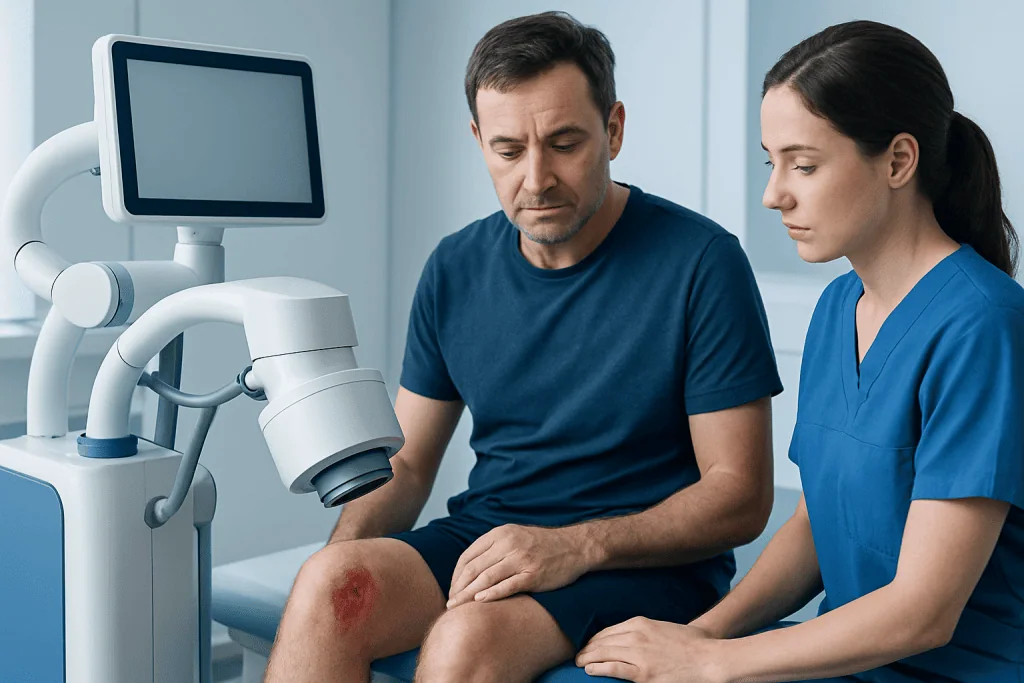
Ulcerated sores on skin can vary widely in appearance. Some are shallow and moist with a red base, while others are deeper and have yellow material, dead tissue, or a dark crust. The surrounding skin may look swollen, fragile, shiny, discolored, or thickened. In some people, the edges of the sore are sharply defined; in others they are irregular or undermined.
Symptoms can include pain, burning, tenderness, itching before the skin breaks, drainage, bleeding, and an unpleasant odor. However, not all ulcers are painful. For example, people with diabetes or nerve damage may have less sensation, so a sore on the foot may become advanced before it is noticed.
The location can also help guide evaluation:
- Pressure-related ulcers often occur over the heels, hips, tailbone, or elbows.
- Venous ulcers are common around the lower legs and ankles, especially near the inner ankle.
- Arterial ulcers may appear on the feet, toes, or lower legs and can be very painful.
- Diabetic ulcers often develop on pressure points of the feet.
- Inflammatory or autoimmune ulcers may appear in unusual sites and can progress quickly.
A sore that lasts for weeks, keeps returning, or enlarges instead of healing deserves medical attention. Persistent non-healing sores may occasionally signal a more serious underlying condition, including circulation problems or skin cancer.
Common causes and risk factors
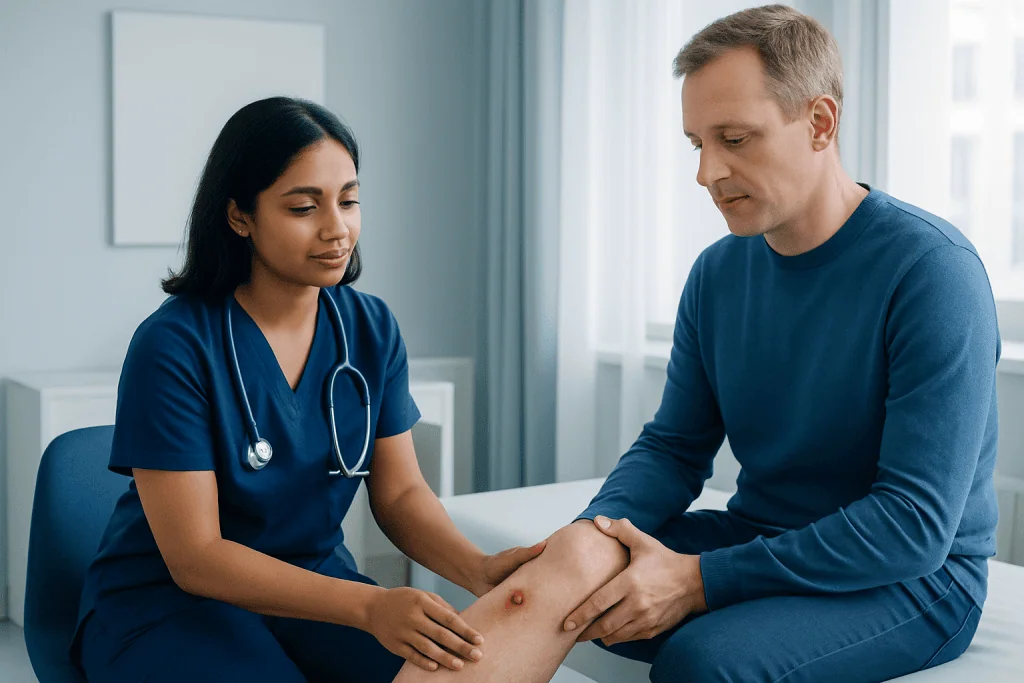
Many ulcerated sores on skin are linked to reduced blood supply or repeated pressure. When tissue does not receive enough oxygen and nutrients, the skin becomes vulnerable and healing slows. This can happen in people who spend long periods in bed or in a chair, in those with vein disease that causes swelling in the legs, or in people with artery disease that limits blood flow to the feet and legs.
Diabetes is another important risk factor. High blood sugar can damage both blood vessels and nerves, which increases the chance of unnoticed injury and delayed healing. This is why a small blister or cut may progress into a deeper wound in some people with diabetes. In such cases, the concern may overlap with diabetic foot problems.
Infection can either cause an ulcer to form or complicate a wound that began for another reason. Bacteria, fungi, and sometimes viruses can contribute, especially when the skin barrier is already weakened. Inflammatory skin disorders, immune-related diseases, vasculitis, and rare conditions such as pyoderma gangrenosum can also lead to ulceration. Less commonly, a skin lesion that crusts, bleeds, and does not heal may turn out to be skin cancer.
Other risk factors include older age, smoking, obesity, poor nutrition, limited mobility, leg swelling, previous ulcers, kidney disease, poor footwear, and repeated friction. Medicines that suppress the immune system or conditions that reduce sensation can also increase risk.
How doctors evaluate ulcerated sores on skin
Diagnosis starts with a careful history and skin examination. A doctor will usually ask when the sore started, whether it began after an injury, whether there is pain or drainage, and whether the person has diabetes, circulation problems, nerve symptoms, fever, or a history of skin disease. The size, depth, edge, color, and location of the sore are all clinically important.
Because appearance alone can be misleading, doctors often look beyond the skin. They may assess pulses in the feet, check for swelling, test sensation, and review medications and general health. If poor circulation is suspected, vascular testing may be needed. If infection is likely, a wound sample may be taken when appropriate, especially if the sore is draining or worsening.
Additional tests can include blood work, imaging for deeper tissue involvement, and sometimes a biopsy. A biopsy may be recommended if the ulcer has unusual features, fails to heal despite appropriate care, or raises concern for cancer or an inflammatory disorder. When the cause is uncertain, referral to dermatology, wound care, endocrinology, infectious diseases, or vascular specialists may be helpful.
In some settings, clinicians use imaging and vascular assessments to understand whether blood flow is limiting healing and whether deeper structures are affected. This may guide advanced wound care or procedures such as vascular surgery when circulation is a central issue.
Treatment depends on the cause
There is no single treatment that fits all ulcerated sores on skin. Good care begins with cleaning the wound appropriately, protecting it from further trauma, and addressing the reason it developed. Dressings are chosen based on the amount of drainage, the condition of the wound bed, and the need to keep the tissue moist but not overly wet. A clinician may also remove dead tissue when necessary, a process called debridement.
If pressure is the main problem, treatment focuses on relieving pressure with repositioning, support surfaces, and protective devices. If the sore is on the lower leg and related to vein disease, compression may help, but only after a clinician has determined that arterial circulation is adequate. Foot ulcers need off-loading, careful footwear review, and close monitoring to prevent deeper infection.
When infection is present, treatment may include antimicrobial dressings or antibiotics, depending on the severity and whether deeper tissues are involved. If a person has diabetes, improving blood sugar management is a key part of healing. If poor circulation is limiting recovery, a vascular evaluation may lead to interventions such as angiography or peripheral artery disease treatment in selected patients.
Inflammatory or autoimmune causes are treated differently and may worsen with inappropriate care, so specialist input is important. When a sore is suspicious for cancer or does not heal as expected, biopsy-guided treatment is needed. In complex cases, multidisciplinary wound care can support healing and help reduce recurrence.
Self-care and prevention
Prevention often starts with daily skin awareness. People at higher risk, especially those with diabetes, reduced mobility, or poor circulation, benefit from checking the skin every day for redness, blisters, cracks, swelling, or drainage. Early attention to small changes can prevent a minor issue from becoming a chronic ulcer.
Protecting the skin barrier is also important. Gentle cleansing, regular moisturizing of dry skin, well-fitting footwear, and avoiding harsh friction can reduce injury. People who spend long periods in bed or seated may need scheduled repositioning and pressure-relieving cushions or mattresses. Those with leg swelling may benefit from medical advice on elevation, movement, and compression when appropriate.
General health measures matter because wound healing depends on the whole body. Stopping smoking, managing diabetes, eating enough protein and a balanced diet, staying active within safe limits, and treating vein or artery disease can all support healthier skin. It is generally best not to use strong antiseptics, home remedies, or tight bandages on a chronic sore without medical guidance, as these may irritate tissue or delay healing.
If a wound has already formed, self-care should focus on cleanliness, protection, and timely review rather than repeated experimentation with products. A clinician can advise on dressings, bathing, activity, and whether a wound care service is needed.
When to seek medical care
Medical assessment is advisable if an ulcerated sore on skin is deep, keeps getting larger, has not improved within a short time, or keeps coming back. Care is especially important for sores on the feet in people with diabetes, because these can worsen without causing much pain.
Prompt medical care is needed if there are signs of infection or tissue damage. These include increasing redness, warmth, swelling, pus, a bad smell, fever, red streaks, severe pain, black tissue, or numbness around the wound. A sore that bleeds easily, forms a raised edge, or does not heal after weeks should also be examined to rule out skin cancer or another underlying disease.
People with poor circulation, immune suppression, kidney disease, or limited mobility should seek help early rather than waiting. Near the end of the care pathway, some patients may benefit from specialist assessment in centers with dermatology, endocrinology, vascular, and wound-care expertise. Acibadem International’s multidisciplinary specialists and JCI-accredited hospitals diagnose and treat complex skin and circulation-related wounds for international patients.
Frequently asked questions
Are ulcerated sores on skin always infected?
No. An ulcer can develop from pressure, poor circulation, diabetes, inflammation, trauma, or cancer, with or without infection. Infection can occur later, which is why changes such as increasing redness, drainage, odor, or fever should be checked.
How long should a skin sore take to heal?
Healing time depends on the cause, depth, blood supply, and overall health of the person. A simple superficial wound may improve within days, but a persistent or deep ulcer may take weeks or longer and should be medically assessed if it is not clearly healing.
Can diabetes cause ulcerated sores on skin?
Yes. Diabetes can reduce sensation and slow healing by affecting nerves and blood vessels. Even a small blister or cut, especially on the foot, can become an ulcer if it is not noticed and treated early.
Should an ulcerated skin sore be kept dry or moist?
Many wounds heal best in a protected, appropriately moist environment rather than being left open to dry out. The right dressing depends on the type of sore and the amount of drainage, so a clinician should guide care for a persistent or deep wound.
Can a non-healing sore be cancer?
Sometimes, yes. A sore that does not heal, repeatedly crusts or bleeds, or has an unusual edge may need a biopsy to rule out skin cancer. This does not mean every persistent sore is cancer, but it does mean proper evaluation is important.
When is a skin ulcer an emergency?
Urgent care is needed if there is rapidly spreading redness, severe pain, fever, black tissue, red streaks, sudden numbness, or a cold pale foot. These signs may suggest serious infection or poor blood supply and should not be ignored.
References
- American Academy of Dermatology
- National Institute of Diabetes and Digestive and Kidney Diseases
- National Health Service
- World Health Organization
- Wound Healing Society
This article is for general information only and is not a substitute for professional medical advice. Please consult a qualified doctor about your individual situation.
Persistent digestive symptoms? Get evaluated in Turkey
JCI-accredited · board-certified surgeons · reply within 24h
Add us as a Preferred Source to see more of our trusted health content across Google Search, AI Overviews and Discover.

More from the Health Library

Muscle Flutter in Stomach: A Complete Medical Overview

Drinking Cherry Juice for Sleep, Gout, and Exercise Recovery

Harlequin Fetus — Explained by Medical Evidence, Not Myths

Balance Exercises for Seniors: A Complete Medical Overview

Orange Excrement: An Evidence-Based Guide for Patients