Understanding Boil Disease Images: A Complete Patient Guide

Boils are usually bacterial skin infections that begin in a hair follicle or oil gland. Images may help identify typical features, but they cannot replace a medical examination.
Key Takeaways
- Boils are usually bacterial skin infections that begin in a hair follicle or oil gland.
- Images may help identify typical features, but they cannot replace a medical examination.
- Warm compresses and good skin hygiene often help small boils, but squeezing them can worsen infection.
- Medical care is important for large, recurring, very painful, or facial boils, or if fever develops.
- Repeated boils may be linked to friction, sweating, diabetes, smoking, or a condition such as hidradenitis suppurativa.
Boil disease images can help people recognize common features such as a painful red bump, swelling, and a white or yellow center, but images alone cannot confirm the cause. A proper diagnosis matters because boils can resemble other skin conditions, including cysts, acne nodules, and deeper infections.
What boil disease images usually show
Boil disease images typically show a raised, red, tender lump under the skin that gradually becomes more swollen and develops a pus-filled center. In many cases, the surrounding skin looks inflamed, and the boil may appear shiny or tight as pressure builds beneath the surface. This appearance is common in a boil, also called a furuncle, which is usually caused by a bacterial infection.
Images can be useful for recognizing patterns, but they have limits. A photograph cannot show pain level, warmth, depth of infection, or whether there are several connected pockets of pus. It also cannot distinguish with certainty between a simple boil and another condition that may look similar, such as an inflamed cyst, an acne nodule, or hidradenitis suppurativa.
For that reason, boil disease images are best used as a visual guide rather than a self-diagnosis tool. If a skin lump is rapidly worsening, keeps returning, or appears in sensitive areas such as the face, groin, buttocks, or armpits, a doctor should assess it directly.
How a boil develops and changes over time
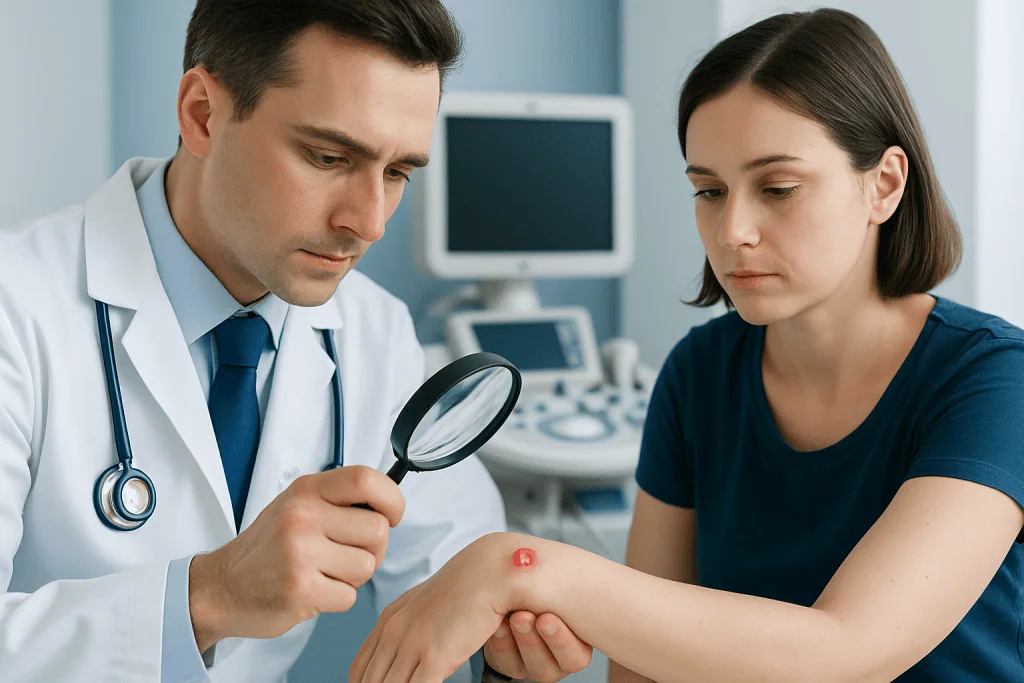
A boil often starts as a small, firm, red bump that may feel itchy, sore, or unusually sensitive. Over the next several days, the area commonly enlarges and becomes more painful as pus collects beneath the skin. This is why boil disease images from early and later stages can look quite different.
As the boil matures, a yellow or white point may appear at the center. This central area may eventually open and drain on its own. Once drainage happens, the pain and pressure often begin to ease, though the skin may remain inflamed and tender for a short time while healing continues.
Some people develop clusters of boils or repeated boils in the same area. A deeper, larger collection of infection is sometimes called a skin abscess. When several nearby hair follicles become infected together, the affected area can look broader, more swollen, and more severe than a single isolated boil.
- Early stage: small, red, painful bump
- Middle stage: increasing size, swelling, warmth, and tenderness
- Late stage: visible pus point or spontaneous drainage
- Healing stage: reduced pressure, crusting, and gradual fading of redness
Symptoms and look-alike conditions
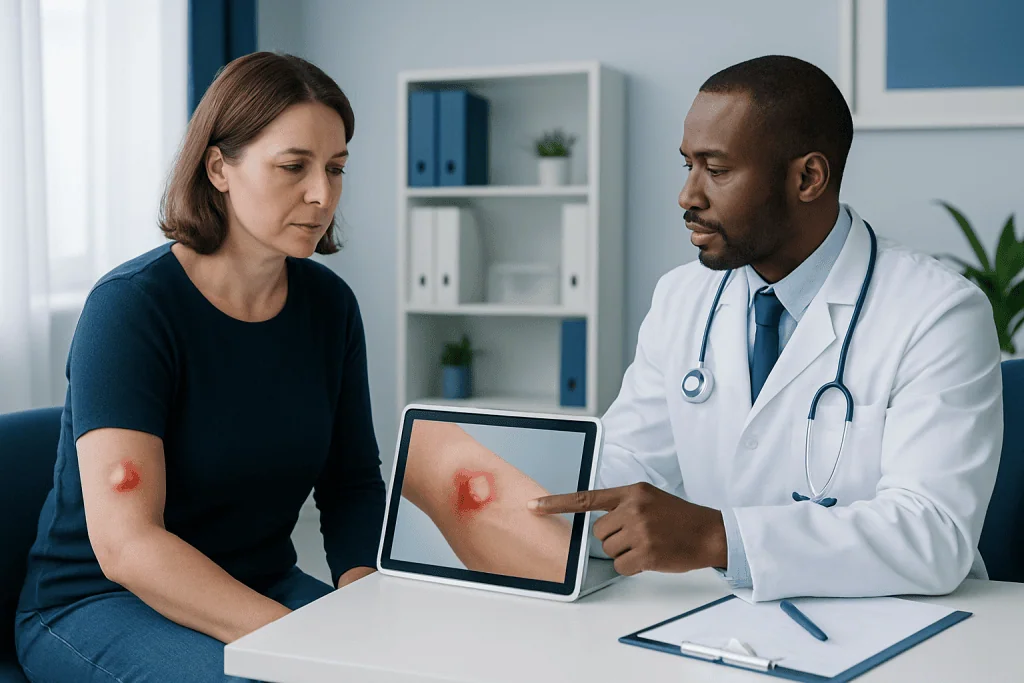
The most common symptoms of a boil are localized pain, redness, swelling, and tenderness. The lump may feel warm, and nearby skin can become irritated from friction or moisture. Some people also notice fatigue, low-grade fever, or swollen lymph nodes if the infection is more extensive.
Not every painful skin lump is a boil. Conditions that may resemble a boil include epidermoid cysts, inflamed acne nodules, insect bites, folliculitis, pilonidal disease, and other forms of skin infection. Recurrent painful lumps in the armpits, groin, or under the breasts may suggest a chronic inflammatory condition rather than an ordinary boil.
Photos online can be misleading because lighting, skin tone, and image quality affect how a lesion appears. On darker skin, redness may be less obvious, while swelling, tenderness, and color change may be more noticeable than bright pink or red tones. A healthcare professional looks at all of these factors together, not just the image alone.
Causes and risk factors
Most boils are caused by bacteria, especially Staphylococcus aureus, entering a hair follicle or small break in the skin. This can happen after shaving, scratching, friction from tight clothing, or irritation in sweaty areas. The body responds to the infection with inflammation and a collection of pus, which creates the swollen lump seen in boil disease images.
Certain factors make boils more likely. These include close skin-to-skin contact, poor ventilation in moist skin folds, obesity, smoking, diabetes, a weakened immune system, and skin conditions that disrupt the skin barrier. Repeated boils may also be linked to bacterial colonization on the skin or inside the nose.
Location can provide clues. Boils are common on the face, neck, armpits, buttocks, thighs, and groin because these areas contain hair follicles and experience friction or sweating. When recurrent lumps repeatedly affect body folds, clinicians may consider related conditions and recommend further evaluation rather than treating each episode in isolation.
How doctors diagnose boils
Doctors usually diagnose a boil through a physical examination. They assess the lump’s size, depth, location, warmth, tenderness, and whether there is drainage. They also ask how long it has been present, whether similar lesions have happened before, and whether there are risk factors such as diabetes, immune problems, or frequent skin irritation.
In straightforward cases, no special testing is needed. If the boil is large, recurrent, severe, or not improving, the doctor may take a sample of drainage for laboratory testing to identify the bacteria and guide treatment. Blood sugar testing or other evaluations may be considered if there are frequent recurrences.
Imaging tests are not commonly required for simple boils, but they may be used if a deeper abscess is suspected or if the diagnosis is uncertain. Some patients with large or complicated abscesses may benefit from specialist assessment in dermatology or general surgery, including procedures such as abscess drainage when needed.
Treatment options and what not to do
Small boils often improve with supportive care. Warm compresses applied several times a day can encourage natural drainage and reduce discomfort. Keeping the area clean, covering it with a fresh dressing if it is draining, and washing hands after touching the area can help prevent spread to nearby skin or other people.
It is important not to squeeze, puncture, or pick at a boil at home. Doing so can push infection deeper, increase pain, delay healing, and raise the risk of scarring. If the boil is large, very painful, or not draining on its own, a clinician may recommend an in-office procedure to release the pus safely.
Antibiotics are not necessary for every boil, but they may be prescribed when there is surrounding cellulitis, fever, multiple lesions, facial involvement, recurrent infection, or higher risk of complications. If repeated boils are related to an ongoing skin disorder, management may include dermatology follow-up and care for the underlying problem, such as dermatology evaluation and treatment or support for conditions that mimic chronic boils, including hidradenitis suppurativa treatment.
Prevention and self-care
Preventing boils focuses on protecting the skin barrier and reducing bacterial spread. Gentle daily cleansing, showering after heavy sweating, changing out of damp clothing, and avoiding shared razors or towels are simple but helpful habits. People who shave areas prone to boils may benefit from reducing friction and using clean equipment.
Loose, breathable clothing can reduce rubbing in areas such as the groin, thighs, buttocks, and underarms. If weight, smoking, or poorly controlled blood sugar are contributing factors, addressing them may lower the chance of future boils. A doctor can also advise on decolonization measures in selected patients with frequent recurrences.
During healing, the skin should be kept clean and protected. Warm compresses may still help, but harsh scrubs, strong antiseptics, and repeated squeezing can worsen irritation. If there are ongoing or recurrent lesions in skin folds, specialist review is helpful to rule out a chronic condition and to create a long-term care plan.
When to seek medical care
Medical advice is recommended if a boil is larger than expected, becomes increasingly painful, keeps returning, or does not improve within several days of home care. A doctor should also assess boils on the face, around the nose, near the eye, on the spine, or in the genital area because these locations may carry higher risks or need more careful treatment.
Urgent care is important if there is fever, spreading redness, red streaks, significant swelling, multiple boils, or a general feeling of illness. People with diabetes, weakened immunity, cancer treatment, or other chronic illnesses should seek prompt evaluation because skin infections may progress more easily.
Near the end of the care pathway, some patients benefit from coordinated evaluation by dermatology, infectious disease, or surgical teams. Acibadem International’s multidisciplinary specialists in JCI-accredited hospitals diagnose and treat skin infections and related conditions for international patients when more advanced assessment is needed.
Frequently asked questions
Can boil disease images confirm that a skin lump is definitely a boil?
No. Boil disease images can show common visual features, but they cannot confirm the exact cause of a skin lump. A physical examination is often needed to tell a boil apart from a cyst, acne nodule, abscess, or another skin condition.
What does a boil usually look like in the early stage?
A boil often begins as a small red or darker inflamed bump that feels tender and firm. Over time, it may enlarge, become more painful, and develop a white or yellow center as pus forms.
Is it safe to pop or squeeze a boil at home?
It is generally not safe to squeeze or puncture a boil at home. This can push infection deeper into the skin, increase pain, and raise the chance of scarring or spread. Warm compresses are a safer first step while waiting for medical advice if needed.
When should someone worry about a boil?
A boil should be medically assessed if it is very painful, growing quickly, recurring, or associated with fever or spreading redness. Care is also important when the boil is on the face, near the eyes, or in someone with diabetes or a weakened immune system.
Why do some people get boils repeatedly?
Recurring boils can be related to friction, sweating, bacterial colonization, smoking, diabetes, or immune problems. In some people, repeated painful lumps in skin folds may point to hidradenitis suppurativa or another chronic inflammatory skin disorder.
Do all boils need antibiotics?
No. Small, uncomplicated boils may improve with warm compresses and proper wound care. Antibiotics are more often used when there is surrounding skin infection, fever, multiple lesions, recurrence, or a higher risk of complications.
References
- American Academy of Dermatology
- Centers for Disease Control and Prevention
- National Health Service
- Mayo Clinic
- Merck Manual Consumer Version
This article is for general information only and is not a substitute for professional medical advice. Please consult a qualified doctor about your individual situation.
Explore treatments in Turkey — costs, top hospitals & a free quote
JCI-accredited · board-certified surgeons · reply within 24h
Add us as a Preferred Source to see more of our trusted health content across Google Search, AI Overviews and Discover.

More from the Health Library



Related Specialists

Dr. Ahmet Fırat Küçükköse
Inpatient Clinic Physicians Clinical Service
Prof. Dr. Murat Kılıç
General Surgery
Prof. Dr. Çiğdem Kalaycık Ertuğay
Otorhinolaryngology
Assoc. Prof. Dr. Muhammet Ahmet Karakaya
Anesthesiology