Understanding Bumps on Testicles and New Lumps

A bump in the scrotal skin is different from a lump felt within the testicle, and this distinction helps guide assessment. Common non-cancerous causes include cysts, ingrown hairs, varicoceles, hydroceles, and epididymal cysts.
Key Takeaways
- A bump in the scrotal skin is different from a lump felt within the testicle, and this distinction helps guide assessment.
- Common non-cancerous causes include cysts, ingrown hairs, varicoceles, hydroceles, and epididymal cysts.
- Testicular cancer is less common than benign causes, but it may present as a painless hard lump or enlargement and needs urgent evaluation.
- Sudden severe testicular pain, swelling, nausea, or vomiting may indicate testicular torsion and requires emergency care.
- Self-examination can help a person notice changes, but it cannot replace a medical examination or ultrasound when needed.
Bumps on testicles can come from harmless conditions affecting the skin, veins, fluid-filled structures, or the tissues around the testicle. However, any new, firm, painless, or persistent lump in the testicle itself should be assessed promptly by a qualified clinician to identify the cause and provide appropriate care.
Overview: What Do Bumps on Testicles Mean?
Bumps on testicles may be noticed during washing, dressing, sexual activity, or a self-check. They can occur in the skin of the scrotum, in the soft structures beside or behind a testicle, or in the testicle itself. These locations matter because many skin-level bumps are minor, while a lump arising from the testicle needs timely medical assessment.
Not every bump signals a serious condition. For example, blocked skin glands, inflamed hair follicles, harmless cysts, enlarged veins, and fluid collections can all create a lump, swelling, or uneven feeling. Still, it is not possible to identify the cause reliably by touch alone. A clinician can examine the area and, when appropriate, arrange a scrotal ultrasound to clarify what is present.
A person should not feel embarrassed about seeking help for a genital concern. Testicular and scrotal conditions are common reasons for medical visits, and early assessment can offer reassurance for benign findings or allow prompt treatment when it is needed.
Where the Bump Is Can Offer Useful Clues
Knowing whether a bump seems to be on the skin, attached to the testicle, or separate from it may help describe the concern to a clinician. Scrotal skin can develop spots, pimples, small cysts, skin tags, or inflamed follicles. These may be tender, red, itchy, or associated with shaving, sweating, friction, or an ingrown hair.
The epididymis is a soft, coiled tube located behind and above each testicle. It may normally feel like a small ridge or cord. Small fluid-filled epididymal cysts, also called spermatoceles, can sometimes be felt in this area and are usually separate from the testicle. Enlarged veins above a testicle, known as a varicocele, may feel like a soft bundle of cords and are more often found on the left side.
A lump that feels hard, fixed, or clearly within the testicle deserves particular attention, even if it does not hurt. Similarly, one testicle becoming noticeably larger, firmer, or heavier should be evaluated. A physical examination remains important because normal anatomy and benign conditions can feel unfamiliar or worrying without clinical context.
Common Causes of Testicular and Scrotal Bumps
Many bumps are caused by non-cancerous changes. Epididymal cysts and spermatoceles are fluid-filled sacs near the epididymis. Hydroceles are collections of fluid around a testicle that can cause smooth swelling of one side of the scrotum. Varicoceles are enlarged scrotal veins and may cause a dull ache, heaviness, or no symptoms at all.
Skin conditions are another common explanation. Folliculitis is inflammation or infection around a hair follicle and may look like a tender pimple. Sebaceous or epidermoid cysts can form when skin material becomes trapped beneath the surface. Sexually transmitted infections can also cause genital skin changes, including sores, blisters, or wart-like bumps, so testing may be recommended when there has been relevant sexual exposure.
Inflammation or infection of the epididymis, called epididymitis, can lead to pain, tenderness, warmth, swelling, and sometimes urinary symptoms or fever. Injury may cause bruising or swelling. An inguinal hernia may create a bulge in the groin or upper scrotum that becomes more noticeable with coughing, lifting, or straining.
Testicular cancer is less common than these benign causes, but it is important to rule out. It may cause a firm painless lump, an enlarged or hardened testicle, a feeling of heaviness in the scrotum, or a dull ache in the lower abdomen or groin. Pain is not required for a lump to need evaluation.
How Doctors Assess a New Lump
A clinician will usually begin by asking when the bump was first noticed and whether it has changed. They may ask about pain, injury, fever, urinary changes, discharge, fertility concerns, sexual health, previous infections, and family or personal history of testicular conditions. These details help distinguish between skin, infectious, vascular, and testicular causes.
A careful examination of the scrotum, testicles, groin, and sometimes abdomen is typically performed. The clinician may examine the person while standing and lying down, as some findings, such as a varicocele or hernia, can become more apparent in certain positions. Privacy and dignity should be respected throughout the assessment.
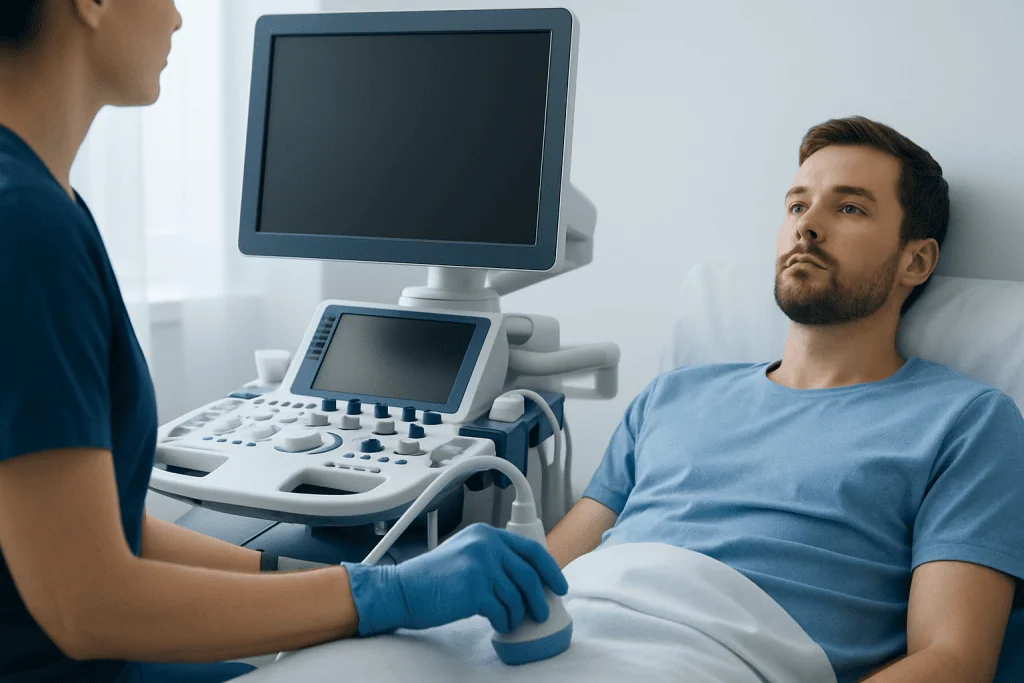
Scrotal ultrasound is a painless imaging test that uses sound waves to show whether a lump is solid, fluid-filled, inside the testicle, or located in nearby tissues. It is commonly used when the examination does not clearly establish the cause. Urine tests, tests for sexually transmitted infections, blood tests, or further specialist review may also be appropriate depending on the findings.
It is best not to assume that a lump is harmless simply because it is small or painless. Equally, most people with a scrotal concern do not have cancer. Appropriate evaluation provides a clearer answer and helps avoid unnecessary worry.
Treatment Depends on the Underlying Cause
Treatment for bumps on testicles is based on the diagnosis rather than the appearance of the lump alone. Small, uncomplicated skin cysts or harmless epididymal cysts may only need observation if they are not painful or growing. A clinician may advise monitoring for changes and returning if symptoms develop.
Inflamed hair follicles and minor skin irritation may improve with gentle hygiene, avoiding squeezing or shaving over the area until it settles, and wearing breathable underwear. If there is a bacterial infection, a sexually transmitted infection, or epididymitis, treatment may include prescription medication selected by a clinician. Sexual partners may also need assessment or treatment in some situations.
A hydrocele, varicocele, hernia, or symptomatic spermatocele may require referral to a urologist. Surgery is not always necessary, but it can be considered when discomfort is persistent, swelling is significant, fertility may be affected, or the diagnosis is uncertain. Testicular cancer is managed by specialist teams, with treatment tailored to the type and stage of the condition.
People should avoid trying to puncture, pop, massage, or remove a bump themselves. This can worsen inflammation, introduce infection, or delay proper diagnosis. Supportive underwear and simple pain relief may be suitable for some mild discomfort, but a clinician or pharmacist can advise on the safest option for the individual.
Self-Care and Monitoring Between Appointments
Regular awareness of what feels normal can make new changes easier to notice. Some people choose to examine their testicles after a warm shower or bath, when the scrotal skin is relaxed. Each testicle can be gently rolled between the fingers and thumb, while noting that the epididymis normally feels like a soft structure behind the testicle.
Self-checks should be gentle and should not cause pain. The goal is not to diagnose a condition but to notice a new lump, persistent swelling, change in size, unusual firmness, or a difference from the other side. If a change is found, arranging a medical review is more useful than repeatedly checking the area, which can increase anxiety or cause tenderness.
For skin-level bumps, keeping the area clean and dry, changing out of sweaty clothing, and avoiding tight or irritating garments may help reduce friction. Condoms and regular sexual health testing can reduce the risk of many sexually transmitted infections. These steps cannot prevent every cause of scrotal swelling or testicular lumps, so changes should still be assessed when they occur.
It may be helpful to note when symptoms began, whether the bump changes with standing or coughing, and whether there is pain, fever, or urinary discomfort. This information can support an efficient medical consultation.
When to Seek Medical Care
A non-urgent medical appointment should be arranged soon for any new lump in or on a testicle, persistent scrotal swelling, unexplained enlargement of one testicle, or a bump that does not settle. Assessment is also appropriate for a painless hard area, a feeling of heaviness, ongoing ache, recurrent swelling, skin sores, or possible exposure to a sexually transmitted infection.
Urgent same-day assessment is needed for significant pain, increasing redness or swelling, fever, pain when passing urine, discharge, or symptoms that develop after an injury. These features can occur with infection, inflammation, bleeding, or other conditions that may need prompt treatment.
Emergency care is needed for sudden, severe testicular pain, particularly when accompanied by nausea, vomiting, abdominal pain, or a high-riding testicle. These symptoms may be caused by testicular torsion, in which blood supply to the testicle can be affected. Rapid treatment is important to protect testicular function.
For international patients who need assessment, Acibadem International’s multidisciplinary specialists and JCI-accredited hospitals can evaluate scrotal and testicular concerns and coordinate appropriate care. The most appropriate first step is a consultation with a qualified doctor or urologist, particularly when a lump is new or changing.
Frequently asked questions
Are bumps on testicles usually cancer?
No. Many bumps are caused by harmless skin cysts, enlarged veins, fluid collections, or structures beside the testicle such as the epididymis. However, a new lump in the testicle cannot be diagnosed accurately at home and should be checked by a clinician.
What does a cancerous testicular lump feel like?
A testicular cancer lump may feel firm, hard, or like a distinct area within the testicle. It is often painless, although some people notice heaviness, swelling, or a dull ache. These features can overlap with other conditions, so an examination and ultrasound are important.
Can an ingrown hair cause a bump on the scrotum?
Yes. An ingrown hair or inflamed hair follicle can cause a small tender, red, pimple-like bump on the scrotal skin. It should not be squeezed, and medical advice is appropriate if it becomes very painful, spreads, drains pus, or does not improve.
Is it normal to feel a lump behind the testicle?
The epididymis, located behind and above the testicle, is a normal soft, cord-like structure that can be felt. A separate smooth lump in this region may also be an epididymal cyst or spermatocele. Any new or uncertain finding should still be assessed by a healthcare professional.
Can a varicocele go away on its own?
A varicocele is an enlargement of veins in the scrotum and usually does not disappear completely without treatment. Many do not require treatment if they cause no symptoms or fertility concerns. A urologist may recommend monitoring or treatment if there is pain, testicular changes, or fertility difficulty.
How quickly should someone see a doctor for a testicular lump?
A new lump, enlargement, or persistent change should be evaluated promptly, ideally within days rather than waiting for weeks. Sudden severe pain or swelling is different and requires emergency assessment immediately. Early review is the safest approach even when there is no pain.
References
- American Urological Association
- National Cancer Institute
- National Health Service
- Mayo Clinic
- Urology Care Foundation
This article is for general information only and is not a substitute for professional medical advice. Please consult a qualified doctor about your individual situation.
Explore treatments in Turkey — costs, top hospitals & a free quote
JCI-accredited · board-certified surgeons · reply within 24h
Add us as a Preferred Source to see more of our trusted health content across Google Search, AI Overviews and Discover.

More from the Health Library
Darkened Patches of Skin: An Evidence-Based Guide for Patients

Lycopene: A Complete Medical Overview

Face Dysmorphia: A Complete Medical Overview

Fast Digesting Carbs: A Complete Medical Overview

Zygote: A Complete Medical Overview