Understanding Bursitis Physical Therapy: A Complete Patient Guide

Bursitis physical therapy focuses on reducing irritation, improving joint mechanics, and rebuilding strength safely. Treatment plans vary by location, such as the shoulder, hip, knee, elbow, or heel.
Key Takeaways
- Bursitis physical therapy focuses on reducing irritation, improving joint mechanics, and rebuilding strength safely.
- Treatment plans vary by location, such as the shoulder, hip, knee, elbow, or heel.
- Rest alone is often not enough; guided movement can help prevent stiffness and repeat flare-ups.
- Most people improve with conservative care, but persistent or severe symptoms need medical evaluation.
- Warning signs such as fever, marked redness, or sudden swelling may suggest infection or another urgent problem.
Bursitis physical therapy is a common, evidence-based way to relieve pain, restore movement, and help the irritated bursa calm down while the surrounding muscles and joints recover. A tailored therapy plan usually combines activity changes, stretching, strengthening, posture or movement training, and gradual return to daily tasks or sport.
Overview: How bursitis physical therapy helps
Bursitis physical therapy helps by reducing stress on an inflamed bursa, improving how the nearby joint moves, and strengthening the muscles that support it. In practical terms, this means therapy is not only about easing pain in the short term. It also aims to correct the movement patterns, posture habits, or overuse triggers that may have caused the problem in the first place.
A bursa is a small fluid-filled sac that cushions tissues such as tendons, muscles, and bones. When it becomes irritated, movement can feel painful or limited. This can happen in the shoulder, hip, knee, elbow, or heel. Depending on the affected area, bursitis may overlap with tendon irritation or other joint conditions, so the therapist’s assessment is an important part of care.
Many people expect complete rest to solve bursitis, but prolonged inactivity can sometimes lead to stiffness, weakness, and slower recovery. Physical therapy usually uses a gradual approach: reducing aggravating activities first, then reintroducing safe movement, and finally building control and strength for daily activities, work, or exercise.
What bursitis feels like and where it happens
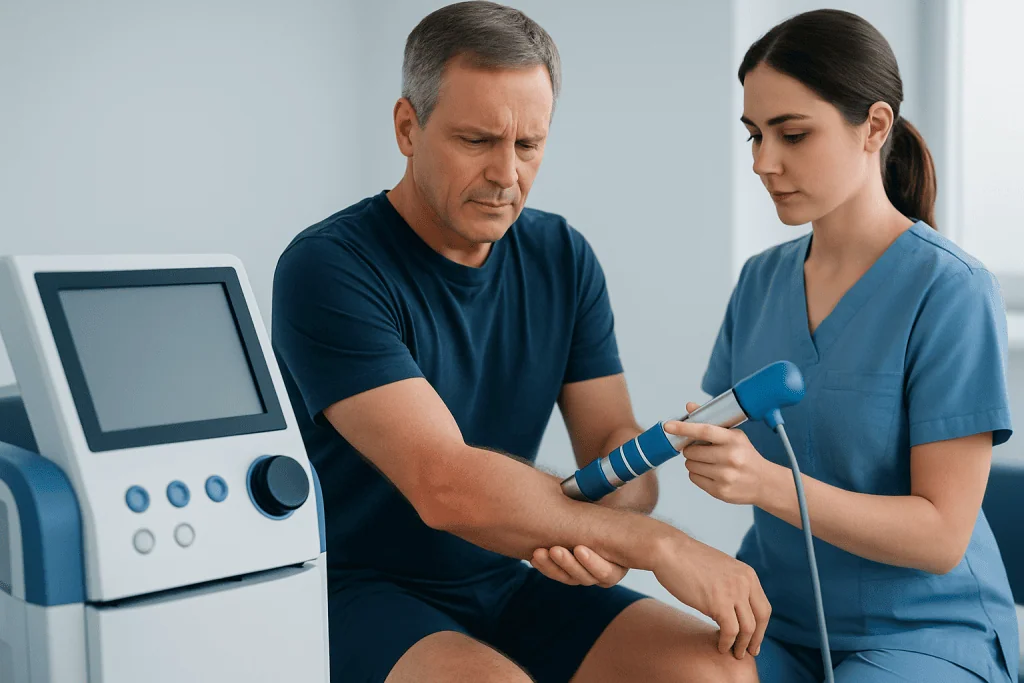
The most common symptom of bursitis is localized pain near a joint. The area may feel sore when touched, more painful with certain movements, or worse after repetitive use. Some people notice swelling, warmth, or stiffness, especially after rest or in the morning.
Symptoms often depend on the location. Shoulder bursitis may cause pain when lifting the arm, reaching overhead, or lying on the affected side. Hip bursitis often causes pain on the outside of the hip, especially when walking, climbing stairs, or sleeping on that side. Knee bursitis can make kneeling uncomfortable, while elbow bursitis may cause visible swelling at the tip of the elbow.
Because symptoms can resemble other conditions, bursitis is not always obvious without an examination. For example, shoulder pain may relate to shoulder impingement syndrome or a tendon problem rather than an inflamed bursa alone. A medical assessment helps clarify the source of pain and guide the right rehabilitation plan.
Why bursitis develops: causes and risk factors

Bursitis usually develops when a bursa is irritated by repeated friction, prolonged pressure, or sudden increase in activity. Common examples include frequent kneeling, repetitive overhead reaching, running on uneven surfaces, or returning to exercise too quickly after a break. Poor movement mechanics can add extra strain over time.
Muscle weakness, joint stiffness, posture changes, and altered walking patterns can all contribute. For instance, weak hip muscles may increase pressure over the outer hip, while limited shoulder blade control can overload the structures around the shoulder. This is one reason why physical therapy often looks beyond the painful spot itself.
Other factors can also play a role, including direct injury, inflammatory arthritis, bone spurs, or infection in some cases. People with jobs or sports that involve repeated stress around one joint may be more likely to develop symptoms. Age-related tissue changes may also make some areas more sensitive to overuse.
- Repetitive motion or overtraining
- Prolonged pressure, such as kneeling or leaning on elbows
- Weakness or poor flexibility around the joint
- Posture and movement pattern problems
- Underlying joint or inflammatory conditions
What happens during physical therapy for bursitis
The first step in bursitis physical therapy is a detailed assessment. A physical therapist usually asks when the pain started, what movements make it worse, what activities are important to the patient, and whether there are any warning signs such as fever or major swelling. They then examine joint movement, strength, tenderness, flexibility, posture, and the way the person walks, lifts, reaches, or performs other tasks.
Treatment is then tailored to the joint involved and the likely cause. Early therapy may focus on reducing irritation with activity modification, gentle range-of-motion work, cold or heat guidance, and practical advice for daily tasks. As pain settles, treatment often shifts toward stretching tight tissues, improving joint mechanics, and strengthening the muscles that support the area.
Exercise is usually the core of treatment. Depending on the location, this may include shoulder blade control exercises, hip abductor strengthening, quadriceps and hamstring work for the knee, or calf flexibility for heel-related symptoms. The therapist may also teach pacing strategies so that activity increases gradually rather than provoking another flare.
Some rehabilitation plans also include manual therapy, taping, balance or gait training, and ergonomic advice. If a person’s symptoms are persistent or linked to structural problems, a physician may recommend additional evaluation. In selected cases, treatment may be coordinated with imaging, medication, injections, or specialist orthopedic care such as orthopedic evaluation.
Exercises and recovery principles patients should know
There is no single best exercise program for all types of bursitis. The right plan depends on the joint involved, symptom severity, and the reason the bursa became irritated. In general, exercises should feel manageable, not sharply painful, and should progress slowly over time.
Most therapy plans include three elements: restoring comfortable movement, improving flexibility where tissues are tight, and building strength in the surrounding muscles. For example, shoulder programs may include pendulum or range-of-motion exercises before advancing to rotator cuff and shoulder blade strengthening. Hip programs often target the side hip muscles and trunk control, while knee-related programs may focus on leg strength and movement alignment.
Recovery is often better when people avoid the pattern of doing too much on a good day and then resting completely after a flare. Instead, therapists usually recommend a steady, graded approach. Temporary discomfort can happen during rehabilitation, but worsening pain, increasing swelling, or pain that lasts well after exercise may signal that the program needs adjustment.
Some patients also benefit from broader rehabilitation support when bursitis affects daily life or follows an injury. In those situations, a doctor may recommend physical therapy and rehabilitation as part of a structured recovery plan. If imaging is needed to look for another source of pain, tests such as MRI can sometimes help in selected cases.
Diagnosis and other treatment options
Bursitis is often diagnosed through medical history and physical examination. A clinician typically asks about recent activity changes, repetitive stress, occupation, sports, sleeping positions, and any past joint problems. The exam helps identify where the pain is coming from and whether another issue may be contributing.
Imaging is not always required, especially when symptoms and examination clearly suggest bursitis. However, ultrasound, X-ray, or MRI may be considered if symptoms are prolonged, severe, or unusual, or if the clinician wants to rule out tendon tears, arthritis, fractures, or other conditions. Shoulder symptoms, for example, may overlap with rotator cuff tear or related disorders.
Besides physical therapy, treatment may include short-term activity modification, ice, protective padding, or medicines recommended by a doctor. In some cases, a clinician may consider aspiration if there is significant fluid collection, or an injection to reduce inflammation when appropriate. Suspected infected bursitis requires prompt medical care and should not be managed with exercise alone.
Surgery is uncommon for simple bursitis but may be discussed if symptoms are persistent and linked to structural problems that do not improve with conservative care. Decisions about procedures are individualized and should be made with a qualified specialist after a full evaluation.
Prevention, self-care, and when to seek medical care
Preventing bursitis often means reducing repeated stress on the same tissues. This may include warming up before exercise, increasing training gradually, taking breaks from repetitive tasks, improving workstation setup, and using cushioning or pads when kneeling or leaning on hard surfaces. Supportive footwear and attention to walking or running mechanics may also help depending on the area involved.
At home, self-care usually includes relative rest rather than total immobilization, avoiding clearly aggravating movements for a short time, and following a prescribed exercise plan consistently. Good sleep positioning can also matter; for instance, people with hip bursitis may find it helpful to avoid lying directly on the painful side. If weight-bearing activity is painful, temporary adjustments to walking or exercise routines may be advised by a clinician.
Medical care is important if pain is severe, limits normal activity for more than a few days, keeps returning, or does not improve with basic self-care. A person should seek prompt evaluation if there is fever, marked redness, a hot swollen joint area, sudden inability to move the joint, significant weakness, or pain after a major injury. These features may suggest infection, a tendon rupture, fracture, or another condition that needs urgent attention.
For patients who need coordinated care, Acibadem International’s multidisciplinary specialists and JCI-accredited hospitals evaluate joint pain conditions and create individualized treatment plans for international patients. If symptoms are ongoing or part of a broader musculoskeletal problem, a physician may also assess related conditions such as tendinitis and recommend the most suitable next steps.
Frequently asked questions
Can physical therapy cure bursitis?
Physical therapy often helps bursitis improve significantly by reducing irritation and correcting the movement or strength problems behind it. While the inflamed bursa itself needs time to settle, therapy can support recovery and lower the chance of repeated flare-ups.
How long does bursitis physical therapy usually take?
Recovery time varies by the joint involved, how long symptoms have been present, and whether there are related tendon or joint problems. Some people improve within a few weeks, while others need a longer, gradual rehabilitation program.
Should a person rest completely if they have bursitis?
Complete rest is not usually the goal unless a doctor advises it for a specific reason. Relative rest, meaning reducing aggravating activities while keeping the joint moving safely, is often more helpful than stopping all activity.
Are exercises safe when bursitis is painful?
Gentle, well-chosen exercises are often safe and useful, but they should match the person’s symptoms and diagnosis. If exercise causes sharp pain, increasing swelling, or lasting worsening afterward, the program should be reviewed by a qualified clinician.
What is the difference between bursitis and tendonitis?
Bursitis is inflammation or irritation of a bursa, while tendonitis involves a tendon. The two can happen together because bursae and tendons are often located close to each other around joints.
When might bursitis need more than physical therapy?
Further treatment may be needed if symptoms are severe, keep returning, or do not improve with conservative care. Additional evaluation is also important if infection, a tear, inflammatory disease, or another structural problem is suspected.
References
- American Academy of Orthopaedic Surgeons
- National Institute of Arthritis and Musculoskeletal and Skin Diseases
- American Physical Therapy Association
- Mayo Clinic
- National Health Service
This article is for general information only and is not a substitute for professional medical advice. Please consult a qualified doctor about your individual situation.
Bursitis in Turkey — costs, top hospitals & a free quote
JCI-accredited · board-certified surgeons · reply within 24h
Add us as a Preferred Source to see more of our trusted health content across Google Search, AI Overviews and Discover.

Orthopedics & Spine
Care for bones, joints and the musculoskeletal system, including joint replacement, sports injuries and trauma.
124 specialists in this unit