

Understanding Cellulitis From Bee Sting: A Complete Patient Guide

Most bee stings cause short-term irritation, but cellulitis from bee sting is a true skin infection. Spreading redness, increasing warmth, pain, and swelling after a sting are key warning signs.
Key Takeaways
- Most bee stings cause short-term irritation, but cellulitis from bee sting is a true skin infection.
- Spreading redness, increasing warmth, pain, and swelling after a sting are key warning signs.
- A doctor usually diagnoses cellulitis through a skin examination and symptom history.
- Treatment often includes antibiotics, along with rest, elevation, and symptom relief.
- Urgent medical care is important if there is fever, facial swelling, breathing trouble, or rapid worsening.
Cellulitis from bee sting is a bacterial skin infection that can develop when bacteria enter broken skin after a sting or scratching. It is different from the usual local swelling of a bee sting because redness, warmth, tenderness, and swelling tend to spread and may worsen over time.
Overview: can a bee sting cause cellulitis?
Yes. Cellulitis from bee sting can happen when bacteria enter the skin through the tiny break left by the stinger or through skin that has been scratched afterward. Although most bee stings cause only temporary pain, redness, and swelling, some people develop a deeper skin infection that needs medical attention.
A normal bee sting reaction often improves within a day or two, even if the area stays itchy or puffy for several days. Cellulitis is different because the redness and swelling usually spread beyond the sting site, the skin may feel warm and tender, and symptoms may continue to worsen instead of settling down.
It can be difficult to tell the difference between a large local allergic reaction and an infection in the first day or so. In general, infection is more likely when pain, warmth, and expanding redness become more noticeable over time, especially if the person has scratched the area, has broken skin, or develops fever or swollen lymph nodes.
How cellulitis differs from a normal bee sting reaction

A typical bee sting causes immediate sharp pain followed by redness, mild swelling, and itching. In some people, the swelling can be large and dramatic, especially around the eyes, hands, or feet, but this still may not mean infection. Large local reactions are often uncomfortable yet self-limited.
Cellulitis is an infection of the deeper layers of the skin and soft tissue. Instead of remaining centered around the sting, symptoms usually spread outward. The skin may become increasingly warm, tight, sore, and tender to the touch. The borders of redness can look less defined than a simple sting reaction, and daily activities may become more uncomfortable.
Another clue is timing. Allergic or inflammatory swelling often peaks within 24 to 48 hours and then slowly improves. Cellulitis may begin later or become more obvious after the first day, especially if the skin barrier was broken by scratching. Because other skin problems can look similar, a doctor may also consider related conditions such as cellulitis or other causes of inflamed skin.
Symptoms and warning signs to watch for
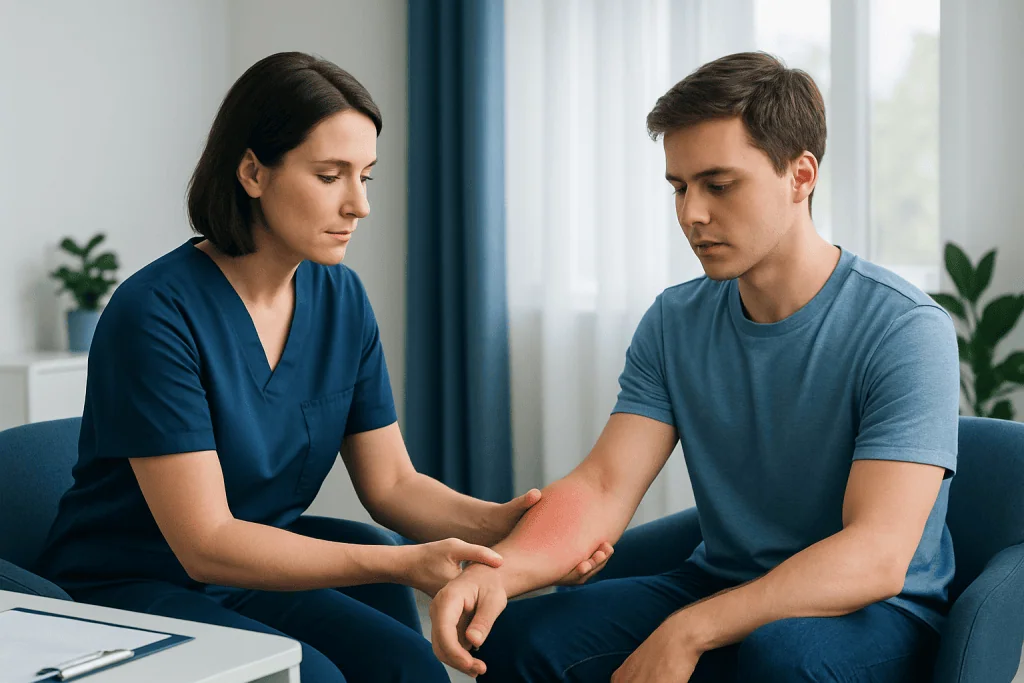
The most common signs of cellulitis from bee sting are spreading redness, increasing swelling, warmth, tenderness, and pain around the sting site. The skin can appear shiny or feel tight. Some people notice that the area becomes harder to move comfortably, especially when the sting is on a finger, hand, ankle, or foot.
Itching can happen with both infection and a normal sting reaction, so it is not enough on its own to confirm cellulitis. More concerning features are redness that expands over hours, pain that gets worse rather than better, or swelling that extends far beyond the original sting. Occasionally, red streaks may appear, which can suggest inflammation involving nearby lymph vessels.
Other symptoms can include:
- Fever or chills
- Swollen lymph nodes
- Fatigue or feeling unwell
- Pus or drainage from the sting site
- Skin that feels very hot, firm, or increasingly sensitive
If symptoms involve the face, eye area, or neck, medical evaluation is especially important. These locations can become complicated more quickly because swelling and infection may affect important nearby tissues.
Causes and risk factors
Bee stings themselves do not contain the bacteria that cause cellulitis in most cases. The infection usually happens when common skin bacteria, often from the person’s own skin surface, enter through the tiny puncture wound. Scratching itchy skin increases this risk because it can create additional breaks and introduce more bacteria.
Several factors can make cellulitis more likely after a sting. These include eczema or other skin conditions, poor circulation, diabetes, leg swelling, a weakened immune system, or a history of repeated skin infections. Children may be more likely to scratch, while older adults may have more fragile skin, so both age groups may need closer observation.
Location also matters. Stings on the lower legs, feet, and hands may be more prone to irritation and contamination because these areas are often rubbed by clothing or exposed to surfaces. If the skin already has cuts, fungal infection, or another rash, bacteria can spread more easily. In some situations, doctors may also evaluate for related skin disorders or abscess formation if symptoms are severe.
How doctors diagnose cellulitis after a bee sting
Diagnosis is usually based on a medical history and physical examination. A doctor will ask when the sting happened, how symptoms changed over time, whether the stinger was removed, and whether there are signs of allergy such as hives, lip swelling, or breathing difficulty. They will also examine how far the redness extends and whether the area is warm, tender, or draining.
Most people do not need extensive testing. Blood tests or imaging are generally reserved for cases that are severe, recurrent, involve the face or deeper tissues, or do not improve as expected. If there is a collection of pus, an ultrasound may help distinguish cellulitis from an abscess, because an abscess may need drainage rather than antibiotics alone.
The doctor may also consider other possibilities such as a strong inflammatory reaction to the sting, contact dermatitis from creams applied to the area, or another skin infection. When there is uncertainty, a careful recheck after a short interval may help clarify whether the problem is improving naturally or behaving more like an infection.
Treatment options and home care
Treatment depends on how severe the infection appears. Mild cellulitis from bee sting is often treated with oral antibiotics prescribed by a doctor. The choice of medicine depends on the person’s age, allergies, medical history, and the expected bacteria in the community. More serious cases may need hospital care and intravenous antibiotics, particularly if fever, rapid spread, severe pain, or immune system problems are present.
Supportive care is also important. Resting the affected area, elevating it when possible, and using a clean, cool compress can help relieve discomfort. Over-the-counter pain relievers may be recommended if appropriate for the individual. If the stinger is still present, removing it promptly can reduce ongoing irritation, though this does not by itself treat cellulitis.
People should avoid scratching, squeezing, or cutting the area. It is also best not to apply multiple medicated creams unless a doctor advises them, because some products can further irritate the skin and make assessment harder. If a deeper pocket of infection develops, treatment may involve procedures commonly used for soft tissue infections, and specialists may evaluate whether wound care or imaging is needed.
When cellulitis is more complicated, associated with poor healing, or appears near important structures, multidisciplinary care can be useful. In selected cases, doctors may also use ultrasound to check for fluid collection under the skin, and if another cause of persistent swelling is suspected, additional specialist evaluation may be considered.
Prevention and self-care after a bee sting
The best way to prevent cellulitis from bee sting is to care for the skin promptly after a sting. The area should be washed gently with soap and water, and any visible stinger should be removed as soon as possible. Keeping fingernails short and avoiding scratching can reduce the chance of bacteria entering the skin.
A cool compress may help with pain and swelling. Some people benefit from simple measures such as rest, elevation, and avoiding tight clothing or friction over the sting. If itching is strong, a doctor or pharmacist can advise on safe options that may reduce the urge to scratch.
People who spend time outdoors can lower their chance of stings by wearing shoes, avoiding strong fragrances in bee-heavy areas, and using caution around flowering plants, open food, and sweet drinks. Those who have repeated skin infections or chronic skin conditions may benefit from discussing prevention strategies with a clinician. When recurrent skin problems are part of a broader pattern, doctors may also review related concerns such as skin infections.
When to seek medical care
Medical care is advisable if redness continues to spread, the area becomes more painful or warm, or swelling keeps increasing after the first day or two. A person should also contact a doctor if there is pus, fever, swollen glands, or difficulty using the affected hand, foot, or joint comfortably. These features suggest that the problem may be more than a routine sting reaction.
Urgent help is needed right away for trouble breathing, wheezing, fainting, widespread hives, swelling of the lips or tongue, or severe dizziness, because these symptoms can signal an allergic emergency rather than cellulitis. Immediate evaluation is also important if the sting is near the eye, if the person is very young or frail, or if they have diabetes, poor circulation, or a weakened immune system.
If symptoms do not improve after starting treatment, or if they worsen quickly, reassessment is important. In rare situations, what appears to be cellulitis may need a different treatment approach. Acibadem International’s multidisciplinary specialists and JCI-accredited hospitals diagnose and treat skin and soft tissue infections for international patients when specialist assessment is needed.
Frequently asked questions
How do you know if a bee sting has turned into cellulitis?
Cellulitis is more likely when redness, warmth, tenderness, and swelling spread beyond the sting site and continue to worsen over time. Fever, swollen lymph nodes, pus, or increasing pain make infection more concerning and should prompt medical review.
Is swelling after a bee sting always an infection?
No. Many people have a normal local reaction or a large local allergic reaction that causes marked swelling without infection. Infection is more likely when the skin becomes increasingly painful, hot, and red, especially after scratching or if symptoms keep spreading.
Can cellulitis from bee sting go away on its own?
A simple sting reaction often improves on its own, but true cellulitis usually needs medical assessment and often antibiotics. Because it can be hard to tell the difference early on, a doctor should evaluate symptoms that are spreading or worsening.
What should be done immediately after a bee sting to reduce infection risk?
The skin should be washed gently with soap and water, and any visible stinger should be removed promptly. Avoiding scratching, keeping the area clean, and using a cool compress can help limit irritation and reduce the chance of bacteria entering the skin.
When is a bee sting a medical emergency?
A bee sting is an emergency if it causes trouble breathing, wheezing, fainting, severe dizziness, or swelling of the lips, tongue, or throat. These signs suggest a serious allergic reaction and need urgent treatment right away.
Who is more likely to develop cellulitis after a bee sting?
People with diabetes, poor circulation, eczema, chronic swelling, or a weakened immune system may be at higher risk. Scratching the sting, having broken skin nearby, or getting stung on the hands, feet, or lower legs can also raise the chance of infection.
References
- American Academy of Dermatology
- Centers for Disease Control and Prevention
- National Health Service
- Mayo Clinic
- Merck Manual Consumer Version
This article is for general information only and is not a substitute for professional medical advice. Please consult a qualified doctor about your individual situation.
Cellulitis in Turkey — costs, top hospitals & a free quote
JCI-accredited · board-certified surgeons · reply within 24h
Add us as a Preferred Source to see more of our trusted health content across Google Search, AI Overviews and Discover.

More from the Health Library



Related Specialists

Dr. Nevin Sarıgüzel
Infectious Diseases & Clinical Microbiology
Fzt. Yaren Yıldız
Physical Medicine & Rehabilitation
Prof. Dr. Zehra Serpil Ustalar
Anesthesiology
Prof. Dr. Belgin Selam
Gynecology & Obstetrics