Understanding HSV Infection of the Eye: A Complete Patient Guide

HSV infection of the eye usually refers to herpes simplex virus affecting the cornea, eyelids, or conjunctiva. Symptoms can include eye redness, pain, watering, light sensitivity, a gritty feeling, and blurred vision.
Key Takeaways
- HSV infection of the eye usually refers to herpes simplex virus affecting the cornea, eyelids, or conjunctiva.
- Symptoms can include eye redness, pain, watering, light sensitivity, a gritty feeling, and blurred vision.
- The infection may return because the virus can remain inactive in the body and reactivate later.
- Diagnosis often requires an eye examination with a slit lamp and fluorescein dye to look for corneal changes.
- Treatment may include antiviral eye medicines or tablets, and steroid drops are used only under specialist guidance.
- Prompt medical attention is important for new eye pain, reduced vision, or sensitivity to light.
HSV infection of the eye is a herpes simplex virus infection that affects the surface or deeper tissues of the eye, most often the cornea. It can cause redness, pain, tearing, light sensitivity, and blurred vision, and early assessment helps protect vision and guide treatment.
Overview: what HSV infection of the eye means
HSV infection of the eye is an infection caused by the herpes simplex virus, usually herpes simplex type 1. In the eye, this virus can affect the eyelids, the clear front window of the eye called the cornea, and sometimes deeper structures. When the cornea is involved, the condition is often called herpes simplex keratitis or ocular herpes.
This infection matters because the cornea needs to stay clear and smooth for sharp vision. HSV can cause inflammation, surface damage, and, in some cases, scarring. While many episodes are mild and treatable, repeated flare-ups can increase the risk of long-term vision problems if they are not recognized and managed appropriately.
HSV infection of the eye is not the same as a simple eye irritation or routine conjunctivitis. It can look similar at first, but the treatment approach is different. Because some common eye drops may worsen the infection when used without supervision, professional evaluation is important whenever symptoms suggest corneal involvement.
How the infection develops and why it can come back
After a person is first exposed to herpes simplex virus, the virus can remain inactive in nerve tissue for a long time. This is why HSV infection of the eye can recur even if the original infection happened years earlier. A recurrence does not always mean a new exposure; often it is the same virus becoming active again.
Reactivation may happen without a clear trigger, but some people notice episodes after illness, stress, fever, sun exposure, eye injury, or surgery. The pattern varies widely. Some people have a single episode, while others have repeated flare-ups that require longer follow-up with an eye specialist.
There are different forms of ocular HSV. Some episodes affect mainly the outer corneal layer, while others involve deeper inflammation. The deeper the inflammation, the more closely treatment and monitoring are needed. In some patients, HSV can also raise eye pressure or contribute to inflammation inside the eye.
Symptoms and signs to watch for

Symptoms of HSV infection of the eye often affect one eye, though both can be involved in some situations. A person may notice redness, eye pain, tearing, blurred vision, or unusual sensitivity to light. Some describe a gritty or burning feeling, as if something is in the eye.
When the cornea is involved, vision may become hazy or less sharp. The eye may feel very uncomfortable in bright light, and the eyelids may squeeze shut. Some people develop small blisters or sores on the eyelids, especially if the infection also affects the surrounding skin.
Symptoms can overlap with other eye problems, including bacterial conjunctivitis, dry eye, corneal abrasion, or conjunctivitis. That is one reason self-diagnosis can be difficult. Any combination of eye pain, reduced vision, and light sensitivity deserves prompt medical assessment.
- Red or bloodshot eye
- Pain, burning, or irritation
- Excess tearing or watery discharge
- Blurred or decreased vision
- Sensitivity to light
- Gritty or foreign-body sensation
- Eyelid sores or swelling in some cases
Causes, triggers, and risk factors
The direct cause is infection or reactivation of herpes simplex virus in eye tissues. In many cases, HSV type 1 is responsible, the same virus commonly linked with cold sores. A person does not need to have visible cold sores to develop eye involvement.
Risk factors for recurrence can include previous ocular HSV, a weakened immune system, physical or emotional stress, fever, trauma to the eye, ultraviolet light exposure, and recent eye procedures. Contact lens wear does not cause HSV, but poor lens hygiene can complicate symptoms and increase the risk of other corneal problems that may be mistaken for it.
Another important point is that not every red eye in someone with a history of herpes is caused by HSV. Conditions such as dry eye or allergies can cause redness and discomfort too. Because the treatments are different, diagnosis should be confirmed before starting or restarting medicines, especially steroid eye drops.
How doctors diagnose HSV infection of the eye
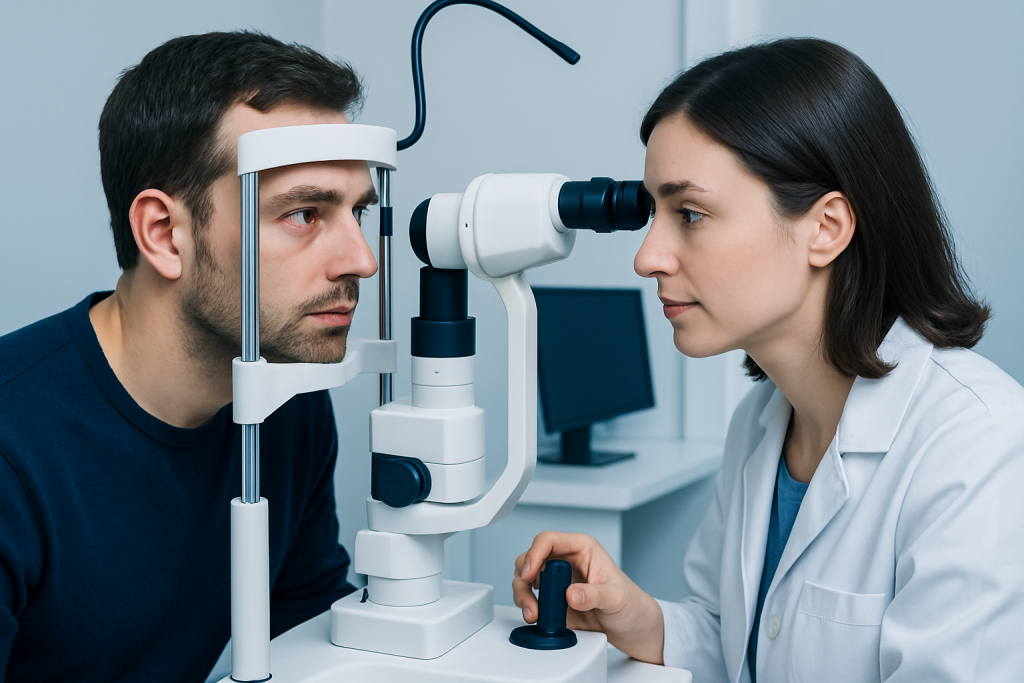
Diagnosis starts with a careful symptom history and a detailed eye examination. An ophthalmologist often uses a slit lamp, a microscope with a bright light, to examine the cornea and other eye structures closely. This helps identify the typical patterns of corneal damage and inflammation caused by HSV.
Fluorescein dye may be placed in the eye to highlight surface defects. In many cases, this allows the doctor to see branching corneal lesions that strongly suggest herpes simplex keratitis. Eye pressure may also be checked, because some HSV-related episodes can affect pressure inside the eye.
Laboratory testing is not always necessary, especially when the examination findings are typical. However, in uncertain or severe cases, the doctor may consider additional tests to rule out other infections or inflammatory eye diseases. Imaging is not usually needed for routine cases, but specialist evaluation is important if symptoms are severe, recurring, or not improving as expected.
Treatment options and what recovery may involve
Treatment depends on which part of the eye is affected and how severe the episode is. Antiviral therapy is the main treatment. This may involve antiviral eye medication, oral antiviral tablets, or both. The aim is to reduce viral activity, help the cornea heal, relieve symptoms, and lower the risk of complications.
Some forms of deeper inflammation may require steroid eye drops, but these should only be used under the close supervision of an ophthalmologist. Steroids can be very helpful in selected cases, yet they can also worsen certain infections if used incorrectly. For this reason, self-treating a painful red eye with leftover eye drops is not safe.
Supportive care may also be recommended, such as lubricating drops and temporary changes in contact lens use. If corneal scarring, repeated episodes, or surface damage significantly affect vision, a specialist may discuss advanced care options, including corneal transplantation in selected cases. Patients with persistent corneal problems may also need ongoing monitoring in ophthalmology clinics to protect the eye surface and vision.
Recovery time varies. Mild surface infections may improve over days to weeks, while deeper inflammation can take longer and needs closer follow-up. It is important to use medicines exactly as prescribed and attend review appointments, even if the eye begins to feel better early on.
Protecting vision: self-care, prevention, and follow-up
There is no guaranteed way to prevent every recurrence, because HSV can reactivate unpredictably. Still, good eye care habits may help lower irritation and support recovery. People should avoid rubbing the eyes, share neither eye cosmetics nor contact lenses, and follow careful hand hygiene, especially during active episodes.
If contact lenses are worn, they should not be used until the eye doctor says it is safe to restart. Lens cases and solutions should be replaced as advised. Protecting the eyes from excessive sunlight with appropriate sunglasses may be helpful for some people who notice light-related triggers.
Long-term follow-up may be recommended for people with repeated episodes or scarring. In some cases, doctors prescribe preventive antiviral treatment to reduce recurrence risk. When symptoms are frequent or damage is significant, care may involve both corneal and general eye specialists, and at Acibadem International, multidisciplinary specialists in JCI-accredited hospitals diagnose and treat eye conditions for international patients.
When to seek medical care
Medical care should be sought promptly for a red, painful eye, especially if there is blurred vision or sensitivity to light. These symptoms can signal corneal involvement and should not be treated as a routine eye irritation. Early assessment helps protect vision and ensures that the correct medicine is used.
Urgent evaluation is especially important if the person has a previous history of ocular herpes, uses contact lenses, has recently had eye surgery, or has a weakened immune system. Care is also needed if symptoms are getting worse, if there is discharge, or if the eye is not improving after initial treatment.
An ophthalmologist may evaluate for HSV and also rule out other conditions that can threaten sight, such as glaucoma complications or bacterial corneal infection. If medical treatment does not control damage to the cornea, more advanced options such as eye surgery may be considered depending on the cause and extent of the problem.
Frequently asked questions
Is HSV infection of the eye the same as pink eye?
No. HSV infection of the eye can cause redness, but it often involves the cornea and may lead to pain, light sensitivity, and blurred vision. Pink eye is a broader term and can be caused by viruses, bacteria, allergies, or irritation.
Can HSV infection of the eye go away on its own?
Some mild episodes may improve, but it is not wise to wait and see when the eye is painful or vision is affected. Ocular HSV can damage the cornea, and early treatment helps reduce complications. An eye specialist should assess suspected cases promptly.
Can it come back after treatment?
Yes. The herpes simplex virus can stay inactive in the body and reactivate later, which is why some people have recurrent episodes. A doctor may recommend preventive treatment in people with frequent recurrences.
Is HSV infection of the eye contagious?
The virus itself can spread through close contact, especially with active herpes sores, but ocular episodes are not usually spread casually from eye to eye in everyday situations. Good hand hygiene and avoiding touching the eyes are sensible precautions. People should also avoid sharing towels, cosmetics, or contact lens items during active symptoms.
Should contact lenses be worn during an outbreak?
No, contact lenses should generally be avoided until an eye doctor confirms that the eye has healed enough to use them safely. Wearing lenses during an active episode can worsen irritation and make evaluation more difficult. Lens hygiene should also be reviewed before restarting.
Can steroid eye drops treat HSV infection of the eye?
Sometimes, but only in specific forms of inflammation and only under specialist supervision. Steroid drops can help control deeper inflammation, yet they may worsen some infections if used at the wrong time or without antiviral cover. They should never be started without medical advice.
References
- American Academy of Ophthalmology
- National Eye Institute
- Centers for Disease Control and Prevention
- Mayo Clinic
- NHS
This article is for general information only and is not a substitute for professional medical advice. Please consult a qualified doctor about your individual situation.
Explore treatments in Turkey — costs, top hospitals & a free quote
JCI-accredited · board-certified surgeons · reply within 24h
Add us as a Preferred Source to see more of our trusted health content across Google Search, AI Overviews and Discover.