Understanding Oral Cancer: A Complete Patient Guide

Oral cancer can begin anywhere in the mouth, including the lips, tongue, gums, cheeks, and palate. A sore that does not heal, a persistent lump, unexplained bleeding, or difficulty swallowing should be evaluated.
Key Takeaways
- Oral cancer can begin anywhere in the mouth, including the lips, tongue, gums, cheeks, and palate.
- A sore that does not heal, a persistent lump, unexplained bleeding, or difficulty swallowing should be evaluated.
- Tobacco, alcohol, HPV infection, and long-term sun exposure to the lips are important risk factors.
- Diagnosis usually involves an exam, imaging, and a biopsy to confirm the type and extent of cancer.
- Treatment may include surgery, radiation therapy, chemotherapy, targeted therapy, or a combination of approaches.
- Regular dental and medical checkups support earlier detection, especially in people with risk factors.
Oral cancer is a cancer that starts in the lips, tongue, gums, inner cheeks, floor of the mouth, hard or soft palate, or nearby tissues. It is often treatable, especially when found early, so persistent mouth changes should be checked by a qualified doctor or dentist.
Overview: what oral cancer means
Oral cancer is a type of head and neck cancer that develops in the tissues of the mouth or lips. It can affect the tongue, gums, inner lining of the cheeks, floor of the mouth, roof of the mouth, and the area behind the wisdom teeth. Most oral cancers are squamous cell carcinomas, meaning they begin in the thin, flat cells that line these surfaces.
In patient terms, oral cancer matters because the mouth is involved in speaking, eating, swallowing, breathing, and facial expression. A growth in this area may begin with subtle symptoms, such as a sore that does not heal or a patch of tissue that looks different from the surrounding skin. These changes are often painless at first, which is one reason persistent symptoms should not be ignored.
Many mouth problems are not cancer. Canker sores, infections, irritation from dental appliances, or trauma from biting the cheek are common and usually improve. The concern increases when a mouth change lasts more than two weeks, keeps returning, grows, bleeds easily, or is accompanied by a neck lump, trouble swallowing, or unexplained weight loss.
Early diagnosis can make treatment more effective and may help preserve speech and swallowing function. Because oral cancer overlaps with other head and neck cancers, evaluation is often done by a team that includes dentists, ear, nose and throat specialists, oral and maxillofacial surgeons, oncologists, pathologists, and radiologists.
Symptoms and warning signs
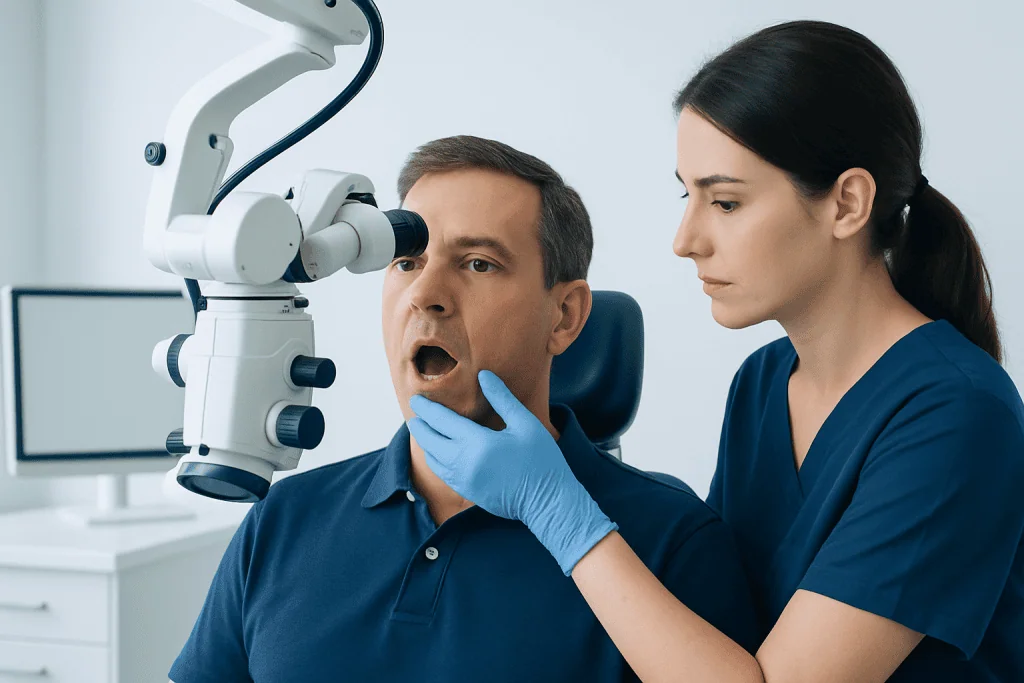
Oral cancer symptoms can vary depending on the exact location and size of the tumor. Some people notice a visible change, while others first feel discomfort when chewing or swallowing. A persistent symptom deserves professional assessment, especially if it lasts longer than two weeks.
Common warning signs include:
- A mouth sore or lip lesion that does not heal
- A white patch, red patch, or mixed red-and-white area inside the mouth
- A lump, thickening, or rough spot in the cheek, gums, or tongue
- Pain, burning, or numbness in the mouth or lips
- Bleeding without a clear cause
- Difficulty chewing, swallowing, or moving the tongue or jaw
- A change in speech or persistent hoarseness
- Loose teeth or dentures that suddenly no longer fit well
- Ear pain, especially when there is no ear infection
- A lump in the neck
Not every symptom means cancer. For example, white or red patches may also occur with irritation, fungal infection, or inflammatory conditions. Even so, these patches can sometimes represent precancerous changes or early cancer, so they should be examined rather than watched for too long.
Some oral cancers are found during routine dental visits before they cause major symptoms. This is one reason regular checkups are valuable even for people who feel well. A clinician may notice subtle changes in tissue texture, color, or asymmetry that are easy to miss at home.
Causes and risk factors

Oral cancer develops when cells in the mouth accumulate genetic changes that allow them to grow abnormally and invade nearby tissue. There is not always a single cause, but several well-established risk factors increase the chance that these changes will occur.
The most important avoidable risk factors are tobacco and alcohol. Cigarettes, cigars, pipes, and smokeless tobacco all raise risk, and heavy alcohol use adds to that effect. When tobacco and alcohol are used together, the risk is especially high. Human papillomavirus, particularly certain high-risk strains, is more strongly linked to cancers in the oropharynx, but HPV can also be relevant in the broader head and neck region.
Additional factors include long-term sun exposure to the lips, older age, a weakened immune system, poor oral hygiene in some cases, and chronic irritation that may contribute alongside other risks. Diet, general health, and past exposure to cancer-causing substances can also play a role. However, some people develop oral cancer without the classic risk factors, so symptoms should never be dismissed simply because a person does not smoke or drink.
Doctors may also monitor certain noncancerous but potentially concerning oral lesions more closely. For example, leukoplakia or erythroplakia can sometimes contain abnormal cells and may need biopsy. Understanding these changes helps clinicians decide when simple observation is reasonable and when further testing is needed.
How oral cancer is diagnosed
Diagnosis begins with a careful history and physical examination. The clinician asks about how long the lesion has been present, whether it is changing, and whether there are symptoms such as pain, numbness, swallowing difficulty, voice changes, or weight loss. The mouth, tongue, lips, throat, and neck are examined for sores, patches, masses, and enlarged lymph nodes.
If an area looks suspicious, the next step is usually a biopsy. This is the only way to confirm whether cancer is present. A small sample of tissue is removed and examined under a microscope by a pathologist. The pathology report identifies the cell type and may provide information that helps guide treatment planning.
Imaging tests help show the tumor’s size, depth, and spread. Depending on the case, doctors may use ultrasound, CT, MRI, or PET/CT. Imaging can be especially helpful for evaluating lymph nodes in the neck and determining whether surgery, radiation, or other treatments are likely to be most appropriate. In many cases, MRI and PET/CT imaging support staging and treatment planning.
Once the cancer is confirmed, the team assigns a stage. Staging describes how large the tumor is, whether nearby tissues are involved, and whether cancer has spread to lymph nodes or distant organs. Stage is important because it influences treatment choices, expected recovery, and follow-up plans. If the disease appears more advanced, clinicians may also evaluate swallowing, nutrition, speech, and dental health before treatment begins.
Treatment options and what they aim to do
Oral cancer treatment is individualized. The main goals are to remove or control the cancer, reduce the chance of recurrence, preserve appearance and function as much as possible, and support quality of life. Decisions are based on the tumor’s location, stage, pathology, overall health, and the person’s priorities.
Surgery is a common treatment for many oral cancers, especially when the tumor is localized. The surgeon removes the cancer and a margin of healthy tissue around it. If there is concern about spread to lymph nodes, surgery may also include removal of lymph nodes in the neck. Reconstructive procedures may be considered to help restore appearance, speech, or swallowing when larger areas need to be removed. In selected cases, robotic surgery may be part of a minimally invasive surgical approach for suitable head and neck tumors.
Radiation therapy may be used alone for some tumors or combined with surgery and/or systemic therapy. It can help destroy cancer cells in the primary site and nearby lymph nodes. Chemotherapy is often used with radiation for more advanced disease, while targeted therapy or immunotherapy may be options in selected situations. When oral cancer is part of a broader pattern of tongue cancer or nearby head and neck disease, treatment planning still follows the same principles of stage, location, and function preservation.
Supportive care is an important part of treatment. Dental evaluation before radiation, nutrition support, speech and swallowing therapy, pain control, and smoking cessation support can all improve tolerance and recovery. At centers such as Acibadem International, multidisciplinary specialists in JCI-accredited hospitals diagnose and treat oral cancer for international patients, coordinating surgery, oncology, imaging, and rehabilitation when needed.
Recovery, self-care, and reducing future risk
Recovery after oral cancer treatment varies widely. Some people heal after a small procedure with minimal long-term effects, while others need more rehabilitation after major surgery, radiation, or combined treatment. Follow-up visits are important because they help monitor healing, detect recurrence, and address ongoing issues such as dry mouth, swallowing changes, speech difficulty, pain, or nutritional concerns.
Self-care often includes good oral hygiene, gentle mouth care as advised by the treatment team, adequate fluid intake, and choosing foods that are easier to chew or swallow during recovery. Dietitians and speech-language therapists can provide practical strategies if eating becomes difficult. For people who smoke or use smokeless tobacco, stopping is one of the most meaningful steps for healing and long-term health. Limiting alcohol use is also recommended.
People who have been treated for oral cancer remain at risk for recurrence or for developing a new cancer in the head and neck region, especially if risk factors continue. Regular surveillance helps the team catch concerns early. Depending on the case, follow-up may include physical exams, imaging, dental care, and rehabilitation planning.
Prevention focuses on lowering risk where possible. Helpful steps include avoiding tobacco, moderating alcohol, protecting the lips from sun exposure with shade or lip protection, maintaining regular dental checkups, and seeking prompt evaluation of persistent mouth changes. These measures cannot prevent every case, but they support earlier detection and better overall oral health.
When to seek medical care
A person should seek medical or dental evaluation if a mouth sore, patch, swelling, or ulcer does not improve within two weeks. Assessment is also important for unexplained bleeding, a persistent lump in the mouth or neck, trouble swallowing, ongoing ear pain without infection, or numbness in the lips or tongue.
Prompt care is especially important for people with higher risk, such as those who use tobacco, drink alcohol heavily, have a history of head and neck cancer, or have significant sun exposure to the lips. Waiting for symptoms to become painful is not a good way to judge seriousness, because early oral cancer may cause little or no pain.
Immediate medical attention is needed if there is difficulty breathing, inability to swallow fluids, severe bleeding, or rapid swelling of the mouth or throat. These symptoms can have several causes, but all require urgent assessment. For non-urgent concerns, starting with a dentist, primary care doctor, or ENT specialist is often appropriate.
Frequently asked questions
What is the first sign of oral cancer?
There is no single first sign for everyone, but a sore in the mouth that does not heal is a common early warning sign. Other early changes can include a red or white patch, a lump, numbness, or discomfort when chewing or swallowing.
Is oral cancer curable?
Oral cancer can often be treated successfully, especially when it is found early. The outlook depends on the tumor's size, location, stage, cell type, and the person's overall health.
Can someone get oral cancer without smoking?
Yes. Although tobacco is a major risk factor, some people develop oral cancer without ever smoking. Alcohol, HPV-related disease in the broader head and neck area, sun exposure to the lips, age, immune status, and other factors may contribute.
How is oral cancer confirmed?
A biopsy is needed to confirm oral cancer. During a biopsy, a doctor removes a small sample of the suspicious tissue and a pathologist examines it under a microscope.
What doctor treats oral cancer?
Treatment is often planned by a multidisciplinary team. Depending on the case, this may include an ENT specialist, oral and maxillofacial surgeon, head and neck surgeon, medical oncologist, radiation oncologist, dentist, pathologist, and rehabilitation specialists.
Are all mouth ulcers a sign of oral cancer?
No. Most mouth ulcers are caused by irritation, minor injury, or common noncancerous conditions. The concern increases when an ulcer lasts longer than two weeks, recurs often in the same place, grows, or is associated with a lump, bleeding, or swallowing problems.
References
- World Health Organization
- National Cancer Institute
- American Cancer Society
- National Comprehensive Cancer Network
- Centers for Disease Control and Prevention
This article is for general information only and is not a substitute for professional medical advice. Please consult a qualified doctor about your individual situation.
Oncology care in Turkey — second opinion and treatment plan
JCI-accredited · board-certified surgeons · reply within 24h
Add us as a Preferred Source to see more of our trusted health content across Google Search, AI Overviews and Discover.