Understanding Pleomorphic Adenoma: A Complete Patient Guide

Pleomorphic adenoma is a usually benign, slow-growing salivary gland tumor. It most often appears as a painless lump near the jaw, ear, or inside the mouth.
Key Takeaways
- Pleomorphic adenoma is a usually benign, slow-growing salivary gland tumor.
- It most often appears as a painless lump near the jaw, ear, or inside the mouth.
- Diagnosis commonly involves examination, imaging, and a needle biopsy.
- Surgery is the main treatment to remove the tumor while protecting nearby structures.
- Long-term follow-up may be advised because recurrence can happen years later.
Pleomorphic adenoma is the most common benign tumor of the salivary glands, most often affecting the parotid gland near the jaw and ear. It usually grows slowly and is not cancer, but proper diagnosis and treatment are important because it can enlarge over time and may recur if not fully removed.
Overview: what pleomorphic adenoma means
Pleomorphic adenoma is a usually noncancerous tumor that develops in the salivary glands, the glands that make saliva to keep the mouth moist and help with digestion. It is the most common benign salivary gland tumor. In many people, it starts in the parotid gland, which sits just in front of and below the ear, but it can also arise in smaller salivary glands inside the mouth or in the submandibular gland beneath the jaw.
The term “pleomorphic” refers to the tumor’s mixed appearance under the microscope. It contains different types of cells and tissue patterns, which is why it may look varied to a pathologist. Even though this can sound concerning, the name does not mean the tumor is aggressive. In most cases, it behaves in a slow-growing and localized way.
People often notice pleomorphic adenoma as a lump that has been present for months or even years. Because it is commonly painless and grows gradually, it may be ignored at first. Still, it should not be left unassessed. A doctor can determine whether the lump is likely benign or whether other causes, including salivary gland cancer, need to be considered.
Common symptoms and how it may feel
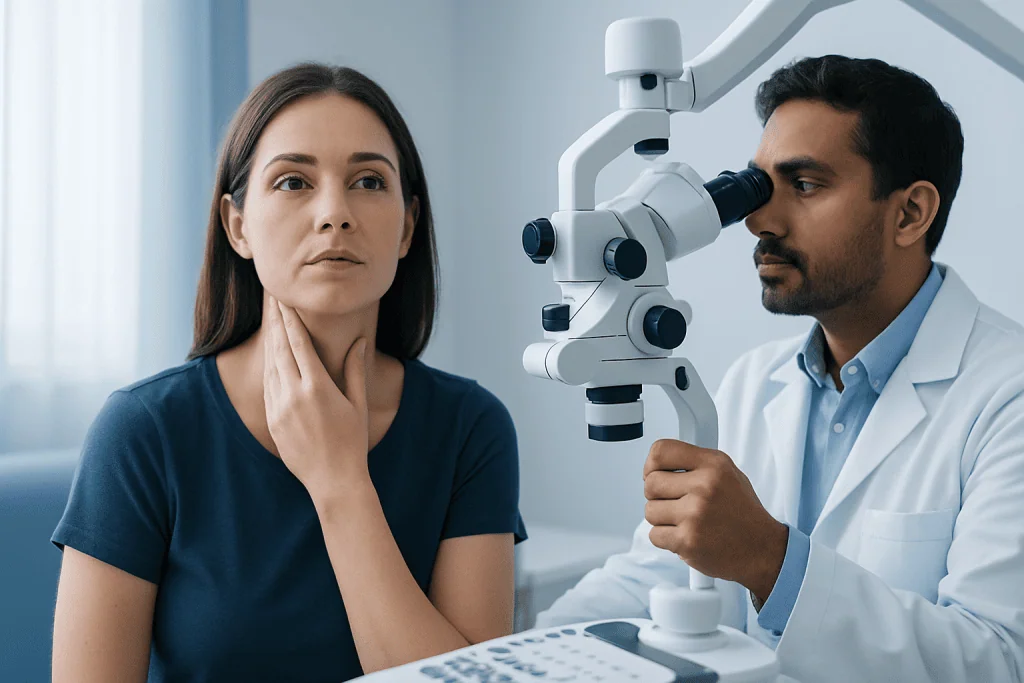
The most common sign of pleomorphic adenoma is a firm, movable, slowly enlarging lump. When the parotid gland is affected, the swelling is often seen near the angle of the jaw or in front of the ear. Tumors in minor salivary glands may appear as a smooth swelling on the roof of the mouth, inner cheek, lip, or other areas inside the mouth.
Many people have no pain and feel otherwise well. This painless nature is one reason the condition is often discovered late. The skin over the lump is usually normal, and there are often no general symptoms such as fever or weight loss.
Less commonly, a larger tumor may cause a sense of fullness, discomfort when chewing, or visible facial asymmetry. Symptoms such as facial weakness, numbness, rapid growth, persistent pain, or difficulty swallowing are not typical for a simple pleomorphic adenoma and deserve prompt assessment, because they may point to another condition or a more complicated tumor.
- Painless swelling near the ear, jaw, or neck
- A lump inside the mouth, especially on the palate
- Slow enlargement over time
- Occasional pressure or cosmetic concern from a larger mass
Why pleomorphic adenoma happens

Pleomorphic adenoma develops when salivary gland cells begin to grow in an abnormal but usually noncancerous way. The exact reason this starts is often unclear. In most patients, there is no single known cause and no action that clearly triggered the tumor.
Researchers understand some of the biological changes involved, including alterations in genes that help regulate cell growth. However, this does not usually mean the tumor is inherited. Most cases happen sporadically, meaning they arise by chance rather than being passed through families.
Certain factors may be associated with a higher likelihood of salivary gland tumors in general, such as prior radiation exposure to the head and neck. Still, many people with pleomorphic adenoma have no identifiable risk factor. It is also important to know that this tumor is not contagious and is not caused by routine dental care, eating habits, or common infections.
How doctors diagnose pleomorphic adenoma
Diagnosis begins with a careful medical history and physical examination. A doctor will ask how long the lump has been present, whether it has changed in size, and whether there are symptoms such as pain, facial weakness, or trouble swallowing. The location, texture, and mobility of the lump can provide useful clues, but examination alone cannot confirm the diagnosis.
Imaging is often used to learn the exact size and position of the tumor and its relation to nearby structures. Ultrasound may be helpful for more superficial lumps, while MRI or CT can give a fuller picture in larger or deeper tumors. Imaging also helps the surgical team plan the safest way to remove the mass. In some cases, this evaluation is part of broader diagnostic imaging of the head and neck.
A fine-needle aspiration biopsy is commonly performed. In this test, a thin needle is used to remove a small sample of cells for laboratory analysis. It can often distinguish a benign tumor like pleomorphic adenoma from other salivary gland conditions. Final confirmation usually comes after the tumor is removed and examined by a pathologist. If the growth is located in a difficult area, assessment by specialists in ENT care may be recommended.
Treatment options and what surgery involves
The main treatment for pleomorphic adenoma is surgical removal. Although the tumor is usually benign, surgery is generally advised because the mass can continue to grow, may become harder to remove later, and has a risk of recurring if not fully excised. Very rarely, a long-standing pleomorphic adenoma can undergo malignant change, which is another reason timely treatment matters.
The exact operation depends on where the tumor is located. In the parotid gland, surgeons usually remove the tumor with a margin of normal tissue rather than simply shelling it out. This careful approach lowers the risk of leaving behind microscopic tumor cells. If the tumor is in a minor salivary gland or under the jaw, the procedure is adapted to that area.
One important surgical consideration is protection of nearby nerves, especially the facial nerve in parotid surgery. The healthcare team explains the benefits and risks before treatment. Some patients may benefit from care in a center experienced in head and neck surgery, where surgeons routinely manage salivary gland tumors and preserve important structures whenever possible.
After surgery, the removed tissue is examined in detail. If the diagnosis is confirmed as pleomorphic adenoma and the tumor has been completely removed, additional treatment is often not needed. Follow-up visits are still important because recurrence can occur, sometimes many years later.
Recovery, outlook, and chance of recurrence
Most people recover well after treatment, and the overall outlook is favorable. Because pleomorphic adenoma is usually benign, complete removal often leads to long-term control. Recovery time depends on the tumor’s size, location, and the type of surgery performed, as well as the person’s general health.
It is normal to have some swelling, tenderness, or temporary numbness after surgery. The care team will provide guidance about wound care, eating, activity, and when to return for review. If the operation involved the parotid area, the medical team may also check facial movements during recovery.
The main long-term concern is recurrence, which means the tumor returns after treatment. Recurrence is more likely if the tumor capsule was disrupted or if tumor cells were left behind. Even when surgery is successful, doctors may advise periodic review over time. In uncommon situations where the tumor appears atypical or cancer is suspected, further evaluation by specialists in oncology care may be appropriate.
Self-care and what patients can do before and after treatment
There is no proven way to prevent pleomorphic adenoma entirely, because its exact cause is often unknown. Still, practical self-care can support timely diagnosis and recovery. Any new lump near the ear, jaw, or inside the mouth that does not go away should be checked by a qualified doctor or dentist.
Before treatment, it helps to keep notes about when the swelling first appeared, whether it has changed, and whether symptoms such as pain or facial weakness have developed. Bringing this information to an appointment can make the assessment more efficient. Patients may also wish to ask what type of imaging or biopsy is planned and what the goals of surgery are.
After treatment, patients should attend follow-up appointments and report any new swelling, changes in the surgical area, or unusual symptoms. Good oral hygiene, balanced nutrition, and following the surgeon’s instructions can aid healing. Near the end of the treatment journey, some international patients may seek care at Acibadem International, where multidisciplinary specialists in JCI-accredited hospitals diagnose and treat salivary gland conditions.
When to seek medical care
Medical evaluation is advisable for any persistent lump near the ear, jaw, neck, or inside the mouth, especially if it lasts more than a couple of weeks or seems to be enlarging. While many salivary gland lumps are benign, only proper assessment can identify the cause and guide the right treatment.
Prompt medical care is especially important if the lump grows quickly, becomes painful, causes facial weakness, affects chewing or swallowing, or is associated with numbness or skin changes. These features do not automatically mean cancer, but they do need timely review.
Patients who have already been treated for pleomorphic adenoma should also seek follow-up if a new lump appears in the same area or if there are concerns during recovery. Early reassessment can help detect recurrence or another salivary gland problem while it is easier to manage.
Frequently asked questions
Is pleomorphic adenoma cancer?
Pleomorphic adenoma is usually a benign, meaning noncancerous, salivary gland tumor. However, it still needs proper diagnosis and treatment because it can continue to grow, recur after incomplete removal, and in rare cases may undergo malignant change over time.
Where does pleomorphic adenoma usually occur?
It most commonly develops in the parotid gland, the large salivary gland located in front of and below the ear. It can also occur in the submandibular gland under the jaw or in the smaller salivary glands inside the mouth, especially on the palate.
What does pleomorphic adenoma feel like?
It often feels like a firm, smooth, slow-growing lump that is not painful. Many people first notice it because of visible swelling or facial asymmetry rather than discomfort.
How is pleomorphic adenoma confirmed?
Doctors usually combine a physical examination with imaging such as ultrasound, MRI, or CT, plus a fine-needle aspiration biopsy. The final diagnosis is most often confirmed after surgical removal, when the tissue is examined under a microscope.
Does pleomorphic adenoma always need surgery?
Surgery is the standard treatment in most cases. Even though the tumor is usually benign, removal is generally advised because it can enlarge over time and may come back if not completely excised.
Can pleomorphic adenoma come back after treatment?
Yes, recurrence is possible, sometimes years after surgery. The risk is lower when the tumor is removed completely and carefully, which is why specialist follow-up may be recommended.
References
- National Cancer Institute
- American Cancer Society
- National Institute of Dental and Craniofacial Research
- American Academy of Otolaryngology–Head and Neck Surgery
- MedlinePlus
This article is for general information only and is not a substitute for professional medical advice. Please consult a qualified doctor about your individual situation.
Oncology care in Turkey — second opinion and treatment plan
JCI-accredited · board-certified surgeons · reply within 24h
Add us as a Preferred Source to see more of our trusted health content across Google Search, AI Overviews and Discover.

More from the Health Library



Related Specialists

Dr. Murat Güven
Pediatrics
Prof. Dr. Derya Eroğlu
Gynecology & Obstetrics
Dr. Sertaç Esin
Acibadem Life Clinical Service
Dr. Levent Konur
Gynecology & Obstetrics