Understanding Pyogenic Arthritis: A Complete Patient Guide

Pyogenic arthritis is a medical term for an infected joint, usually caused by bacteria. Sudden joint pain, swelling, warmth, fever and difficulty moving the joint are common warning signs.
Key Takeaways
- Pyogenic arthritis is a medical term for an infected joint, usually caused by bacteria.
- Sudden joint pain, swelling, warmth, fever and difficulty moving the joint are common warning signs.
- Testing joint fluid is central to diagnosis and helps identify the germ causing infection.
- Treatment usually includes urgent antibiotics and drainage of infected fluid from the joint.
- Children, older adults and people with weakened immunity or existing joint disease may have a higher risk.
- A painful, swollen joint with fever or feeling unwell requires urgent medical assessment.
Pyogenic arthritis, also called septic arthritis, is an infection inside a joint that is most often caused by bacteria. It can damage cartilage quickly, but early diagnosis, antibiotics and removal of infected joint fluid can support recovery and help preserve joint function.
What is pyogenic arthritis?
Pyogenic arthritis is an infection within a joint, most commonly caused by bacteria. It is also often called septic arthritis. The infection triggers inflammation and the buildup of infected fluid, or pus, in and around the joint. Because inflammation can harm cartilage and other joint structures, pyogenic arthritis requires prompt medical assessment and treatment.
Any joint can be affected, but the knee is a common site. The hip, shoulder, ankle, wrist, elbow and smaller joints may also be involved. In adults, the infection often affects one joint. In newborns, young children, older adults and people with reduced immunity, more than one joint can occasionally be affected.
Pyogenic arthritis is different from osteoarthritis, rheumatoid arthritis and gout, although these conditions can cause overlapping symptoms such as pain and swelling. It is also distinct from joint pain caused by an injury. A clinician needs to identify the cause promptly because bacterial joint infection is treated differently from noninfectious forms of arthritis.
How pyogenic arthritis affects the joint
A healthy joint contains a small amount of lubricating synovial fluid. When bacteria enter this space, the immune system responds with inflammation. Fluid, inflammatory cells and bacterial products can build up, increasing pressure within the joint and causing marked pain and restricted movement.
Cartilage has a limited blood supply and can be vulnerable to the effects of intense inflammation. Without timely treatment, infection may injure cartilage, bone and surrounding soft tissues. This can lead to ongoing stiffness, pain, reduced movement or, in some cases, lasting joint damage.
The speed at which symptoms develop varies. Some people become unwell within hours or a few days, while others—particularly older people or those with weakened immune systems—may have less obvious symptoms. A rapid change in joint comfort or ability to bear weight should not be ignored.
Symptoms and signs to recognize

Pyogenic arthritis commonly causes severe pain in one joint that develops quickly. The joint may be swollen, warm, tender and difficult to move. People may avoid using the affected limb because movement can be particularly painful, and a hip infection may present as groin, thigh or buttock pain rather than visible swelling.
Fever, chills, tiredness and a general feeling of illness can occur, but not everyone has a fever. Infants and young children may be unusually irritable, feed poorly, cry when a limb is moved, or refuse to crawl or walk. Older adults may have confusion, weakness or a decline in mobility rather than classic symptoms.
- Sudden, intense joint pain
- Swelling, redness or warmth around a joint
- Reduced range of motion or inability to use the limb normally
- Fever or feeling unwell
- Difficulty walking or putting weight through a leg
These symptoms can also occur with gout, inflammatory arthritis, injury or other conditions. However, it is important not to assume that a painful, swollen joint is due to a familiar arthritis flare, especially if symptoms are new, unusually severe or accompanied by fever.
Causes and factors that increase risk
Bacteria are the usual cause of pyogenic arthritis. Staphylococcus aureus is a frequent cause, although other bacteria may be involved depending on a person’s age, health, recent medical care and possible exposure. Less commonly, fungi or other microorganisms can infect a joint; these causes may develop more gradually and require specialized evaluation.
Germs may reach a joint through the bloodstream from an infection elsewhere in the body. They can also enter directly after a penetrating injury, animal bite, surgery, injection or procedure involving a joint. Infection in nearby skin, bone or soft tissue can sometimes spread into a joint.
Risk can be higher in people with an artificial joint, rheumatoid arthritis, osteoarthritis, diabetes, kidney or liver disease, skin infections, weakened immunity, or a history of joint surgery. Medicines that suppress the immune system may also raise susceptibility. Having a risk factor does not mean a person will develop pyogenic arthritis, but it can lower the threshold for seeking assessment when symptoms appear.
How doctors diagnose pyogenic arthritis
Diagnosis begins with a medical history and physical examination. The clinician will ask when symptoms started, whether there has been a recent infection, injury, injection, surgery or travel, and whether the person has medical conditions or medicines that affect immunity. They will assess the painful joint and look for signs of infection elsewhere.
The most important test is usually joint aspiration, also called arthrocentesis. Using a sterile needle, a clinician removes a sample of joint fluid for laboratory testing. The sample may be examined for white blood cells, crystals and bacteria, and it is cultured to identify the organism and guide antibiotic selection. Blood tests and blood cultures can help assess inflammation and detect bacteria in the bloodstream.
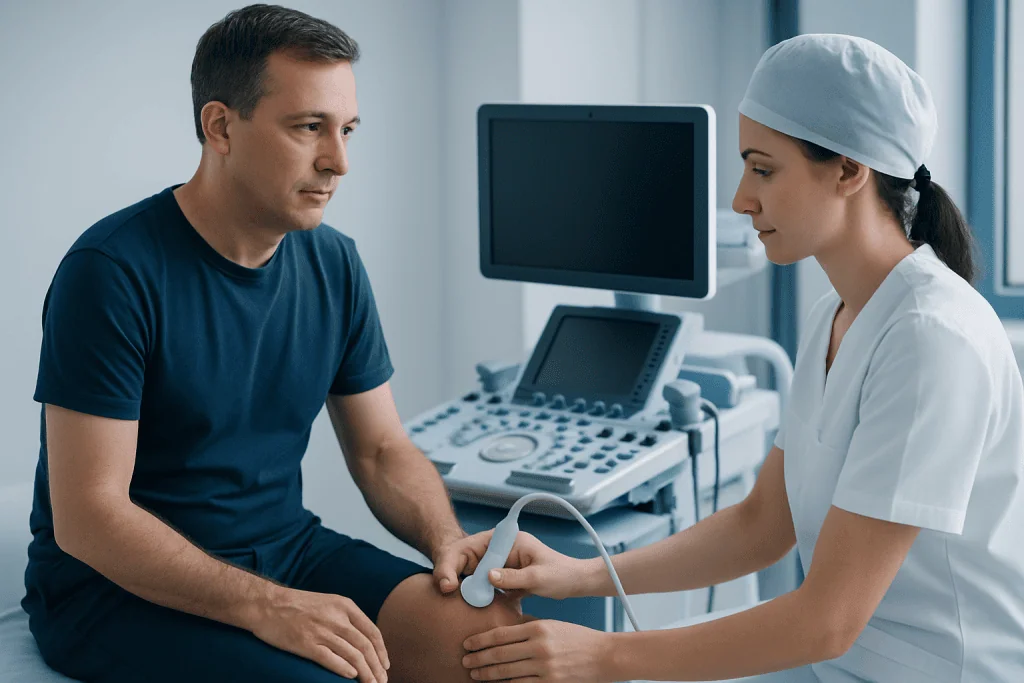
Imaging may support the assessment. Ultrasound can help detect fluid and guide aspiration, especially in deeper joints such as the hip. X-rays can show baseline joint changes, while magnetic resonance imaging or computed tomography may be considered when infection in bone or deeper tissues is suspected. Imaging alone cannot reliably rule out a joint infection, so fluid testing remains especially important.
Treatment and recovery
Pyogenic arthritis is generally treated in hospital or through urgent specialist care. Antibiotics are started promptly after appropriate cultures are obtained whenever possible. Initial treatment is often given intravenously because it reaches effective levels in the body quickly. Once laboratory results are available and the person is improving, the antibiotic plan may be adjusted and, in selected cases, changed to an oral medicine.
Removing infected fluid is another key part of care. Drainage may be performed with repeated needle aspiration, arthroscopy, or open surgery, depending on the affected joint, the amount of infection and the person’s overall condition. For appropriate patients, arthroscopy may allow the surgeon to wash out the joint and remove infected material through small incisions.
The length of treatment depends on the germ involved, the joint affected, whether there is infection in nearby bone, and the response to treatment. Pain relief, rest and temporary support for the joint may be recommended early on. As pain and inflammation improve, physiotherapy and carefully guided movement can help restore strength, flexibility and everyday function.
Follow-up is important. Clinicians monitor symptoms, joint function and sometimes repeat blood tests to confirm that inflammation is settling. If an artificial joint is infected, management may be more complex and can involve orthopedic and infectious disease specialists. Acibadem International’s multidisciplinary specialists and JCI-accredited hospitals diagnose and treat pyogenic arthritis for international patients.
Reducing risk and supporting joint health
Not every case of pyogenic arthritis can be prevented, because bacteria can sometimes spread through the bloodstream without warning. Still, prompt treatment of skin, urinary, dental or other infections may reduce the chance of bacteria spreading. Keeping wounds clean and seeking care for deep, contaminated or worsening wounds is also sensible.
People with diabetes can help lower infection risk by managing blood glucose as advised and checking the skin, particularly the feet, for cuts or sores. Those taking immune-suppressing medicines should discuss fever, signs of infection and any planned procedures with their treating team. They should not stop prescribed medication without medical advice.
After treatment, gradual rehabilitation can help recovery. Following the recommended exercise plan, attending follow-up appointments and reporting renewed pain, swelling or fever are practical ways to support safe healing. Returning to strenuous activity should be guided by the clinician or physiotherapist, particularly after surgery.
When to seek medical care
A person should seek urgent medical care for a suddenly painful, swollen, warm joint, especially if there is fever, chills, inability to bear weight, or difficulty moving the joint. This is particularly important after recent joint surgery, an injection, a penetrating injury, or when an artificial joint is present.
Emergency assessment is also appropriate if joint symptoms occur with confusion, faintness, severe weakness, rapid breathing, a widespread rash, or a person appears seriously unwell. Infants and children who refuse to use an arm or leg, have unexplained irritability, or develop fever with a limp need prompt medical evaluation.
Early treatment can reduce the risk of joint damage and other complications. Even when symptoms turn out to have another cause, timely assessment of a possible bacterial joint infection is the safest approach.
Frequently asked questions
Is pyogenic arthritis the same as septic arthritis?
Yes. Pyogenic arthritis and septic arthritis are commonly used terms for an infection within a joint. The term pyogenic refers to an infection that produces pus, usually because of bacteria.
Can pyogenic arthritis be cured?
Many people recover well when the infection is recognized and treated promptly with appropriate antibiotics and drainage. Recovery can take time, and some people need rehabilitation to regain joint movement and strength. The outcome depends on factors such as the affected joint, the causative germ and how quickly treatment begins.
How quickly does pyogenic arthritis develop?
Symptoms may develop within hours to a few days, particularly with bacterial infection. Some people, including older adults and people with reduced immunity, may have subtler or more gradual symptoms. A new painful, swollen joint should be assessed urgently.
Is pyogenic arthritis contagious?
The joint infection itself is not spread through ordinary contact with another person. However, the bacteria that caused it may sometimes be transmitted in specific ways, depending on the organism and source of infection. A healthcare professional can explain whether any precautions are needed.
Can a joint infection happen without fever?
Yes. Fever is common but not present in every case. Older adults, people with weakened immune systems and those taking certain medicines may have little or no fever despite a serious infection.
What happens if pyogenic arthritis is not treated?
Without treatment, inflammation and infection can damage cartilage and other joint structures. Infection may also spread beyond the joint and cause serious illness. Prompt medical assessment and treatment are important to protect both joint function and overall health.
References
- Centers for Disease Control and Prevention
- National Institute of Arthritis and Musculoskeletal and Skin Diseases
- Merck Manual Professional Edition
- American Academy of Orthopaedic Surgeons
- National Health Service
This article is for general information only and is not a substitute for professional medical advice. Please consult a qualified doctor about your individual situation.
Arthritis in Turkey — costs, top hospitals & a free quote
JCI-accredited · board-certified surgeons · reply within 24h
Add us as a Preferred Source to see more of our trusted health content across Google Search, AI Overviews and Discover.

Physical Medicine & Rehabilitation
Restoring movement and function after injury, surgery or neurological conditions.
152 specialists in this unit