Understanding Speech Therapy: A Complete Patient Guide
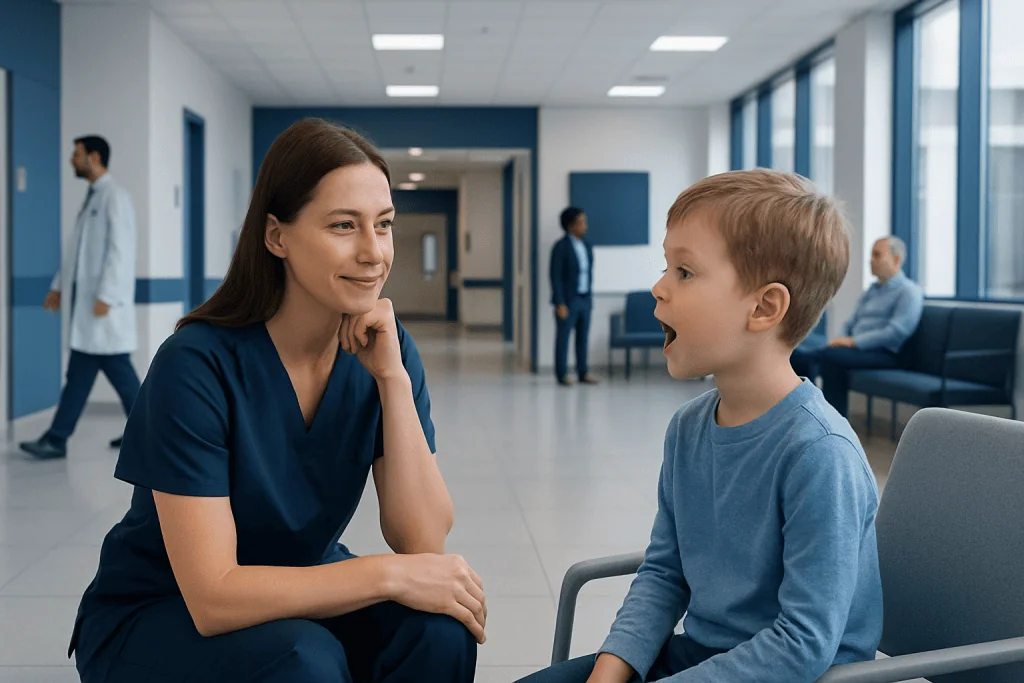
Speech therapy can help with speech, language, voice, fluency, social communication, and swallowing difficulties. Treatment plans are individualized after assessment by a speech-language pathologist.
Key Takeaways
- Speech therapy can help with speech, language, voice, fluency, social communication, and swallowing difficulties.
- Treatment plans are individualized after assessment by a speech-language pathologist.
- Both children and adults may benefit, including people recovering from stroke or living with neurological conditions.
- Progress often depends on the cause of the problem, how early therapy begins, and regular practice.
- Persistent communication or swallowing changes should be assessed by a qualified healthcare professional.
Speech therapy is a structured treatment that helps children and adults improve communication and, in some cases, swallowing. It is tailored to the person’s needs and may support clearer speech, better language skills, a healthier voice, and safer eating and drinking.
What speech therapy is and how it helps
Speech therapy is a healthcare service that evaluates and treats problems related to speaking, understanding language, using language, voice, fluency, and swallowing. It is provided by a trained speech-language pathologist, sometimes called a speech therapist. The goal is to help a person communicate more effectively and, when swallowing is affected, to eat and drink more safely.
Speech therapy is not only for children with delayed speech. Adults may also need it after a stroke, brain injury, surgery, neurological disease, or voice strain. Some people seek therapy because they stutter, have difficulty pronouncing certain sounds, or feel that others often struggle to understand them.
The approach varies from one person to another. A child may work on understanding words, combining sentences, or producing sounds more clearly. An adult may focus on rebuilding speech after neurological injury, reducing hoarseness, improving breath support for speaking, or learning strategies for communication in daily life.
Because communication affects learning, relationships, confidence, and independence, speech therapy can play an important role in quality of life. It often works best when started promptly and supported by regular practice at home, school, or work.
What conditions can speech therapy treat?
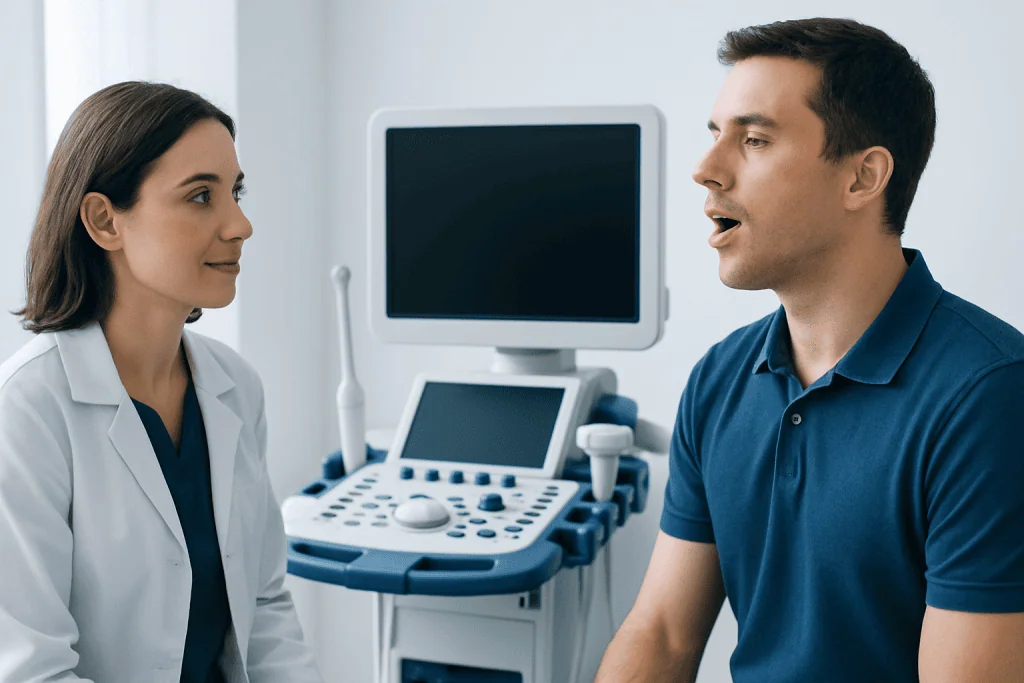
Speech therapy covers several different areas, and many people are surprised by how broad it is. It may help with articulation problems, where sounds are unclear; language disorders, where understanding or expressing ideas is difficult; and fluency disorders such as stuttering. It can also support people with voice disorders, social communication challenges, and swallowing problems.
In children, speech therapy is commonly used for speech sound disorders, language delay, developmental conditions, hearing-related communication issues, and feeding or swallowing concerns. In adults, therapy is often part of recovery after stroke, traumatic brain injury, head and neck surgery, or progressive neurological conditions that affect speech and swallowing.
Some people need therapy because of a structural or functional problem involving the mouth, tongue, vocal cords, or brain. Others develop difficulties gradually due to conditions such as Parkinson’s disease or after prolonged voice use. For swallowing issues, therapy may be recommended alongside evaluation for dysphagia when coughing, choking, or difficulty eating is present.
- Speech: saying sounds and words clearly
- Language: understanding and expressing ideas
- Fluency: speaking smoothly without blocks or repetitions
- Voice: pitch, loudness, quality, and vocal endurance
- Swallowing: safer chewing and swallowing
- Cognitive-communication: attention, memory, and problem-solving related to communication
Signs that someone may need speech therapy
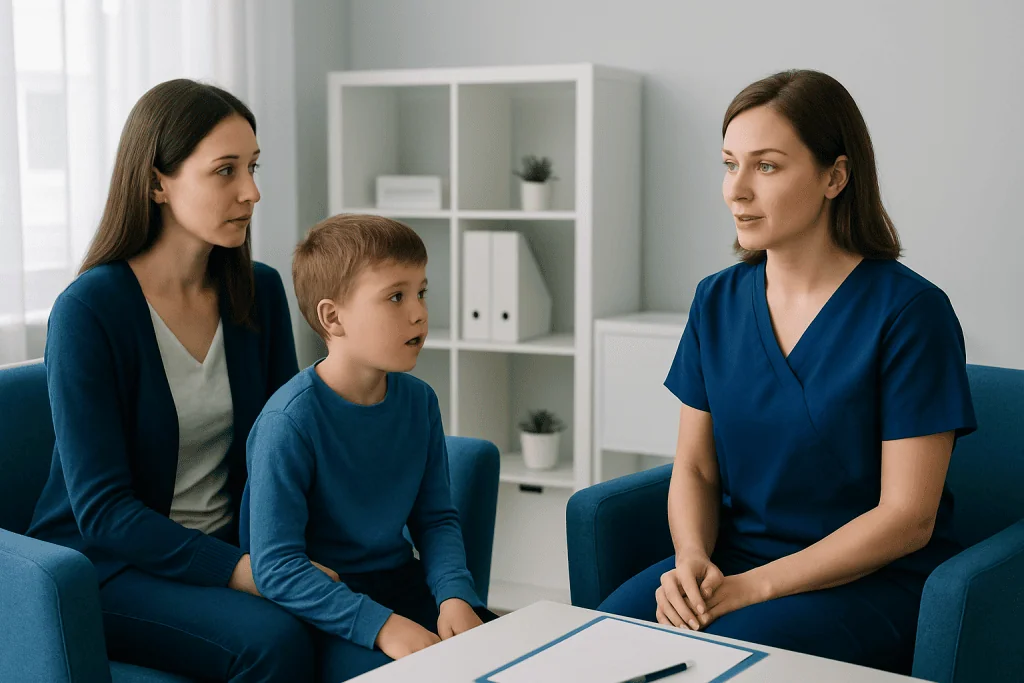
The signs depend on age and the type of difficulty. A young child may speak later than expected, use fewer words than peers, struggle to combine words into phrases, or be hard to understand. A school-age child may have trouble following directions, telling stories, learning new vocabulary, or using language socially.
Adults may notice slurred speech, word-finding problems, stuttering, persistent hoarseness, reduced volume, or a change in speech after illness or injury. Some people feel that they know what they want to say but cannot get the words out clearly. Others find that speaking is physically tiring or that their voice fades during the day.
Swallowing symptoms can also be important. Coughing during meals, a wet or gurgly voice after swallowing, food sticking in the throat, unexplained weight loss, or frequent chest infections may suggest a swallowing problem that needs medical assessment.
Any persistent communication change deserves attention, especially when it appears suddenly. Sudden speech difficulty, facial drooping, confusion, or weakness can be a medical emergency and may require urgent evaluation for conditions such as stroke.
How speech therapy assessment and diagnosis work
Speech therapy begins with a detailed assessment rather than a one-size-fits-all program. The speech-language pathologist asks about symptoms, development, medical history, education, work demands, and everyday communication needs. For children, parents or caregivers usually provide important information about milestones, behavior, hearing, and school progress.
The evaluation may include listening to speech, testing understanding and expression, checking oral muscle function, and observing voice quality, fluency, or social interaction. If swallowing is a concern, the clinician may assess how the person manages saliva, liquids, and food. Some people also need instrumental studies arranged by a medical team.
Because speech and language difficulties can have different causes, assessment may involve other specialists. Depending on the situation, hearing tests, neurological evaluation, ENT assessment, imaging, or developmental assessment may be advised. This team approach helps identify whether the main issue is speech, language, hearing, voice, swallowing, or an underlying medical condition.
After the assessment, the clinician explains the findings and sets goals that are practical and meaningful. These goals may focus on speaking more clearly, using longer sentences, improving voice quality, communicating at work, or swallowing with greater safety and comfort.
What happens during speech therapy sessions?
Speech therapy sessions are tailored to the person’s age, diagnosis, strengths, and daily needs. Therapy may be one-to-one or, in some settings, part of a group program. Sessions can take place in a hospital, rehabilitation center, outpatient clinic, school, or sometimes through telehealth when appropriate.
For speech sound problems, treatment may involve listening to sounds, practicing mouth placement, repeating words, and building accuracy in conversation. For language difficulties, therapy may focus on vocabulary, sentence structure, comprehension, storytelling, and practical communication strategies. Stuttering therapy often includes techniques to improve fluency and reduce the stress linked to speaking.
Voice therapy may include breath support, posture, vocal hygiene, and exercises to reduce strain. Swallowing therapy may involve changing food textures, modifying posture during meals, strengthening selected muscles, or learning safer swallowing strategies. In some cases, speech therapy is part of a broader rehabilitation plan that may include physical therapy and rehabilitation or neurological care.
Home practice is usually an important part of progress. The therapist may suggest short, regular exercises and strategies for caregivers, teachers, or family members to reinforce therapy goals in everyday situations. Consistency often matters more than intensity alone.
Treatment options beyond exercises alone
Speech therapy itself is a treatment, but some people need additional medical or surgical care depending on the cause. For example, hoarseness due to vocal cord problems may need assessment by an ENT specialist, and swallowing difficulty may need evaluation by gastroenterology or neurology. A child with recurrent ear problems may need hearing support before communication skills can fully improve.
Adults with neurological causes may benefit from comprehensive rehabilitation after hospital treatment. Someone recovering from a neurological event may receive speech therapy alongside stroke rehabilitation to address speech, language, cognition, and swallowing in a coordinated way. People with voice disorders may also be referred for ear, nose and throat (ENT) care when structural problems are suspected.
For swallowing concerns, doctors may recommend tests or procedures to understand why food or liquid is not moving safely. In selected cases, speech therapy works together with dietary changes, medical treatment, or further evaluation through endoscopy if symptoms suggest a problem lower in the throat or esophagus rather than only the mouth or upper swallowing muscles.
The best treatment plan depends on the diagnosis, symptom severity, age, and the person’s goals. A coordinated team can be especially helpful when communication problems occur with hearing loss, developmental differences, head and neck disease, or neurological disorders.
Self-care, family support, and what affects progress
Progress in speech therapy is often gradual, and improvement may happen in small steps. Many people benefit from short daily practice rather than occasional long sessions. Family support can make a meaningful difference, especially for children, by turning practice into part of normal conversation, play, reading, or routines at home.
Good communication habits can also help. Speaking slowly, reducing background noise, making eye contact, and allowing extra time to respond may support both children and adults with communication difficulties. For voice problems, hydration, avoiding vocal strain, and taking breaks from shouting or prolonged talking can be useful.
Results depend on several factors, including the underlying cause, how long symptoms have been present, hearing status, general health, motivation, and access to regular therapy. Early intervention can be particularly helpful in children, but adults can also make meaningful gains, including after serious illness or neurological injury.
Near the end of treatment planning, many people ask what ongoing support looks like. Follow-up may be needed to adjust goals, maintain gains, or address new challenges. Acibadem International’s multidisciplinary specialists and JCI-accredited hospitals evaluate and treat speech, voice, and swallowing conditions for international patients when coordinated care is needed.
When to seek medical care
A medical review is advisable if speech, language, voice, or swallowing problems persist, worsen, or interfere with daily life. Children should be assessed if communication skills seem significantly delayed, if speech is hard to understand for their age, or if feeding and swallowing raise concern. Adults should seek evaluation for new hoarseness, stuttering, slurred speech, voice fatigue, or swallowing problems that do not improve.
Urgent medical care is needed for sudden trouble speaking, understanding speech, facial drooping, weakness, severe confusion, or sudden swallowing difficulty, as these can be signs of a neurological emergency. Recurrent choking, coughing during meals, unexplained weight loss, or repeated chest infections also require prompt attention.
People with a history of stroke, neurological disease, head and neck surgery, or prolonged intubation may benefit from early referral rather than waiting for symptoms to settle on their own. A qualified doctor or speech-language pathologist can guide the next steps and coordinate any needed testing or specialist care.
Frequently asked questions
Is speech therapy only for children?
No. Speech therapy helps both children and adults. Adults may need it after stroke, brain injury, neurological disease, voice disorders, or swallowing problems.
How long does speech therapy take to work?
The timeline varies from person to person. Progress depends on the cause of the problem, its severity, how often therapy is attended, and how consistently skills are practiced outside sessions.
Can speech therapy help with swallowing problems?
Yes. Speech-language pathologists often assess and treat swallowing difficulties as well as communication problems. They may recommend exercises, safer swallowing techniques, and changes in posture or food texture when appropriate.
What is the difference between speech and language problems?
Speech problems relate to how sounds are produced, such as unclear pronunciation or slurred words. Language problems involve understanding, organizing, or expressing ideas through words, sentences, and conversation.
Does a child with delayed speech always need therapy?
Not always, but a professional assessment is important if there are concerns. Some children catch up naturally, while others benefit from early support that improves communication and learning outcomes.
Can speech therapy be done online?
In some cases, yes. Telehealth speech therapy can be useful for selected speech, language, and voice needs, although some swallowing concerns and complex cases may require in-person assessment.
References
- American Speech-Language-Hearing Association
- National Institute on Deafness and Other Communication Disorders
- National Health Service
- Centers for Disease Control and Prevention
- World Health Organization
This article is for general information only and is not a substitute for professional medical advice. Please consult a qualified doctor about your individual situation.
Explore treatments in Turkey — costs, top hospitals & a free quote
JCI-accredited · board-certified surgeons · reply within 24h
Add us as a Preferred Source to see more of our trusted health content across Google Search, AI Overviews and Discover.

More from the Health Library



Related Specialists

Assoc. Prof. Dr. Şafak Yılmaz Baran
Gynecology & Obstetrics
Dr. Fatih Coşkun
Emergency Service
Assoc. Prof. Dr. Nezih Ziroğlu
Orthopedic Surgery & Traumatology
Dr. Mustafa Barış Kemahli
Cardiovascular Surgery