Understanding Superficial Thrombophlebitis: A Complete Patient Guide

Superficial thrombophlebitis usually causes a painful, red, warm, cord-like vein under the skin. It often affects varicose veins and may develop after an IV line, injury, or periods of reduced movement.
Key Takeaways
- Superficial thrombophlebitis usually causes a painful, red, warm, cord-like vein under the skin.
- It often affects varicose veins and may develop after an IV line, injury, or periods of reduced movement.
- A clinician may recommend ultrasound to confirm the diagnosis and rule out deep vein thrombosis.
- Treatment may include walking, leg elevation, compression, pain relief, and in some cases blood-thinning medication.
- Prompt medical review is important if symptoms spread, the leg becomes very swollen, or there is chest pain or shortness of breath.
Superficial thrombophlebitis is a blood clot with inflammation in a vein close to the surface of the skin, most often in the leg. It is usually less dangerous than a deep vein clot, but it still deserves medical attention because symptoms can overlap with more serious vein problems.
What superficial thrombophlebitis is
Superficial thrombophlebitis means a blood clot forms in a vein close to the skin and the vein becomes inflamed. It most commonly appears in the legs, especially where there are visible varicose veins, but it can also occur in the arms, sometimes after an intravenous cannula or injection. Many people notice a tender, red, warm area with a firm cord-like vein beneath the skin.
In many cases, superficial thrombophlebitis improves with supportive care and careful follow-up. However, it should not be dismissed as a simple skin problem. Some people have a nearby clot in a deeper vein, or the clot can extend toward the deep venous system, which is why proper assessment matters.
A useful way to understand this condition is to compare it with deep vein thrombosis. In superficial thrombophlebitis, the clot is in a surface vein; in deep vein thrombosis, the clot is in a deeper vein where it may carry a higher risk of traveling to the lungs. Symptoms can overlap, so a clinician may examine the person carefully and order an ultrasound when needed.
How it feels and what people may notice
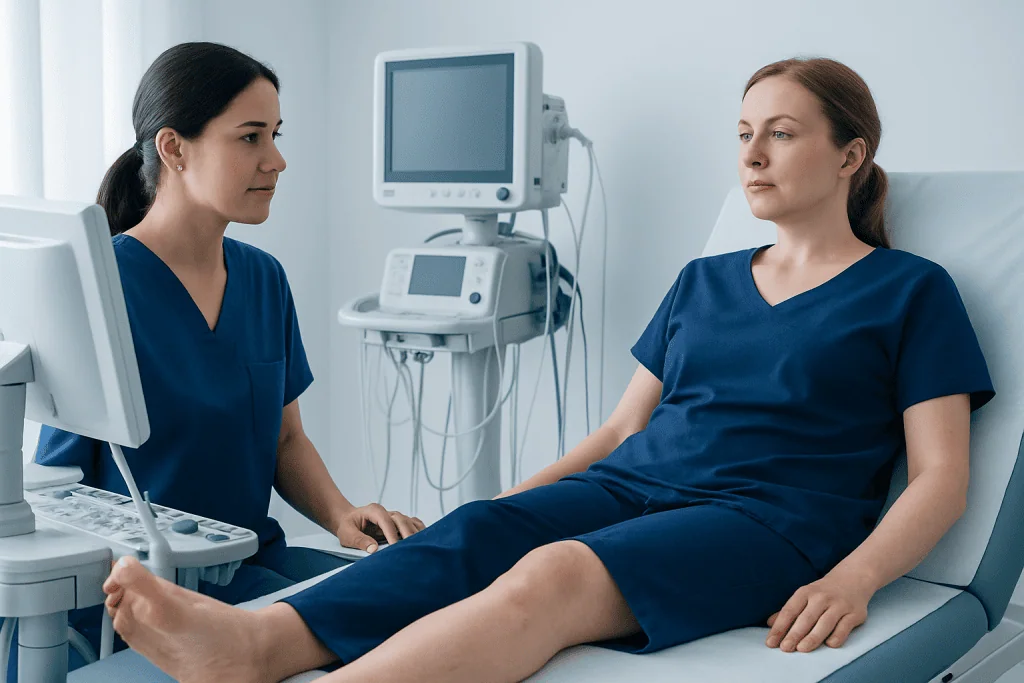
The most typical symptom is localized pain or tenderness along the course of a vein. The skin over the area may look red or slightly darker than usual, feel warm, and seem swollen. Instead of generalized swelling of the whole leg, many people feel a narrow, firm, rope-like structure under the skin.
Symptoms can begin suddenly or develop over a few days. If a varicose vein is involved, the area may become more prominent and uncomfortable when standing for a long time. Some people also report itching, a pulling sensation, or discomfort when clothing rubs over the area.
Not every painful red patch on the leg is superficial thrombophlebitis. Similar symptoms can occur with cellulitis, bruising, muscle strain, or inflamed varicose veins without a clot. This is one reason why self-diagnosis can be difficult, especially if swelling involves the entire calf or if symptoms are severe.
- Tenderness along a visible vein
- Redness or warmth over the skin
- A hard or cord-like vein under the skin
- Mild swelling near the affected area
- Discomfort that worsens with pressure or prolonged standing
Why it happens: causes and risk factors

Superficial thrombophlebitis develops when blood flow in a superficial vein slows down or the vein wall becomes irritated, allowing a clot to form and inflammation to follow. A common setting is the presence of varicose veins, which can alter blood flow and make surface veins more prone to irritation. The condition may also develop after minor trauma, medical procedures involving a vein, or a period of reduced mobility.
Risk factors overlap with those for other venous clots. They include recent surgery, pregnancy and the weeks after childbirth, hormonal medications such as estrogen-containing contraceptives, older age, obesity, smoking, and a personal or family history of clotting problems. Dehydration and long periods of sitting, such as during travel or illness, may also contribute in some cases.
Sometimes superficial thrombophlebitis is a one-time event with an obvious cause. In other situations, especially when it occurs repeatedly, appears in unusual sites, or happens without a clear trigger, doctors may look for an underlying tendency to clot more easily. Rarely, migrating or recurrent superficial thrombophlebitis can be linked with inflammation, clotting disorders, or an occult medical condition that needs evaluation.
How doctors diagnose it and check for related clots
Diagnosis starts with the history and physical examination. A clinician will ask when symptoms started, whether there are varicose veins, any recent travel or surgery, use of hormones, prior clots, and whether there are warning symptoms such as marked leg swelling, chest pain, or shortness of breath. On examination, the affected vein may feel like a tender, firm cord under the skin.
Although the diagnosis may seem straightforward, ultrasound is often important. A venous duplex ultrasound can show where the clot is, how long it is, and whether it is close to a junction with the deep veins. It also helps rule out varicose veins complications and confirm whether a deeper clot is present.
Blood tests are not always needed for a typical, mild case. However, they may be considered when there is suspicion of infection, recurrent thrombophlebitis, or an inherited or acquired clotting tendency. The main goal of testing is not just to name the condition, but to decide who can be treated conservatively and who needs closer monitoring or anticoagulation.
Treatment options and what recovery usually involves
Treatment depends on the location of the clot, how extensive it is, the level of pain, and whether there is any connection to the deep venous system. Many uncomplicated cases are managed with walking, leg elevation when resting, warm compresses, and anti-inflammatory pain relief if suitable for the person. Compression stockings may also be advised to reduce discomfort and support venous circulation.
When the clot is longer, close to the deep veins, or the person has higher-risk features, a doctor may recommend anticoagulant medication for a limited time. This lowers the chance that the clot will extend or that a deep vein thrombosis will develop. The exact choice and duration vary, so treatment should be individualized by a qualified clinician rather than started without guidance.
If varicose veins are contributing to repeated symptoms, longer-term vein care may be discussed after the acute inflammation settles. In selected patients, this may include assessment by specialists in varicose veins treatment or evaluation by cardiovascular surgery teams when anatomy and symptoms suggest a procedural approach could help.
Recovery is often gradual over days to weeks. Pain and redness tend to improve first, while the vein may remain firm or visible for longer. Follow-up is important if symptoms worsen, spread upward, or fail to improve as expected.
Prevention and day-to-day self-care
Prevention focuses on supporting healthy blood flow and addressing reversible risks. Regular walking, avoiding long periods of sitting or standing without movement, staying well hydrated, and maintaining a healthy weight can all help. During long trips, simple calf exercises and short walking breaks may reduce venous stasis.
People with varicose veins may benefit from medical assessment if symptoms are frequent or bothersome. Compression stockings can help some individuals, especially those who stand for long periods, although the best choice depends on comfort, circulation, and a clinician’s advice. Skin care also matters because irritated skin over damaged veins can make symptoms feel worse.
After an episode of superficial thrombophlebitis, it is sensible to review medications and personal risk factors with a doctor. Hormonal therapy, smoking, immobility, and recent surgery may change the prevention plan. If recurrent clots occur, specialists may investigate whether a broader blood or vascular condition is present and whether care through hematology or vein services is appropriate.
When to seek medical care
Medical care should be sought promptly for a new painful, red, cord-like vein, especially in the leg. Although superficial thrombophlebitis is often manageable, it can resemble or coexist with deep vein thrombosis. A clinician can decide whether ultrasound is needed and whether simple measures are enough.
Urgent medical attention is needed if the whole leg becomes swollen, the pain is significant, redness is spreading quickly, or there is fever that raises concern for infection. Emergency care is especially important for chest pain, shortness of breath, coughing up blood, fainting, or sudden severe weakness, because these symptoms can suggest a clot affecting the lungs or another serious problem.
People who are pregnant, have cancer, recently had surgery, have had previous blood clots, or are using estrogen-containing medication should have a lower threshold for evaluation. Near the end of the care journey, some patients may choose specialist assessment at Acibadem International, where multidisciplinary teams in JCI-accredited hospitals diagnose and treat venous conditions for international patients.
Frequently asked questions
Is superficial thrombophlebitis the same as a blood clot?
It involves a blood clot, but the clot is in a vein near the surface of the skin rather than in a deep vein. It also includes inflammation of the vein, which is why the area often looks red, warm, and tender. It is usually less dangerous than a deep vein clot, but it still needs proper evaluation.
Can superficial thrombophlebitis turn into deep vein thrombosis?
Sometimes it can extend toward the deep veins or occur alongside a deep vein thrombosis. The risk depends on where the clot is located, how long it is, and the person's underlying risk factors. That is why ultrasound is often used to guide treatment and follow-up.
How long does superficial thrombophlebitis last?
Pain and redness often improve within days to a few weeks, especially with supportive care. The affected vein may stay firm or noticeable for longer while the inflammation settles. Recovery time varies depending on the size and location of the clot and whether varicose veins are present.
Should a person walk or rest with superficial thrombophlebitis?
In many uncomplicated cases, gentle walking is encouraged because it supports blood flow. Rest with leg elevation can also help reduce discomfort when symptoms flare. A doctor may recommend a different plan if there is concern about a deeper clot or severe symptoms.
Do all cases need blood thinners?
No. Many mild cases are treated with compression, movement, warm compresses, and pain relief measures. Blood-thinning medication is more likely to be recommended when the clot is extensive, close to the deep venous system, or the person has higher-risk features.
What is the difference between superficial thrombophlebitis and cellulitis?
Superficial thrombophlebitis usually causes tenderness along a vein with a firm cord-like feel under the skin. Cellulitis is a skin and soft tissue infection that often causes more diffuse redness, warmth, swelling, and sometimes fever. Because the two can look similar, a clinician may need to examine the area and sometimes arrange tests.
References
- National Heart, Lung, and Blood Institute
- Centers for Disease Control and Prevention
- American Heart Association
- Society for Vascular Surgery
- National Institute for Health and Care Excellence
This article is for general information only and is not a substitute for professional medical advice. Please consult a qualified doctor about your individual situation.
Explore treatments in Turkey — costs, top hospitals & a free quote
JCI-accredited · board-certified surgeons · reply within 24h
Add us as a Preferred Source to see more of our trusted health content across Google Search, AI Overviews and Discover.