

Understanding Tendonitis: A Complete Patient Guide

Tendonitis usually develops from overuse, repeated strain, or sudden increases in activity. Pain, tenderness, stiffness, and discomfort with movement are common symptoms.
Key Takeaways
- Tendonitis usually develops from overuse, repeated strain, or sudden increases in activity.
- Pain, tenderness, stiffness, and discomfort with movement are common symptoms.
- Diagnosis is often based on a physical examination, with imaging used when needed.
- Treatment may include rest, ice, activity modification, physical therapy, and sometimes procedures.
- Early treatment can help prevent ongoing pain and long-term tendon damage.
- Medical evaluation is important if pain is severe, persistent, or follows an injury.
Tendonitis is irritation or inflammation of a tendon, the strong tissue that connects muscle to bone. It commonly causes pain with movement, tenderness, and reduced function, and it often improves with early care, activity changes, and guided rehabilitation.
Overview: what tendonitis means
Tendonitis is a common condition in which a tendon becomes irritated or inflamed. A tendon is the tough, cord-like tissue that connects muscle to bone and helps the body move. When a tendon is stressed repeatedly or more forcefully than it can tolerate, it can become painful and less able to glide smoothly during motion.
Although the term tendonitis is widely used, some long-lasting cases involve more tendon wear and degeneration than active inflammation. This is why a clinician may also use the term tendinopathy. For patients, the most important point is that tendon pain is real, common, and usually manageable with the right diagnosis, activity adjustments, and recovery plan.
Tendonitis can affect many parts of the body, especially the shoulder, elbow, wrist, knee, heel, and hip. It is often linked to sports, work tasks, exercise routines, or hobbies that repeat the same movement. It can also develop after a sudden increase in training or after returning to activity too quickly.
How tendonitis feels and where it can occur
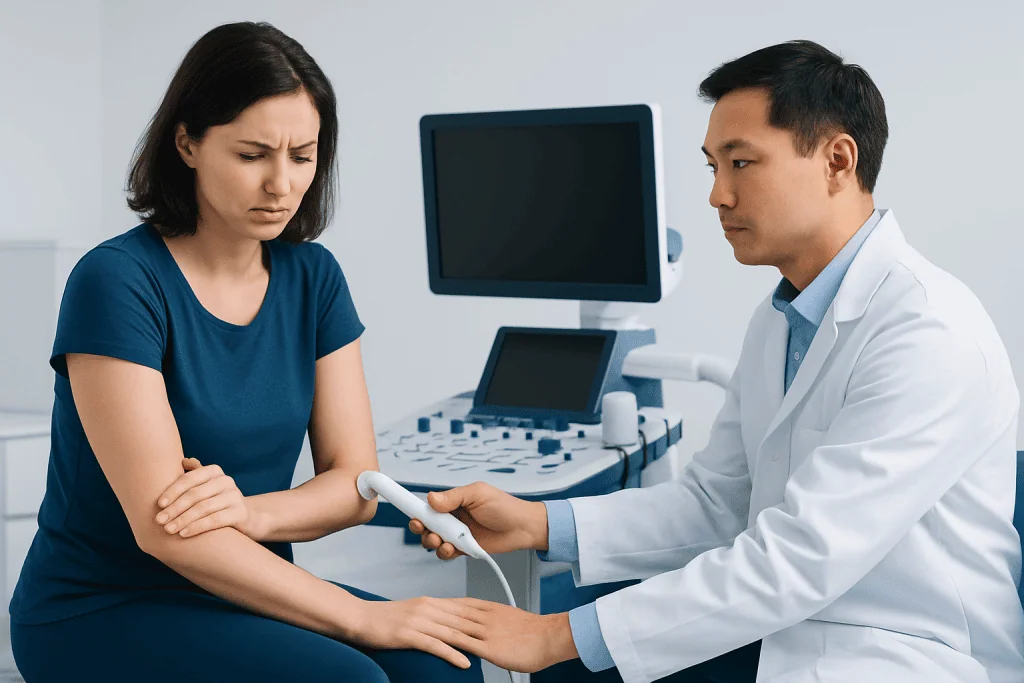
The main symptom of tendonitis is pain near a joint or along the course of a tendon. The pain may start gradually and become more noticeable during movement, exercise, lifting, gripping, climbing stairs, or walking. Some people also notice morning stiffness or discomfort after rest.
Other common symptoms include tenderness when the area is touched, mild swelling, warmth, and a feeling of weakness. In some cases, the tendon may feel thickened, or movement may produce a catching sensation. Symptoms are often worse during or after the activity that triggered the problem.
Common forms of tendonitis include shoulder tendon irritation, elbow pain such as tennis elbow, pain around the kneecap or patellar tendon, and Achilles tendon pain at the back of the ankle. The exact pattern of symptoms depends on which tendon is involved and how severe the irritation is.
- Shoulder: pain when reaching overhead or behind the back
- Elbow: pain with gripping, lifting, or twisting
- Wrist or thumb: discomfort with typing, pinching, or repetitive hand use
- Knee: pain with stairs, running, squatting, or jumping
- Achilles tendon: pain during walking, running, or rising onto the toes
Why tendonitis develops: causes and risk factors

Tendonitis most often develops when a tendon is overloaded. This can happen through repetitive movements, poor training technique, forceful motion, or doing too much too soon. A person who starts a new exercise program, increases intensity quickly, or returns to sports after a break may be at higher risk.
Work-related activities can also play a role, especially jobs that involve repeated lifting, gripping, kneeling, climbing, or overhead motion. Poor posture, limited flexibility, muscle weakness, and improper equipment use may increase strain on the tendon. Footwear that does not support the body well can contribute to lower-limb tendon problems.
Age is another factor because tendons naturally become less flexible over time. Some medical conditions may also make tendon pain more likely, including inflammatory joint disease, diabetes, and thyroid disorders. Certain medications are associated with tendon injury risk in some situations, so a doctor may review a patient’s medicines as part of the assessment.
Sometimes tendonitis appears together with nearby joint or soft tissue conditions. For example, shoulder tendon pain may overlap with shoulder impingement, while heel pain may need to be distinguished from other causes of ankle and foot symptoms. Identifying the true source of pain is important because treatment can differ from one condition to another.
How doctors diagnose tendonitis
Diagnosis usually begins with a detailed medical history and physical examination. A doctor will ask when the pain started, what activities make it worse, whether there was a recent injury, and how the symptoms affect daily life. During the examination, the clinician may check for tenderness, swelling, weakness, range of motion, and pain with specific movements.
In many cases, imaging is not needed right away, especially when the symptoms and examination clearly suggest tendonitis. However, imaging can be helpful if symptoms are severe, if the diagnosis is uncertain, or if there is concern about a tendon tear or another injury. Ultrasound can show tendon thickening or inflammation, while MRI may provide more detailed information about surrounding soft tissues.
Doctors may also consider other causes of pain, such as bursitis, arthritis, nerve irritation, stress injury, or ligament problems. This step is important because several conditions can mimic tendonitis. If the presentation is unusual or if the pain is not improving, blood tests or referral to a specialist may be appropriate.
Treatment options and recovery
Treatment for tendonitis aims to reduce pain, protect the tendon, and gradually restore strength and function. Early care often includes temporary rest from the painful activity, ice, and changes to movement patterns. This does not always mean complete inactivity; instead, it usually means reducing the load on the irritated tendon while staying as active as is safely possible.
Many people benefit from a guided rehabilitation program. Exercises may focus on flexibility, posture, muscle balance, and progressive strengthening of the tendon and surrounding muscles. A doctor or therapist may recommend physical therapy and rehabilitation to improve movement and help the tendon adapt to load in a controlled way. Bracing, taping, or supportive footwear may also be useful for selected cases.
Medicines for pain relief may be considered when appropriate, but they are only one part of treatment. Some patients with persistent symptoms may be evaluated for additional options such as injections or other procedures, depending on the tendon involved and the underlying problem. If there is a significant tear or structural damage, an orthopedic assessment may be needed, and some patients may require orthopedic surgery.
Recovery time varies. Mild cases may settle within weeks, while longer-standing tendon problems can take months to improve. A gradual return to exercise, work, or sport is important because returning too quickly can trigger symptoms again. In complex cases, a team approach including sports medicine specialists can help tailor treatment to the person’s activity level and goals.
Self-care, prevention, and protecting the tendon long term
Self-care is an important part of recovery and prevention. The key is to reduce or modify the activity that causes pain, rather than pushing through severe symptoms. Short periods of rest, ice after aggravating activity, and attention to posture or technique can help calm the tendon while healing begins.
Long-term prevention focuses on managing load. Warm-up before exercise, increase intensity gradually, and build strength in the muscles around the affected area. Flexible training plans, rest days, and varying repetitive tasks can help lower the risk of recurrence. Proper shoes, ergonomic adjustments at work, and sport-specific coaching may also be helpful.
A practical self-care approach may include:
- Reducing painful repetitive movements for a short time
- Using ice after activity if it eases symptoms
- Following a structured stretching and strengthening program
- Checking technique, posture, tools, or footwear
- Returning to sport or work duties in stages, not all at once
People with ongoing tendon pain should avoid relying only on rest for long periods, because tendons often respond best to progressive, supervised loading once serious injury has been ruled out. If symptoms are difficult to manage, a specialist can help design a safer recovery plan. At Acibadem International, multidisciplinary specialists in JCI-accredited hospitals evaluate tendon disorders and provide treatment for international patients when more advanced care is needed.
When to seek medical care
It is reasonable to seek medical advice if tendon pain lasts more than a few days, keeps returning, or interferes with work, exercise, sleep, or daily activities. Assessment is also important if the pain began after a sudden injury, if there is marked swelling, or if movement has become noticeably weak or limited.
Urgent evaluation may be needed if a person hears a pop, cannot bear weight, cannot lift or use the limb normally, or suspects a tendon rupture. Fever, redness that is spreading, or severe pain that is worsening should also be reviewed promptly because these symptoms may suggest a different problem.
Early diagnosis can help prevent chronic symptoms and guide the safest path back to activity. A qualified doctor can determine whether the problem is simple tendonitis, a tendon tear, or another condition that needs a different approach.
Frequently asked questions
What is tendonitis?
Tendonitis is irritation or inflammation of a tendon, the tissue that connects muscle to bone. It usually causes pain with movement and is often linked to overuse, repetitive motion, or a sudden increase in activity.
How is tendonitis different from a tendon tear?
Tendonitis usually means the tendon is irritated but still intact, while a tendon tear involves partial or complete damage to the tendon fibers. A tear may cause sudden pain, weakness, loss of function, or a popping sensation and often needs prompt medical assessment.
Can tendonitis heal on its own?
Mild tendonitis may improve with rest, activity changes, and gradual rehabilitation. However, pain that lasts, returns often, or limits normal function should be evaluated so the tendon is not repeatedly overloaded.
Is exercise good or bad for tendonitis?
Exercise can be helpful when it is chosen carefully and progressed gradually. In many cases, guided strengthening is part of recovery, but painful activities may need to be reduced temporarily until the tendon can tolerate more load.
How long does tendonitis take to get better?
Recovery depends on the tendon involved, how long symptoms have been present, and whether the triggering activity can be modified. Some cases improve within a few weeks, while persistent tendon problems may take several months to settle.
When should someone worry about tendonitis symptoms?
A person should seek medical care if pain is severe, follows an injury, or causes weakness or trouble using the limb. Assessment is also important if the symptoms do not improve, keep coming back, or are associated with swelling, redness, or difficulty bearing weight.
References
- American Academy of Orthopaedic Surgeons
- National Institute of Arthritis and Musculoskeletal and Skin Diseases
- NHS
- Mayo Clinic
- American Orthopaedic Society for Sports Medicine
This article is for general information only and is not a substitute for professional medical advice. Please consult a qualified doctor about your individual situation.
Joint and spine care in Turkey — expert assessment & treatment
JCI-accredited · board-certified surgeons · reply within 24h
Add us as a Preferred Source to see more of our trusted health content across Google Search, AI Overviews and Discover.

More from the Health Library



Related Specialists

Dr. Ahmet Doğan
Emergency Service
Dr. Elif Avşaroğlu
Gynecology & Obstetrics
Dt. İrem Coşar Tüfekçi
Oral & Dental Health
Assoc. Prof. Dr. Mehmet Sağır
Aesthetic Plastic & Reconstructive Surgery