Understanding Thyroid Eye Disease: A Complete Patient Guide

Thyroid eye disease is different from thyroid hormone imbalance, although the two are often related. Common symptoms include eye dryness, redness, swelling, a staring appearance, bulging eyes, and double vision.
Key Takeaways
- Thyroid eye disease is different from thyroid hormone imbalance, although the two are often related.
- Common symptoms include eye dryness, redness, swelling, a staring appearance, bulging eyes, and double vision.
- Smoking is a major risk factor and can worsen the condition and reduce treatment response.
- Treatment depends on severity and may include lubrication, thyroid management, medicines, prisms, or surgery.
- Urgent assessment is needed for reduced vision, severe pain, color vision changes, or trouble moving the eyes.
Thyroid eye disease is an autoimmune condition that affects the tissues around the eyes, often in people with Graves’ disease or other thyroid problems. It can cause irritation, eye bulging, eyelid changes, double vision, and, in some cases, vision-threatening complications that benefit from early specialist care.
What is thyroid eye disease?
Thyroid eye disease is an autoimmune condition in which the body’s immune system mistakenly targets tissues around the eyes. This leads to inflammation and swelling in the eye muscles, eyelids, fat, and connective tissues inside the eye socket. As these tissues expand, the eyes may look more prominent, feel uncomfortable, or move less smoothly.
Although it is often associated with Graves’ disease, thyroid eye disease is not exactly the same as a thyroid hormone disorder. A person may have overactive thyroid function, normal thyroid levels, or less commonly an underactive thyroid and still develop eye symptoms. The eye problem and the thyroid problem are related through the immune system, but they do not always progress in parallel.
Doctors sometimes describe the condition as having an active inflammatory phase followed by a more stable phase. During the active phase, symptoms such as redness, swelling, pain, or changing appearance may worsen over months. Later, inflammation may settle, but some structural changes, such as eyelid retraction or eye prominence, can remain and may need further treatment.
How thyroid eye disease affects the eyes and appearance
A distinctive feature of thyroid eye disease is that it can affect both comfort and appearance. Swelling behind the eyes may push the eyeballs forward, causing a bulging appearance called proptosis. Tightening of the eyelids can make the eyes look more open or give a staring expression, even when the person feels well otherwise.
The surface of the eye may also become exposed because the eyelids do not close fully, especially during sleep. This can lead to dryness, tearing, grittiness, sensitivity to light, and a feeling that something is in the eye. Some people have more watering rather than dryness because the irritated eye reflexively produces tears.
When the eye muscles become inflamed or stiff, the eyes may no longer move together properly. This can cause double vision, especially when looking up, down, or to the side. In more severe cases, swelling inside the eye socket can put pressure on the optic nerve, which is the nerve that carries visual information to the brain.
Because changes may affect facial expression and confidence, thyroid eye disease can also have an emotional and social impact. Reassuringly, many symptoms can be managed, and specialist assessment helps identify the best time for medical or surgical treatment.
Symptoms of thyroid eye disease

Symptoms can begin gradually or become noticeable over a relatively short period. They often affect both eyes, though not always to the same degree. Some people mainly notice irritation and swelling, while others first become aware of changes in eye position or appearance.
- Dry, gritty, burning, or watery eyes
- Redness of the eyes or eyelids
- Puffiness around the eyes, especially in the morning
- Eye pain or pressure, sometimes worse when looking up or down
- Bulging eyes or a prominent-eyed appearance
- Eyelid retraction, causing a widened stare
- Light sensitivity
- Double vision
- Difficulty closing the eyes fully
- Blurred vision or reduced color vision in more serious cases
Symptoms may fluctuate. For example, dryness and swelling can be worse in wind, smoke, air-conditioned environments, or after poor sleep. Active disease can also cause discomfort behind the eyes when moving them.
Any sudden drop in vision, new loss of color brightness, severe eye pain, or rapidly increasing swelling should be assessed urgently. These may be warning signs of pressure on the optic nerve or other serious eye complications.
Causes and risk factors
Thyroid eye disease develops because of an autoimmune reaction. Immune cells and antibodies trigger inflammation in tissues within the eye socket, leading to swelling and later scarring or stiffness. The condition is most strongly linked with Graves’ disease, an autoimmune thyroid disorder, but it can also occur in people with other thyroid conditions or even when thyroid blood tests are temporarily normal.
Smoking is one of the most important known risk factors. People who smoke are more likely to develop thyroid eye disease, to have more severe symptoms, and to respond less well to treatment. Avoiding secondhand smoke is also helpful, especially during the active phase of the disease.
Other factors can influence risk or severity. These include poorly controlled thyroid hormone levels, a history of radioactive iodine treatment in some patients, and individual immune system differences. Stress and general health changes may affect how symptoms are experienced, although they are not considered direct causes.
Because thyroid eye disease sits at the overlap of hormone, immune, and eye health, patients are often cared for by both endocrinology and ophthalmology specialists. This coordinated approach can be especially important when symptoms are changing.
How doctors diagnose thyroid eye disease
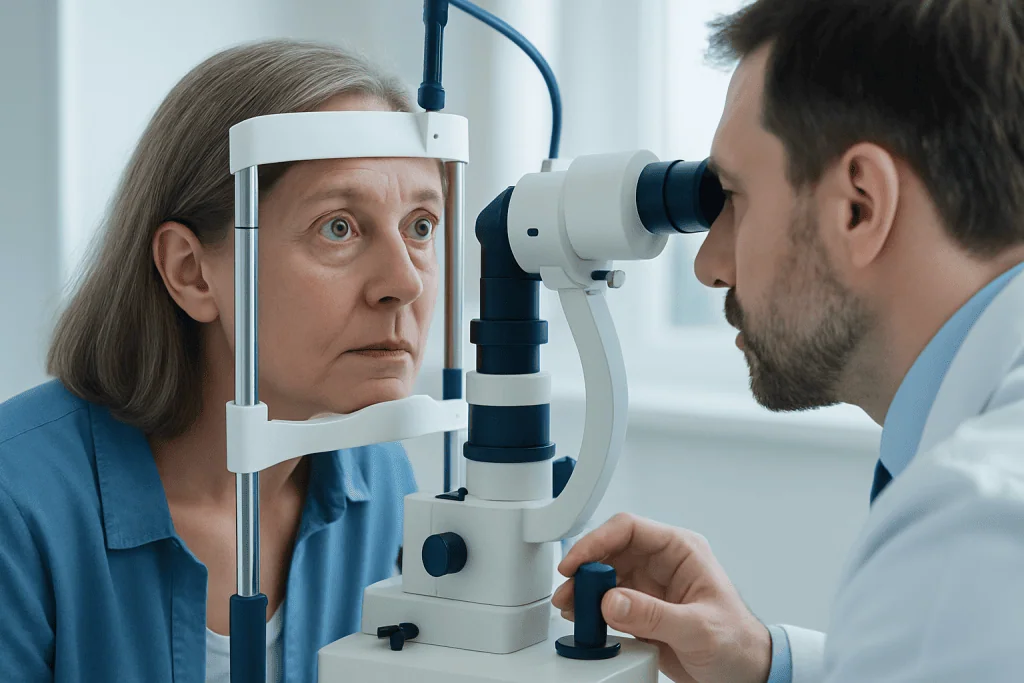
Diagnosis starts with a careful medical history and eye examination. A doctor asks about thyroid disease, smoking, timing of symptoms, double vision, eye discomfort, and any changes in sight. The eye exam may assess eyelid position, eye prominence, eye movements, corneal exposure, color vision, and the health of the optic nerve.
Blood tests are commonly used to check thyroid hormone levels and thyroid-related antibodies. These tests help identify whether Graves’ disease or another thyroid disorder is present, but the diagnosis of thyroid eye disease is not based on blood tests alone. Some people have clear eye findings even when thyroid hormone levels are normal at the time of evaluation.
Imaging studies may be helpful when the diagnosis is uncertain, symptoms are asymmetric, or there is concern about pressure within the eye socket. Orbital CT or MRI can show enlarged eye muscles, inflammation, and crowding near the optic nerve. In many cases, this imaging supports treatment planning as well.
Doctors also grade disease activity and severity. This matters because active inflammatory disease is often treated differently from stable disease. If vision is threatened, urgent treatment is needed. If appearance or double vision remains after inflammation settles, reconstructive options may then be considered.
Treatment options for thyroid eye disease
Treatment depends on how active the disease is, how severe symptoms are, and whether vision is at risk. Mild cases may be managed with eye lubrication, nighttime ointment, measures to protect the cornea, and close follow-up. Keeping thyroid hormone levels stable and stopping smoking are key parts of treatment at every stage.
During active inflammation, doctors may use medicines to reduce immune-related swelling. These can include corticosteroids or other targeted treatments selected by a specialist based on the patient’s overall health and disease pattern. If double vision is present, temporary prisms in glasses may help some patients function more comfortably while the condition stabilizes.
When the disease causes marked eye prominence, persistent lid changes, or optic nerve compression, surgery may be recommended. In selected cases, orbital decompression surgery can create more space within the eye socket and reduce pressure on the eye and nerve. Procedures such as eyelid surgery may improve eyelid position and help protect the eye surface, while strabismus surgery may be considered for stable double vision caused by restricted eye muscles.
Because treatment timing matters, specialist teams often stage care in a planned sequence rather than doing everything at once. In experienced centers, ophthalmologists, endocrinologists, radiologists, and surgeons work together to match treatment to the active or stable phase of disease. Near the end of the care journey, some international patients may seek evaluation at Acibadem International, where multidisciplinary specialists in JCI-accredited hospitals diagnose and treat thyroid eye disease.
Self-care and daily management
Self-care does not replace medical treatment, but it can make a meaningful difference in day-to-day comfort. Lubricating eye drops and ointments can reduce dryness and protect the front surface of the eye, especially when the lids do not close fully. A doctor or pharmacist can advise on preservative-free options when frequent use is needed.
Simple daily habits may also help. Many patients feel better when they sleep with the head slightly elevated, wear sunglasses outdoors, and avoid smoky or very dry environments. If swelling is worse on waking, cool compresses may provide temporary comfort.
The most important lifestyle step is to stop smoking. This is one of the few clearly modifiable factors known to improve the outlook. Good thyroid follow-up is also essential, since large swings in thyroid hormone levels can complicate care.
Patients should not ignore new visual symptoms, even if previous appointments suggested mild disease. Thyroid eye disease can change over time, so regular review helps ensure that treatment is adjusted when needed.
When to seek medical care
A prompt medical review is appropriate for anyone with a new bulging-eye appearance, persistent red or painful eyes, new double vision, or eyelids that no longer close fully. People with known thyroid disease should mention eye symptoms early rather than waiting for them to become more obvious. Early assessment can help confirm the diagnosis and protect vision.
Urgent care is especially important if there is reduced vision, colors seeming less bright, severe eye pain, marked difficulty moving the eyes, or rapid worsening of swelling. These symptoms can suggest compression of the optic nerve or serious exposure of the cornea and need timely specialist attention.
Patients who already have a thyroid condition, including hyperthyroidism, should keep routine endocrine follow-up and ask whether an eye specialist review is needed. If the eye symptoms are part of a broader thyroid disorder, coordinated care often offers the clearest treatment plan.
Frequently asked questions
Is thyroid eye disease the same as Graves’ disease?
No. Graves’ disease is an autoimmune thyroid disorder, while thyroid eye disease affects the tissues around the eyes. They are closely linked, and many people with thyroid eye disease have Graves’ disease, but they are not identical conditions.
Can thyroid eye disease happen if thyroid blood tests are normal?
Yes. Some people develop thyroid eye disease before thyroid hormone abnormalities are detected, or while blood levels are in the normal range. This is one reason an eye exam and thyroid-related blood tests are often both needed.
Does thyroid eye disease go away on its own?
The active inflammatory phase often settles over time, but some changes may remain. Eye prominence, eyelid retraction, or double vision can persist after inflammation improves and may require treatment.
Can thyroid eye disease cause blindness?
Severe vision loss is uncommon, but it can happen if swelling compresses the optic nerve or if the cornea becomes badly exposed and damaged. Early recognition and specialist treatment greatly help reduce this risk.
Why is smoking so important in thyroid eye disease?
Smoking is strongly associated with a higher risk of developing thyroid eye disease and with more severe disease. It can also make treatments less effective, so stopping smoking is a key part of care.
What kind of doctor treats thyroid eye disease?
Treatment often involves both an ophthalmologist and an endocrinologist. Depending on symptoms, care may also include specialists in orbital surgery, strabismus, oculoplastics, or neuro-ophthalmology.
References
- American Academy of Ophthalmology
- National Eye Institute
- American Thyroid Association
- European Group on Graves' Orbitopathy
- National Institute of Diabetes and Digestive and Kidney Diseases
This article is for general information only and is not a substitute for professional medical advice. Please consult a qualified doctor about your individual situation.
Explore treatments in Turkey — costs, top hospitals & a free quote
JCI-accredited · board-certified surgeons · reply within 24h
Add us as a Preferred Source to see more of our trusted health content across Google Search, AI Overviews and Discover.