Urinary Tract Infection in Children: Signs, Diagnosis, and Treatment

Urinary tract infections in children can affect the bladder, urethra, or kidneys. Symptoms vary by age and may include fever, pain with urination, frequent urination, or unexplained irritability.
Key Takeaways
- Urinary tract infections in children can affect the bladder, urethra, or kidneys.
- Symptoms vary by age and may include fever, pain with urination, frequent urination, or unexplained irritability.
- A urine test is the main way to diagnose a UTI in children.
- Most childhood UTIs are treated with antibiotics, along with fluids and follow-up when needed.
- Prompt medical care is important, especially for infants, high fever, or signs of kidney infection.
Urinary tract infection in children is common and usually treatable, especially when it is recognized early. Knowing the signs, how diagnosis works, and what treatment involves can help families seek timely care and support recovery.
Overview
Urinary tract infection in children is an infection anywhere in the urinary system, which includes the kidneys, ureters, bladder, and urethra. Most infections are caused by bacteria that enter the urinary tract and multiply. In children, UTIs are common and can range from mild bladder infections to more serious kidney infections.
A lower urinary tract infection usually affects the bladder and is often called cystitis. An upper urinary tract infection affects the kidneys and may be called pyelonephritis. Kidney infections can make a child more unwell and need prompt treatment to reduce the risk of complications.
UTIs can happen at any age, from infancy through adolescence. They may be harder to recognize in babies and young children because symptoms can be vague. Older children are often able to describe pain or changes in urination more clearly.
With timely diagnosis and appropriate treatment, most children recover well. The main goals are to relieve symptoms, clear the infection, and identify whether there is any underlying issue that increases the chance of repeat infections.
Symptoms of UTI in Children
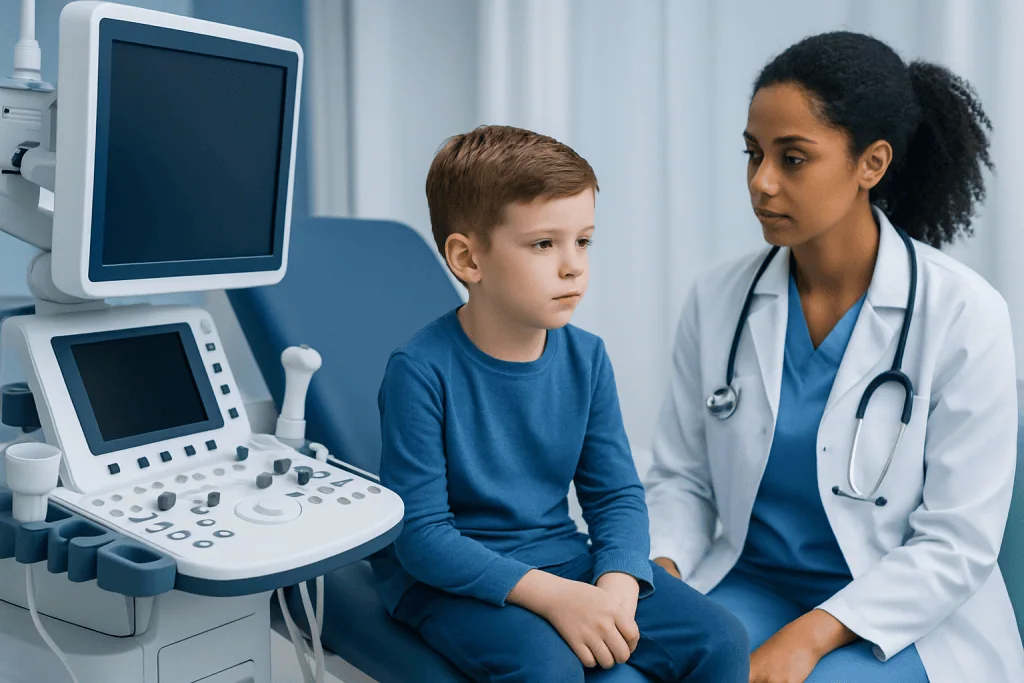
Symptoms of a UTI in children depend on the child’s age and whether the infection is in the bladder or kidneys. In older children, common symptoms include pain or burning during urination, needing to urinate more often, sudden urgency, lower abdominal discomfort, and urine that looks cloudy or smells unusually strong.
Some children may also have accidents after being toilet trained or wake at night to urinate more often. Blood in the urine can happen in some cases. When the kidneys are involved, symptoms may include fever, chills, back or side pain, vomiting, tiredness, and a child who appears generally unwell.
In babies and toddlers, a UTI may be less obvious. Signs can include fever without a clear source, poor feeding, vomiting, irritability, lethargy, poor weight gain, or fewer wet diapers than expected. Because these symptoms overlap with many childhood illnesses, medical assessment is important.
- Infants may show fever, fussiness, poor feeding, or vomiting.
- Toddlers may have abdominal pain, new wetting accidents, or fever.
- School-age children may report burning urination, urgency, or lower belly pain.
- Teens may have symptoms similar to adults, including pelvic discomfort or back pain.
Causes and Risk Factors
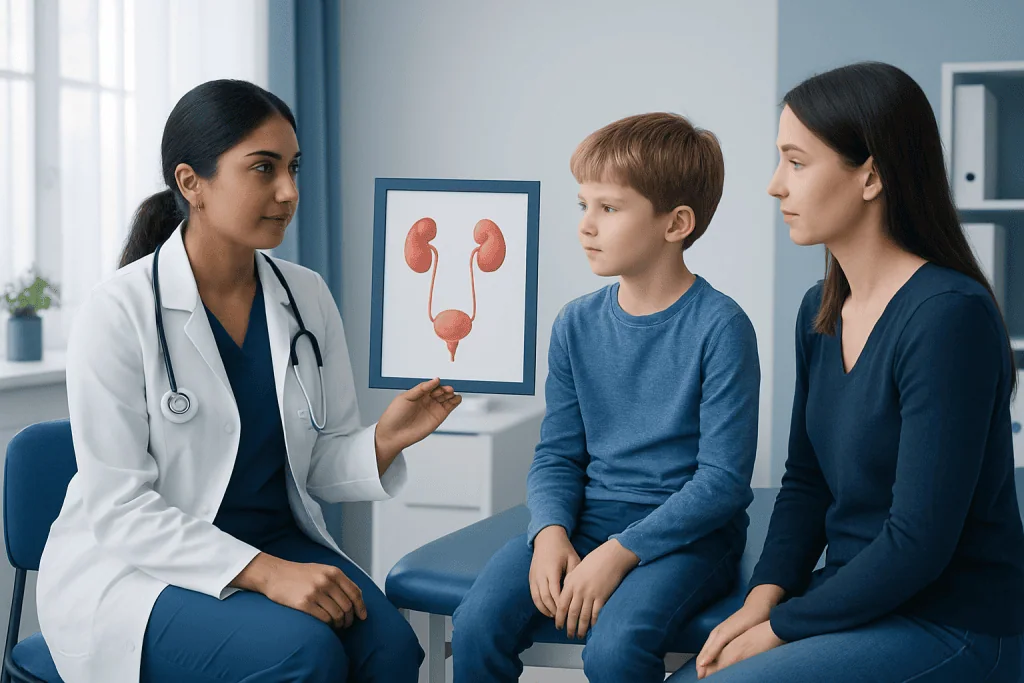
Most UTIs in children are caused by bacteria from the bowel, especially bacteria that reach the urethra and travel into the bladder. Girls tend to have UTIs more often than boys after infancy because the urethra is shorter. In newborns and very young infants, boys can also be affected, particularly if there are structural urinary tract problems.
Several factors can increase risk. These include holding urine for long periods, incomplete bladder emptying, constipation, poor hydration, and irritation around the genital area. Some children develop UTIs because of problems in the urinary tract that make it easier for bacteria to remain or move upward toward the kidneys.
Other risk factors include a history of previous UTIs, family history of urinary tract abnormalities, kidney stones, and conditions that affect bladder function. Vesicoureteral reflux, where urine flows backward from the bladder toward the kidneys, may raise the chance of repeated infections and kidney involvement. Children with recurrent infections may need evaluation for vesicoureteral reflux.
Occasionally, a UTI can be linked to another condition that changes urinary flow or bladder emptying. If a child has repeated infections, a specialist may also consider whether there is a related problem such as neurogenic bladder or another urologic issue.
How Doctors Diagnose a UTI
Diagnosis begins with a medical history and physical examination. A doctor asks about fever, urinary symptoms, bowel habits, previous infections, and whether the child has any known urinary tract abnormalities. Because symptoms can be nonspecific in young children, a urine test is especially important.
The main tests are urinalysis and urine culture. Urinalysis looks for signs of infection such as white blood cells, nitrites, or blood. A urine culture helps confirm which bacteria are causing the infection and can show which antibiotics are most likely to work well.
How the urine sample is collected matters. In toilet-trained children, a clean-catch urine sample is often used. In infants and some young children, a catheter sample may be needed to reduce contamination. A collection bag placed on the skin is sometimes used for screening, but it is less reliable for confirming infection.
If the child is very young, has recurrent UTIs, or is suspected to have a kidney infection or structural problem, imaging tests may be recommended. These can include an ultrasound of the kidneys and bladder, and in selected cases a specialized test to look for reflux. Depending on the child’s situation, doctors may also involve specialists in pediatric urology for further assessment.
Treatment Options
Most UTIs in children are treated with antibiotics. The exact medicine and length of treatment depend on the child’s age, symptoms, general health, the likely location of the infection, and the urine culture result. Children with mild bladder infections often improve with oral antibiotics taken at home.
If a child is very young, unable to keep fluids down, looks dehydrated, or may have a kidney infection, hospital care may be needed. In these cases, doctors may give intravenous fluids and antibiotics until the child is stable and able to take medicine by mouth. Prompt treatment is especially important when fever is high or the child appears significantly unwell.
Supportive care also matters. Encouraging fluids, helping the child empty the bladder regularly, and managing fever or discomfort with clinician-approved measures can support recovery. Antibiotics should be taken exactly as prescribed, even if symptoms improve earlier, unless a doctor advises otherwise.
Children with repeated infections or an underlying abnormality may need longer-term follow-up. Treatment may include addressing constipation, reviewing toilet habits, or evaluating whether a structural problem needs further care. In some cases, this may involve kidney and bladder imaging through urinary system ultrasound or a broader plan within pediatric nephrology.
Prevention and Self-care
Not every UTI can be prevented, but some practical steps may lower the risk. Children should be encouraged to drink enough fluids during the day and to use the toilet regularly rather than holding urine for long periods. Good bladder habits help empty the urinary tract and reduce bacterial growth.
Constipation should be addressed because it can interfere with normal bladder emptying. A balanced diet with enough fiber, fluids, and regular bathroom routines can help. For children who are toilet training or have bowel and bladder dysfunction, a doctor may suggest a structured plan to improve habits.
Gentle hygiene is also helpful. Children should wipe from front to back after using the toilet. Harsh soaps, bubble baths, or perfumed products around the genital area may cause irritation in some children and are best avoided if they seem to worsen symptoms.
Parents should not try to diagnose or treat a suspected UTI at home without medical advice, especially in babies. Cranberry products and other home remedies should not replace proper testing and treatment. The safest approach is to speak with a healthcare professional if symptoms suggest infection.
When to See a Doctor
A child should be seen by a doctor if there is pain with urination, frequent urination, new daytime or nighttime accidents, blood in the urine, or belly, side, or back pain. Medical review is also important if a fever has no clear cause, especially in babies and toddlers.
Urgent assessment is needed if the child is younger than three months with a fever, appears very sleepy, has difficulty feeding, is vomiting repeatedly, seems dehydrated, or looks generally very unwell. These signs can suggest a more serious infection and should not be ignored.
Follow-up may be advised after treatment, particularly if symptoms do not improve, return soon after antibiotics, or if the child has recurrent infections. A doctor may recommend more testing to understand why infections are happening and how best to prevent them in the future.
For families seeking coordinated care, Acibadem International’s multidisciplinary specialists and JCI-accredited hospitals diagnose and treat urinary tract conditions in children, including cases that need further imaging or specialist review.
Frequently asked questions
How do parents know if a child has a urinary tract infection?
Older children may complain of burning during urination, needing to go often, or lower belly pain. Babies and toddlers may only have fever, irritability, vomiting, or poor feeding, so a urine test is often needed to confirm the cause.
Can a child have a UTI without pain when urinating?
Yes. Some children, especially infants and younger children, may not show the classic symptom of painful urination. Fever, accidents after toilet training, tummy pain, or general fussiness can sometimes be the main signs.
Is a urinary tract infection in children serious?
Many UTIs are mild and improve well with treatment. However, infections that involve the kidneys or occur in very young infants need prompt medical care because they can make a child more unwell and may require closer monitoring.
How is a urine sample collected from a young child?
In toilet-trained children, a clean-catch sample is usually collected in a sterile cup. In infants or when a clean sample is essential, a catheter sample may be used because it gives a more accurate result than a bag specimen.
Why do some children keep getting UTIs?
Recurrent UTIs can happen for several reasons, including constipation, incomplete bladder emptying, holding urine too long, or structural urinary tract problems. If infections happen repeatedly, a doctor may recommend imaging or specialist evaluation.
Do all children with a UTI need scans?
No. Imaging is usually reserved for certain situations, such as recurrent infections, unusual bacteria, poor growth, severe illness, or concern about a urinary tract abnormality. The decision depends on the child’s age, symptoms, and medical history.
References
- American Academy of Pediatrics
- National Institute of Diabetes and Digestive and Kidney Diseases
- National Institute for Health and Care Excellence
- Centers for Disease Control and Prevention
- European Association of Urology
This article is for general information only and is not a substitute for professional medical advice. Please consult a qualified doctor about your individual situation.
Urinary Tract Infection in Turkey — costs, top hospitals & a free quote
JCI-accredited · board-certified surgeons · reply within 24h
Add us as a Preferred Source to see more of our trusted health content across Google Search, AI Overviews and Discover.