Uv Light Therapy: Symptoms, Causes, and Treatment Options
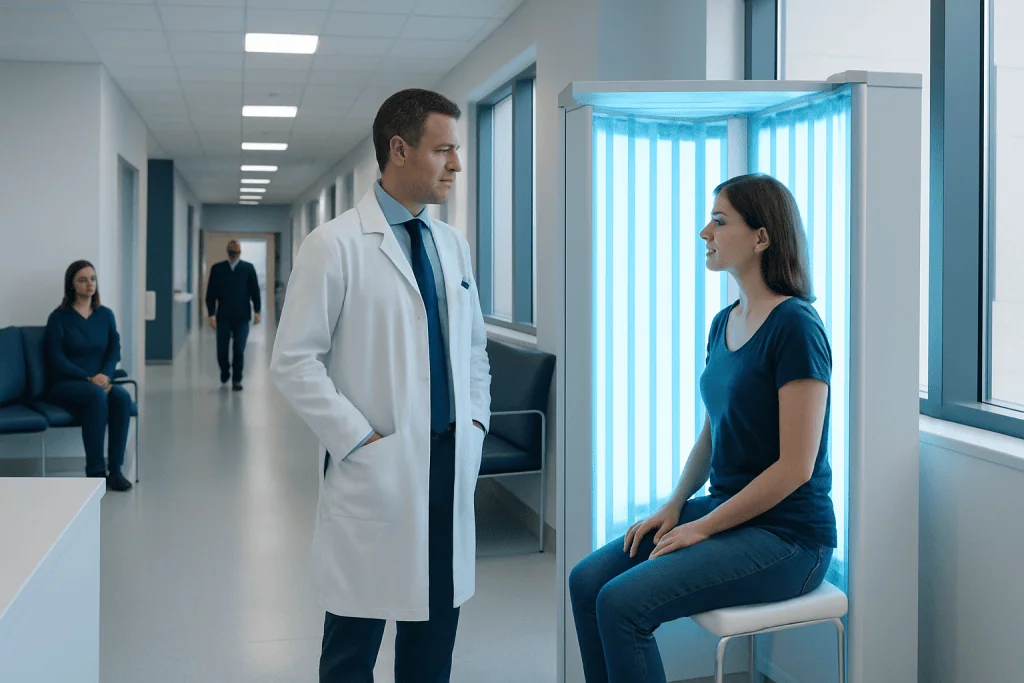
UV light therapy is a medical treatment that uses measured doses of ultraviolet radiation, not ordinary tanning beds. Narrowband UVB is commonly used for psoriasis, eczema, vitiligo, and some other skin disorders.
Key Takeaways
- UV light therapy is a medical treatment that uses measured doses of ultraviolet radiation, not ordinary tanning beds.
- Narrowband UVB is commonly used for psoriasis, eczema, vitiligo, and some other skin disorders.
- Treatment is usually delivered in repeated sessions over weeks, with dose adjustments based on skin response.
- Possible short-term effects include redness, dryness, itching, and sunburn-like reactions; long-term exposure may increase skin-aging and skin-cancer risk.
- A dermatologist can determine whether phototherapy is appropriate and how it can be combined safely with other treatments.
UV light therapy, also called phototherapy, uses carefully controlled ultraviolet light to treat certain inflammatory skin conditions. It can reduce inflammation, itching, and scaling for some people, but it should be prescribed and monitored by a qualified dermatologist because ultraviolet exposure also has risks.
What Is UV Light Therapy?
UV light therapy is a medical treatment in which the skin is exposed to carefully measured ultraviolet (UV) light. It is also known as phototherapy. Dermatologists use it for selected skin conditions in which inflammation, abnormal immune activity, or altered pigment production contributes to symptoms.
Unlike sunlight, UV light therapy is delivered using medical equipment under a planned schedule. The type of UV light, the starting dose, and the number of sessions are chosen according to the diagnosis, skin type, affected body areas, medicines being taken, and previous response to treatment.
For many patients, phototherapy is one option among topical medicines, oral medicines, injectable therapies, and lifestyle measures. It does not suit every condition or every person, but it may help when symptoms are widespread, recurrent, or not adequately controlled with topical treatment alone.
Which Conditions Can UV Light Therapy Help?
UV light therapy is most often used for inflammatory skin conditions. It can slow the rapid growth of skin cells, reduce immune-driven inflammation, and ease itching. A dermatologist may recommend it for plaque psoriasis, certain forms of eczema or atopic dermatitis, pruritus, vitiligo, cutaneous T-cell lymphoma, and some other carefully selected disorders.
For people with psoriasis, phototherapy may reduce raised, scaly plaques and improve itching. It can be particularly useful when plaques cover larger areas of the body or when applying topical medicine everywhere is impractical. Results vary, and continued care is often needed to manage a chronic condition.
In vitiligo, narrowband UVB may encourage repigmentation in some areas by supporting pigment-cell activity. Improvement is usually gradual, and treatment courses may be lengthy. Response can differ by body site, duration of the condition, and the individual pattern of pigment loss.
Phototherapy may also be considered for difficult eczema when appropriate skin care and topical treatments have not provided enough control. The underlying diagnosis matters, because a rash that looks similar to eczema may require a different treatment plan.
Types of Medical Phototherapy
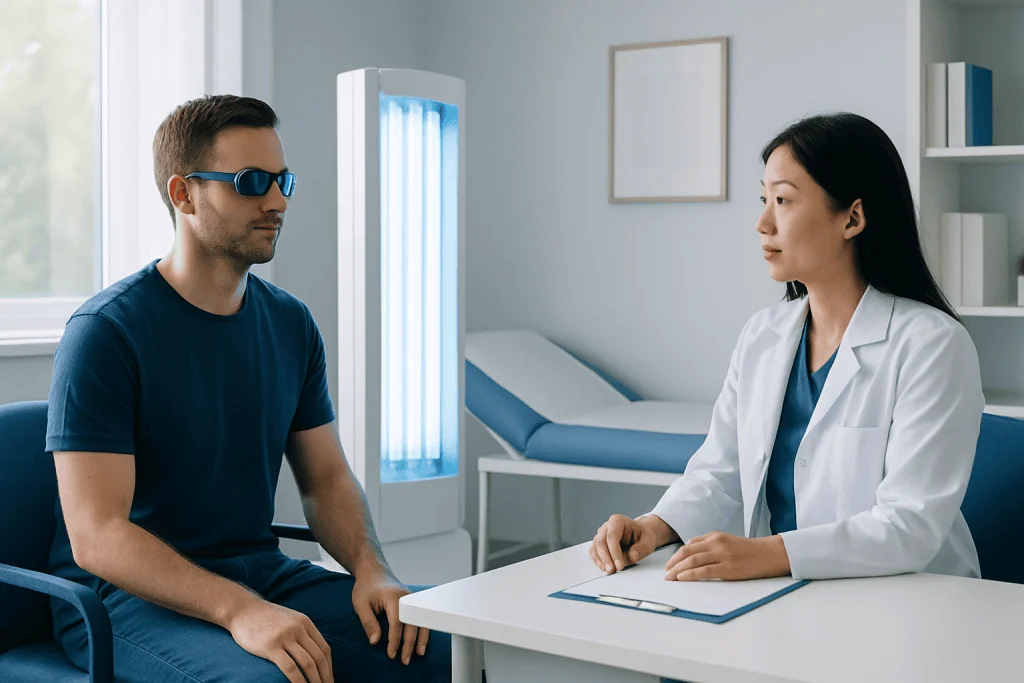
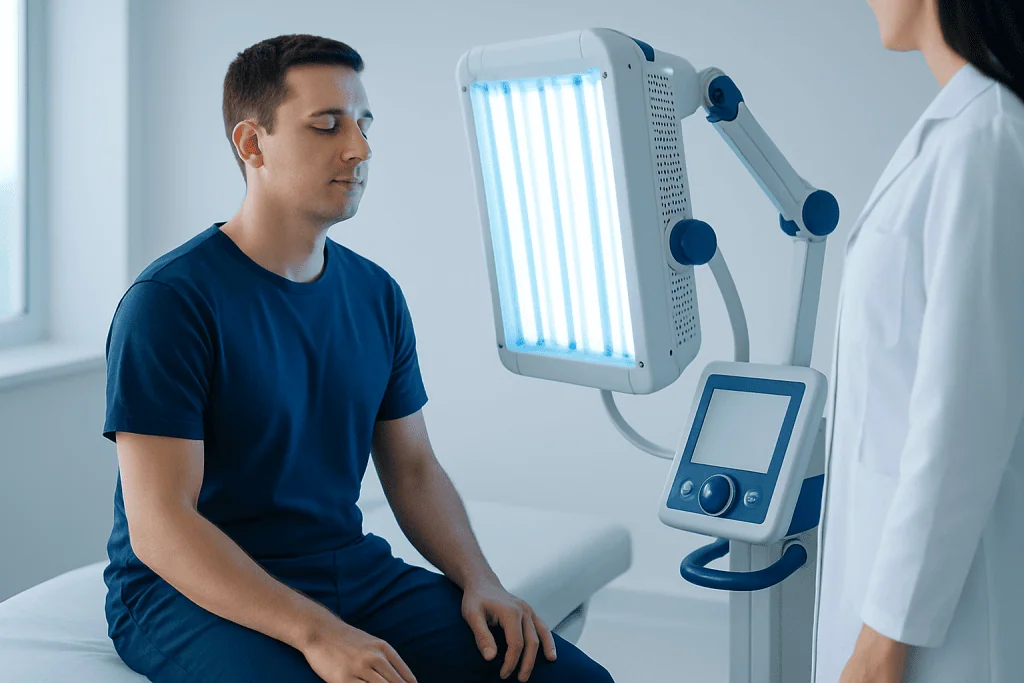
Narrowband UVB is one of the most commonly used forms of UV light therapy. It uses a limited wavelength range of ultraviolet B light, which can be effective for several inflammatory and pigment-related skin disorders. It is generally delivered in a light cabinet, with a handheld device for localized areas, or with specialized equipment for the hands, feet, or scalp.
Broadband UVB uses a wider portion of the UVB spectrum and is used less often in many settings. It may still be appropriate in selected circumstances. The treating clinician decides which approach best fits the condition and the available treatment options.
PUVA combines psoralen, a medicine that makes the skin more responsive to light, with ultraviolet A exposure. Psoralen may be taken by mouth, applied to the skin, or used in a soak before UVA treatment. PUVA can be effective for some conditions, but it requires additional precautions because it can cause prolonged light sensitivity and may carry greater cumulative risks than narrowband UVB.
Excimer light or laser treatment delivers focused UVB to limited patches of affected skin. It may be useful for localized psoriasis or vitiligo and can spare unaffected surrounding skin. It is not the same as cosmetic laser treatment and should be performed under dermatologic guidance.
What to Expect During Treatment
Before starting UV light therapy, the clinician reviews the skin diagnosis, medical history, medicines, previous UV exposure, and personal or family history of skin cancer. The skin may be examined and photographed to help monitor response. In some situations, additional testing or consultation is needed before treatment begins.
A treatment session is usually brief. The person may stand in a full-body cabinet or receive light on a specific area. Protective goggles are worn to prevent eye injury, and genital shielding may be recommended during whole-body treatment. Areas not intended for treatment can be covered.
Sessions are commonly scheduled several times a week at the beginning, although the exact frequency varies. The initial exposure is low and is adjusted gradually according to the skin’s response. The goal is to obtain benefit while avoiding significant redness or burning. Improvement may take multiple weeks, and some people require maintenance treatment or a different approach after an initial course.
People using PUVA receive specific instructions about avoiding sunlight after psoralen exposure and protecting their eyes with appropriate UVA-blocking eyewear. Following the clinic’s instructions closely is essential, including reporting any burning, blistering, unusual rash, or new medicine.
Benefits, Risks, and Side Effects
The potential benefit of UV light therapy is improved control of skin symptoms without needing systemic medication in some cases. It may reduce scaling, redness, thickened skin, itching, or pigment loss, depending on the condition being treated. For others, it works best as part of a broader plan that includes moisturizers, prescription topical therapy, or systemic treatment.
Short-term side effects can include dryness, itchiness, mild redness, tenderness, or a sunburn-like reaction. These effects are often manageable when reported promptly, since the treatment dose can be adjusted. More intense burning, blisters, severe pain, or widespread rash should be assessed by the treating team.
Because UV radiation can damage skin cells over time, repeated exposure may contribute to premature skin aging and can increase the risk of skin cancer. The degree of risk depends on the type of phototherapy, total cumulative exposure, individual skin cancer risk factors, and other sources of UV exposure. Dermatology teams track treatment courses and examine the skin when clinically appropriate.
Not everyone is a suitable candidate. Extra caution or alternative treatments may be needed for people with a history of melanoma or certain other skin cancers, conditions that cause light sensitivity, or use of medicines that increase photosensitivity. Pregnancy, eye conditions, and immune suppression may also affect the choice of treatment.
Preparing for UV Light Therapy and Supporting Skin Health
Patients should give their clinician a complete list of prescription medicines, over-the-counter medicines, supplements, and topical products. Some antibiotics, diuretics, retinoids, anti-inflammatory medicines, fragrances, and herbal products can increase sensitivity to light. Medication changes should never be made independently, but the prescriber may modify the treatment plan if needed.
On treatment days, patients should follow the clinic’s directions about moisturizers, topical medicines, perfumes, makeup, and sunscreen. A plain moisturizer may help reduce dryness, but some products can alter how light reaches the skin. The clinician can explain when to apply topical medicines in relation to a phototherapy session.
Medical phototherapy does not make unprotected sun exposure safe. People should continue routine sun protection outside their prescribed sessions, including shade, protective clothing, and broad-spectrum sunscreen on exposed skin when appropriate. Tanning beds should not be used as a substitute for prescribed UV treatment because their light output and risks are not medically controlled.
Keeping appointments and tracking symptoms can help the dermatology team assess progress. If travel, work schedules, or access makes clinic-based treatment difficult, a clinician may discuss whether other treatments are more practical. Home phototherapy may be an option for carefully selected patients, but it still requires a prescription, training, and regular medical monitoring.
When to Seek Medical Care
A person should arrange a medical assessment for a persistent, itchy, painful, scaly, spreading, or changing skin rash rather than beginning UV treatment without a diagnosis. A clinician can identify whether phototherapy is likely to help and can rule out infections, medication reactions, skin cancer, and other conditions that may need different care.
During a phototherapy course, prompt advice is important if there is severe redness, blistering, eye pain, vision changes, fever, signs of skin infection, or a rapidly worsening rash. New or changing moles, sores that do not heal, or unusual bleeding areas should also be checked, especially in people with past UV exposure.
People with difficult-to-control skin symptoms may benefit from a dermatology review to discuss options such as medical phototherapy alongside other treatments. Acibadem International’s multidisciplinary specialists and JCI-accredited hospitals diagnose and treat skin conditions for international patients, with care plans based on the individual’s diagnosis and needs.
Frequently asked questions
Is UV light therapy the same as using a tanning bed?
No. Medical UV light therapy uses calibrated equipment, a prescribed light type, and planned doses supervised by a clinician. Tanning beds are not a safe substitute because they can deliver high levels of UV radiation without medical monitoring.
How long does UV light therapy take to work?
Some people notice improvement after several weeks, while others need a longer course or may not respond sufficiently. The timing depends on the diagnosis, severity, type of phototherapy, and individual skin response.
Can UV light therapy cure psoriasis or eczema?
UV light therapy can improve symptoms and sometimes achieve periods of clearer skin, but it does not usually cure chronic conditions such as psoriasis or eczema. Ongoing skin care and follow-up may still be needed to manage flare-ups.
Does UV light therapy increase the risk of skin cancer?
Cumulative ultraviolet exposure can increase skin cancer risk, particularly with certain forms of therapy and higher total exposures. Dermatologists balance this risk against expected benefit, use the lowest effective exposure, and monitor the skin over time.
Can children have UV light therapy?
Phototherapy may be considered for some children with selected skin conditions when the expected benefits outweigh potential risks. The decision should be made by a dermatologist experienced in pediatric skin care, with appropriate safety measures and follow-up.
Can a person use sunscreen during UV light therapy?
Sunscreen and other topical products should be used according to the treating clinic's instructions. Products applied before a session may affect treatment delivery, while sun protection outside treatment remains important.
References
- American Academy of Dermatology Association
- National Institute of Arthritis and Musculoskeletal and Skin Diseases
- National Health Service
- British Association of Dermatologists
- World Health Organization
This article is for general information only and is not a substitute for professional medical advice. Please consult a qualified doctor about your individual situation.
Explore treatments in Turkey — costs, top hospitals & a free quote
JCI-accredited · board-certified surgeons · reply within 24h
Add us as a Preferred Source to see more of our trusted health content across Google Search, AI Overviews and Discover.