Valeda Light Therapy: How It Works, Results and What to Expect

Valeda uses carefully controlled red, near-infrared and yellow light in a clinic setting. It is designed for selected people with dry AMD, particularly earlier or intermediate stages, after a detailed retinal assessment.
Key Takeaways
- Valeda uses carefully controlled red, near-infrared and yellow light in a clinic setting.
- It is designed for selected people with dry AMD, particularly earlier or intermediate stages, after a detailed retinal assessment.
- A treatment course commonly includes several short sessions over a few weeks, with repeat courses considered individually.
- Research suggests potential improvements in some visual-function measures, but results vary and vision cannot be guaranteed.
- New distortion, a sudden central blur or a rapid change in vision needs urgent assessment because it may signal wet AMD.
Valeda light therapy is a non-invasive, light-based treatment used for selected people with dry age-related macular degeneration (AMD). It is delivered in an eye clinic over multiple visits and is intended to support retinal function; it does not cure AMD or replace regular monitoring and eye care.
What is Valeda light therapy?
Valeda light therapy is a clinic-based form of photobiomodulation (PBM) used for selected people with dry age-related macular degeneration (AMD). The Valeda Light Delivery System directs low-level light of specific wavelengths toward the retina, the light-sensitive tissue at the back of the eye. The treatment is non-invasive: it does not involve injections, surgery or a laser that burns tissue.
Dry AMD is a common retinal condition that can gradually affect central vision, which is used for reading, recognising faces and detailed tasks. Valeda treatment is intended to support retinal cell function and may improve some measures of visual performance in appropriate patients. It is not a cure for AMD, and it cannot restore retina that has already been permanently damaged.
Suitability depends on the type and stage of AMD, retinal imaging findings, current vision and overall eye health. An ophthalmologist should confirm the diagnosis and discuss whether this approach is appropriate alongside established AMD care, including monitoring for progression to advanced or wet AMD.
How Valeda light therapy works
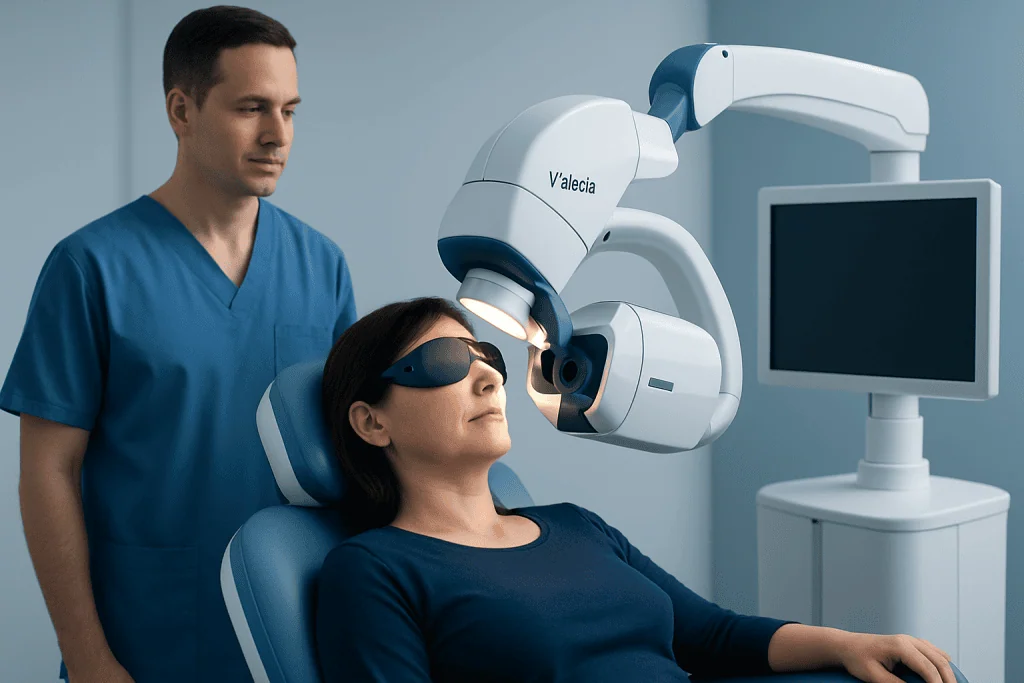
Photobiomodulation uses non-thermal light energy to influence cellular processes. Valeda treatment uses red, near-infrared and yellow wavelengths in a planned sequence. These wavelengths are thought to interact with cells in the retina, including cells involved in energy production and retinal support, with the aim of improving cellular resilience and reducing processes associated with oxidative stress.
The treatment light is not the same as ordinary red-light devices marketed for skin or home use. It is a regulated ophthalmic system used under clinical supervision, with wavelength, dose, timing and eye alignment controlled by the treating team. Home light devices should not be used as a substitute for specialist retinal care.
Evidence from clinical studies has shown improvements in certain visual outcomes for some people with dry AMD, including best-corrected visual acuity and contrast-related measures. However, response is individual. The degree of benefit may be modest, may not be noticeable to every patient and should be interpreted in the context of retinal scans and regular eye examinations.
Who may be a candidate for Valeda treatment?
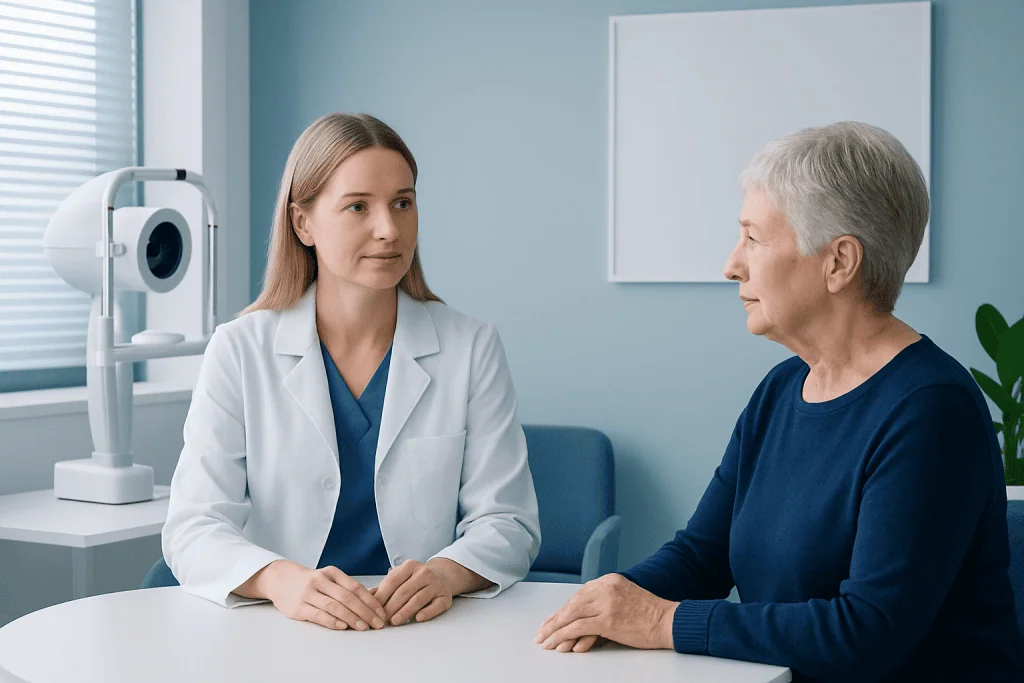
Valeda light therapy may be considered for adults with specific forms of dry AMD after assessment by a retina specialist. People with early or intermediate disease may be evaluated, particularly when imaging confirms drusen or other dry-AMD changes and there is no evidence of active abnormal blood-vessel growth beneath the retina.
Before recommending treatment, the ophthalmologist reviews visual acuity, symptoms, medical history, medicines and detailed retinal imaging. Tests may include a dilated eye examination, optical coherence tomography (OCT), colour retinal photographs and other imaging when needed. These tests help distinguish dry AMD from macular degeneration that requires a different treatment approach.
Valeda may not be suitable for every eye. Advanced retinal scarring, certain other retinal diseases, active wet AMD, significant media opacity or circumstances that make light exposure unsuitable can affect candidacy. The treating ophthalmologist will also consider whether a person can attend the planned series of visits and continue routine follow-up.
- A specialist assessment is needed before treatment begins.
- Both eyes are assessed separately because AMD can differ between eyes.
- New symptoms should always be evaluated rather than assumed to be part of dry AMD.
What happens during a Valeda light therapy procedure?
Valeda treatment is usually provided as an outpatient appointment in an ophthalmology clinic. At the first visit, the team confirms the treatment plan, checks vision and positions the patient comfortably at the device. Pupils may be dilated depending on the clinical protocol and the ophthalmologist’s assessment.
One eye is typically treated at a time. The patient looks toward the device while the clinician aligns it correctly and administers the programmed sequence of light exposures. The session itself is brief. People may notice coloured light and temporary afterimages, but the treatment should not be painful. Staff remain available throughout the procedure and can pause if the person feels uncomfortable.
A commonly used protocol consists of multiple sessions, often delivered over several weeks, rather than a single appointment. The exact schedule and whether both eyes are treated depend on the clinical plan, local protocol and individual retinal findings. Patients should follow the clinic’s instructions about transport if dilation is used, as vision can be temporarily blurred afterward.
For people seeking specialist retinal assessment and treatment planning, ophthalmology care can coordinate imaging, visual testing and follow-up around a Valeda course where appropriate.
Benefits, risks and recovery timeline
The potential benefit of Valeda light therapy is support for visual function in appropriately selected dry-AMD patients. Some people may experience improved clarity, contrast sensitivity or performance on vision testing after treatment. Others may notice little subjective change. The main goal is not to promise a particular line of vision or to eliminate AMD, but to consider whether PBM can be a useful part of an individual retinal-care plan.
There is generally no surgical recovery period. Most people can return to usual activities after an appointment, although temporary glare, colour effects or blurred vision may occur, especially if dilating drops were used. These effects usually settle as the eyes readjust. The clinic may arrange repeat vision testing and retinal scans to monitor changes over time.
Reported treatment-related effects are usually mild and temporary, but any medical procedure can have risks or limitations. It is important to tell the care team about eye symptoms, light sensitivity, eye medicines and relevant health conditions. A patient should contact the clinic promptly if discomfort persists or vision worsens after treatment.
Valeda does not prevent every form of AMD progression. Regular monitoring remains important, and some people with AMD may need different treatment, including intravitreal injection treatment if wet AMD develops.
How successful is Valeda light therapy?
Valeda light therapy can improve selected visual-function outcomes in some people with dry AMD, but success is not the same for everyone. Clinical studies of photobiomodulation have reported average improvements in measures such as best-corrected visual acuity in selected study participants. An average result does not predict the response of an individual patient.
Outcome depends on the stage of AMD, the health of the retina, the presence of other eye conditions and adherence to the treatment and follow-up plan. Some patients may perceive improvements in contrast or reading comfort, while others may have stable test results without an obvious day-to-day change. It is also possible for AMD to progress despite treatment.
The most useful way to judge benefit is through ophthalmologist-led monitoring, including vision tests, symptom review and retinal imaging. A specialist can explain realistic goals based on the appearance of each eye rather than relying on a general success rate.
How long does it take to see results from LED light therapy?
Any change from Valeda light therapy is generally assessed after completion of a planned treatment series rather than after a single session. Some people may notice a difference in visual comfort or contrast during the following weeks, while others notice no clear change even when testing identifies small improvements. Retinal response, if it occurs, is gradual rather than immediate.
Follow-up timing varies by clinic and by the patient’s retinal findings. Vision testing and OCT imaging may be repeated after the initial course and at later reviews. This allows the ophthalmologist to compare results with the baseline assessment and identify signs of progression that need a different approach.
Patients should not delay an eye review while waiting for a treatment effect. Sudden central distortion, a dark patch, a sharp decline in vision or new difficulty seeing straight lines can indicate a separate change that requires prompt assessment.
Does red light therapy work on a 70 year old woman?
Age alone does not determine whether Valeda light therapy may be useful. A 70-year-old woman can be assessed for treatment in the same way as any other adult: the key factors are the diagnosis, AMD stage, retinal imaging, visual function, other eye conditions and whether there are reasons to avoid the procedure.
It is important to distinguish supervised retinal photobiomodulation from general red-light products. The evidence for Valeda concerns a specific medical device and a defined treatment protocol for selected dry-AMD patients. Results from that research should not be assumed to apply to home red-light devices or to conditions other than dry AMD.
Many people in their seventies have more than one cause of reduced vision, such as cataract, glaucoma or diabetes-related retinal changes. A comprehensive eye assessment can identify these factors and guide the most appropriate plan. Cataract or other correctable issues may need attention separately.
How long does Valeda treatment last?
A Valeda appointment is short, but treatment is given as a course of several sessions over a number of weeks. The exact number of visits, spacing of sessions and whether treatment is repeated are determined by the ophthalmologist and the clinical protocol. Patients should ask their treating team for a personalised schedule before starting.
The duration of any benefit is not fixed. AMD is a long-term condition, and visual function can change over time because of the underlying disease or other eye-health factors. Regular reviews are therefore needed even if a patient feels that vision has improved or remained stable.
Some patients may be considered for further courses after reassessment, but repeat treatment is not automatic. Decisions should be based on eye examination findings, imaging, symptoms, prior response and the balance of potential benefit and limitations.
When to seek medical care
Anyone with gradual central-vision changes, increasing difficulty reading, reduced contrast or distortion of straight lines should arrange an eye examination. Early evaluation is especially important for people over 50, those with a family history of AMD and those who smoke or have previously been diagnosed with retinal changes.
Urgent same-day or prompt ophthalmic assessment is needed for sudden vision loss, a new dark or grey area in central vision, rapidly increasing distortion, flashes with many new floaters, or a curtain-like shadow. These symptoms can have several causes, including wet AMD, and should not be managed with light therapy or home remedies.
Risk reduction for AMD includes not smoking, managing cardiovascular health, protecting the eyes from excessive sunlight with appropriate eyewear and eating a varied diet rich in leafy vegetables, fruit, fish and other nutrient-dense foods. An eye specialist may recommend specific supplements for certain stages of AMD, but supplements are not appropriate for everyone and should be discussed individually.
Acibadem International’s multidisciplinary specialists and JCI-accredited hospitals can assess retinal conditions and discuss suitable treatment options for international patients.
Frequently asked questions
Is Valeda light therapy painful?
Valeda treatment is non-invasive and should not be painful. During the session, the patient sees bright or coloured light and may have temporary afterimages. The clinical team can adjust positioning or pause treatment if there is discomfort.
Can Valeda light therapy cure dry AMD?
No. Valeda light therapy does not cure dry AMD or reverse permanent retinal damage. It may support visual function in selected patients, but regular retinal monitoring remains necessary.
How successful is Valeda light therapy?
Studies suggest that some appropriately selected people with dry AMD may improve in visual-function measurements after treatment. Results vary, and not every patient notices a meaningful change in everyday vision. An ophthalmologist can explain what outcomes are realistic for a particular eye.
How long does it take to see results from LED light therapy?
Results are usually assessed after a full course of clinic-based sessions, often over several weeks. Some people may notice gradual changes in contrast or clarity, while others may not notice a subjective difference. Follow-up visual testing and retinal imaging provide the most reliable assessment.
Does red light therapy work on a 70 year old woman?
A woman's age of 70 does not, by itself, rule out Valeda treatment. Whether it may help depends on the type and stage of AMD, retinal health and other eye conditions. A retina specialist should determine eligibility after a full assessment.
How long does Valeda treatment last?
Each session is brief, but treatment is delivered as a series of visits over several weeks. How long any benefit lasts differs between individuals and is not guaranteed. Ongoing reviews help the ophthalmologist decide whether monitoring alone or a further course should be considered.
Can Valeda light therapy treat wet AMD?
Valeda is not a substitute for treatment of active wet AMD. Wet AMD often requires urgent assessment and may be treated with medicines injected into the eye. New distortion or sudden central vision loss should be assessed promptly.
References
- National Eye Institute
- American Academy of Ophthalmology
- Food and Drug Administration
- Age-Related Eye Disease Study Research Group
- International Council of Ophthalmology
This article is for general information only and is not a substitute for professional medical advice. Please consult a qualified doctor about your individual situation.
Explore treatments in Turkey — costs, top hospitals & a free quote
JCI-accredited · board-certified surgeons · reply within 24h
Add us as a Preferred Source to see more of our trusted health content across Google Search, AI Overviews and Discover.