

Varicocele treatment in Turkey: Hospitals, Safety & What to Expect

A varicocele is an enlargement of veins around the testicle, most often on the left side. Treatment is not always necessary; it is usually considered for persistent pain, impaired fertility, testicular changes, or abnormal semen findings.
Key Takeaways
- A varicocele is an enlargement of veins around the testicle, most often on the left side.
- Treatment is not always necessary; it is usually considered for persistent pain, impaired fertility, testicular changes, or abnormal semen findings.
- Microsurgical varicocelectomy and embolization are common procedures designed to stop abnormal blood flow in affected veins.
- Recovery is usually measured in days to weeks, while fertility-related changes may take several months to assess.
- International patients should plan for pre-treatment evaluation, a safe period of local recovery, medical records, and follow-up arrangements at home.
Varicocele treatment in Turkey is based on an individual urology assessment and may involve observation, microsurgical varicocelectomy, or catheter-based embolization. The appropriate option depends on symptoms, fertility goals, testicular health, imaging findings, and personal preferences.
Varicocele treatment in Turkey: what patients can expect
Varicocele treatment in Turkey begins with a specialist assessment rather than a one-size-fits-all procedure. A urologist reviews symptoms, fertility plans, examination findings, ultrasound results when needed, and any semen or hormone tests to decide whether monitoring, surgery, or embolization is appropriate.
For people travelling internationally, care planning commonly includes sharing medical records before travel, arranging an in-person consultation and tests after arrival, discussing anesthesia and procedure choices, and allowing adequate time for early recovery before flying home. The safest plan is individualized, particularly for patients with other health conditions or those travelling with a partner for fertility care.
A varicocele can be managed in different ways. This article explains the hospital-based pathway and practical considerations; for a detailed overview of the condition and its treatment approaches, see varicocele treatment options.
Understanding varicocele and why treatment may help
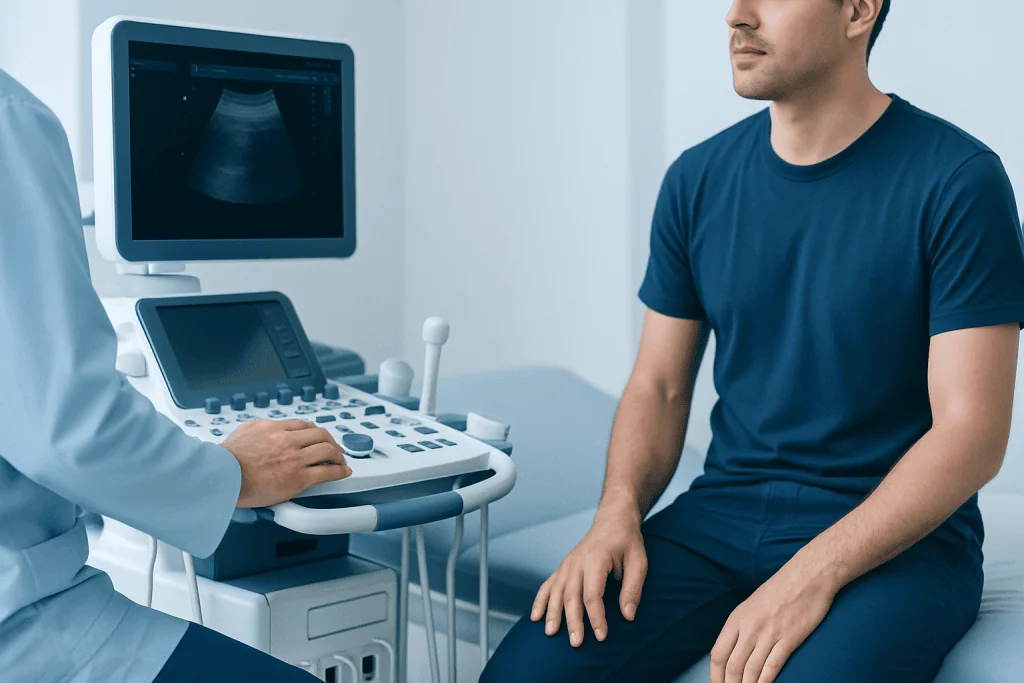
A varicocele is a group of enlarged veins in the scrotum, the skin sac that holds the testicles. It develops when valves in the veins do not direct blood effectively back toward the heart, allowing blood to pool. Varicoceles are often found on the left because of normal differences in venous anatomy, although they can occur on both sides.
Some people have no symptoms and learn they have a varicocele during a routine examination or fertility evaluation. Others notice a dull ache, heaviness, visible or palpable enlarged veins, or discomfort that becomes more noticeable after prolonged standing, exercise, or later in the day.
Not every varicocele affects fertility or requires repair. In some people, however, it may be associated with altered semen parameters, lower testosterone levels, reduced testicular growth in adolescents, or testicular shrinkage. A urologist considers the complete clinical picture instead of treating an ultrasound finding alone.
Who may be a candidate for treatment
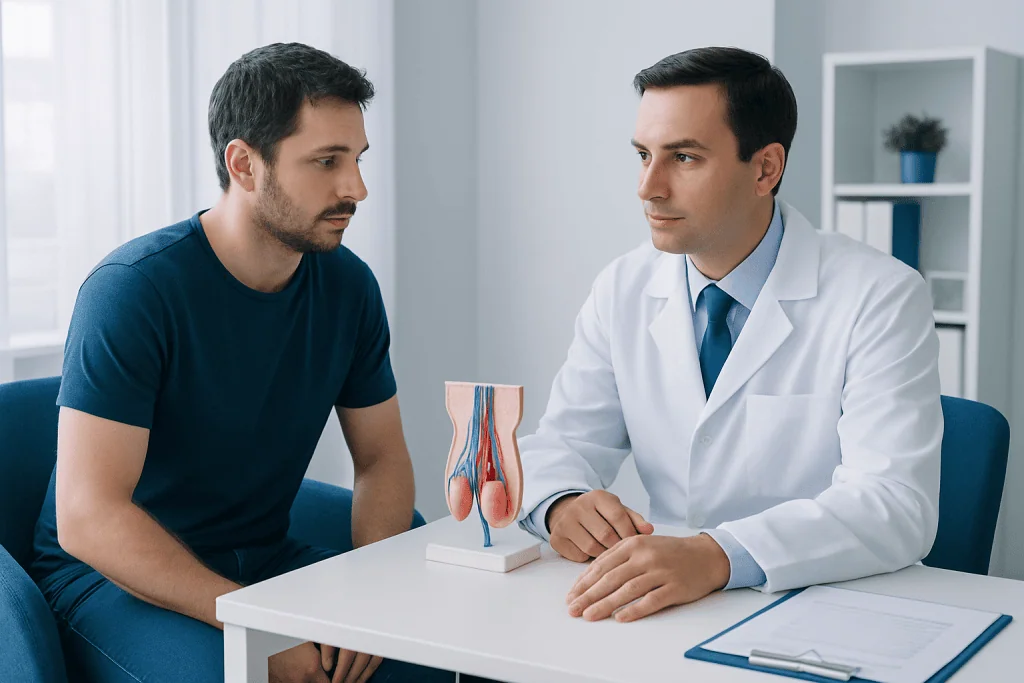
Treatment may be discussed when a clinically detectable varicocele is linked with ongoing discomfort that does not improve with supportive measures, difficulty conceiving with abnormal semen analysis, or a difference in testicular size or development. In adolescents, serial examination and testicular measurements can help identify those who may benefit from intervention.
For fertility concerns, both partners should usually be assessed where relevant. Varicocele repair may improve semen measures for some men, but it cannot guarantee pregnancy because fertility can be influenced by many factors. The likely benefit depends on age, semen results, partner-related factors, duration of infertility, and whether other reproductive conditions are present.
People with painless varicoceles, normal testicular development, and no fertility concern may only need observation. A sudden right-sided varicocele, one that does not reduce when lying down, or a new finding in an older adult may need further investigation to rule out an underlying cause before treatment is considered.
- Persistent pain affecting daily activities despite conservative care
- Infertility with a palpable varicocele and abnormal semen testing
- Testicular volume loss or delayed growth in an adolescent
- Selected cases of hormone or testicular function concerns after specialist review
How varicocele procedures work
The goal of a procedure is to close or block the abnormal veins while preserving the testicular artery, lymphatic vessels, and normal drainage pathways. This redirects blood through healthier veins and may reduce pressure and heat around the testicle.
Microsurgical varicocelectomy is a surgical repair often performed through a small incision in the lower groin or just below it. Using magnification, the surgeon identifies and ties off the affected veins while protecting nearby structures. It is commonly performed under general or regional anesthesia, depending on the clinical setting and anesthesia plan.
Varicocele embolization is a minimally invasive alternative performed by an interventional radiologist. A thin catheter is introduced into a vein, usually through the neck or groin, and guided using imaging to the affected veins. Coils, a medical plug, or a sclerosing agent may then be used to block the abnormal blood flow. Availability and suitability vary, and prior anatomy or previous treatment can influence the choice.
Each approach has potential advantages and limitations. The treating team should explain expected outcomes, anesthesia, recurrence risk, recovery needs, and why one method is preferred for the individual patient.
The procedure pathway: assessment through discharge
Before a procedure, the clinical team takes a medical history, reviews medications and allergies, performs an examination, and may request scrotal ultrasound, semen analysis, blood tests, or hormone testing. Patients should disclose blood-thinning medicines, supplements, smoking, prior groin surgery, kidney disease, and any history of reactions to anesthesia or contrast dye.
On the treatment day, the team confirms identity, procedure details, consent, and fasting instructions where anesthesia or sedation is planned. For surgery, the affected veins are carefully isolated and closed through a small incision. For embolization, imaging guides catheter placement and treatment of the targeted veins. The duration varies with anatomy and whether one or both sides are treated.
Afterward, patients recover under observation while pain, nausea, bleeding, and vital signs are monitored. Many procedures are performed as day treatment, although an overnight stay may occasionally be recommended based on the procedure, recovery, travel status, or other medical needs. Discharge instructions should cover wound care, activity, pain management, warning signs, and scheduled follow-up.
Acibadem International’s multidisciplinary specialists and JCI-accredited hospitals diagnose and treat varicocele for international patients, with care coordination that can support appointment planning, hospitalization needs, and post-treatment communication.
Recovery timeline, benefits, and possible risks
Most patients have mild to moderate bruising, swelling, or discomfort in the groin or scrotum for a short time after treatment. Supportive underwear, rest, and clinician-recommended pain relief can help. Desk-based activities may often be resumed within several days, while heavy lifting, strenuous exercise, cycling, and sexual activity may need to be avoided for a period advised by the treating clinician.
For international visitors, travel timing should be discussed before booking flights. A clinician may advise remaining locally long enough for early review and may provide individualized guidance about sitting for long periods, hydration, walking during travel, and when it is safe to fly.
Potential benefits include improvement in discomfort, preservation of testicular growth in selected adolescents, and improvement in semen parameters in some fertility patients. Semen changes are generally assessed over months because sperm production takes time. Repeat testing is commonly timed according to the fertility specialist’s plan.
Risks are uncommon but can include bruising or bleeding, infection, fluid collection around the testicle called hydrocele, recurrence or persistence of the varicocele, injury to nearby structures, and continued pain. Embolization also involves radiation exposure from imaging, possible contrast reactions, and the possibility that venous anatomy prevents completion. Prompt medical advice is important for fever, worsening swelling, severe pain, wound discharge, or urinary difficulties.
Safety, hospital planning, and questions to ask
Safe varicocele care depends on appropriate diagnosis, experienced clinicians, anesthesia assessment when needed, infection-prevention procedures, and clear follow-up. Patients considering treatment abroad can ask who will perform the procedure, which technique is recommended and why, what anesthesia or sedation is used, what complications are most relevant to their case, and how urgent concerns will be handled after discharge.
They should also ask what documentation will be provided for their doctor at home, including operative or procedure reports, imaging findings, medications, and follow-up recommendations. It is helpful to bring prior ultrasound reports, semen analyses, hormone results, medication lists, and details of previous surgeries or fertility treatment.
Accommodation should allow a quiet recovery period, easy access to the hospital, and assistance if needed on the first day after treatment. Patients should avoid making plans that require strenuous sightseeing, long walks, or immediate travel. A responsible adult companion may be advisable after sedation or general anesthesia.
JCI accreditation indicates that a hospital has undergone evaluation against internationally recognized quality and patient-safety standards. It does not replace the need to discuss individual risks, clinician experience, and the most appropriate treatment plan with the treating team.
When to seek medical care
A medical assessment is appropriate for a new scrotal lump, swelling, heaviness, persistent ache, concerns about testicular size, or difficulty conceiving. Although varicocele is a common explanation for enlarged scrotal veins, examination is important because other conditions can cause similar symptoms.
Urgent medical care is needed for sudden severe testicular pain, rapid swelling, pain after an injury, fever with scrotal redness or swelling, nausea or vomiting with severe groin pain, or a testicle that appears unusually high or twisted. These symptoms can occur with conditions that require prompt treatment and should not be assumed to be caused by a varicocele.
After treatment, patients should contact their clinical team for increasing rather than improving pain, fever, heavy bleeding, spreading redness, drainage from an incision, marked swelling, chest pain, shortness of breath, or any symptom that feels concerning. Follow-up is also important when treatment is part of a fertility plan, since outcomes need time and repeat assessment.
Frequently asked questions
Is varicocele treatment in Turkey safe?
Safety depends on the individual's health, the appropriateness of treatment, clinician expertise, hospital standards, anesthesia planning, and follow-up arrangements. Patients should have a urology assessment and ask clear questions about the proposed technique, expected recovery, risks, and plans for care after returning home.
Which treatment is best for a varicocele?
There is no single best treatment for everyone. Microsurgical repair is commonly used, while embolization may be suitable for selected patients who prefer a catheter-based approach or have particular surgical considerations. A urologist and, where appropriate, an interventional radiologist can explain the most suitable option.
How long is recovery after varicocele surgery?
Early discomfort and swelling usually improve over days to a few weeks, but recovery varies by procedure and person. Light activity may be possible relatively soon, while strenuous exercise and sexual activity should be resumed only according to the treating clinician's instructions.
Can varicocele treatment improve fertility?
Repair may improve semen parameters in some men with a palpable varicocele and abnormal semen results. Improvement is not guaranteed, and pregnancy depends on multiple factors affecting both partners. Fertility outcomes are usually reassessed over several months.
Will a varicocele come back after treatment?
A varicocele can persist or recur if abnormal veins remain open or new pathways develop. The risk varies by technique, anatomy, and individual factors. Follow-up examination and, when needed, ultrasound can help assess ongoing symptoms or suspected recurrence.
How long should an international patient stay after treatment?
The recommended stay depends on whether surgery or embolization is performed, how recovery progresses, and the planned follow-up. Patients should discuss travel dates before treatment and avoid booking a return flight that does not allow time for post-procedure assessment if needed.
References
- American Urological Association
- European Association of Urology
- Mayo Clinic
- National Institute of Diabetes and Digestive and Kidney Diseases
- Society of Interventional Radiology
This article is for general information only and is not a substitute for professional medical advice. Please consult a qualified doctor about your individual situation.
Varicocele in Turkey — costs, top hospitals & a free quote
JCI-accredited · board-certified surgeons · reply within 24h
Add us as a Preferred Source to see more of our trusted health content across Google Search, AI Overviews and Discover.

More from the Health Library



Related Specialists
Prof. Dr. Mehmet Ali Vardar
Gynecology & Obstetrics
Fzt. Sena Durmaz
Physical Medicine & Rehabilitation
Dr. Aysimin Akçakaya Koraman
Pediatrics
Dyt. Beyza Erdoğan Aksan
Nutrition & Diet