Varicose Veins Treatment: Procedure, Recovery and Results
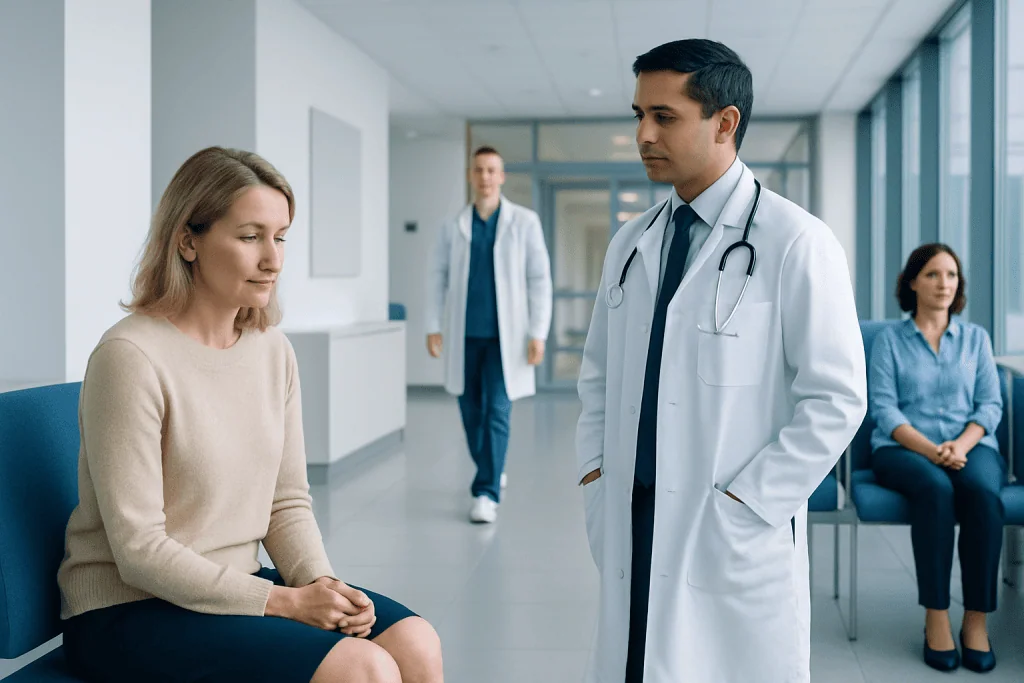
Treatment is not always necessary, but it may be recommended for pain, swelling, skin changes, bleeding or venous ulcers. Duplex ultrasound helps clinicians identify faulty vein valves and plan the most suitable procedure.
Key Takeaways
- Treatment is not always necessary, but it may be recommended for pain, swelling, skin changes, bleeding or venous ulcers.
- Duplex ultrasound helps clinicians identify faulty vein valves and plan the most suitable procedure.
- Modern options often close or remove affected veins through small access points rather than large incisions.
- Walking soon after treatment is usually encouraged, while strenuous exercise may need to wait for medical advice.
- Treated veins do not need to remain open for healthy circulation; blood is redirected through other veins.
Varicose veins treatment is tailored to the veins involved, symptoms, skin changes and ultrasound findings. Many people can be treated with minimally invasive procedures and resume light activity quickly, while surgical recovery generally takes longer.
Varicose Veins Treatment: What It Involves
Varicose veins treatment aims to reduce symptoms, prevent or manage complications, and improve the appearance of enlarged surface veins when this is important to the individual. Varicose veins develop when valves inside leg veins do not close effectively. Blood can then pool in the veins, causing them to stretch, twist and become more visible.
Treatment may range from symptom-supporting measures, such as movement and compression stockings, to procedures that close or remove unhealthy veins. The best approach depends on symptoms, the size and location of the veins, skin health, medical history, pregnancy status and the results of a vein ultrasound. A clinician may recommend monitoring alone if veins cause no troublesome symptoms or complications.
Most treatment plans focus on superficial veins, which are close to the skin. These veins can be closed or removed without disrupting the body’s essential deep-vein circulation. When an affected superficial vein is no longer carrying blood, circulation naturally redirects through healthier veins.
When Treatment May Be Recommended
Some people seek treatment because varicose veins cause aching, heaviness, throbbing, itching, nighttime cramps or swelling. Symptoms may become more noticeable after standing or sitting for long periods and may improve with rest or leg elevation. Others are concerned about the visible appearance of veins, which can also be discussed with a vascular specialist.
Treatment becomes especially important to consider when chronic vein problems lead to skin changes. These may include persistent ankle swelling, brownish discoloration, dry or inflamed skin, hardened skin around the lower leg, superficial vein bleeding, or a slow-healing wound near the ankle. These changes can indicate more significant chronic venous disease.
A detailed assessment distinguishes varicose veins from other conditions that may also cause leg discomfort or swelling. For a broader explanation of symptoms and vein-valve problems, see varicose veins.
Assessment and Choosing a Procedure
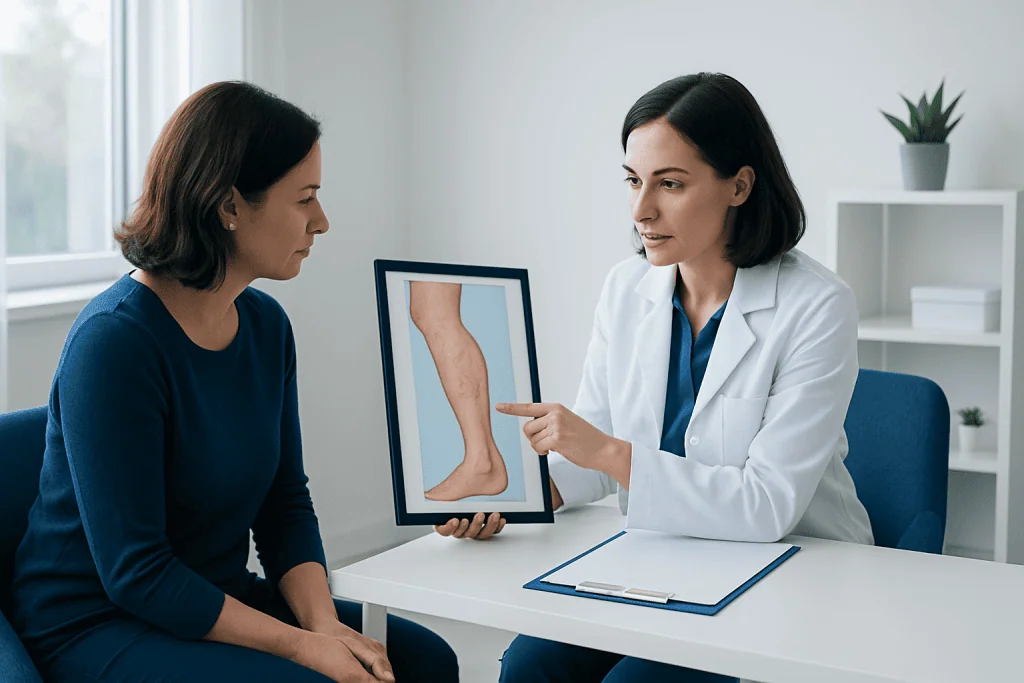
A clinician will ask about symptoms, prior blood clots, previous vein procedures, family history, work and activity patterns, medicines and pregnancy history. They will examine the legs while the person is standing, because varicose veins are often more visible in this position.
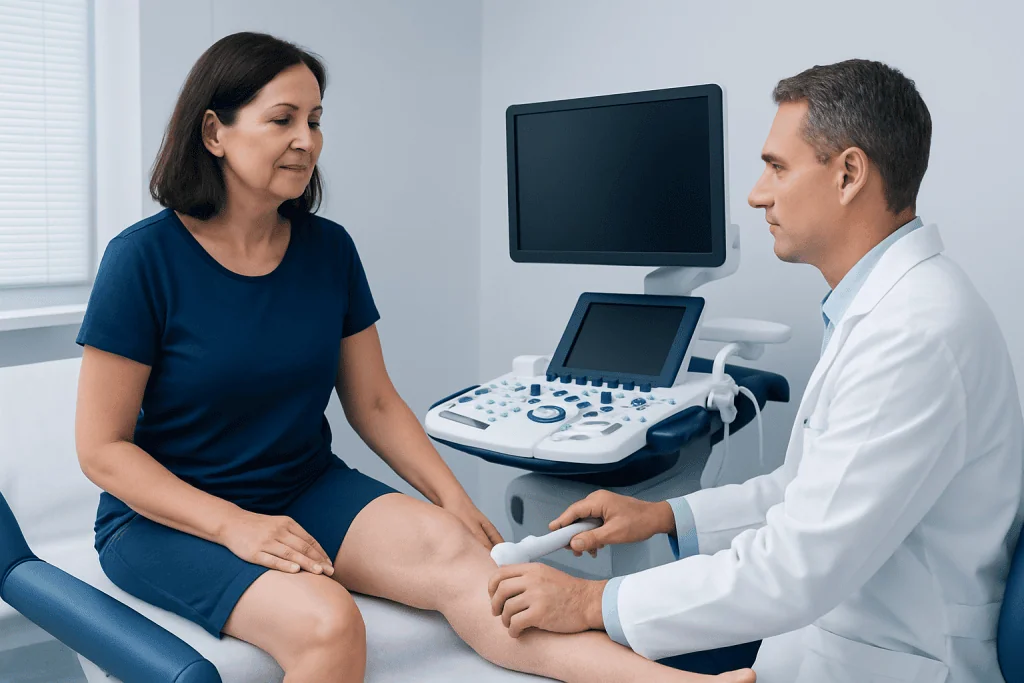
Duplex ultrasound is commonly used before intervention. This painless test combines ultrasound imaging with blood-flow assessment. It can show whether blood is flowing backward in superficial veins, check the deep veins, and help identify the source of the problem. Ultrasound findings help avoid treating only visible branches while leaving the underlying reflux untreated.
Shared decision-making is important. A person and their clinician can consider the expected benefit, recovery needs, possible complications, cosmetic goals, whether one or both legs require care, and the chance that new varicose veins may develop later. Procedures are often performed with local anesthesia, sometimes with sedation or general anesthesia depending on the technique and individual circumstances.
Varicose Veins Treatment Options
Conservative care may help manage mild symptoms. It can include regular walking, avoiding prolonged immobility where possible, maintaining a weight that supports overall health, elevating the legs when resting and using compression stockings when advised. Compression can improve symptoms for some people, but it does not permanently correct faulty valves.
Endovenous thermal ablation uses heat from a laser or radiofrequency catheter to close an affected vein from inside. It is commonly guided by ultrasound and performed through a small skin puncture. Other minimally invasive methods may include medical adhesive closure or mechanochemical ablation, depending on the vein pattern and local availability. These procedures close the faulty vein rather than physically removing it.
Ultrasound-guided foam sclerotherapy involves injecting a medication as foam into selected veins, causing them to seal and gradually fade. It may be used for smaller varicose branches, recurrent veins or in combination with another procedure. Sclerotherapy is also used for some smaller visible veins, although suitability depends on the type and source of the vein.
Ambulatory phlebectomy removes surface varicose branches through very small incisions. Surgical ligation and stripping may still be considered when anatomy or clinical circumstances make less invasive options unsuitable. Varicose vein treatment should be individualized by a qualified vascular team rather than selected on appearance alone.
Recovery, Activity and Aftercare
After most vein procedures, patients are encouraged to walk shortly afterward unless their clinician gives different instructions. Gentle movement supports circulation and can reduce stiffness. A care team may recommend compression stockings or bandages for a defined period, but the duration and pressure level vary by procedure and individual needs.
Temporary bruising, tenderness, tightness along the treated vein, mild swelling, numbness around a small incision, or firm areas beneath the skin can occur. These effects generally improve over time. The closed vein is gradually absorbed by the body, while removed branches leave small healing sites.
Patients should follow their procedure-specific guidance about bathing, driving, lifting, travel and exercise. Many can return to desk-based work quickly after minimally invasive treatment, but physically demanding work may require more time. Follow-up ultrasound may be used after certain procedures to confirm that the treated vein has closed as intended and to check for uncommon complications.
Acibadem International’s multidisciplinary specialists and JCI-accredited hospitals assess and treat venous conditions for international patients, with care plans based on clinical examination and vascular imaging.
How Long After Varicose Vein Treatment Do You See Results?
Symptom improvement may begin within days to a few weeks after successful treatment, particularly when aching, heaviness or swelling was related to the treated vein. However, the visible result takes longer because bruising and inflammation need to settle and the body gradually absorbs the treated vein.
After ablation or sclerotherapy, a vein may initially look darker, feel firm or remain visible before fading. This can take weeks and sometimes several months. Results after phlebectomy may become apparent sooner in the removed branches, although small incision marks and bruising still need time to heal.
The timing of results varies with the treatment type, the size of the vein, the extent of disease, skin tone, healing factors and whether additional sessions are needed. Follow-up appointments allow the clinician to assess progress and discuss any remaining veins safely.
How Many Days Should I Rest After Varicose Veins Surgery?
Complete bed rest is generally not recommended after varicose vein surgery or minimally invasive vein treatment. Instead, brief, regular walks are commonly advised from the day of treatment, as long as the person feels able and has received no instruction to limit activity.
Many people take a few days away from usual routines after a minor procedure, especially if work involves long periods of standing, heavy lifting or strenuous physical activity. Following traditional surgical stripping, more recovery time may be needed than after catheter-based procedures. The exact amount depends on the procedure, the number of veins treated, anesthesia, pain control and the nature of the person’s work.
Heavy exercise, intense leg training and prolonged immobility may be restricted temporarily. The treating clinician should provide individualized instructions, including when to return to work, drive, fly and resume sports.
Is There a Downside to Removing Varicose Veins?
Removing or closing diseased superficial veins does not usually harm overall circulation because these veins are not functioning efficiently and blood can travel through other healthy veins. However, no procedure is without potential downsides. Expected short-term effects may include bruising, soreness, swelling, skin staining, small scars or temporary changes in sensation.
Less common risks depend on the method and can include infection, bleeding, inflammation of a treated vein, skin injury, nerve irritation, allergic reaction, blood clot formation or incomplete closure of a vein. Serious complications are uncommon, but they should be discussed before treatment. Careful assessment is particularly important for people with a history of deep vein thrombosis, clotting disorders, severe arterial disease or complex medical conditions.
Varicose veins can recur or new veins can form over time, even after technically successful treatment. Maintaining regular activity, attending follow-up where recommended and seeking assessment for new symptoms can support long-term vein health.
How Long Does It Take to Recover From Varicose Vein Surgery?
Recovery varies considerably. After minimally invasive treatment such as endovenous ablation, many people return to light daily activities within a short period, although tenderness and bruising may last for days or weeks. Full cosmetic settling often takes longer than functional recovery.
Recovery after surgical ligation and stripping is usually longer because it involves incisions and removal of a larger vein segment. People may need more time before returning to strenuous work, high-impact exercise or prolonged standing. Bruising and discomfort can be more pronounced initially, but should gradually improve.
Patients should contact their treating team if pain or swelling becomes severe or progressively worse, if there is significant bleeding, fever, spreading redness, chest pain, shortness of breath, or sudden one-sided leg swelling. These symptoms need timely medical assessment and should not be managed through self-care alone.
When to Seek Medical Care
A medical appointment is appropriate when leg veins are painful, increasingly swollen, itchy, heavy or affecting daily life. Assessment is also advisable for persistent skin changes around the ankles, recurrent superficial vein inflammation, a wound that is slow to heal, or bleeding from a varicose vein.
Urgent medical evaluation is needed for sudden leg swelling or pain, warmth and redness in one leg, unexplained shortness of breath, chest pain, coughing blood, or bleeding that does not stop with firm direct pressure and leg elevation. These symptoms can have causes other than varicose veins and require prompt assessment.
Pregnancy can make varicose veins more noticeable, and symptoms should be discussed with an obstetric or medical clinician. In many cases, definitive procedures are postponed until after pregnancy unless there is a specific medical reason for earlier treatment.
Frequently asked questions
Are varicose veins treatment procedures painful?
Many minimally invasive procedures are performed with local anesthesia, so discomfort during treatment is usually limited. Mild tenderness, pulling sensations or bruising afterward are common and typically temporary. The care team can explain pain-relief options and what to expect for the planned procedure.
Do compression stockings get rid of varicose veins?
Compression stockings may reduce symptoms such as aching, heaviness and swelling for some people. They do not remove existing varicose veins or repair faulty vein valves. A clinician can advise whether compression is appropriate and which type may be suitable.
Can varicose veins come back after treatment?
A successfully treated vein may remain closed or removed, but new varicose veins can develop over time. This may happen because vein disease can affect other veins or because of ongoing factors such as age, family tendency, pregnancy or prolonged standing. Follow-up can help identify and manage new concerns.
Can I walk after varicose vein treatment?
Walking is commonly encouraged soon after treatment because it supports circulation and recovery. The appropriate amount of activity depends on the procedure and the person’s medical history. Patients should follow their clinician’s instructions, particularly if they have other circulation problems or a history of blood clots.
Will removing a varicose vein affect blood flow in the leg?
In most cases, closing or removing an unhealthy superficial vein does not impair leg circulation. Blood is redirected through healthy superficial and deep veins. Ultrasound assessment before treatment helps confirm that the procedure is appropriate for the person’s circulation.
What should I avoid after varicose vein treatment?
Patients may be advised to avoid strenuous exercise, heavy lifting, prolonged sitting or standing, and hot baths for a short time, depending on the procedure. Instructions about compression, wound care, driving and travel also vary. The treating team’s guidance should take priority over general advice.
References
- National Institute for Health and Care Excellence
- Society for Vascular Surgery
- American Venous Forum
- National Health Service
- Mayo Clinic
This article is for general information only and is not a substitute for professional medical advice. Please consult a qualified doctor about your individual situation.
Explore treatments in Turkey — costs, top hospitals & a free quote
JCI-accredited · board-certified surgeons · reply within 24h
Add us as a Preferred Source to see more of our trusted health content across Google Search, AI Overviews and Discover.