Vaser Liposuction — Explained by Medical Evidence, Not Myths

Vaser liposuction is a surgical body-contouring procedure, not a weight-loss treatment. Ultrasound energy is used to disrupt fatty tissue before suction, but outcomes depend greatly on patient selection and surgical technique.
Key Takeaways
- Vaser liposuction is a surgical body-contouring procedure, not a weight-loss treatment.
- Ultrasound energy is used to disrupt fatty tissue before suction, but outcomes depend greatly on patient selection and surgical technique.
- People with stable weight, good general health, and realistic expectations may be suitable candidates.
- Swelling, bruising, numbness, contour irregularities, fluid collections, and infection are possible risks.
- A consultation with a qualified plastic surgeon is essential to discuss alternatives, safety, and expected recovery.
Vaser liposuction is a form of ultrasound-assisted liposuction that uses sound-wave energy to loosen fatty tissue before it is removed with suction. It may improve body contour in selected people, but it is not a treatment for obesity, does not replace healthy habits, and should be considered with a clear understanding of its recovery needs and possible complications.
Overview: what Vaser liposuction is
Vaser liposuction is a type of liposuction that uses ultrasound energy to help break up or loosen fat before it is removed through a thin suction tube called a cannula. “VASER” is a commonly used term for a particular ultrasound-assisted approach. The procedure is designed to improve the shape of a specific area of the body rather than produce major weight loss.
During the procedure, the surgeon first introduces a sterile fluid solution into the treatment area. This solution commonly contains saline, a local anesthetic, and medication that reduces bleeding. A small ultrasound probe is then used beneath the skin to deliver energy to fatty tissue, after which the loosened fat is suctioned out through small incisions.
Vaser liposuction may be performed on areas such as the abdomen, waist, back, thighs, upper arms, chest, neck, or beneath the chin. It is sometimes promoted as a method for more detailed contouring because the surgeon can work around superficial and deeper fat layers. However, the result is influenced by skin elasticity, the amount and location of fat, healing, and the surgeon’s skill—not by the device alone.
What medical evidence can and cannot show
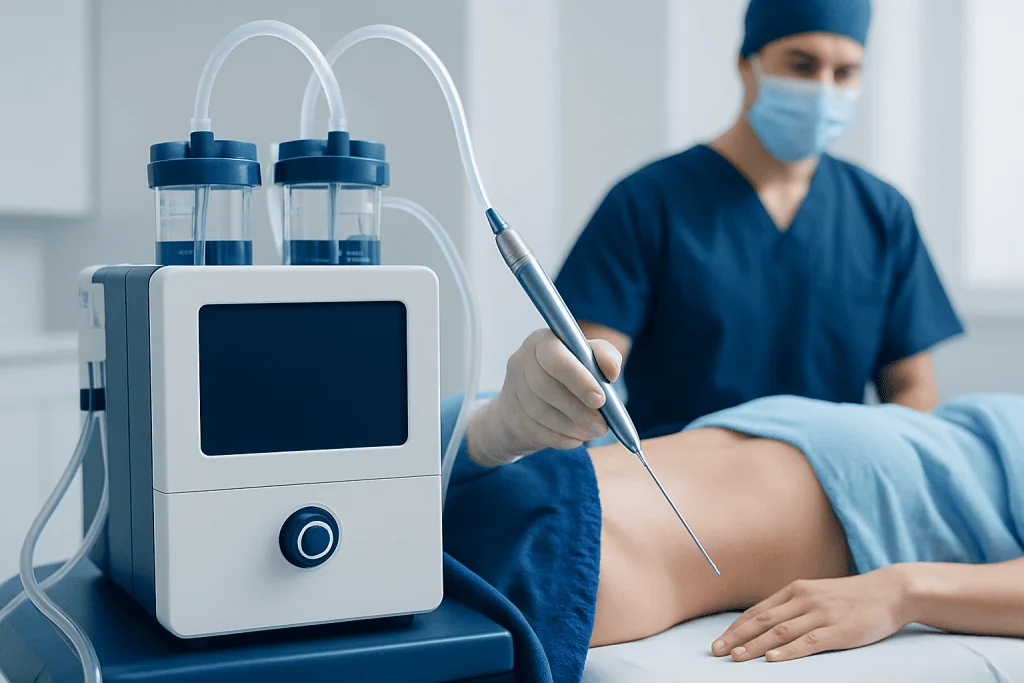
Research on ultrasound-assisted liposuction suggests that it can remove localized fat effectively and may be useful in selected body-contouring cases. Some studies report high patient satisfaction and results broadly comparable with other established liposuction techniques. However, studies vary in their design, the areas treated, follow-up duration, and the outcome measures used, so claims that one technique is always superior should be viewed carefully.
There is no strong evidence that Vaser liposuction is a substitute for weight management, exercise, or treatment for metabolic conditions. Removing subcutaneous fat—the fat located under the skin—does not reliably treat high blood pressure, diabetes, high cholesterol, or the health risks associated with obesity. It also does not remove visceral fat, which is the fat surrounding internal abdominal organs and is more closely linked with cardiometabolic risk.
Evidence does not support promises of perfectly defined muscles, permanent results regardless of lifestyle, or completely scar-free surgery. Fat cells removed from a treated area do not return in the same number, but remaining fat cells can enlarge with weight gain. A stable lifestyle after surgery is therefore important for maintaining contour changes.
Who may be a suitable candidate

Suitable candidates are generally adults who are close to a stable, sustainable body weight and have localized areas of fat that have not responded as desired to diet and activity. Good skin elasticity can help the skin adapt to the new contour after fat removal. People considering the procedure should have realistic goals: improvement in shape is possible, but symmetry and smoothness cannot be guaranteed.
A surgeon will review medical history, medications, allergies, previous operations, smoking or nicotine use, and any history of clotting or wound-healing problems. Conditions such as uncontrolled diabetes, significant heart or lung disease, active infection, bleeding disorders, or poorly controlled mental health concerns may affect whether elective surgery is appropriate. Pregnancy and breastfeeding are also times when body-contouring surgery is usually postponed.
People with substantial excess weight may benefit more from a structured medical weight-management plan or, when appropriate, discussion of bariatric treatment rather than liposuction alone. A qualified clinician can help distinguish a cosmetic contour concern from a health condition that needs broader care. The consultation should also include discussion of non-surgical options, which may offer modest changes without surgery but are not equivalent to liposuction.
How the procedure and recovery usually work
Vaser liposuction may be performed under local anesthesia with sedation or under general anesthesia, depending on the areas treated, the planned volume of fat removal, and the patient’s health. The procedure time varies. Before surgery, the surgeon marks the treatment areas while the patient is standing, because body contours look different when lying down.
After the procedure, patients typically wear a compression garment to support the treated area and help limit swelling. Bruising, swelling, soreness, fluid leakage from small incisions, and temporary numbness are common in the early recovery period. Many people resume gentle walking soon after surgery, while return to work and more strenuous activity depends on the extent of treatment and the surgeon’s instructions.
The initial body shape can be difficult to judge because swelling may last for weeks and, in some cases, several months. Follow-up appointments are important so the surgical team can monitor healing, check for fluid collections, and advise on scar care, activity, and garment use. Patients should follow their own surgeon’s aftercare plan rather than relying on advice shared online.
Risks and limitations to understand
Like all surgical procedures, Vaser liposuction has risks. More common concerns include bruising, swelling, discomfort, temporary altered sensation, small scars, skin laxity, uneven contours, asymmetry, and dissatisfaction with the cosmetic result. Some people may require additional treatment or revision surgery if healing produces an uneven contour or if their goals are not met.
Less common but potentially serious complications include infection, bleeding, persistent fluid collections known as seromas, skin injury or burns related to ultrasound energy, delayed wound healing, reactions to anesthesia, and blood clots. Rarely, fat embolism or other complications affecting breathing can occur after liposuction. The risk may increase when large treatment areas are addressed, multiple procedures are combined, or surgery is undertaken in an unsuitable setting.
Safety is supported by careful assessment, appropriate anesthesia planning, sterile operating conditions, qualified postoperative care, and clear limits on what can safely be treated in one session. It is important to choose a surgeon with recognized training in plastic or cosmetic surgery and to ask where the procedure will be performed, who will provide anesthesia, and how complications would be managed.
- Ask whether the expected benefit justifies the surgical risks for the individual.
- Discuss smoking, vaping, nicotine products, supplements, and all medicines before surgery.
- Do not assume that minimally visible incisions mean the procedure is risk-free.
Preparing well and supporting recovery
A safe plan begins before the operation. Patients should attend a full consultation, provide an accurate medical history, complete recommended tests, and disclose all prescription medicines, over-the-counter products, and herbal supplements. Some medications or supplements can affect bleeding or anesthesia, but they should only be stopped or changed with advice from the prescribing clinician and surgical team.
Stopping smoking and avoiding nicotine as advised by the surgeon can support circulation and wound healing. It is also sensible to arrange transport after the procedure, practical help at home if needed, comfortable clothing, and time away from demanding work or exercise. Crash dieting before or after surgery is not recommended; adequate nutrition, hydration, and stable weight support recovery.
After surgery, gentle movement can help reduce the risk of blood clots, but strenuous activity, heavy lifting, and swimming should wait until the surgeon says they are safe. Compression garments should be worn as instructed. A balanced eating pattern, regular physical activity once cleared, and weight stability offer the best chance of preserving the contour achieved through surgery.
When to seek medical care
Anyone considering Vaser liposuction should arrange a consultation with a qualified surgeon before making a decision. The surgeon can assess whether liposuction is appropriate, explain likely results for the person’s skin and body shape, and discuss safer or more suitable alternatives where needed. A reputable clinician will not pressure a person to proceed and will allow time for informed decision-making.
After surgery, urgent medical assessment is needed for chest pain, shortness of breath, fainting, confusion, coughing blood, severe or rapidly worsening pain, one-sided leg swelling, or heavy bleeding. These symptoms may have causes unrelated to surgery, but they should not be ignored. Patients should contact their surgical team promptly for fever, increasing redness or warmth, pus-like drainage, rapidly expanding swelling, or pain that is not controlled by the prescribed plan.
Acibadem International’s multidisciplinary specialists and JCI-accredited hospitals assess and treat patients seeking body-contouring surgery, including international patients. The safest approach is an individualized evaluation that prioritizes medical suitability, informed consent, and appropriate follow-up care.
Frequently asked questions
Is Vaser liposuction better than traditional liposuction?
Vaser liposuction and traditional liposuction use different methods to prepare fat for removal, but neither is universally better for every person or body area. Ultrasound assistance may be helpful in some contouring cases, while conventional techniques may be appropriate in others. The surgeon’s training, safety practices, and the individual’s anatomy are more important than marketing claims about a device.
Is Vaser liposuction a weight-loss procedure?
No. Vaser liposuction is intended for localized fat reduction and body contouring, not for treating obesity or achieving substantial weight loss. It does not replace nutrition, physical activity, medical weight management, or treatment for obesity-related health conditions.
How long does it take to see Vaser liposuction results?
Some contour change may be noticeable after early swelling begins to settle, but the final result develops gradually. Swelling and tissue healing can continue for several months, particularly when larger areas have been treated. The surgeon can provide a more individualized recovery timeline based on the procedure performed.
Does Vaser liposuction tighten loose skin?
It may produce some degree of skin retraction in people with good natural skin elasticity, but it is not a reliable treatment for significant loose or hanging skin. When excess skin is a main concern, a skin-removal operation may be discussed instead. A consultation can clarify which approach is likely to match the person’s goals.
Are the results of Vaser liposuction permanent?
The fat cells removed during liposuction are permanently removed from the treated area. However, remaining fat cells can enlarge if a person gains weight, and body shape can change with aging, pregnancy, hormones, and lifestyle. Maintaining a stable weight helps preserve the result.
What questions should a person ask before Vaser liposuction?
Useful questions include whether the surgeon is appropriately trained and licensed, where the procedure will take place, which anesthesia will be used, and what complications are possible. Patients should also ask about expected recovery, scar placement, follow-up visits, and what would happen if a revision or urgent medical assessment were needed. Clear, individualized answers are an important part of informed consent.
References
- American Society of Plastic Surgeons
- International Society of Aesthetic Plastic Surgery
- U.S. Food and Drug Administration
- National Health Service
- Mayo Clinic
This article is for general information only and is not a substitute for professional medical advice. Please consult a qualified doctor about your individual situation.
Vaser Liposuction in Turkey — costs, top hospitals & a free quote
JCI-accredited · board-certified surgeons · reply within 24h
Add us as a Preferred Source to see more of our trusted health content across Google Search, AI Overviews and Discover.
Check your numbers in seconds
BMI, calories, due date, blood pressure and 30+ more clinical calculators — free, instant, doctor-reviewed ranges.

More from the Health Library



Related Specialists

Dr. Seda Saygılı Özaydın
Oral & Dental Health
Dr. Salim Sırrı Türker
Orthopedic Surgery & Traumatology
Prof. Dr. Uğur Öziç
Orthopedic Surgery & Traumatology
Dyt. Tuba Sungur
Nutrition & Diet