Velamentous Cord Insertion: What Patients Need to Know

Velamentous cord insertion is usually diagnosed on prenatal ultrasound, not from symptoms. The main concern is that unprotected fetal blood vessels travel through the membranes before reaching the placenta.
Key Takeaways
- Velamentous cord insertion is usually diagnosed on prenatal ultrasound, not from symptoms.
- The main concern is that unprotected fetal blood vessels travel through the membranes before reaching the placenta.
- Some pregnancies remain uncomplicated, while others need closer follow-up for fetal growth, placental position, or labor planning.
- It can occur together with vasa previa, a more urgent condition that needs specialist care.
- Regular prenatal visits and individualized delivery planning help reduce risks.
Velamentous cord insertion is a pregnancy finding in which the umbilical cord attaches to the membranes rather than directly into the placenta. It often causes no symptoms, but it matters because exposed blood vessels may be more vulnerable and pregnancy may need closer ultrasound monitoring.
Overview
Velamentous cord insertion is a placental finding in pregnancy where the umbilical cord inserts into the membranes surrounding the placenta instead of attaching directly into the placental tissue. This means the blood vessels from the cord travel within the membranes for a distance before they reach the placenta, rather than being cushioned by the normal protective tissue of the cord and placenta.
Many people learn about velamentous cord insertion during a routine prenatal ultrasound. In many cases, it does not cause noticeable symptoms and the pregnancy continues with careful observation. The reason doctors pay attention to it is that the exposed vessels can be more fragile, and the finding may be linked with other pregnancy concerns such as slower fetal growth, an unusual placental location, or vasa previa.
This condition is different from other cord insertion patterns, such as a marginal cord insertion, where the cord attaches near the edge of the placenta but still enters placental tissue. Velamentous insertion generally needs more deliberate follow-up because the vessels are less protected. The best approach depends on how far the vessels travel, whether there are other placental findings, and how the baby is growing.
How It Affects Pregnancy
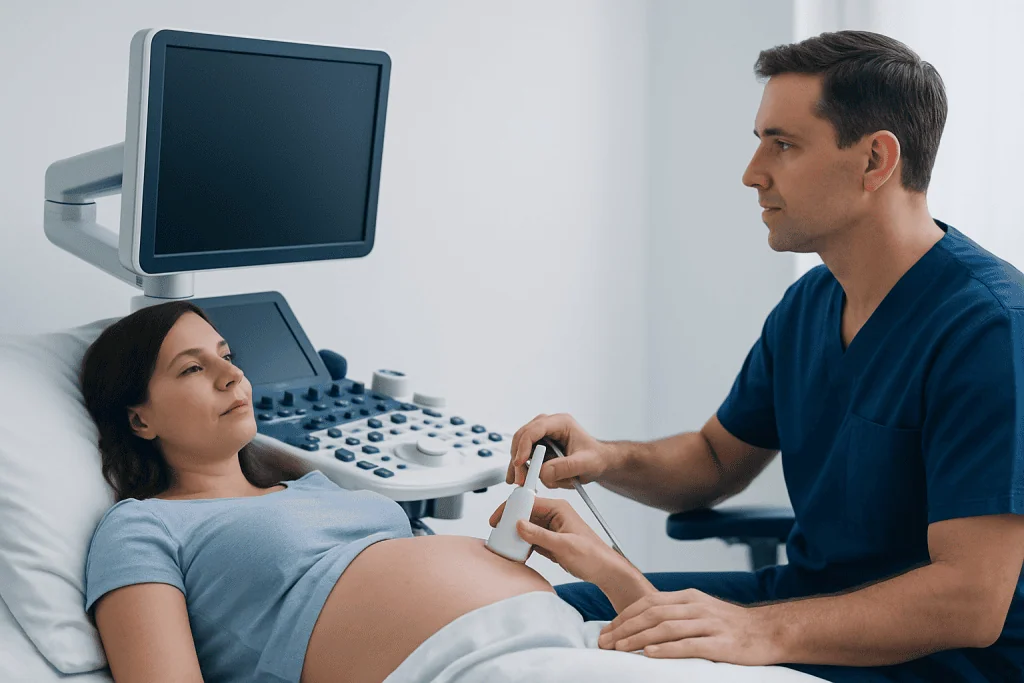
The umbilical cord is the baby’s lifeline, carrying oxygen and nutrients from the placenta and returning waste products. In a typical pregnancy, the cord enters the placenta directly, where the blood vessels are supported and protected. In velamentous cord insertion, those vessels run through the membranes before they reach the placenta, which can make them more susceptible to compression or injury.
The degree of risk is not the same in every pregnancy. Some patients have a small area of exposed vessels and no major complications, while others may need more frequent scans because of concerns about blood flow, fetal growth, or placental position. If the unsupported vessels pass near the cervix, the condition may be associated with vasa previa, which changes delivery planning significantly.
Doctors also consider the broader context of the pregnancy. Factors such as carrying twins, a low-lying placenta, prior placental abnormalities, or other ultrasound findings may influence monitoring and management. A diagnosis of velamentous cord insertion does not automatically mean a serious problem will occur, but it does mean the pregnancy deserves closer attention.
Symptoms and Possible Complications

Velamentous cord insertion often causes no symptoms at all. Most pregnant patients do not feel anything different, and there is usually no pain, bleeding, or change in daily functioning caused directly by the cord insertion pattern. That is why prenatal imaging is so important for identifying it early.
Possible complications relate mainly to the exposed fetal blood vessels. Depending on the exact location and pregnancy course, doctors may watch for fetal growth restriction, changes in blood flow, preterm birth, or distress during labor. If the vessels lie over or very close to the cervix, there may be a risk of vessel rupture when the membranes break, which is why checking for associated vasa previa is essential.
Labor and delivery planning may be affected too. In some cases, vaginal birth is still possible with careful monitoring. In others, especially when there is vasa previa or other significant placental concerns, a planned cesarean birth may be the safest option. The goal is to reduce stress on the exposed vessels and support a safe delivery for both parent and baby.
- Usually no symptoms before diagnosis
- May be linked with slower fetal growth
- Can occur with placental position abnormalities
- May affect labor monitoring and delivery method
- Needs urgent evaluation if vasa previa is suspected
Causes and Risk Factors
The exact cause of velamentous cord insertion is not fully understood. It develops as the placenta and umbilical cord form early in pregnancy. In most cases, it is not caused by anything the pregnant person did or did not do. It is best thought of as a variation in placental development rather than a preventable mistake or injury.
Certain situations are associated with a higher chance of this finding. These include multiple pregnancy, such as twins, pregnancies conceived with assisted reproductive techniques, and placental variations such as a low-lying placenta or placenta previa. Doctors may also look more carefully for cord and placental differences if there has been a history of placental complications in a prior pregnancy.
Even with known risk factors, velamentous cord insertion can also appear in pregnancies without any obvious reason. Because it is not usually preventable, the focus is on early recognition and tailored prenatal care. A detailed ultrasound exam helps clarify whether this is an isolated finding or part of a more complex placental picture.
Diagnosis and Monitoring
Diagnosis usually begins with a routine prenatal ultrasound, often during the mid-pregnancy anatomy scan. The sonographer and obstetric specialist look at where the umbilical cord enters the placenta and whether the vessels travel through the membranes before reaching placental tissue. Color Doppler ultrasound is especially useful because it can show the course of the blood vessels clearly.
After the diagnosis is made, the next step is to determine whether any associated conditions are present. Doctors may check the placental location, the distance of vessels from the cervix, and the baby’s growth over time. Follow-up scans are often recommended to monitor fetal growth and reassess placental and vessel anatomy as the pregnancy progresses.
In some patients, the most important question is whether velamentous cord insertion is accompanied by placenta previa or vasa previa. These conditions can affect bleeding risk and delivery planning. If fetal growth needs close review or the pregnancy has additional complexities, a maternal-fetal medicine specialist may guide surveillance with advanced imaging such as detailed ultrasound evaluation.
Treatment Options and Delivery Planning
There is no procedure that can move the cord insertion to a different place during pregnancy. Treatment therefore focuses on monitoring, preventing complications where possible, and choosing the safest timing and mode of delivery. The management plan depends on whether the baby is growing well, whether the vessels are near the cervix, and whether other placental findings are present.
For isolated velamentous cord insertion, care often includes repeat ultrasounds to assess growth and blood flow. Some patients may need more frequent prenatal visits or fetal well-being assessments in the third trimester. If there is concern about fetal growth, reduced movement, or other changes, the obstetric team may recommend closer surveillance and discussion of delivery timing.
When vasa previa or another major placental complication is present, planned cesarean delivery may be advised to reduce the chance of vessel rupture during labor or after the membranes break. In selected pregnancies where cesarean birth is the safest route, cesarean section becomes part of the care plan. If labor is considered appropriate, continuous fetal monitoring and careful obstetric supervision are commonly used.
Near the end of care, some patients benefit from consultation with specialists in high-risk pregnancy care to review imaging, birth planning, and newborn support needs. Acibadem International’s multidisciplinary specialists and JCI-accredited hospitals diagnose and treat placental and high-risk pregnancy conditions for international patients.
Prevention, Self-care, and Emotional Support
Velamentous cord insertion cannot usually be prevented, but healthy prenatal habits remain important. Keeping scheduled prenatal visits, completing recommended ultrasounds, and reporting any new symptoms promptly help the care team respond early if concerns arise. General pregnancy health measures such as balanced nutrition, avoiding tobacco, and managing chronic conditions support overall maternal and fetal well-being.
Self-care also includes paying attention to fetal movement later in pregnancy, following activity guidance from the obstetric team, and understanding the individualized birth plan. Many patients feel anxious after hearing that the umbilical cord or placenta is different from usual. Clear communication with the care team can help place the diagnosis in context and explain what is being monitored and why.
It may help to ask practical questions at appointments, such as how often growth scans are needed, whether delivery at a specialized center is recommended, and what signs should prompt urgent evaluation. Support from a partner, family member, midwife, or counselor can also make repeated monitoring feel more manageable. Reassurance is appropriate: careful follow-up allows many pregnancies with velamentous cord insertion to be managed safely.
When to Seek Medical Care
Patients with velamentous cord insertion should continue routine prenatal care and follow all monitoring recommendations. They should contact their obstetric team promptly if they notice vaginal bleeding, a sudden decrease in fetal movement, contractions that may suggest preterm labor, leaking of fluid, or strong abdominal pain. These symptoms do not always mean a serious complication, but they deserve timely assessment in pregnancy.
Urgent medical evaluation is especially important if bleeding occurs after the membranes rupture or if a doctor has mentioned concern for vasa previa. In late pregnancy, any significant change in fetal movement should be taken seriously and discussed without delay. If there is uncertainty about whether a symptom is important, it is safer to call a qualified healthcare professional or go to the recommended maternity unit.
Regular follow-up is also part of seeking care. Even when a patient feels well, missing ultrasound appointments can make it harder to track fetal growth and delivery planning. A personalized plan from an obstetrician or maternal-fetal medicine specialist offers the best guidance for this condition.
Frequently asked questions
Is velamentous cord insertion dangerous?
It can increase certain pregnancy risks, but the level of concern depends on the exact anatomy and whether other conditions are present. Many pregnancies do well with careful ultrasound follow-up and individualized delivery planning.
Can velamentous cord insertion harm the baby?
It may be associated with reduced fetal growth, vessel compression, or labor-related concerns in some cases. However, early diagnosis and close monitoring help the care team respond if the baby needs extra surveillance or a different delivery plan.
How is velamentous cord insertion diagnosed?
It is most often diagnosed on prenatal ultrasound, especially the anatomy scan, sometimes with color Doppler imaging. The scan shows that the umbilical cord attaches to the membranes instead of directly into the placenta.
Does velamentous cord insertion always mean a cesarean section?
No. Some patients can still have a vaginal birth if there are no additional high-risk findings and the obstetric team feels labor is appropriate. Cesarean delivery is more likely if vasa previa, fetal distress, or other placental complications are present.
Can velamentous cord insertion be treated during pregnancy?
The cord insertion itself cannot be changed during pregnancy. Treatment focuses on monitoring fetal growth, checking placental and vessel position, and planning delivery in the safest way for the specific pregnancy.
What is the difference between velamentous cord insertion and vasa previa?
Velamentous cord insertion refers to the way the cord attaches to the membranes rather than directly to the placenta. Vasa previa is a separate but related condition in which fetal blood vessels run over or near the cervix, creating a more urgent delivery risk.
References
- American College of Obstetricians and Gynecologists
- Society for Maternal-Fetal Medicine
- Royal College of Obstetricians and Gynaecologists
- National Institute for Health and Care Excellence
- March of Dimes
This article is for general information only and is not a substitute for professional medical advice. Please consult a qualified doctor about your individual situation.
Explore treatments in Turkey — costs, top hospitals & a free quote
JCI-accredited · board-certified surgeons · reply within 24h
Add us as a Preferred Source to see more of our trusted health content across Google Search, AI Overviews and Discover.

More from the Health Library



Related Specialists

Assoc. Prof. Dr. Oğuz Durakbaşa
Orthopedic Surgery & Traumatology
Dr. Setareh Farrokhnıa
Radiology
Öznur Tanişman
Physical Medicine & Rehabilitation
Dyt. Şeyda Sıla Bilgili Tokgöz
Nutrition & Diet