Visual Agnosia: A Complete Medical Overview
Visual agnosia affects recognition and interpretation of visual information rather than the sharpness of eyesight itself. Symptoms vary by type and may involve objects, faces, colors, familiar places, or visually presented words.
Key Takeaways
- Visual agnosia affects recognition and interpretation of visual information rather than the sharpness of eyesight itself.
- Symptoms vary by type and may involve objects, faces, colors, familiar places, or visually presented words.
- Stroke, head injury, brain tumors, infections, and neurodegenerative conditions can affect visual recognition pathways.
- Diagnosis combines eye assessment, neurological examination, brain imaging, and specialized cognitive testing.
- Treatment focuses on managing the underlying cause, rehabilitation, practical adaptations, and safety support.
Visual agnosia is a neurological condition in which a person can see but cannot reliably recognize objects, faces, colors, or other visual information. It usually develops after injury or disease affecting the brain’s visual processing networks, and assessment can help identify the type, cause, and supportive care needs.
Visual Agnosia: What It Means
Visual agnosia is a neurological difficulty recognizing or assigning meaning to things that are seen, even when the eyes may be functioning adequately. A person may look directly at a familiar object, such as a key or cup, yet be unable to name it or explain its purpose until they touch it, hear it, or receive another clue.
The condition occurs when areas of the brain that interpret visual signals are damaged or are not working as expected. It is different from blindness, blurry vision, or an ordinary memory lapse. The visual information reaches the brain, but the brain has trouble connecting that information with stored knowledge about what the item, face, symbol, or scene represents.
Visual agnosia is uncommon and can be subtle, especially when a person has developed useful ways to compensate. Its effects depend on the specific visual processing network involved. Some people mainly struggle to recognize everyday objects, while others have difficulty recognizing faces, reading, navigating familiar places, or identifying colors.
How Visual Recognition Normally Works
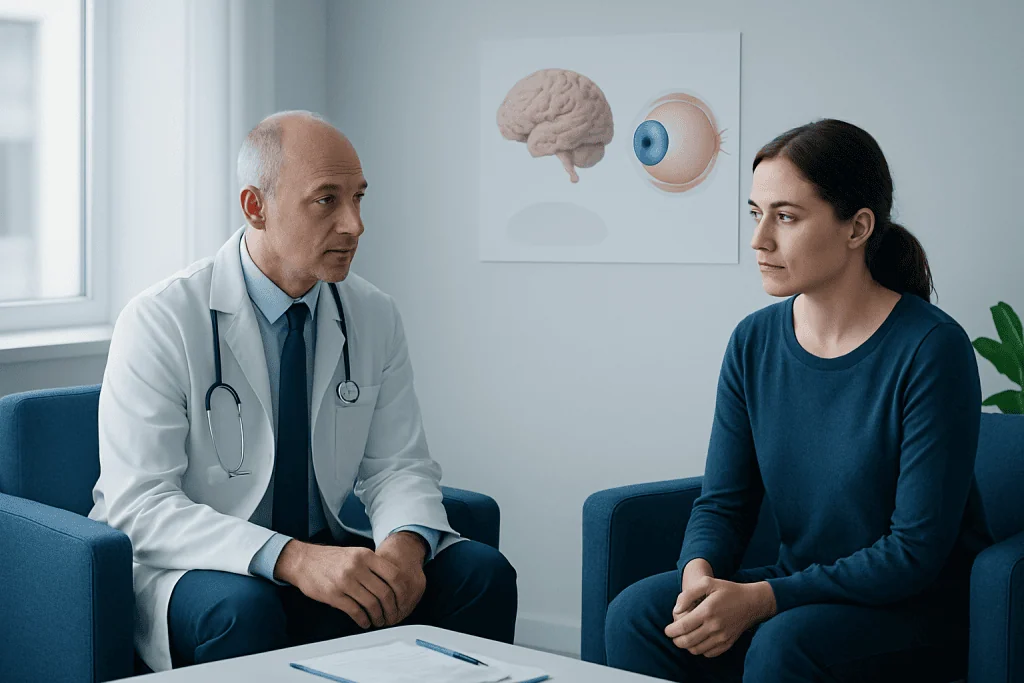
Seeing is an active brain process, not simply an eye function. Light enters the eye and is converted into nerve signals by the retina. These signals travel through the optic nerve and visual pathways to the occipital lobes at the back of the brain, where basic features such as lines, movement, shape, and color are processed.
For recognition to occur, the brain must then integrate these features and compare them with prior knowledge. Networks extending from the occipital lobe toward the temporal and parietal lobes help identify “what” an object is and where it is located. Damage at different points in these networks can produce different patterns of visual difficulty.
In some forms of visual agnosia, a person cannot form a coherent visual perception of an object. In others, they can copy a drawing or describe its features but cannot identify what it is. This distinction helps clinicians understand whether the main problem is perception, recognition, language, attention, memory, or a combination of these functions.
Types and Symptoms of Visual Agnosia
Symptoms can differ considerably from person to person. The condition may affect one narrow visual ability or several. A person often recognizes an item through touch, sound, smell, context, or verbal description, which can make the problem less obvious to family members and even to the individual at first.
- Apperceptive visual agnosia: difficulty putting visual details together into a recognizable whole. A person may struggle to match shapes, copy images, or distinguish similar objects.
- Associative visual agnosia: the person can often see and copy an object accurately but cannot name it or state what it is used for based on sight alone.
- Prosopagnosia: difficulty recognizing familiar faces, sometimes called face blindness. The person may identify others by voice, hairstyle, clothing, or context.
- Color agnosia: trouble identifying or matching colors despite being able to see them.
- Topographical agnosia: difficulty recognizing familiar places or navigating using visual landmarks.
- Pure alexia: marked difficulty reading words despite preserved writing ability and otherwise adequate vision.
Symptoms may be sudden, such as after a stroke, or develop gradually in some degenerative brain conditions. Other symptoms can occur at the same time, including weakness, speech changes, visual field loss, headaches, confusion, memory difficulty, or problems with coordination. These associated symptoms can provide important clues about the underlying cause.
Causes and Risk Factors
Visual agnosia is most often caused by damage to the brain’s visual association areas, particularly in the occipital and temporal regions. The exact location and extent of damage influence which recognition ability is affected. It is not usually caused by a lack of effort, reduced intelligence, or a primary eye disorder.
A stroke is a leading cause of sudden-onset visual agnosia, especially when blood flow is interrupted in areas supplied by the posterior cerebral artery. Traumatic brain injury can also disrupt visual networks. Other possible causes include brain tumors, bleeding in or around the brain, inflammation, oxygen deprivation, seizures, central nervous system infections, and complications after certain neurological illnesses.
Some neurodegenerative disorders may cause gradually progressive problems with visual interpretation. For example, certain forms of dementia can affect visual-spatial skills and object recognition. When symptoms appear slowly, a doctor will consider the full pattern of cognitive, behavioral, movement, and visual changes rather than assuming that visual agnosia alone explains them.
Risk factors depend on the underlying condition. Measures that reduce stroke risk, such as managing high blood pressure, diabetes, high cholesterol, smoking, and irregular heart rhythms, may indirectly lower the risk of brain injury that can lead to visual recognition difficulties.
How Doctors Diagnose Visual Agnosia
Diagnosis begins with a detailed history. A clinician may ask when the difficulty started, whether it was sudden or gradual, which things are hard to recognize, and whether touch or sound helps. Information from relatives or caregivers can be particularly useful because people may not always notice the full impact of their symptoms.
An eye examination may be used to check visual acuity, eye movements, visual fields, and eye health. This is important because problems such as cataracts, retinal disease, glaucoma, or optic nerve disorders can also interfere with daily visual tasks. However, normal or near-normal eye findings do not rule out a brain-based visual processing problem.
A neurological examination and neuropsychological assessment can test object naming, matching, copying drawings, face recognition, reading, color identification, attention, memory, and language. These tasks help distinguish visual agnosia from aphasia, delirium, visual neglect, memory disorders, and other conditions that can look similar.
Brain imaging, usually magnetic resonance imaging (MRI) or computed tomography (CT), may help identify a stroke, bleeding, tumor, injury, or another structural cause. Additional blood tests, electroencephalography (EEG), or specialist assessments may be recommended depending on the person’s symptoms and medical history.
Treatment, Rehabilitation and Everyday Support
There is no single treatment that restores visual recognition in every case. Care is directed first at the cause. For example, treatment may be needed for a stroke, seizure disorder, brain inflammation, tumor, or another neurological condition. Early medical assessment is particularly important when symptoms begin suddenly.
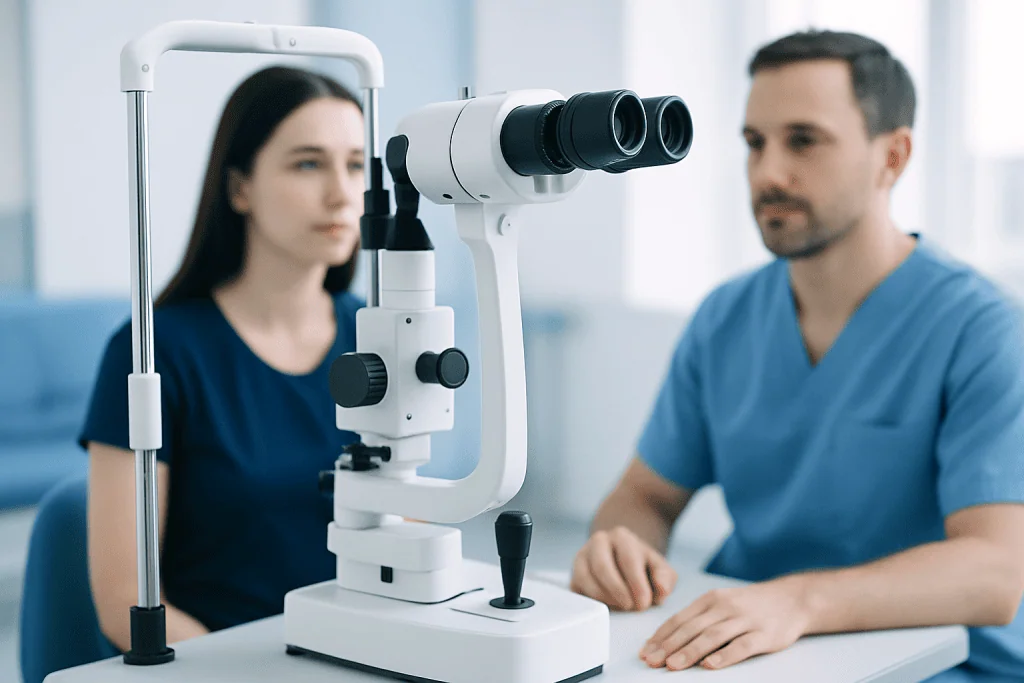
Rehabilitation can help a person use remaining abilities and develop compensatory strategies. Occupational therapists, neuropsychologists, speech and language therapists, neurologists, ophthalmologists, and rehabilitation specialists may work together. The goals are practical: improving independence, communication, safety, and confidence in activities that matter to the person.
Helpful strategies depend on the type of agnosia. Someone with object-recognition difficulty may use tactile labels, organized storage, smartphone voice tools, and routines that keep items in consistent places. A person with face-recognition difficulty may rely on voices, names, distinctive clothing, introductions, and contacts labeled with clear descriptions. Reading difficulties may be supported by text-to-speech tools, larger print, or listening to written information.
Family members can support rehabilitation by giving clear verbal cues, avoiding unnecessary pressure to “remember,” and allowing extra time. Homes can be made safer by improving lighting, reducing clutter, labeling essential items, and using contrasting colors where useful. Acibadem International’s multidisciplinary specialists and JCI-accredited hospitals can assess neurological and visual symptoms and coordinate care for international patients when appropriate.
When to Seek Medical Care
Sudden inability to recognize familiar objects, faces, words, or surroundings needs urgent medical evaluation. It may be a sign of stroke or another acute neurological problem, particularly when it occurs with facial drooping, weakness or numbness on one side, trouble speaking, severe headache, confusion, loss of balance, or a new change in vision. Emergency services should be contacted promptly rather than waiting to see whether the symptom improves.
A non-urgent medical appointment is still important for gradual or intermittent recognition problems. Difficulty identifying familiar people, getting lost in known places, reading previously manageable text, or making unusual visual mistakes can affect safety and may need assessment by a doctor, neurologist, eye specialist, or neuropsychologist.
Before the appointment, it can help to note specific examples: what was not recognized, whether other senses helped, when it happened, how long it lasted, and whether there were associated symptoms. This information can help the clinical team determine the most appropriate tests and support.
Frequently asked questions
Is visual agnosia the same as poor eyesight?
No. Visual agnosia is primarily a problem with how the brain interprets what the eyes see. A person may have normal or corrected visual acuity but still be unable to recognize an object, face, color, or word from sight alone.
Can visual agnosia happen after a stroke?
Yes. A stroke affecting the occipital, temporal, or connecting visual pathways can cause visual agnosia, often with sudden onset. Any sudden new difficulty recognizing visual information should be assessed urgently because stroke treatment is time-sensitive.
Can someone with visual agnosia recognize objects by touch?
Often, yes. Many people can identify an item once they touch it, hear it used, smell it, or receive a verbal clue. This preserved recognition through other senses is one feature that can help clinicians identify a visual processing disorder.
Is face blindness a type of visual agnosia?
Prosopagnosia, or face blindness, is commonly considered a selective form of visual agnosia. A person may see facial features clearly but have difficulty recognizing familiar people by their faces. They may use voice, context, hairstyle, or clothing to identify someone.
Can visual agnosia improve?
Improvement depends largely on the cause, the area of brain affected, and the person’s overall health. Some recovery can occur after an acute brain injury, especially with rehabilitation, while others may have lasting symptoms. Practical strategies and therapy can still improve daily function even when symptoms do not fully resolve.
Which specialist treats visual agnosia?
Assessment may involve a neurologist, ophthalmologist or neuro-ophthalmologist, neuropsychologist, and rehabilitation professionals. The appropriate team depends on the suspected cause and the specific recognition problem. Coordinated care can address both the medical cause and everyday adaptations.
References
- National Institute of Neurological Disorders and Stroke
- American Stroke Association
- National Eye Institute
- Merck Manual Professional Edition
- Cleveland Clinic
This article is for general information only and is not a substitute for professional medical advice. Please consult a qualified doctor about your individual situation.
Explore treatments in Turkey — costs, top hospitals & a free quote
JCI-accredited · board-certified surgeons · reply within 24h
Add us as a Preferred Source to see more of our trusted health content across Google Search, AI Overviews and Discover.

More from the Health Library

Unboiled Milk Benefits: An Evidence-Based Guide for Patients

Anisakis: What Patients Need to Know

Ammonia Sickness: What Patients Need to Know
Bypsee: Symptoms, Causes, and Treatment — Complete Patient Guide
Pampers Size Chart: An Evidence-Based Guide for Patients