Vo2 Max — Explained by Medical Evidence, Not Myths

vo2 max measures the body’s peak ability to take in, transport, and use oxygen during exercise. A higher vo2 max often reflects better aerobic fitness, but normal values vary by age, sex, body size, health status, and training history.
Key Takeaways
- vo2 max measures the body’s peak ability to take in, transport, and use oxygen during exercise.
- A higher vo2 max often reflects better aerobic fitness, but normal values vary by age, sex, body size, health status, and training history.
- Both laboratory and field-based tests can estimate vo2 max, though direct testing is more precise.
- Regular aerobic exercise, interval training, strength work, sleep, and risk-factor management can all support healthier exercise capacity.
- A low or declining vo2 max may relate to deconditioning, but it can also signal heart, lung, blood, or metabolic conditions that deserve medical attention.
vo2 max is the maximum amount of oxygen the body can use during intense exercise, and it is one of the clearest measures of cardiorespiratory fitness. It can be helpful for health and performance, but it is not a single score that defines overall wellness, and it should be interpreted in context.
What vo2 max means
vo2 max is the maximum amount of oxygen the body can use during intense exercise. In practical terms, it reflects how well the lungs bring in oxygen, how effectively the heart and blood vessels deliver it, and how efficiently the muscles use it to produce energy. Because these systems work together, vo2 max is widely used as an overall marker of aerobic or cardiorespiratory fitness.
The term is usually written as “VO2 max,” where “V” refers to volume, “O2” refers to oxygen, and “max” means the highest value reached during progressively harder exercise. It is commonly reported in milliliters of oxygen used per kilogram of body weight per minute. This allows comparison between people of different sizes, although body composition and muscle mass can still influence interpretation.
Medical evidence shows that cardiorespiratory fitness is closely linked to health outcomes. Even so, vo2 max is not a diagnosis and not a complete picture of health. A person can have a moderate score and still be healthy, or a strong score and still have medical issues that need attention. The most useful approach is to view vo2 max as one piece of clinical information rather than a personal label.
Why vo2 max matters for health
vo2 max is often discussed in sports, but its value goes beyond athletic performance. It helps show how much work the body can sustain using oxygen-dependent energy systems. In everyday life, this relates to stamina for walking, climbing stairs, carrying groceries, and recovering from physical effort.
From a medical perspective, better cardiorespiratory fitness is generally associated with healthier heart and lung function and lower long-term risk from many chronic conditions. Clinicians may use exercise capacity, including vo2 max or estimated equivalents, when assessing overall fitness, rehabilitation progress, or readiness for exercise after illness. This is particularly relevant for people with known or suspected heart disease or chronic breathing symptoms.
At the same time, vo2 max should not be treated as a mythic “best number.” Genetics, age, biological sex, altitude, medications, recent illness, and training all affect the result. A modest improvement over time can be meaningful, especially if it comes with better symptoms, blood pressure, blood sugar control, or day-to-day function.
What affects vo2 max

Several factors influence vo2 max, and not all of them are under personal control. Age is important because average vo2 max tends to decline over time, especially with inactivity. Sex-related physiological differences, body composition, and genetics also affect baseline values, which is why comparison should be made using age- and sex-adjusted reference ranges rather than a single universal target.
Training status is one of the strongest modifiable factors. Regular aerobic activity can improve how much blood the heart pumps with each beat, increase the muscles’ ability to extract oxygen, and enhance exercise efficiency. Interval training, sustained moderate exercise, and a balanced program that includes strength training can all support improvements.
Health conditions can also lower vo2 max. Examples include asthma or other lung disease, anemia, obesity, thyroid disorders, poorly controlled diabetes, and cardiovascular conditions. Some people who feel their fitness has dropped sharply may actually be experiencing an underlying issue such as arrhythmia or reduced heart function, so unexplained changes deserve attention.
- Common influences include age, sex, heredity, and body composition.
- Exercise habits, sleep quality, and recovery affect performance on testing day.
- Altitude, heat, dehydration, and illness can temporarily reduce results.
- Certain medicines, including some that slow heart rate, may change exercise response.
How vo2 max is measured
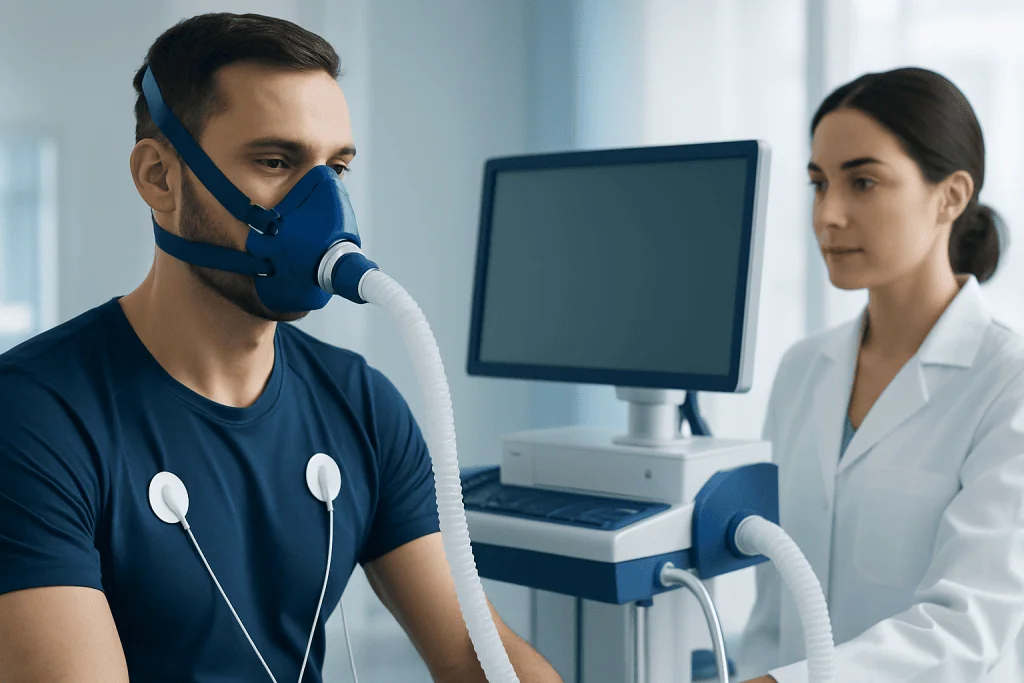
The most accurate way to measure vo2 max is a supervised exercise test, usually on a treadmill or cycle ergometer, while breathing through a mask connected to specialized equipment. The workload increases step by step until the person reaches near-maximal effort. The machine analyzes inhaled and exhaled gases to calculate oxygen use directly. In medical settings, this type of cardiopulmonary exercise testing may be combined with heart monitoring to evaluate symptoms or exercise intolerance.
Many gyms, sports centers, and wearable devices provide estimated vo2 max values. These estimates can be useful for tracking trends, but they are not as precise as direct testing. They rely on formulas based on pace, heart rate, workload, or recovery patterns, and those formulas may be affected by measurement error, skin sensors, medications, or unusual exercise conditions.
Doctors may recommend formal assessment when symptoms occur with activity, when exercise needs to be prescribed safely, or when there is concern about heart or lung disease. In some cases, related investigations such as an electrocardiogram or an echocardiography evaluation may help clarify whether reduced exercise capacity is due to deconditioning or an underlying medical problem.
How to understand a vo2 max result
A vo2 max result is most meaningful when interpreted against reference values for age and sex and considered alongside symptoms, medical history, and functional ability. A “good” number for one person may be unrealistic or unnecessary for another. What matters clinically is whether the value is appropriate for that individual and whether it changes over time in a way that matches symptoms and overall health.
Higher scores generally suggest stronger aerobic capacity, but very fit endurance athletes are not the standard for the general population. In clinical care, a person’s exercise tolerance, shortness of breath, chest symptoms, recovery, and ability to perform daily activities are often just as important as the numeric result. This is especially true in older adults or people managing chronic conditions.
It is also important to recognize the limits of the metric. vo2 max does not directly measure strength, balance, mobility, flexibility, mental health, or nutrition. It also does not diagnose disease by itself. A low score may reflect inactivity, but it can also be a prompt to look more carefully at the heart, lungs, circulation, or blood.
Can vo2 max be improved?
For many people, yes. The body adapts to repeated physical training by becoming more efficient at delivering and using oxygen. Improvement does not always require extreme exercise. Consistent, structured activity that is appropriate for age, fitness level, and health status is usually the safest and most sustainable approach.
Helpful strategies often include brisk walking, cycling, swimming, or similar aerobic exercise on most days of the week. Some people also benefit from interval-based training, where short periods of harder effort alternate with easier recovery. Strength training supports muscle health and movement economy, which can indirectly improve exercise capacity. Adequate sleep, hydration, nutrition, and recovery also matter.
People with symptoms, chronic illness, or long periods of inactivity should start gradually and seek professional advice before beginning vigorous exercise. In selected cases, clinicians may recommend a supervised exercise program or cardiac rehabilitation after a cardiac event or procedure. If breathing symptoms are a concern, evaluation by specialists in pulmonology care may help identify treatable causes that limit exercise tolerance.
- Build activity progressively rather than increasing intensity too quickly.
- Combine moderate aerobic work with occasional higher-intensity sessions if medically appropriate.
- Include rest days and recovery to reduce injury risk and overtraining.
- Manage blood pressure, diabetes, smoking, and sleep problems, since these affect overall fitness.
When to seek medical care
A lower-than-expected vo2 max is not always a sign of disease, but some situations warrant medical review. A person should seek care if exercise causes chest pain, pressure, dizziness, fainting, marked palpitations, severe breathlessness, or a sudden drop in exercise capacity. These symptoms deserve prompt assessment, especially in adults with cardiovascular risk factors or a family history of early heart disease.
Medical review is also sensible when fatigue is persistent, recovery from ordinary activity becomes unusually difficult, or home devices show a major unexplained change in estimated fitness. The cause may be simple deconditioning, but it can also relate to asthma, infection, anemia, medication effects, or heart and lung conditions. Safe exercise advice is especially important after illness, surgery, or pregnancy-related complications.
Near the end of the evaluation pathway, care may involve more than one specialty. Acibadem International’s multidisciplinary specialists and JCI-accredited hospitals diagnose and treat exercise-limiting conditions for international patients, using appropriate testing and individualized treatment planning when needed.
Frequently asked questions
Is vo2 max the same as overall health?
No. vo2 max is an important measure of cardiorespiratory fitness, but it does not capture every aspect of health. Strength, balance, mental wellbeing, nutrition, sleep, and chronic disease control also matter.
What is a normal vo2 max?
There is no single normal number for everyone. vo2 max varies by age, sex, body composition, genetics, and activity level, so results should be compared with appropriate reference ranges rather than a universal target.
Are smartwatch vo2 max readings accurate?
They can be useful for following trends, but they are estimates rather than direct measurements. Factors such as sensor quality, heart rate accuracy, medications, and workout type can affect the result.
Can someone have a low vo2 max without having a disease?
Yes. Low fitness, recent inactivity, aging, recovery after illness, and excess body weight can all lower vo2 max without a serious underlying disease. However, if the change is sudden or accompanied by symptoms, medical assessment is important.
How long does it take to improve vo2 max?
Many people notice measurable improvement after several weeks of regular, structured training, although the timeline varies. Starting fitness level, consistency, age, genetics, and medical conditions all influence the rate of progress.
Should everyone have a formal VO2 max test?
Not necessarily. For many healthy people, estimated fitness from regular activity and symptom-free exercise is enough. Formal testing is more useful when performance precision is needed or when symptoms or medical conditions make exercise evaluation important.
References
- World Health Organization
- American Heart Association
- American College of Sports Medicine
- Centers for Disease Control and Prevention
- European Society of Cardiology
This article is for general information only and is not a substitute for professional medical advice. Please consult a qualified doctor about your individual situation.
Explore treatments in Turkey — costs, top hospitals & a free quote
JCI-accredited · board-certified surgeons · reply within 24h
Add us as a Preferred Source to see more of our trusted health content across Google Search, AI Overviews and Discover.
Check your numbers in seconds
BMI, calories, due date, blood pressure and 30+ more clinical calculators — free, instant, doctor-reviewed ranges.

More from the Health Library



Related Specialists

Dr. Yusuf İzzet Güngörmüş
Ophthalmology
Fzt. İrfancan Velioğlu
Physical Medicine & Rehabilitation
Dr. Aykut Ayyıldız
Anesthesiology
Prof. Dr. Ahmet Tayyar
Gynecology & Obstetrics