Vocal Cord Polyp — Explained by Medical Evidence, Not Myths

Vocal cord polyps are benign lesions that can interfere with normal vocal-fold vibration. Hoarseness, breathiness, vocal fatigue, and a reduced vocal range are common symptoms.
Key Takeaways
- Vocal cord polyps are benign lesions that can interfere with normal vocal-fold vibration.
- Hoarseness, breathiness, vocal fatigue, and a reduced vocal range are common symptoms.
- Voice overuse, smoking, reflux, and ongoing throat irritation can contribute to polyp development.
- Diagnosis typically involves viewing the vocal folds with laryngoscopy, often with stroboscopy.
- Treatment may include voice therapy and addressing irritants; some polyps require microsurgical removal.
A vocal cord polyp is a usually noncancerous swelling or growth on a vocal fold, often related to voice strain, irritation, or injury. It commonly changes the voice, but an ear, nose, and throat assessment is important because persistent hoarseness has several possible causes.
Vocal Cord Polyp: The Evidence-Based Overview
A vocal cord polyp is a localized, usually noncancerous growth on one of the vocal folds, the paired tissues in the voice box that vibrate to create sound. It may be soft and swollen, or more firm and blood-filled, and can be attached by a broad base or a small stalk. Because it changes how the vocal folds meet and vibrate, it often causes a noticeable change in the voice.
These polyps are different from throat infections and are not contagious. They are also not the same as vocal nodules, which are typically more symmetrical, callus-like lesions that develop on both vocal folds. A polyp may develop after a single episode of intense voice use, such as shouting, or after repeated vocal strain over time.
Although most vocal cord polyps are benign, a persistent voice change should not be self-diagnosed. Examination by an ear, nose, and throat specialist (ENT) or laryngologist helps identify the cause and rule out other conditions that can look similar, including cysts, nodules, inflammation, or less commonly, cancer.
How a Vocal Cord Polyp Can Affect the Voice
Hoarseness is the most frequent symptom of a vocal cord polyp. The voice may sound rough, breathy, weak, strained, or lower in pitch than usual. Some people notice that their voice breaks unexpectedly, loses endurance during the day, or requires more effort to speak.
The pattern of symptoms varies with the polyp’s size, location, and flexibility. A small lesion may affect singing first, especially higher notes or vocal control. A larger lesion can make everyday speaking difficult because the vocal folds may no longer close evenly during speech.
Other possible symptoms include a sensation of throat discomfort, frequent throat clearing, a need to cough, or vocal fatigue. Pain is not typical. Difficulty breathing is unusual with a single small polyp, but urgent assessment is needed if breathing becomes difficult or noisy.
- Persistent hoarseness lasting more than two to four weeks
- Reduced singing range or inability to sustain the voice
- A breathy, rough, or intermittently “cracking” voice
- Voice tiredness after speaking for a short time
- Throat clearing or irritation alongside voice changes
Why Vocal Cord Polyps Develop

Most vocal cord polyps are associated with phonotrauma, meaning physical stress or injury caused by voice use. A period of yelling, cheering, forceful singing, or prolonged speaking can cause tiny blood vessels and tissues in a vocal fold to swell or bleed. Repeated strain may prevent the tissue from healing normally and lead to a persistent lesion.
Several factors can make the vocal folds more vulnerable. Smoking and exposure to secondhand smoke or workplace irritants can inflame the larynx. Acid reflux reaching the throat may contribute to irritation in some people, although reflux symptoms alone do not confirm that reflux is the cause of a voice problem. Dehydration, frequent coughing, untreated allergies, and respiratory infections can also increase vocal stress.
People who depend heavily on their voices, including teachers, singers, coaches, call-center workers, performers, and public speakers, may have greater exposure to voice strain. However, anyone can develop a polyp. The lesion is not a sign that a person has used their voice incorrectly; it often results from a combination of tissue vulnerability, circumstances, and vocal demands.
How Doctors Diagnose a Vocal Cord Polyp
Diagnosis begins with a medical history and discussion of the voice change, work or singing demands, smoking exposure, reflux symptoms, recent infections, and any episode of intense voice use. The clinician will also ask about warning signs such as swallowing difficulty, coughing up blood, neck lumps, unexplained weight loss, or breathing problems.
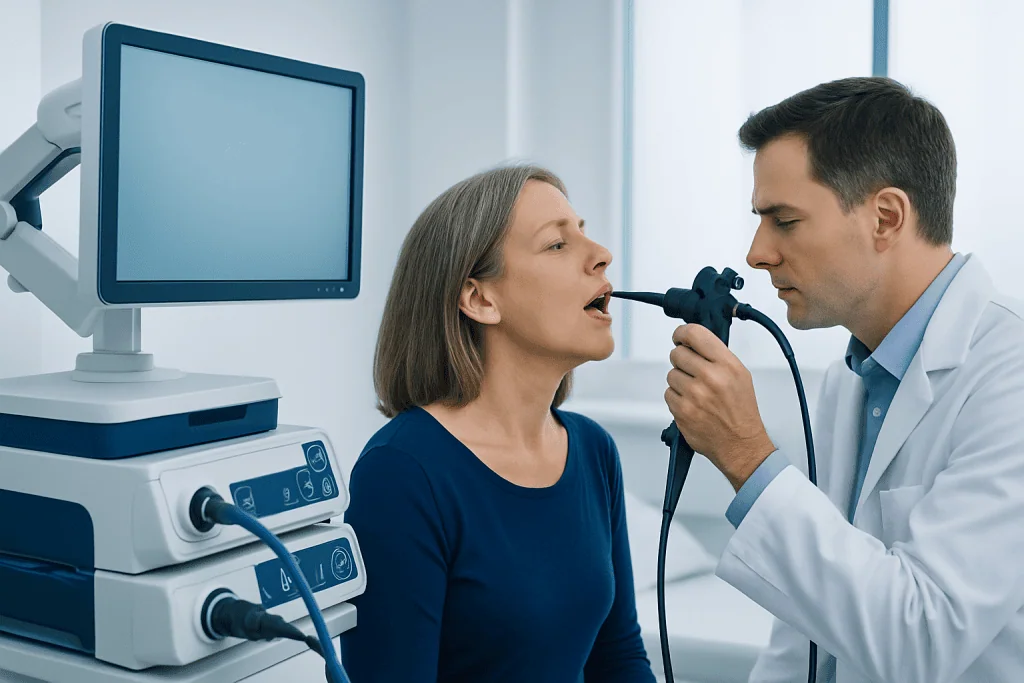
The key test is laryngoscopy, in which the clinician views the larynx using a thin flexible camera passed through the nose or a small rigid scope placed through the mouth. This examination is usually performed in clinic and allows the specialist to see whether a lesion is present and how the vocal folds move.
Video stroboscopy may be used to assess the fine vibration of the vocal folds in more detail. It can help distinguish a polyp from other benign lesions and guide voice therapy or procedural planning. In selected situations, the specialist may recommend biopsy or removal of a lesion so it can be examined under a microscope, particularly when its appearance or risk factors warrant clarification.
Many causes of hoarseness can overlap. For example, inflammation, muscle tension during speaking, and benign vocal-fold lesions may occur together. A careful assessment provides a more useful plan than relying on symptoms alone.
Treatment: Restoring Voice While Protecting the Vocal Folds
Treatment is individualized according to the polyp’s features, the severity of symptoms, the person’s voice needs, and contributing irritants. Avoiding voice overuse for a short period may reduce swelling after an acute injury, but prolonged complete silence is not routinely appropriate without professional guidance. Whispering can also strain the voice for some people, so it is usually better to speak gently and efficiently if speaking is necessary.
Voice therapy with a speech-language pathologist is an important part of care. It teaches practical techniques to reduce vocal impact, improve breathing and voice efficiency, and manage the specific speaking or singing situations that trigger strain. Therapy can be used alone in selected cases and is often recommended before and after surgery to lower the risk of recurrence.
Contributing factors should be addressed. This may include stopping smoking, avoiding irritating fumes, managing allergies or chronic coughing with a clinician, maintaining adequate hydration, and discussing suspected reflux when appropriate. Medications do not dissolve every polyp, but they may be useful for an underlying condition such as allergy-related inflammation or reflux symptoms when a clinician identifies a need.
When a polyp remains symptomatic or is unlikely to resolve with conservative measures, microlaryngoscopic surgery may be considered. During this procedure, the surgeon removes the lesion while aiming to preserve the delicate layers of the vocal fold. Assessment and treatment for voice and swallowing disorders can help determine whether non-surgical care, surgery, or a combination is most suitable.
Voice Care and Prevention After Diagnosis
Not every vocal cord polyp can be prevented, but healthy vocal habits can reduce repeated irritation and support recovery. Regular fluid intake helps maintain vocal-fold hydration, while adequate sleep and planned vocal breaks can reduce fatigue. People with high voice demands may benefit from learning warm-up, pacing, and amplification strategies through a voice professional.
It is helpful to avoid shouting over noise whenever possible. Using a microphone, moving closer to the listener, or taking turns speaking can lessen vocal effort. Repeated throat clearing can be replaced with a sip of water, a gentle swallow, or another strategy advised by a clinician, especially if throat clearing has become habitual.
Smoking cessation is one of the most important protective steps for laryngeal health. Alcohol can also dry the throat in some people, and exposure to smoke, dust, and chemical fumes should be minimized when possible. A clinician can advise on workplace protections and on managing medical conditions that cause frequent cough or nasal drainage.
After treatment, follow-up is important for monitoring healing and voice quality. Returning to demanding speaking or singing too quickly may delay recovery, so the specialist and voice therapist can provide a gradual, individualized return-to-voice plan.
When to Seek Medical Care
Anyone with hoarseness or another unexplained voice change that lasts longer than two to four weeks should arrange an assessment with an ENT specialist, particularly if the voice is important for work or daily life. Earlier review is sensible for people who smoke, have a history of head and neck cancer, or have had previous vocal-fold problems.
Prompt medical attention is needed for trouble breathing, noisy breathing, coughing up blood, severe swallowing difficulty, a neck lump, or rapidly worsening symptoms. These symptoms do not necessarily mean a serious condition, but they require timely evaluation.
It is best to avoid repeatedly treating persistent hoarseness with lozenges, voice rest, or reflux remedies without a diagnosis. These measures may temporarily soothe irritation but do not show what is happening on the vocal folds. At Acibadem International, multidisciplinary ENT and voice specialists in JCI-accredited hospitals can assess and treat vocal-fold conditions for international patients.
A diagnosis of a vocal cord polyp is often manageable, and many people regain comfortable, effective voice use with appropriate care. The most useful next step is a personalized examination and treatment plan from a qualified clinician.
Frequently asked questions
Can a vocal cord polyp go away on its own?
Some vocal fold polyps, particularly newer or smaller lesions, may improve with reduced vocal strain, treatment of irritants, and voice therapy. Others persist because the tissue change is more established. An ENT examination is needed to determine the lesion type and discuss the most appropriate approach.
Is a vocal cord polyp cancer?
A vocal cord polyp is usually benign, meaning it is not cancer. However, persistent hoarseness should be examined because different laryngeal conditions can produce similar symptoms. A specialist can assess the lesion directly and recommend further testing if needed.
What is the difference between vocal nodules and a vocal cord polyp?
Vocal nodules are usually small, paired thickenings that appear on both vocal folds where they repeatedly meet. A vocal cord polyp is more often a single lesion on one vocal fold and may develop after an acute episode of voice strain or ongoing irritation. Both can cause hoarseness, but assessment and treatment planning may differ.
Should a person rest their voice if they have a vocal cord polyp?
Reducing shouting, forceful speaking, and lengthy voice use can be helpful, especially during irritation or recovery. Complete silence is not always necessary, and whispering may place strain on the voice for some people. A voice specialist can recommend a safe, individualized level of voice use.
How long does recovery take after vocal cord polyp removal?
Recovery varies according to the procedure, the size and location of the lesion, and the person’s voice demands. The surgeon may recommend a brief period of restricted voice use followed by a gradual return, often supported by voice therapy. Follow-up appointments help ensure healing is progressing as expected.
Can reflux cause a vocal cord polyp?
Reflux may irritate the larynx and can contribute to voice symptoms in some people, but it is not the only cause of vocal cord polyps. Voice strain, smoking, coughing, and other irritants may also play a role. A clinician can evaluate whether reflux management is relevant in an individual case.
References
- American Academy of Otolaryngology–Head and Neck Surgery
- National Institute on Deafness and Other Communication Disorders
- American Speech-Language-Hearing Association
- Cleveland Clinic
- Merck Manual Consumer Version
This article is for general information only and is not a substitute for professional medical advice. Please consult a qualified doctor about your individual situation.
Explore treatments in Turkey — costs, top hospitals & a free quote
JCI-accredited · board-certified surgeons · reply within 24h
Add us as a Preferred Source to see more of our trusted health content across Google Search, AI Overviews and Discover.