Vr Surgeon: An Evidence-Based Patient Guide
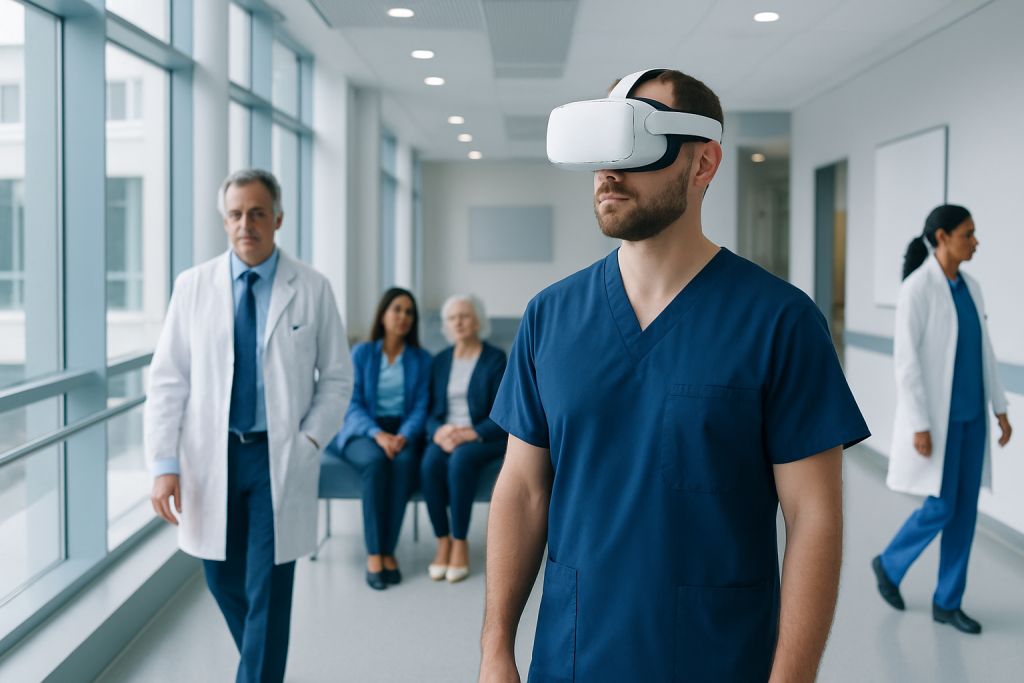
A VR surgeon is a surgeon using virtual reality technology, not a separate type of medical specialist. VR may help surgeons understand complex anatomy, rehearse selected procedures, and communicate plans with patients and teams.
Key Takeaways
- A VR surgeon is a surgeon using virtual reality technology, not a separate type of medical specialist.
- VR may help surgeons understand complex anatomy, rehearse selected procedures, and communicate plans with patients and teams.
- The usefulness of VR depends on the operation, the quality of imaging data, the technology used, and the experience of the clinical team.
- VR is used most often in training and surgical planning; direct use during an operation remains specialized and is not appropriate for every procedure.
- Patients should ask how VR information will be checked against standard scans, navigation systems, and usual surgical safety protocols.
A VR surgeon is a qualified surgical clinician who uses virtual reality (VR) technology as an additional tool for planning, training, patient education, or selected steps of care. VR can create an interactive three-dimensional view of anatomy, but the evidence supports it as an aid to clinical expertise rather than a replacement for established imaging, surgical judgment, or safety procedures.
What Does a VR Surgeon Do?
A VR surgeon is a licensed surgeon who uses virtual reality as part of surgical care. The phrase does not describe a new medical specialty or a surgeon who operates remotely through a headset. Instead, it usually refers to a clinician using immersive, computer-generated three-dimensional models to review anatomy, plan an operation, practise technical steps, teach trainees, or explain a planned procedure to a patient.
For VR surgical planning, imaging such as CT, MRI, ultrasound, or angiography may be converted into a detailed 3D representation. Wearing a headset or using a large interactive display, the surgical team can view structures from different angles, enlarge areas of interest, and consider possible surgical routes. This may be particularly useful when anatomy is altered by a tumor, injury, congenital difference, or previous surgery.
Virtual reality is one part of a wider group of digital surgical tools, which may also include three-dimensional printing, computer navigation, robotic systems, and augmented reality. A VR system does not make decisions independently. The surgeon remains responsible for assessing the patient, interpreting scans, choosing treatment, performing the operation, and responding to unexpected findings.
How Virtual Reality Is Used in Surgical Care
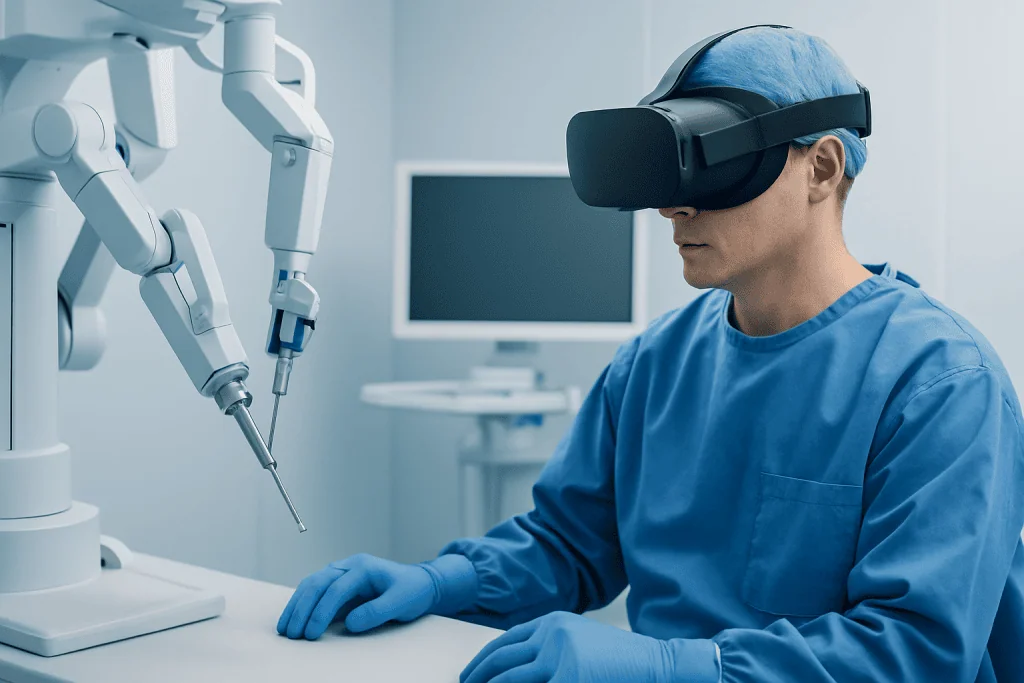
In clinical practice, VR is most established as a learning and preparation tool. Surgical trainees can use realistic simulations to develop hand-eye coordination, learn an operation’s sequence, and practise responding to complications in a supervised environment. This form of VR surgery practice can complement traditional education using anatomy teaching, supervised operating-room experience, and skills laboratories.
For individual patients, a virtual model may help a team prepare for a complex procedure. Examples include some brain, spine, heart, orthopedic, abdominal, and reconstructive operations. It can help clinicians discuss the relationship between a planned surgical route and nearby nerves, blood vessels, organs, or bones. For selected cases, patient-specific planning can be useful alongside established imaging and intraoperative guidance.
VR may also improve communication. A surgeon can use a model to show why a procedure is recommended, what area will be treated, and which structures need protection. However, a virtual model is a simplified representation based on available scan data. It cannot predict every finding during surgery or eliminate the need for informed consent, standard safety checks, and conventional imaging review.
How a VR Medical Procedure Is Planned and Performed
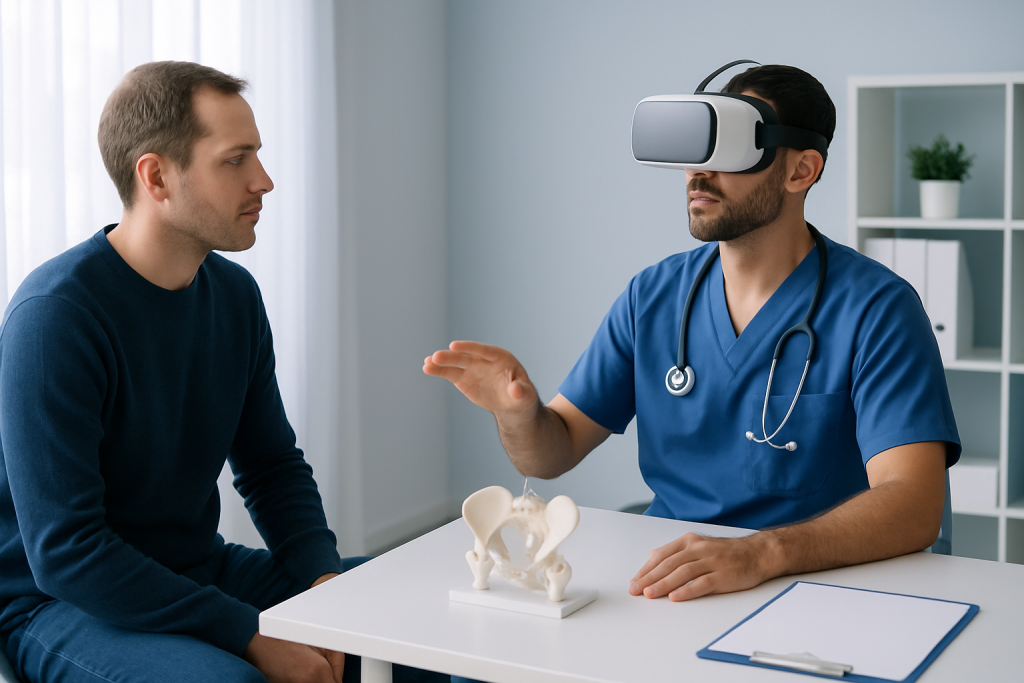
There is no single VR medical procedure because the technology is adapted to the operation being considered. The process commonly begins with a usual clinical assessment, including medical history, physical examination, and appropriate tests. If surgery is being considered, the surgeon reviews standard imaging and decides whether a VR model could add meaningful information for the particular case.
When suitable imaging is available, specialized software may segment the scan into relevant structures, such as bone, blood vessels, a tumor, or an organ. The surgical team reviews the resulting model, checks it against the original scans, and may explore different approaches. This planning is an addition to—not a substitute for—formal radiology reporting, multidisciplinary discussion, and routine preoperative preparation.
On the day of surgery, the patient follows the usual pathway for that operation, including anesthesia assessment, consent confirmation, infection-prevention measures, and surgical safety checks. The surgeon may refer to the prior VR plan, but surgery is performed using the techniques and equipment appropriate to the procedure. If the technology is used during an operation, it should be integrated with established methods such as image guidance and direct visualization, where indicated.
- Assessment: the team confirms diagnosis, goals, and whether surgery is appropriate.
- Image preparation: scans are processed into a 3D model when this is likely to help.
- Team planning: the surgical route and alternatives are reviewed.
- Operation and verification: standard safety protocols and clinical judgment guide care throughout.
Who May Be a Candidate for VR Surgical Planning?
Suitability is determined by the underlying medical condition, not by a patient’s interest in VR alone. VR planning may be considered when anatomy is complex, when a procedure requires careful spatial understanding, or when a team believes an immersive model may support discussion and preparation. It is not routinely required for common operations with straightforward anatomy.
Good-quality imaging is important. The value of a 3D model depends on the scan type, timing, resolution, and the accuracy of the software reconstruction. People with changing conditions, emergency surgical needs, or imaging that does not clearly show the relevant structures may not benefit from a time-intensive virtual model.
Patients can ask whether VR is expected to change the surgical plan, improve understanding of a particular risk, or assist communication among specialties. They can also ask what established alternatives are available. A recommendation for surgery should always be based on the expected benefits and risks of the operation itself, rather than on whether a VR platform is available.
Benefits, Limitations, and VR Evidence
Potential benefits of VR include clearer understanding of three-dimensional anatomy, improved preparation for selected complex operations, and an engaging way to support patient education. In simulation-based training, virtual environments can provide repeatable practice without exposing patients to risk. These advantages are especially relevant when training technical skills or reviewing uncommon anatomical situations.
VR evidence is growing, but it varies by specialty, technology, and outcome measured. Studies often suggest improvements in learners’ confidence, anatomical understanding, or task performance in simulated settings. Evidence that VR consistently improves long-term patient outcomes, reduces complications, or shortens recovery across all types of surgery is more limited. Well-designed research and careful evaluation remain important.
Virtual models can contain errors caused by image quality, movement during scanning, software processing, or changes in anatomy after the scan. Headsets may also cause temporary dizziness, nausea, eye strain, or disorientation in some users. These effects are usually relevant to people using the headset for planning or education rather than to a patient under anesthesia, but they should still be recognized.
For patients, the central question is not whether a VR system is used, but whether the proposed operation is appropriate and performed by an experienced team with reliable safety processes. A qualified surgeon should explain the intended role of technology in plain language and should not promise that VR removes surgical risk.
Recovery and Aftercare
Recovery is determined by the actual surgery, anesthesia, the treated condition, and the person’s overall health—not by whether VR was used in planning. For example, recovery after a minor outpatient procedure may take days, while recovery after major brain, heart, orthopedic, or abdominal surgery may require a hospital stay followed by weeks or months of rehabilitation and follow-up.
Before surgery, the care team should provide procedure-specific guidance about medicines, fasting, mobility, wound care, pain management, activity restrictions, and return to work or school. After discharge, it is important to attend follow-up appointments and report concerns promptly. Rehabilitation may be recommended after some operations to rebuild strength, function, balance, speech, or independence.
Patients should not assume that a detailed virtual plan guarantees a particular recovery timeline. During any operation, findings may differ from preoperative images, and the surgical approach may need to be adjusted for safety. Open communication with the clinical team helps patients prepare realistically and understand their individual recovery plan.
When to Seek Medical Care
A person considering surgery should seek medical advice from an appropriately qualified clinician rather than relying on virtual reality demonstrations, online simulations, or consumer VR content. Prompt assessment is especially important for new or worsening symptoms such as severe pain, weakness, loss of sensation, difficulty speaking, sudden visual changes, chest pain, shortness of breath, uncontrolled bleeding, or symptoms after a significant injury.
After an operation, urgent medical advice is needed for symptoms such as fever with worsening wound redness or drainage, persistent vomiting, increasing swelling, severe or escalating pain not controlled by the prescribed plan, difficulty breathing, fainting, or new neurological symptoms. The appropriate contact may be the operating team, an urgent care service, or emergency services depending on the severity and local guidance.
For international patients requiring a complex surgical assessment, Acibadem International’s multidisciplinary specialists and JCI-accredited hospitals can evaluate conditions and discuss appropriate diagnostic, surgical, and rehabilitation options. The decision to use VR planning, if relevant, should be individualized and made with the treating surgical team.
What’s the Best VR to Get?
There is no single “best VR” headset for medical care because patients generally do not need to purchase a device for surgery. Hospitals choose professional systems based on clinical purpose, cybersecurity, image compatibility, accuracy checks, usability, staff training, and integration with their existing imaging and safety workflows.
For home use, a consumer VR headset should not be treated as a medical device or a source of personalized surgical guidance. Someone choosing a headset for entertainment or general education should consider comfort, content controls, privacy settings, motion-sickness susceptibility, and age-appropriate use. A clinician can clarify whether any recommended rehabilitation or educational program requires a specific approved device.
Why Is VR No Longer Popular?
VR has not disappeared, but public attention has shifted over time as technology trends change. Consumer adoption may be affected by cost, headset comfort, available content, motion sickness, privacy concerns, and the fact that many people do not wish to wear a headset regularly. These factors are different from the question of whether VR has a focused role in health care.
In medicine, adoption is appropriately cautious because new tools must be reliable, secure, clinically useful, and compatible with busy care settings. VR is therefore used selectively rather than universally. Its value is strongest when it solves a defined problem, such as skills simulation, anatomical visualization, or communication in a complex case.
Should a 12 Year Old Have a VR?
A 12-year-old may use VR for age-appropriate recreation or education if a parent or guardian considers it suitable and follows the device manufacturer’s age guidance. Supervision, time limits, breaks, and safe physical space are important. Children should stop using the headset if they develop dizziness, nausea, headaches, eye discomfort, distress, or balance problems.
For medical use, a child should only use VR when it is recommended and supervised by an appropriate health professional, such as a pediatric rehabilitation or clinical team. VR may sometimes be used to support education, therapy, distraction during care, or rehabilitation, but it is not a replacement for medical assessment or treatment.
Can I Get a VR for Free?
Some schools, libraries, community programs, research studies, and health services may provide temporary access to VR equipment or experiences. Availability differs by location, eligibility, purpose, and funding. A person should confirm who is responsible for setup, safety, cleaning, data privacy, and technical support before participating.
When VR is used as part of hospital care, access may be included in a clinical program or may depend on local service arrangements. It should not be assumed that a headset or VR-based service is free, covered by insurance, or medically necessary. Patients can ask their provider or insurer about availability and any potential personal costs before proceeding.
Frequently asked questions
Is a VR surgeon a real surgeon?
Yes. A VR surgeon should be a fully qualified surgeon who uses virtual reality as an additional planning, training, or communication tool. VR technology does not replace surgical qualifications, clinical judgment, or standard operating-room safety practices.
Can virtual reality replace surgery?
No. Virtual reality may help teams plan, simulate, or explain surgery, but it does not treat most surgical conditions by itself. The need for an operation depends on diagnosis, symptoms, expected benefits, alternatives, and risks.
Does VR make surgery safer?
VR may help preparation in selected cases by improving visualization of complex anatomy or allowing rehearsal of technical steps. However, it cannot remove surgical risks, and evidence does not support assuming that it makes every operation safer. Standard imaging, experienced clinicians, and established safety procedures remain essential.
Will I wear a VR headset during my operation?
Usually, no. In most situations, VR is used by the surgical team before surgery for planning or training. If virtual or augmented imaging is used during a procedure, the approach depends on the operation and the equipment used by the clinical team.
Is VR safe for children in medical settings?
VR can be used in selected pediatric settings under professional supervision, for example for education, rehabilitation, or distraction. Suitability depends on the child’s age, health needs, comfort, and the specific program. Parents should discuss concerns such as motion sickness, vision issues, seizures, or anxiety with the treating clinician.
What should I ask a surgeon about VR planning?
Patients can ask why VR is being considered, what information it may add beyond standard scans, and whether it could affect the surgical approach. They can also ask about the team’s experience with the technology, how models are verified, and what the usual risks and alternatives are. These questions support informed, realistic decision-making.
References
- World Health Organization
- U.S. Food and Drug Administration
- American College of Surgeons
- National Institutes of Health
- Cochrane
This article is for general information only and is not a substitute for professional medical advice. Please consult a qualified doctor about your individual situation.
Explore treatments in Turkey — costs, top hospitals & a free quote
JCI-accredited · board-certified surgeons · reply within 24h
Add us as a Preferred Source to see more of our trusted health content across Google Search, AI Overviews and Discover.