Vtach vs Vfib: Key Differences and How Doctors Tell Them Apart
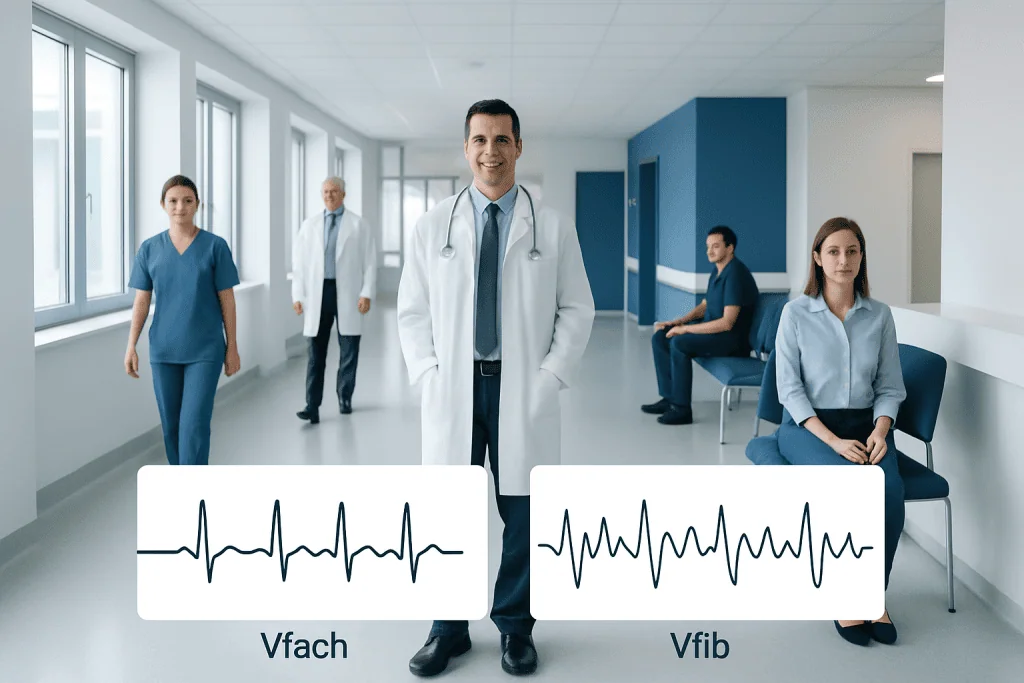
Ventricular tachycardia is usually fast but organized; ventricular fibrillation is disorganized and immediately life-threatening. A person with V-tach may be awake or may collapse, depending on whether the rhythm is producing enough blood flow.
Key Takeaways
- Ventricular tachycardia is usually fast but organized; ventricular fibrillation is disorganized and immediately life-threatening.
- A person with V-tach may be awake or may collapse, depending on whether the rhythm is producing enough blood flow.
- V-fib usually causes sudden collapse, no effective pulse, and cardiac arrest unless treated at once.
- Clinicians use ECG findings, pulse status, blood pressure, and the patient’s stability to tell these rhythms apart quickly.
- Both conditions need urgent medical evaluation, and ventricular fibrillation always requires emergency response and defibrillation.
Vtach vs vfib can be understood by one core difference: ventricular tachycardia is a fast, organized rhythm from the heart’s lower chambers, while ventricular fibrillation is a chaotic rhythm that usually stops effective pumping. Doctors tell them apart by symptoms, pulse, and especially the ECG pattern, because treatment urgency and next steps differ.
Vtach vs Vfib at a Glance
In the simplest terms, vtach vs vfib comes down to whether the heart’s lower chambers are beating in an organized way or quivering chaotically. Ventricular tachycardia, often called V-tach, is a rapid rhythm starting in the ventricles that may still produce some circulation. Ventricular fibrillation, or V-fib, is a severely disorganized electrical rhythm that prevents the heart from pumping blood effectively.
This distinction matters because the person’s condition can look very different. Someone with V-tach may feel palpitations, chest discomfort, dizziness, or faintness and may still be conscious. With V-fib, the person usually collapses quickly, has no effective pulse, and needs immediate emergency treatment.
A side-by-side view can make the difference clearer:
- Rhythm pattern: V-tach is fast and usually regular; V-fib is chaotic and irregular.
- Heart pumping: V-tach may allow limited pumping; V-fib usually stops effective pumping.
- Symptoms: V-tach may cause palpitations, weakness, shortness of breath, chest pain, or fainting; V-fib usually causes sudden collapse and unresponsiveness.
- Pulse: V-tach may be with or without a pulse; V-fib is treated as pulseless.
- Urgency: Both are urgent, but V-fib is a cardiac arrest rhythm requiring immediate defibrillation.
- Common link: V-tach can sometimes deteriorate into V-fib.
Although both are dangerous ventricular arrhythmias, they are not interchangeable terms. The way doctors recognize them at the bedside and on an ECG guides what happens next and how quickly life-saving treatment must begin.
How a Clinician Tells Them Apart
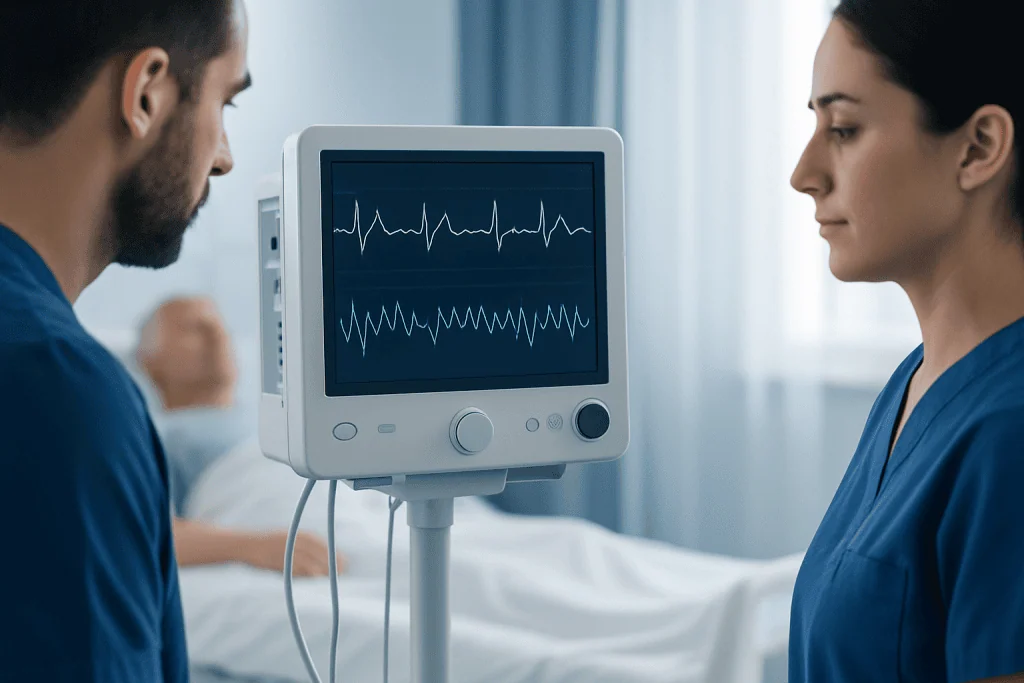
Doctors and emergency teams distinguish V-tach from V-fib by combining the patient’s condition with the heart rhythm seen on a monitor or electrocardiogram. The first question is often practical: Is the person awake? Do they have a pulse? Are they breathing normally? A patient who is suddenly unresponsive and pulseless is treated as a cardiac arrest emergency while the rhythm is identified.
On an ECG, V-tach typically appears as a wide, fast rhythm with a more organized repeating pattern. It may be monomorphic, where the electrical complexes look similar beat to beat, or polymorphic, where they vary. V-fib, by contrast, does not show a stable repeating pattern. Instead, it looks erratic, with chaotic waves and no organized ventricular contractions.
Doctors also assess whether V-tach is stable or unstable. Stable V-tach means the person still has enough blood pressure and circulation to remain conscious and responsive, even if symptoms are significant. Unstable V-tach causes low blood pressure, chest pain, confusion, severe shortness of breath, or fainting, and it demands immediate intervention because circulation is failing.
In some cases, the distinction is made in seconds. In others, clinicians look more closely at the strip, review the patient’s history, and consider related conditions such as arrhythmia or underlying structural heart disease. Even when the rhythm diagnosis is uncertain at first, emergency teams follow established protocols designed to protect circulation and restore a safer rhythm quickly.
What Ventricular Tachycardia Is Like

Ventricular tachycardia begins in the ventricles, the heart’s lower pumping chambers, and usually causes the heart to beat very quickly. Because the heart is moving so fast, it may not have enough time to fill properly between beats. That can reduce blood flow to the brain and body, leading to symptoms that range from mild awareness of the heartbeat to collapse.
Symptoms of V-tach can include pounding or racing heartbeats, dizziness, lightheadedness, weakness, chest discomfort, sweating, shortness of breath, or fainting. Some episodes are brief and stop on their own. Others last longer or recur, and some become unstable very quickly. A person can even have pulseless V-tach, which is treated as cardiac arrest.
V-tach may occur in people with prior heart attack, heart failure, cardiomyopathy, inherited electrical conditions, or scarring in the heart muscle. It may also be triggered by electrolyte disturbances, certain medications, stimulant use, or severe illness. In some people, especially those with a structurally normal heart, specific forms of V-tach can still occur and need specialist evaluation.
Because V-tach can progress to ventricular fibrillation, doctors take it seriously even when symptoms seem temporary. If recurrent or dangerous episodes are confirmed, care may include medication review, imaging, rhythm monitoring, electrophysiology study and ablation, or devices such as an implantable cardioverter-defibrillator depending on the cause and the person’s overall risk.
What Ventricular Fibrillation Is Like
Ventricular fibrillation is one of the most urgent heart rhythm emergencies. Instead of contracting together to pump blood, the ventricles twitch in a rapid, disorganized way. The result is little or no effective circulation. Without immediate treatment, the brain and other organs are deprived of oxygen-rich blood within minutes.
Most people with V-fib collapse suddenly and become unresponsive. They typically do not have an effective pulse, and breathing may stop or become abnormal. For family members or bystanders, this often looks like a sudden cardiac arrest rather than a symptom that slowly develops. Calling emergency services and starting CPR while an automated external defibrillator is obtained can be life-saving.
V-fib may develop during or after a heart attack, in severe heart disease, with major electrolyte imbalance, after electric shock, or when another dangerous rhythm such as V-tach deteriorates. Sometimes it occurs in people with inherited rhythm disorders or other underlying cardiac conditions that were not previously recognized.
Because V-fib is a pulseless rhythm, treatment priorities are immediate defibrillation, CPR, and advanced emergency care. After the person is stabilized, doctors look for the cause and for conditions such as heart rhythm disorders that may increase future risk. Long-term treatment focuses on preventing another event and addressing the underlying heart problem.
Causes, Risk Factors, and Why One Can Lead to the Other
V-tach and V-fib share many of the same underlying risk factors because both arise from abnormal electrical activity in the ventricles. Common contributors include coronary artery disease, prior heart attack, heart failure, cardiomyopathy, myocarditis, congenital heart disease, and inherited electrical disorders. Electrolyte changes such as low potassium or magnesium can also make these rhythms more likely.
Other possible triggers include some medications, drug toxicity, stimulant substances, severe lack of oxygen, major illness, and complications after cardiac procedures. In younger people, inherited rhythm syndromes may play a larger role. In older adults, scar tissue from past heart injury is a common factor.
One reason the comparison of vtach vs vfib is so important is that these rhythms may be part of a progression. A rapid organized ventricular rhythm can become less organized, especially if blood flow to the heart is poor or the electrical instability worsens. That means sustained V-tach can deteriorate into V-fib, turning an urgent arrhythmia into a full cardiac arrest rhythm.
Risk assessment often includes a review of family history, previous fainting episodes, prior heart disease, medication use, and imaging of the heart. In some cases, a patient may need advanced testing to look for hidden structural disease or a genetic tendency to dangerous ventricular arrhythmias.
Diagnosis and What Doctors Check After the Emergency
The immediate diagnosis is usually made with continuous cardiac monitoring or a 12-lead ECG. In the emergency setting, clinicians focus first on the rhythm, pulse, blood pressure, mental status, and oxygenation. The patient’s stability determines whether the next step is emergency shock, medication, CPR, or another urgent intervention.
Once the person is stabilized, doctors investigate why the rhythm happened. Tests often include blood work to check electrolytes and heart injury markers, echocardiography to assess heart structure and pumping function, and sometimes coronary imaging if a blocked artery is suspected. Rhythm monitoring may continue in the hospital to detect recurrence.
Some patients need specialized evaluation by heart rhythm experts. This may include a formal electrophysiology study, stress testing, cardiac MRI, or longer-term ambulatory monitoring. The goal is not only to confirm the type of arrhythmia but also to understand whether the heart has scar tissue, inflammation, inherited electrical disease, or another reversible trigger.
Because ventricular arrhythmias can overlap with other serious rhythm problems, doctors may also evaluate for broader cardiology assessment and follow-up. Care plans are individualized, especially when episodes occurred during a heart attack, after surgery, or in someone with known heart failure or cardiomyopathy.
What Doctors Do for Each Case
Treatment depends on whether the rhythm is V-tach or V-fib and whether the patient has a pulse. For stable V-tach, doctors may use antiarrhythmic medication, correct electrolyte abnormalities, and look for triggers while monitoring closely. For unstable V-tach, synchronized cardioversion is often needed promptly because blood pressure and organ perfusion are threatened.
For pulseless V-tach and V-fib, the response is similar because both are cardiac arrest rhythms. Emergency teams begin CPR and deliver unsynchronized defibrillation as indicated, along with advanced life support measures. Time matters greatly, which is why bystander CPR and early access to an AED are so important.
After recovery, long-term treatment aims to prevent another dangerous rhythm episode. Depending on the cause, options may include medication, treatment of coronary artery disease, correction of electrolyte problems, catheter ablation, or an implantable cardioverter-defibrillator. Some patients also need evaluation for device-based rhythm management, though the exact device depends on the diagnosis and heart function.
At specialized centers, management often involves cardiologists, electrophysiologists, emergency physicians, and imaging experts working together. Acibadem International’s multidisciplinary specialists in JCI-accredited hospitals diagnose and treat ventricular arrhythmias for international patients, with care guided by the rhythm type, the underlying cause, and the patient’s overall cardiovascular health.
When to Seek Medical Care
Emergency medical care is needed immediately if a person collapses, becomes unresponsive, has no pulse, or is not breathing normally. These signs can indicate ventricular fibrillation or pulseless ventricular tachycardia. Calling emergency services, starting CPR if trained, and using an AED if available may save a life while professional help is on the way.
Urgent evaluation is also important for symptoms that may suggest V-tach, even if the person remains conscious. Warning signs include sudden rapid pounding heartbeat, chest pain, fainting, near-fainting, severe shortness of breath, or unexplained dizziness. Anyone with these symptoms, especially if they have known heart disease, should seek prompt medical attention.
People who have had a previous heart attack, heart failure, cardiomyopathy, or a family history of sudden cardiac death should discuss any new palpitations or fainting episodes with a doctor. Early assessment can identify problems before they become more serious. It can also clarify whether symptoms are due to a benign fast heartbeat or a ventricular rhythm that needs treatment.
For ongoing prevention, patients are often advised to keep follow-up appointments, take prescribed medicines as directed, avoid non-prescribed stimulant substances, and ask about safe exercise, travel, and monitoring plans. Preventive care is especially important after an episode of V-tach or V-fib because future risk depends heavily on the underlying cause.
Frequently asked questions
What is the main difference between V-tach and V-fib?
The main difference is organization of the rhythm and how well the heart can still pump. V-tach is a fast rhythm from the ventricles that may still produce some circulation, while V-fib is chaotic electrical activity that usually stops effective pumping and causes cardiac arrest.
Can a person be awake during ventricular tachycardia?
Yes, some people with ventricular tachycardia remain awake, especially if the rhythm still allows enough blood flow. Others may feel dizzy, weak, or faint, and severe cases can cause collapse if circulation becomes too poor.
Is ventricular fibrillation always an emergency?
Yes. Ventricular fibrillation is a medical emergency because it usually means the heart is not pumping blood effectively. Immediate CPR and defibrillation are critical to improve the chance of survival.
How do doctors confirm whether it is V-tach or V-fib?
Doctors use an ECG or cardiac monitor to look at the rhythm pattern while also checking whether the patient has a pulse and stable blood pressure. V-tach usually shows a fast organized wide-complex rhythm, while V-fib appears chaotic without a repeating pattern.
Can V-tach turn into V-fib?
Yes, sustained or worsening ventricular tachycardia can deteriorate into ventricular fibrillation. This is one reason doctors treat V-tach seriously, especially in people with heart disease or symptoms such as fainting or chest pain.
What causes these rhythms to happen?
Common causes include prior heart attack, coronary artery disease, heart failure, cardiomyopathy, inherited rhythm disorders, and electrolyte imbalance. Some medications, stimulant substances, or severe illness can also increase the risk.
Do people need long-term treatment after V-tach or V-fib?
Many people do, but the plan depends on the underlying cause and future risk. Long-term care may include medicines, treatment of heart disease, ablation, or an implantable defibrillator, along with regular follow-up with a heart specialist.
References
- American Heart Association
- National Heart, Lung, and Blood Institute
- National Institute for Health and Care Excellence
- European Society of Cardiology
- MedlinePlus
This article is for general information only and is not a substitute for professional medical advice. Please consult a qualified doctor about your individual situation.
Explore treatments in Turkey — costs, top hospitals & a free quote
JCI-accredited · board-certified surgeons · reply within 24h
Add us as a Preferred Source to see more of our trusted health content across Google Search, AI Overviews and Discover.
Check your numbers in seconds
BMI, calories, due date, blood pressure and 30+ more clinical calculators — free, instant, doctor-reviewed ranges.