Warm Compress for Meibomian Gland Dysfunction: What Patients Need to Know

A warm compress can help relieve meibomian gland dysfunction by loosening thickened oils in the eyelid glands. For best results, the compress should be comfortably warm, not hot, and used consistently.
Key Takeaways
- A warm compress can help relieve meibomian gland dysfunction by loosening thickened oils in the eyelid glands.
- For best results, the compress should be comfortably warm, not hot, and used consistently.
- Warm compresses are often combined with gentle lid massage and eyelid hygiene.
- Persistent symptoms, eye pain, vision changes, or marked redness should be assessed by an eye doctor.
- Some people need additional treatment such as prescription eye drops, in-office gland therapies, or evaluation for other eye conditions.
A warm compress for meibomian gland dysfunction can be an effective first-step home treatment. By gently heating the eyelids, it helps soften thickened oil in the glands so it can flow more easily and support a healthier tear film.
How a Warm Compress Helps Meibomian Gland Dysfunction
A warm compress for meibomian gland dysfunction is commonly recommended because it helps liquefy thickened oil trapped inside the meibomian glands, which line the eyelid margins. When these oils become too thick or the gland openings are blocked, the tear film becomes less stable and tears evaporate more quickly. This can lead to dryness, burning, fluctuating vision, and eyelid irritation.
Used correctly, a warm compress does not cure every cause of dry eye, but it can improve gland function and reduce symptoms in many people. It is often most helpful when symptoms are linked to evaporative dry eye, a common form of dry eye associated with meibomian gland dysfunction.
This approach works best as part of a routine rather than as a one-time remedy. Many patients notice gradual improvement over days to weeks, especially when warm compresses are combined with gentle lid care and advice from an eye specialist.
What Meibomian Gland Dysfunction Is
Meibomian gland dysfunction, often called MGD, affects the tiny oil-producing glands in the upper and lower eyelids. These glands release an oily layer that spreads over the surface of tears. That oil slows evaporation and helps keep the eyes comfortable.
In MGD, the glands may become blocked, inflamed, or produce oil that is too thick or poor in quality. As a result, tears evaporate too fast, even if the eyes make a normal amount of watery tears. This is why people can feel dry, gritty, or irritated despite having watery eyes.
MGD often overlaps with other eye surface problems, including dry eye and blepharitis. Because symptoms can look similar, an eye examination is important when symptoms are persistent, recurrent, or affecting daily life.
Symptoms That May Improve With Warm Compresses

Symptoms of meibomian gland dysfunction can vary from mild annoyance to ongoing discomfort. They often worsen with screen use, air conditioning, wind, heating systems, contact lens wear, or long periods of reading because blinking becomes less complete or less frequent.
Common symptoms include:
- Dryness or a gritty, sandy feeling
- Burning, stinging, or irritation
- Blurred or fluctuating vision that improves after blinking
- Red eyelid margins
- Crusting around the lashes
- Watery eyes due to reflex tearing
- Discomfort with contact lenses
A warm compress may be especially helpful when the eyelids feel tender or the secretions from the glands are thick. However, symptoms such as severe pain, marked light sensitivity, or a sudden drop in vision are not typical of simple MGD and should be assessed promptly.
How to Use a Warm Compress Safely and Effectively
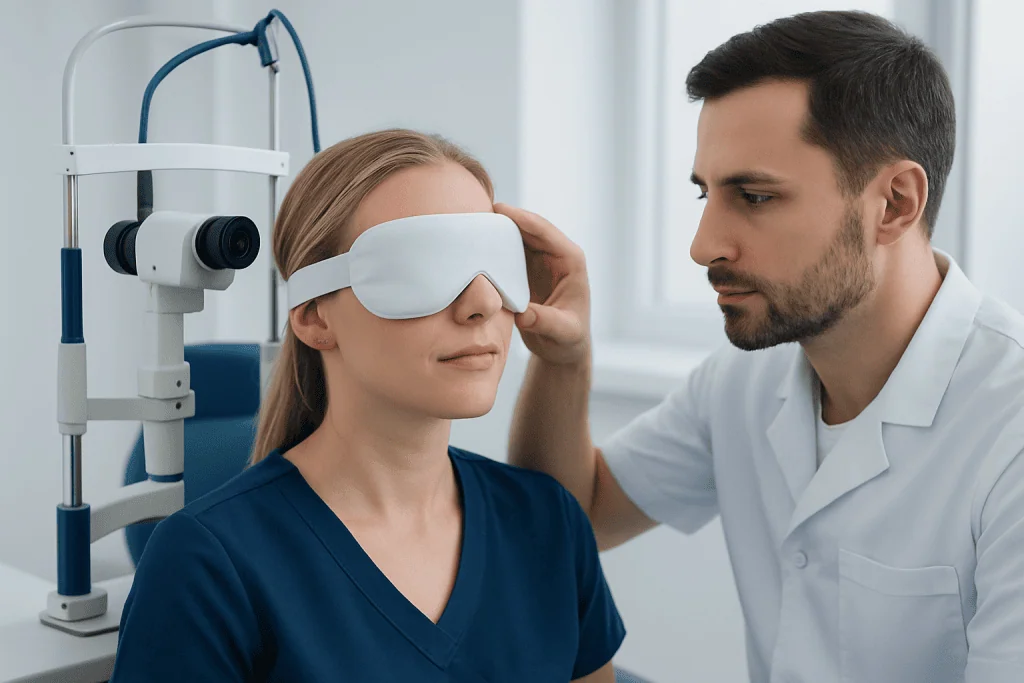
The goal is to deliver gentle, sustained warmth to the eyelids without irritating the skin or the eye surface. A clean washcloth soaked in warm water or a reusable eye mask designed for eyelid warming may be used. The compress should feel comfortably warm, never hot, since eyelid skin is delicate and can burn easily.
In general, the compress is placed over closed eyelids for several minutes so the heat can soften the oils inside the glands. Because washcloths cool quickly, they may need to be rewarmed to maintain consistent warmth. Reusable masks can hold heat longer, but they should be used according to the product instructions and kept clean.
After warming, some clinicians advise gentle lid massage or expression to encourage the oil to move toward the gland openings. This should be done with clean hands and very light pressure along the eyelid, not hard rubbing. Eyelid cleansing can also help remove debris and reduce inflammation along the lid margin.
Warm compresses are often more effective when done regularly rather than only when symptoms flare. If the routine causes redness, discomfort, or worsening symptoms, it is best to stop and speak with an eye doctor before continuing.
Common Causes and Factors That Contribute to MGD
Several factors can contribute to meibomian gland dysfunction. Aging is one of the most common, because gland function and oil quality can change over time. Hormonal influences, chronic eyelid inflammation, skin conditions such as rosacea, and environmental dryness may also play a role.
Daily habits matter as well. Extended screen time can reduce blink frequency and lead to incomplete blinking, which may impair normal oil release. Contact lens wear, eye makeup residue, and poor eyelid hygiene can also contribute in some people. Certain medications or underlying medical conditions may affect tear film stability and eyelid health.
Because MGD can overlap with infection, allergy, or other eyelid disorders, persistent symptoms should not be self-diagnosed. An ophthalmologist can determine whether symptoms are due mainly to gland blockage, tear film imbalance, or another condition that needs different treatment.
Other Treatments Your Eye Doctor May Recommend
Warm compresses are often the starting point, but they are not the only option. Depending on symptom severity and examination findings, an eye doctor may recommend lubricating drops, eyelid cleansers, prescription anti-inflammatory treatment, or management of associated blepharitis or rosacea. Some patients also benefit from changing contact lens habits or treating related dryness of the eye surface.
For more persistent gland blockage, in-office therapies may be suggested. These can include professional gland expression or procedures designed to warm and clear the meibomian glands more effectively than home care alone. If symptoms are linked to a broader ocular surface problem, treatment may also include options used for dry eye treatment.
When MGD coexists with other eye conditions, a fuller eye evaluation may be needed. In some cases, doctors may also assess whether vision complaints are related to refractive issues or cataract-related changes, depending on age and symptoms. Management is individualized because not every patient has the same cause of discomfort or tear instability.
Prevention, Self-Care, and Daily Habits
Good daily habits can support the benefits of warm compresses. Taking screen breaks, blinking fully and often, staying hydrated, and avoiding direct airflow from fans or car vents may help reduce evaporation from the tear film. A humidified environment can also be useful in dry indoor settings.
Eyelid hygiene is another important step. Gentle cleansing of the lid margins may reduce buildup of oils, skin debris, and irritants. People who wear eye makeup should remove it thoroughly each day, especially along the lash line. Contact lens users may need to review lens wear time and lens care with an eye professional if symptoms are frequent.
Self-care should remain gentle and consistent rather than aggressive. Scrubbing the lids, using very hot compresses, or trying to squeeze the glands forcefully can worsen irritation. If symptoms continue despite careful home care, specialist assessment is the safest next step.
When to Seek Medical Care
Medical advice is important if dry, irritated eyes do not improve with routine warm compresses and eyelid care, or if symptoms keep returning. An eye doctor can check the eyelid margins, tear film, gland openings, and eye surface to confirm whether MGD is the main problem.
Prompt medical attention is recommended for severe eye pain, significant redness, light sensitivity, discharge, a sudden change in vision, or symptoms affecting only one eye in an unusual way. These features can suggest a different condition that needs timely treatment.
People with recurrent symptoms may benefit from a comprehensive eye evaluation, especially if they have rosacea, autoimmune disease, contact lens intolerance, or previous eye surgery. Acibadem International’s multidisciplinary specialists and JCI-accredited hospitals evaluate and treat eye surface conditions for international patients, including dry eye and related eyelid disorders.
Frequently asked questions
How often should a warm compress be used for meibomian gland dysfunction?
The ideal schedule can vary depending on symptom severity and a doctor's advice, but consistency is usually more important than intensity. Many people are advised to use it regularly as part of daily eyelid care, especially during symptom flares. If symptoms persist, an eye specialist can tailor the routine.
How warm should the compress be?
It should be comfortably warm, not hot. The eyelids have thin, sensitive skin, so too much heat can cause irritation or burns. If the compress feels hot or uncomfortable, it should be cooled before use.
Can a warm compress cure meibomian gland dysfunction?
A warm compress can improve symptoms and support gland function, but it does not permanently cure every case. MGD is often a chronic condition that may need ongoing eyelid care and, in some people, medical treatment. Long-term control usually depends on consistent management.
Should the eyelids be massaged after the warm compress?
Gentle massage may help move softened oil toward the gland openings after warming. However, the pressure should be light, and the eyes should remain closed to avoid irritation. If a person is unsure of the technique, it is best to ask an eye doctor for instruction.
Can warm compresses make symptoms worse?
They can if they are too hot, used too aggressively, or if the eye problem is not actually caused by MGD. Worsening redness, pain, or irritation suggests the routine should be stopped and reviewed by a clinician. Other conditions, such as infection or allergy, may need different treatment.
Are warm compresses enough if vision becomes blurry?
Mild, fluctuating blur that improves with blinking can happen with tear film instability from MGD. But persistent blurred vision, sudden visual changes, or vision loss should not be treated only at home. These symptoms need prompt medical evaluation.
References
- American Academy of Ophthalmology
- National Eye Institute
- American Optometric Association
- Tear Film and Ocular Surface Society
- Mayo Clinic
This article is for general information only and is not a substitute for professional medical advice. Please consult a qualified doctor about your individual situation.
Explore treatments in Turkey — costs, top hospitals & a free quote
JCI-accredited · board-certified surgeons · reply within 24h
Add us as a Preferred Source to see more of our trusted health content across Google Search, AI Overviews and Discover.