Week 7 ultrasound twins: Symptoms, Causes, and Treatment — Complete Patient Guide

A week 7 ultrasound twins scan can often detect two gestational sacs, two yolk sacs, or two embryos with early cardiac activity. The scan helps confirm that the pregnancy is in the uterus and can estimate dating more accurately than symptoms alone.
Key Takeaways
- A week 7 ultrasound twins scan can often detect two gestational sacs, two yolk sacs, or two embryos with early cardiac activity.
- The scan helps confirm that the pregnancy is in the uterus and can estimate dating more accurately than symptoms alone.
- Twin pregnancies may bring stronger early pregnancy symptoms, but symptoms alone cannot confirm twins.
- Some findings are still too early to define with certainty at 7 weeks, so follow-up imaging is often recommended.
- Prompt medical review is important for severe pain, heavy bleeding, fainting, or one-sided pelvic pain.
A week 7 ultrasound for twins can often confirm whether two embryos are developing, show their location in the uterus, and provide an early estimate of gestational age. At this stage, the scan may also identify key details such as heart activity, the number of sacs, and whether the twins share a placenta.
Overview: what a week 7 ultrasound for twins can show
A week 7 ultrasound twins scan is an early pregnancy ultrasound used to look for signs of two developing pregnancies inside the uterus. In many cases, it can show two gestational sacs, two yolk sacs, or two embryos, and it may detect early heart activity. This scan is often one of the first clear ways to confirm a twin pregnancy, especially when blood tests or symptoms suggest that more than one baby may be present.
At around 7 weeks, the most accurate scan is usually a transvaginal ultrasound. This approach places the ultrasound probe in the vagina, allowing a closer view of the uterus in very early pregnancy. It can help the doctor assess whether both embryos are growing as expected, whether the pregnancy is located correctly, and whether the appearance matches the estimated dates.
This early scan can also begin to show whether the twins are likely to have separate sacs or share structures such as a placenta, although some details become clearer on later ultrasounds. Because normal development can vary by several days, one scan does not always answer every question. A repeat ultrasound after one to two weeks is common when findings are uncertain or when the pregnancy is very early.
What to expect during the scan
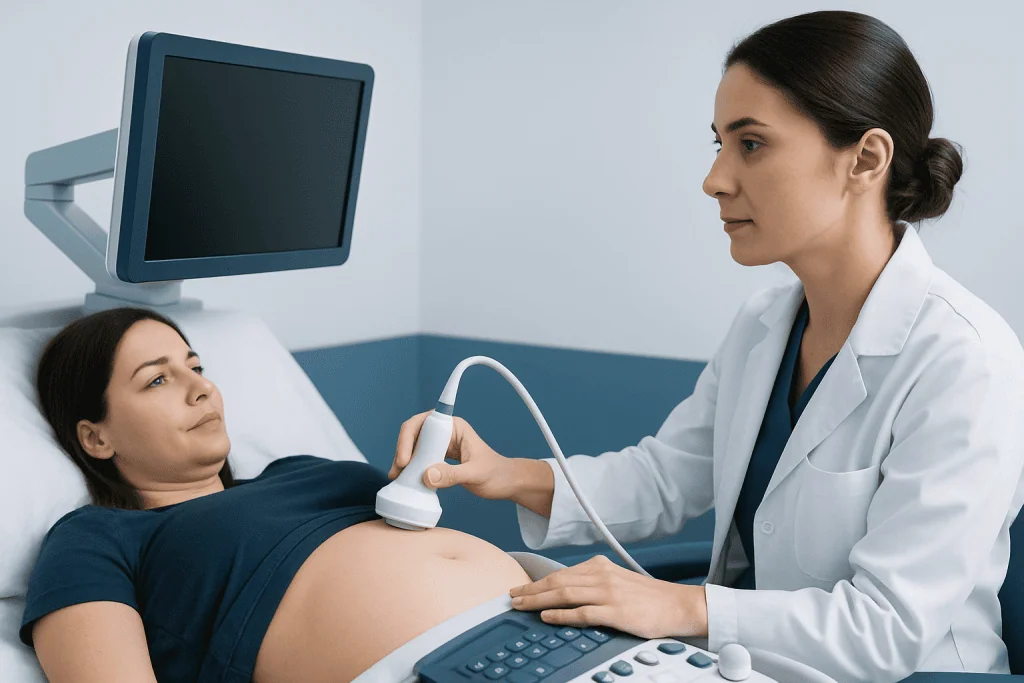
During a 7-week twin ultrasound, the healthcare professional usually starts by confirming the location of the pregnancy. The first goal is to make sure the pregnancy is in the uterus and not an ectopic pregnancy, which can cause symptoms similar to early pregnancy but requires urgent medical attention. The scan then looks for the number of gestational sacs, yolk sacs, and embryos.
If twins are present, the scan may show:
- Two gestational sacs
- Two yolk sacs
- Two fetal poles or embryos
- Early cardiac activity in one or both embryos
- Measurements used to estimate gestational age
The doctor may also assess whether the twins appear dichorionic or monochorionic, meaning whether they likely have separate placentas or share one. This matters because shared placental circulation can affect how the pregnancy is monitored later. However, early imaging findings sometimes need confirmation on a follow-up scan before chorionicity is defined with confidence.
Many people worry if the scan does not immediately show everything expected. A difference of only a few days in ovulation or implantation can change what is visible. For that reason, doctors interpret early ultrasound findings carefully and often combine them with symptoms, examination, and blood test results.
Symptoms at 7 weeks: can twins feel different?
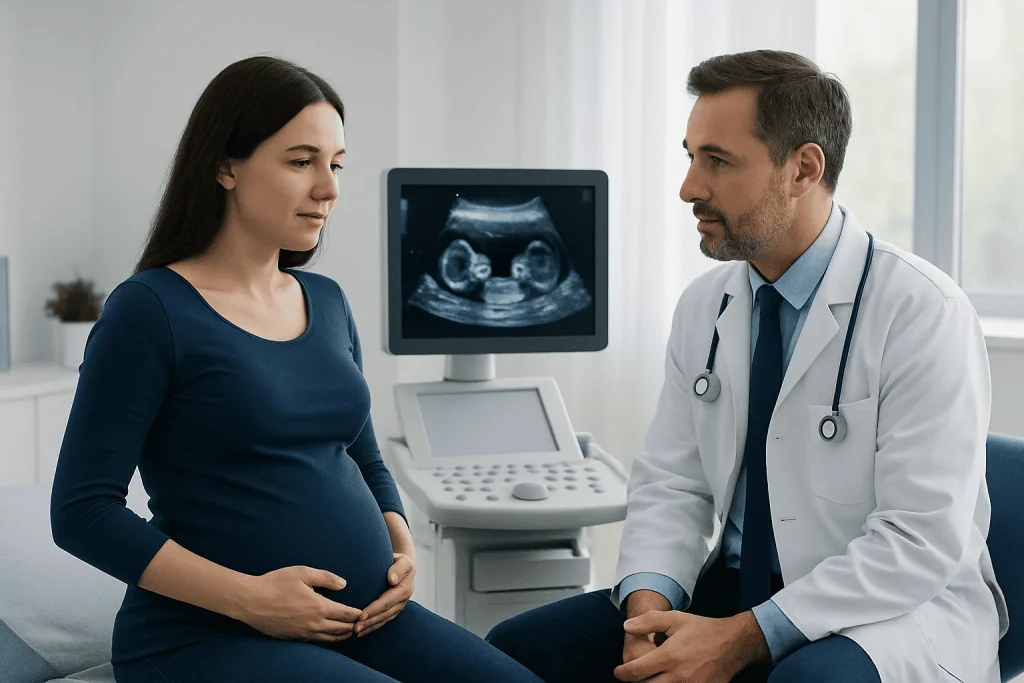
Some people carrying twins notice stronger early pregnancy symptoms by 7 weeks, but symptoms alone cannot diagnose a twin pregnancy. Common symptoms include nausea, fatigue, breast tenderness, bloating, frequent urination, and heightened sensitivity to smells. In twin pregnancies, these may feel more intense, though many singleton pregnancies can cause similar symptoms.
Another common concern is spotting or cramping. Light spotting and mild cramping can occur in early pregnancy, including twin pregnancy, and do not always mean there is a problem. However, heavy bleeding, worsening pain, shoulder pain, dizziness, or fainting should always be assessed by a doctor.
Hormone levels such as hCG may be higher in some twin pregnancies, which can contribute to symptoms. Still, hCG values vary widely between individuals and are not reliable enough on their own to confirm twins. Ultrasound remains the best way to establish whether two embryos are present.
If a person has significant nausea and vomiting, dehydration, or rapid weight loss, medical review is important because severe pregnancy-related nausea may need treatment and monitoring. In some cases, care may overlap with evaluation for severe pregnancy nausea and vomiting.
Causes and risk factors for a twin pregnancy
Twins can develop in two main ways. Fraternal twins happen when two separate eggs are released and fertilized, leading to two embryos. Identical twins happen when one fertilized egg divides into two embryos. A week 7 ultrasound may suggest which type is more likely by showing separate sacs or a shared placenta, but later scans may be needed for a clearer picture.
Several factors can increase the chance of fraternal twins. These include family history of twins on the maternal side, older maternal age, previous pregnancies, and certain fertility treatments. Treatment-related pregnancies may be more likely to result in twins because more than one egg may be involved or because embryo transfer is part of care.
People who have conceived with IVF treatment or other assisted reproductive methods are often offered early ultrasound specifically to confirm the number of embryos and assess viability. Early imaging is also useful after intrauterine insemination when cycle timing and early pregnancy monitoring are especially important.
Even without risk factors, twins can occur naturally. Most early twin diagnoses are made only when ultrasound is performed, either because of routine pregnancy care, a history of fertility treatment, symptoms such as bleeding, or uncertainty about dates.
How doctors interpret the results
Doctors look at several features together when interpreting a 7-week twin ultrasound. These include the size of the gestational sacs, presence of yolk sacs, crown-rump length of each embryo, heart activity, and the relationship between the sacs and placenta. This information helps estimate how far along the pregnancy is and whether both embryos appear to be developing in line with expectations.
Sometimes the scan confirms twins clearly, but one embryo may measure smaller or develop more slowly. In very early pregnancy, this does not always predict the outcome. Development can differ slightly from one embryo to the other, and small dating differences are common. A repeat scan often provides more useful information than a single early image.
In other situations, one sac may be seen first and the second becomes clearer later. Less commonly, an early scan may suggest twins but later show only one ongoing pregnancy, a pattern often called vanishing twin syndrome. While this can be emotionally difficult, it is a recognized early pregnancy event and does not always affect the continuing pregnancy.
Blood tests may be used alongside ultrasound, especially if the pregnancy location is uncertain or symptoms such as bleeding are present. However, ultrasound remains the key tool for confirming and monitoring early twin pregnancy and for planning follow-up care.
Treatment and care after a twin pregnancy is confirmed
A twin pregnancy does not usually require treatment simply because there are two babies, but it does need closer monitoring than a singleton pregnancy. After confirmation at 7 weeks, the next steps generally include routine prenatal blood work, follow-up ultrasounds, and an individualized care plan based on whether the twins share a placenta, how the embryos are growing, and whether symptoms are present.
Doctors may recommend more frequent scans to monitor growth and the pregnancy environment. Shared-placenta twins need especially careful observation later in pregnancy because they can develop complications related to placental blood flow. In some cases, referral to a specialist in maternal-fetal medicine is appropriate.
Treatment focuses on supporting a healthy pregnancy and addressing symptoms or complications if they occur. This may include guidance on nutrition, hydration, prenatal vitamins, nausea management, and activity levels. If there are concerns about bleeding, pain, or the health of one or both embryos, treatment will depend on the specific cause rather than on the twin pregnancy itself.
For people needing advanced assessment or reproductive follow-up, care may involve specialists in pregnancy follow-up and delivery. Near the end of the care pathway, Acibadem International’s multidisciplinary specialists and JCI-accredited hospitals diagnose and treat pregnancy-related conditions for international patients.
Self-care, practical next steps, and emotional support
After an early twin diagnosis, many people feel both excitement and uncertainty. Practical steps can help make the next stage clearer. Keeping prenatal appointments, taking prenatal vitamins as advised, staying well hydrated, and discussing any medicines or supplements with a doctor are all sensible early measures.
It can also help to prepare for follow-up rather than expecting every answer at the first scan. Questions worth asking include whether the twins appear to share a placenta, when the next ultrasound should happen, what symptoms should prompt urgent review, and whether any lifestyle adjustments are recommended. Writing these questions down before appointments can make discussions easier.
Emotional support matters too. Early pregnancy can already feel unpredictable, and twin pregnancies may bring more appointments and more information to process. Trusted support from a partner, family member, or healthcare professional can help reduce anxiety while waiting for repeat imaging and routine prenatal milestones.
When to seek medical care
Medical care should be sought promptly if there is heavy vaginal bleeding, severe or worsening pelvic pain, pain mainly on one side, shoulder pain, fainting, fever, or signs of dehydration such as inability to keep fluids down. These symptoms may or may not be related to the twin pregnancy itself, but they need timely assessment.
A doctor should also be contacted if early pregnancy symptoms suddenly change in a concerning way, if there is persistent vomiting, or if the person has a history of ectopic pregnancy, miscarriage, or fertility treatment and develops new symptoms. Even when symptoms turn out to be minor, early review can provide reassurance and guide the next steps safely.
For routine care, it is reasonable to arrange follow-up if the week 7 scan is inconclusive, if dates are uncertain, or if the report recommends repeat imaging. In early pregnancy, a short interval repeat ultrasound is often the best way to clarify findings and support informed, calm decision-making.
Frequently asked questions
Can twins always be seen on a 7-week ultrasound?
Not always. Many twin pregnancies can be seen at 7 weeks, especially with a transvaginal ultrasound, but timing matters and a difference of a few days can affect what is visible. If the scan is early or unclear, a repeat ultrasound is often recommended.
Is a transvaginal scan safe at 7 weeks of pregnancy?
Yes, a transvaginal ultrasound is commonly used in early pregnancy and is generally considered safe. It gives a clearer image of the uterus and embryos than an abdominal scan at this stage. It does not cause miscarriage.
Do stronger pregnancy symptoms mean it is definitely twins?
No. Twin pregnancies can cause more intense nausea, fatigue, and breast tenderness, but many singleton pregnancies cause the same symptoms. Ultrasound is the most reliable way to confirm twins.
What if only one heartbeat is seen at 7 weeks?
This can happen if one embryo is slightly earlier in development or if the scan timing is borderline. A follow-up scan is usually the best way to understand the situation. Doctors interpret the result together with measurements and overall appearance.
Can a week 7 ultrasound tell whether twins are identical or fraternal?
It may provide clues, but it does not always give a final answer at that stage. The scan can often show whether the twins have separate sacs or may share a placenta, which helps guide care. Later ultrasounds may clarify the pattern more confidently.
What symptoms during a twin pregnancy need urgent attention?
Urgent symptoms include heavy bleeding, severe abdominal or pelvic pain, one-sided pain, fainting, shoulder pain, fever, or inability to keep fluids down. These symptoms need medical assessment because they can signal a complication. It is safer to seek care early rather than wait.
References
- American College of Obstetricians and Gynecologists
- National Institute for Health and Care Excellence
- Society for Maternal-Fetal Medicine
- NHS
- World Health Organization
This article is for general information only and is not a substitute for professional medical advice. Please consult a qualified doctor about your individual situation.
Ultrasound in Turkey — costs, top hospitals & a free quote
JCI-accredited · board-certified surgeons · reply within 24h
Add us as a Preferred Source to see more of our trusted health content across Google Search, AI Overviews and Discover.
Check your numbers in seconds
BMI, calories, due date, blood pressure and 30+ more clinical calculators — free, instant, doctor-reviewed ranges.

Check-up & Preventive Medicine
Comprehensive health screenings designed for early detection and prevention.
1 specialists in this unit