Wet vs Dry Macular Degeneration: Key Differences in Symptoms and Treatment
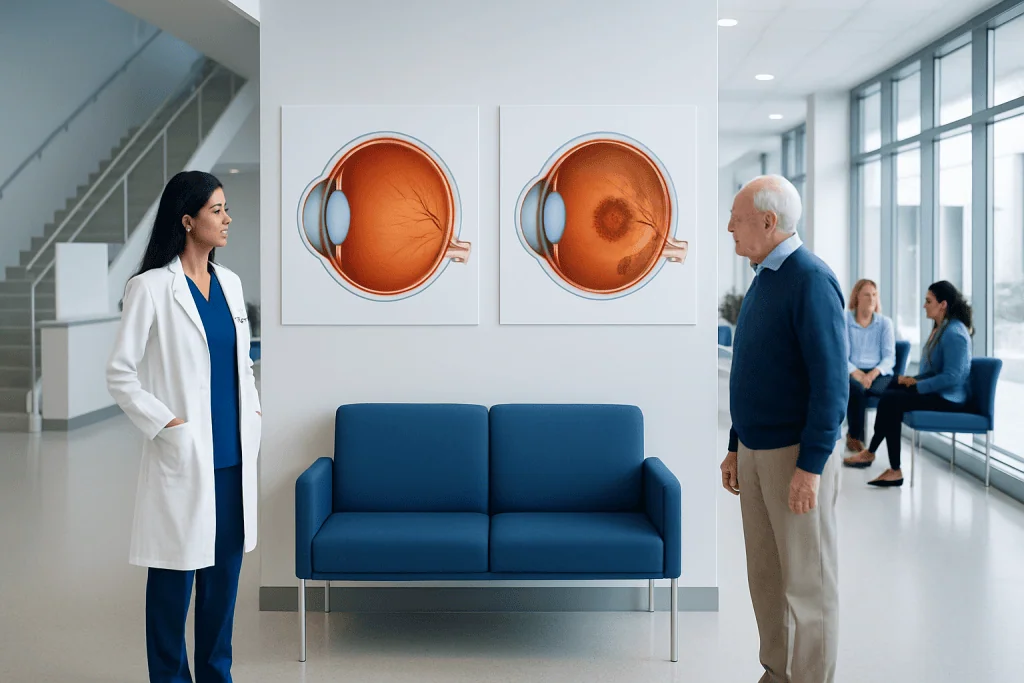
Dry macular degeneration is the more common form and often develops gradually. Wet macular degeneration involves abnormal blood vessels and can damage vision more quickly.
Key Takeaways
- Dry macular degeneration is the more common form and often develops gradually.
- Wet macular degeneration involves abnormal blood vessels and can damage vision more quickly.
- Both forms affect central vision, making reading, driving, and recognizing faces harder.
- Early diagnosis with a dilated eye exam and retinal imaging helps guide treatment and monitoring.
- Wet AMD often responds to eye injections, while dry AMD management focuses on monitoring, lifestyle, and selected supplements.
Wet and dry macular degeneration are two forms of age-related macular degeneration that affect central vision. Dry AMD is more common and usually progresses slowly, while wet AMD is less common but can cause faster vision loss and often needs prompt treatment.
Overview: What Is Wet vs Dry Macular Degeneration?
Wet and dry macular degeneration are two types of age-related macular degeneration, often called AMD. This condition affects the macula, the central part of the retina responsible for sharp, detailed vision. When the macula is damaged, a person may still keep side, or peripheral, vision, but everyday tasks such as reading, recognizing faces, or seeing fine details can become more difficult.
Dry AMD is the most common form. It usually develops slowly as the macula becomes thinner and small yellow deposits called drusen build up under the retina. Wet AMD is less common but more serious because abnormal blood vessels grow under the retina and may leak blood or fluid. That leakage can damage the macula more quickly and lead to a faster change in vision.
Although both forms affect central vision, they are not exactly the same disease process. Dry AMD can remain mild for years, but in some people it progresses to more advanced stages. Wet AMD may develop on its own or arise in an eye that already has dry AMD. Understanding the difference helps patients know what symptoms to watch for and why timely eye care matters.
Symptoms: How the Two Types Differ
Both wet and dry AMD can cause blurry or distorted central vision, but the pattern is often different. In dry AMD, symptoms usually appear gradually. A person may notice the need for brighter light when reading, more difficulty adapting to dim settings, mild blur in the center of vision, or trouble seeing fine detail.
Wet AMD often causes more sudden or noticeable changes. Straight lines may start to look wavy, objects can appear smaller or larger than expected, and a dark or blank spot may develop in central vision. Reading may become difficult over days or weeks rather than slowly over months or years.
Common symptoms of either form can include:
- Blurred central vision
- Difficulty recognizing faces
- Reduced contrast or color clarity
- Needing brighter light for close work
- Distortion of straight lines
AMD typically does not cause eye pain. In the early stages, especially with dry AMD, there may be no obvious symptoms at all. That is one reason routine eye examinations are important for older adults and for people with known risk factors.
Causes and Risk Factors
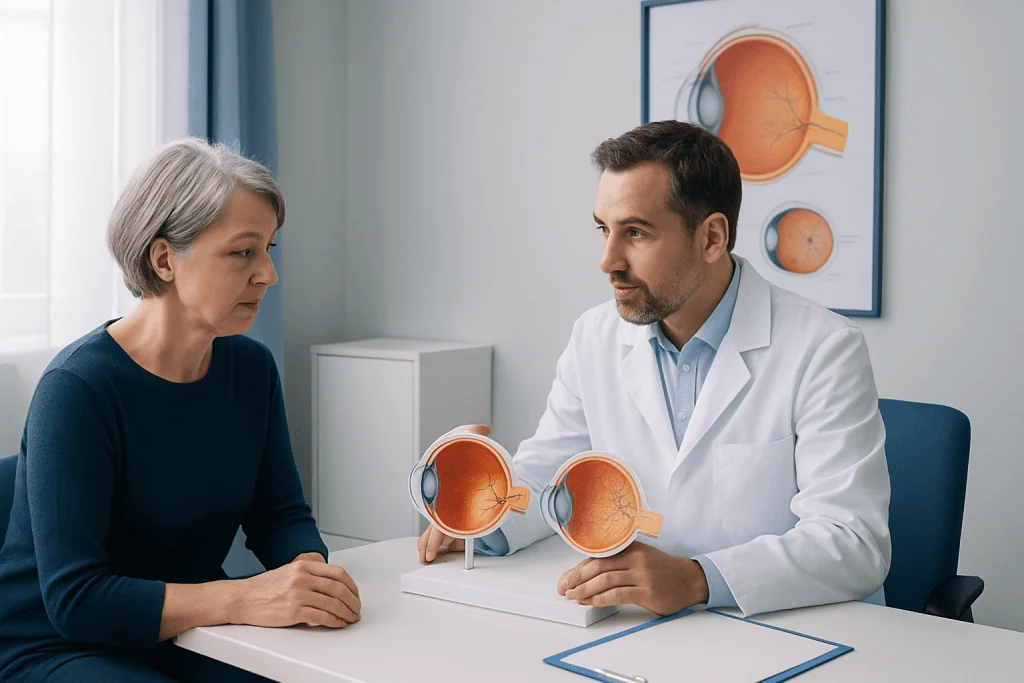
The exact cause of AMD is complex and involves aging changes in the retina, genetics, and environmental influences. In dry AMD, waste material can build up beneath the retina, and the tissue of the macula may gradually thin and lose function. In wet AMD, abnormal blood vessels grow beneath the macula, where they are fragile and prone to leaking. This leakage can quickly disrupt the retinal layers needed for clear central vision.
Age is the strongest risk factor, which is why the condition is called age-related macular degeneration. Family history also matters, and some people inherit a higher tendency to develop AMD. Smoking is one of the most important modifiable risks because it can increase oxidative stress and reduce blood flow to the retina.
Other factors linked to higher risk include:
- Older age
- Smoking or past smoking
- Family history of AMD
- High blood pressure or cardiovascular disease
- Obesity and low physical activity
- Poor diet low in leafy vegetables and fish
- Long-term exposure to sunlight without eye protection
Having dry AMD does not always mean a person will develop wet AMD, but it can increase the chance. People with changes in one eye may also need careful monitoring of the other eye, since AMD can affect both eyes, though not always to the same degree or at the same time.
Diagnosis and Monitoring
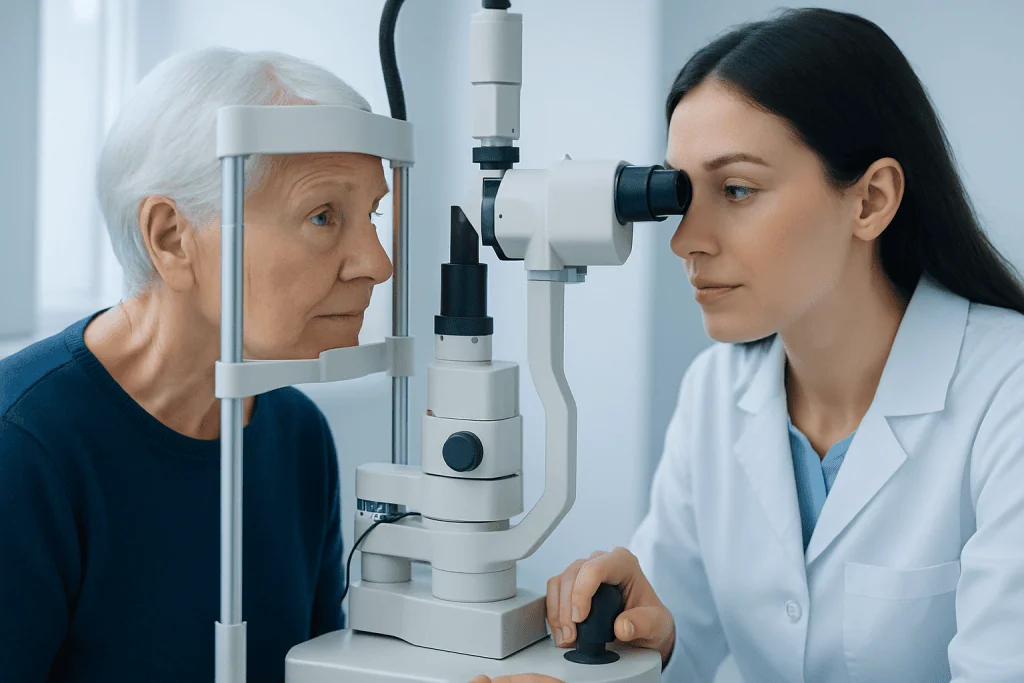
Diagnosis begins with a detailed eye examination by an ophthalmologist or retina specialist. The doctor will ask about symptoms, test visual acuity, and examine the retina after dilating the pupils. A simple grid test may also be used to check for distortion in central vision.
Modern retinal imaging plays an important role in telling wet and dry AMD apart. Optical coherence tomography creates detailed cross-sectional images of the retina and can show fluid, swelling, or thinning. Retinal photography helps document changes over time, and in some cases angiography is used to look for abnormal leaking blood vessels.
Because early disease may be subtle, follow-up is often just as important as the first diagnosis. Patients may be advised to monitor vision at home and report any sudden change right away. Prompt assessment is especially important if symptoms suggest wet AMD, because early treatment can help protect remaining vision.
In some situations, doctors also consider other conditions that can affect central vision. These may include macular degeneration in its different stages or other retinal disorders that can mimic AMD on symptoms alone. Careful imaging helps guide the most accurate diagnosis and treatment plan.
Treatment Options for Dry and Wet AMD
Treatment depends on whether AMD is dry or wet and on how advanced it is. For dry AMD, there is currently no single treatment that reverses the condition. Management usually focuses on regular monitoring, healthy lifestyle changes, and, in certain patients with intermediate or advanced dry AMD, specific vitamin and mineral supplements recommended by an eye specialist.
Wet AMD is different because active treatment can often slow leakage and vision loss. The main treatment is medicine injected into the eye to block signals that promote abnormal blood vessel growth. These anti-VEGF medicines are given in a controlled clinical setting and may need to be repeated over time depending on the eye’s response. In selected cases, laser-based treatments may also be considered, though they are used less often than injections.
Supportive care is also important for both forms. Low-vision aids, brighter lighting, magnifiers, and digital reading tools can help maintain independence. If central vision loss becomes more advanced, referral for vision rehabilitation can teach practical strategies for daily life.
When specialist treatment is needed, patients may be evaluated for advanced retinal care and imaging, and in some cases procedures connected to eye injections or detailed eye examination pathways may be part of the care plan. The best approach is individualized and based on retinal findings, symptoms, and follow-up needs.
Prevention and Self-care
AMD cannot always be prevented, but healthy habits can support eye health and may reduce the risk of progression. Stopping smoking is one of the most important steps. Managing blood pressure, cholesterol, and other cardiovascular risk factors is also helpful because the retina depends on healthy circulation.
A balanced diet rich in leafy green vegetables, colorful fruits, legumes, and fish may support retinal health. Regular physical activity and maintaining a healthy weight can benefit overall vascular health as well. Many eye specialists also recommend protecting the eyes from strong sunlight with UV-blocking sunglasses and a brimmed hat when outdoors.
People with known AMD are often encouraged to monitor each eye separately at home, for example by checking whether straight lines appear wavy or whether a new central blur has developed. Self-monitoring does not replace professional care, but it can help patients notice changes earlier and seek treatment promptly if needed.
For patients living with chronic retinal disease, consistent follow-up matters. This may include regular retinal imaging and discussion about nutrition, visual aids, and home safety. If vision loss affects daily tasks, structured support such as vision rehabilitation may improve confidence and function.
When to See a Doctor
Anyone who notices new distortion, a dark spot in central vision, or a sudden drop in the ability to read or recognize faces should arrange an urgent eye assessment. These symptoms do not always mean wet AMD, but they require prompt evaluation because early treatment can be important if leaking blood vessels are present.
People over 50, especially those with a family history of AMD or a history of smoking, should keep up with routine eye examinations even if their vision seems normal. Early dry AMD may not cause symptoms, and an eye doctor can often detect changes before they interfere with daily life.
Medical review is also important if vision changes are affecting safety, mobility, or emotional well-being. Losing central vision can be frustrating, but support is available. A specialist can explain whether the condition is stable, whether treatment is needed, and what tools may help preserve independence.
For international patients seeking specialist evaluation, Acibadem International’s multidisciplinary eye teams in JCI-accredited hospitals diagnose and treat retinal conditions, including wet and dry AMD, with individualized follow-up when appropriate.
Frequently asked questions
Which is worse, wet or dry macular degeneration?
Wet macular degeneration is usually considered more urgent because it can damage central vision more quickly. Dry macular degeneration is more common and often progresses slowly, but it can still cause significant vision problems over time.
Can dry macular degeneration turn into wet macular degeneration?
Yes, in some people dry AMD can progress to wet AMD. That is why regular monitoring and prompt reporting of new distortion or sudden vision changes are important.
Does macular degeneration cause total blindness?
Macular degeneration mainly affects central vision, which is needed for detailed tasks such as reading and driving. It usually does not cause complete blindness because peripheral vision is often preserved.
What are the first signs of wet macular degeneration?
Early signs may include straight lines appearing wavy, a sudden blur in the center of vision, or a dark or empty spot when looking straight ahead. These changes should be assessed quickly by an eye doctor.
Can macular degeneration be cured?
There is no complete cure for AMD at present, but treatment can help manage it. Wet AMD can often be controlled with injections, while dry AMD management focuses on monitoring, risk reduction, and supportive care.
Are vitamins helpful for macular degeneration?
Some people with intermediate or advanced dry AMD may benefit from specific eye vitamin formulations recommended by their doctor. Vitamins are not suitable for everyone, so it is best to ask an ophthalmologist before starting supplements.
References
- American Academy of Ophthalmology
- National Eye Institute
- NHS
- Mayo Clinic
- Centers for Disease Control and Prevention
This article is for general information only and is not a substitute for professional medical advice. Please consult a qualified doctor about your individual situation.
Macular Degeneration in Turkey — costs, top hospitals & a free quote
JCI-accredited · board-certified surgeons · reply within 24h
Add us as a Preferred Source to see more of our trusted health content across Google Search, AI Overviews and Discover.
Check your numbers in seconds
BMI, calories, due date, blood pressure and 30+ more clinical calculators — free, instant, doctor-reviewed ranges.