What Age Can You Have LASIK Eye Surgery: Procedure, Recovery and Results

LASIK is generally considered only after age 18, when prescription changes have stabilized. Healthy corneas, an appropriate prescription, and realistic expectations are central to candidacy.
Key Takeaways
- LASIK is generally considered only after age 18, when prescription changes have stabilized.
- Healthy corneas, an appropriate prescription, and realistic expectations are central to candidacy.
- LASIK reshapes the cornea to reduce dependence on glasses or contact lenses; it does not prevent normal age-related vision changes.
- Many people see clearly within days, while vision and dryness can continue to settle over several weeks or months.
- LASIK outcomes are usually long-lasting, but some people may need glasses, reading glasses, or enhancement treatment later.
- Sudden vision loss, significant pain, increasing redness, or discharge after surgery needs urgent eye assessment.
Most people can be considered for LASIK eye surgery from age 18, but many eye surgeons prefer vision to be stable for at least a year and may recommend waiting until the early 20s. A detailed eye examination—not age alone—determines whether LASIK is likely to be safe and appropriate.
Overview: What Age Can You Have LASIK Eye Surgery?
For most people, the answer to what age can you have LASIK eye surgery is 18 years or older. However, being legally old enough is not the same as being an ideal candidate. Eye surgeons usually look for a stable glasses or contact lens prescription for at least one year, healthy corneas, and no eye or medical condition that could interfere with healing.
LASIK, short for laser-assisted in situ keratomileusis, is a refractive procedure that changes the shape of the cornea, the clear front surface of the eye. This adjustment helps light focus more accurately on the retina and can reduce reliance on glasses or contact lenses for nearsightedness, farsightedness, or astigmatism.
There is no single upper age limit for LASIK. Adults in their 40s, 50s, or beyond may still be suitable if their eyes are healthy, but age-related changes such as presbyopia, cataracts, dry eye, or retinal disease may affect whether LASIK is the best option. A comprehensive assessment helps the ophthalmologist recommend the most suitable vision-correction approach.
How LASIK Works and Who May Be a Candidate
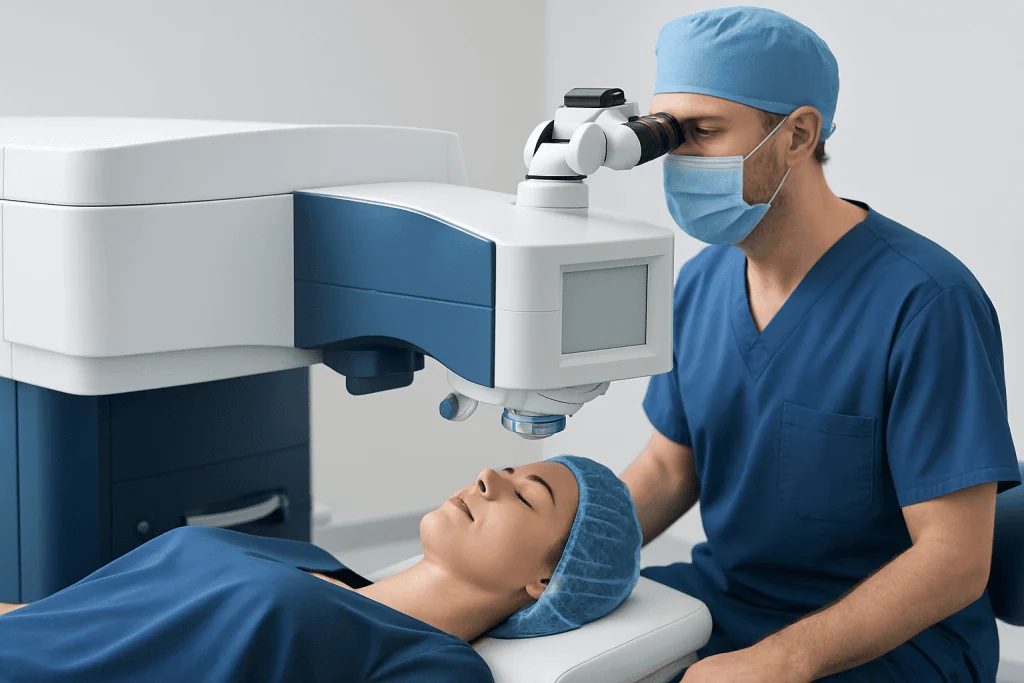
During LASIK, an ophthalmologist creates a very thin flap in the cornea using a femtosecond laser or, less commonly, a mechanical device. The flap is gently lifted, and an excimer laser removes a precisely calculated amount of corneal tissue. The flap is then repositioned, where it adheres naturally without stitches.
Good candidates are usually adults with a stable refractive error, corneas thick and regular enough for treatment, and generally healthy eyes. Detailed measurements assess corneal shape, thickness, pupil size, tear production, eye pressure, and the prescription in each eye. Contact lenses can temporarily alter corneal measurements, so an eye team may ask a person to stop wearing them for a specified period before assessment.
LASIK may not be advised for people with unstable prescriptions, very thin or irregular corneas, uncontrolled diabetes, certain autoimmune conditions, active eye infection, severe dry eye, glaucoma, cataracts, or some retinal disorders. Pregnancy and breastfeeding can temporarily change vision and tear production, so refractive surgery is commonly postponed until hormonal changes have settled.
Other laser vision correction techniques or lens-based procedures can be considered when LASIK is unsuitable. The choice should be individualized rather than based on age or prescription alone.
LASIK Procedure: What Happens Step by Step
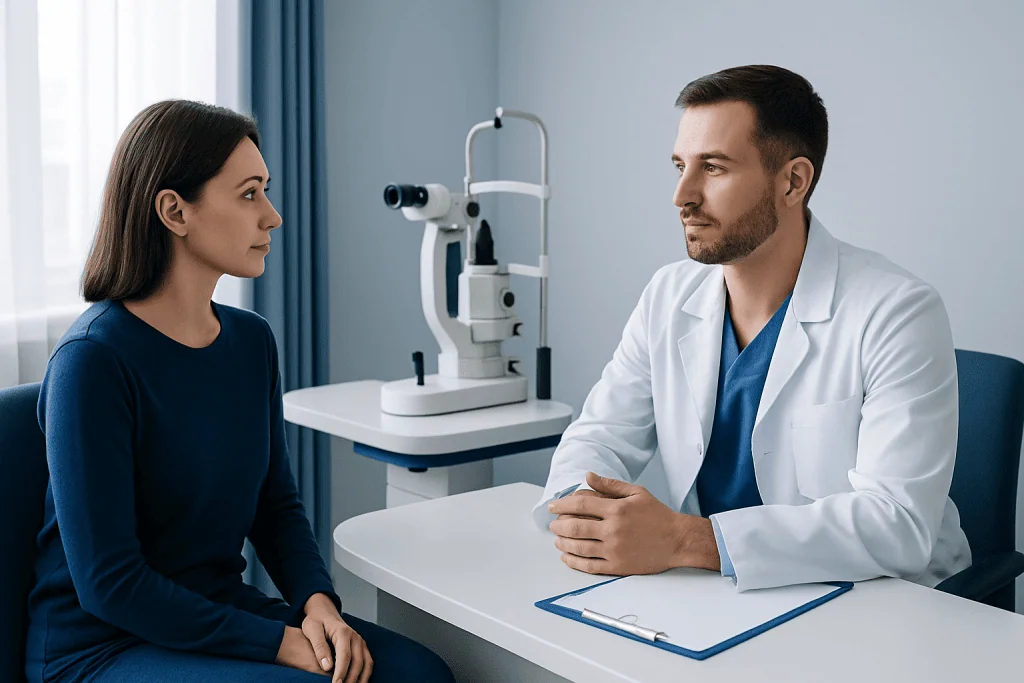
Before surgery, the ophthalmologist confirms measurements, reviews the expected outcome, and discusses benefits, limitations, and potential complications. On the day of treatment, numbing eye drops are used. The person remains awake, but the procedure is designed to be comfortable and usually takes only a short time for each eye.
A device gently holds the eyelids open, and the person is asked to focus on a fixation light. The surgeon creates the corneal flap, applies the laser treatment according to the planned correction, and returns the flap to its position. Temporary blurred vision, watering, light sensitivity, or a gritty sensation can occur immediately afterward.
After the procedure, someone else should drive the patient home. Protective shields may be used while sleeping during the first days, and prescribed drops support healing and reduce infection or inflammation risk. Rubbing the eyes, swimming, and contact sports should be avoided for the period advised by the surgeon.
For people exploring laser vision correction, LASIK eye surgery assessment includes deciding whether the procedure fits the individual’s corneal findings, prescription, daily visual needs, and long-term eye health.
Recovery Timeline, Benefits and Possible Risks
Many people notice improved vision within the first day or two after LASIK. Vision may fluctuate early on, and night-time glare, halos, light sensitivity, or dry-eye symptoms are relatively common during initial healing. Follow-up visits allow the eye team to monitor the cornea, vision, and comfort.
Most routine activities can often be resumed within a few days, depending on the surgeon’s advice and the nature of the work. Vision quality commonly continues to refine over several weeks. Dry-eye symptoms may last longer for some people, particularly those who had dry eye before surgery, and lubricating drops or other treatments may be recommended.
The main potential benefit is reduced dependence on corrective lenses. LASIK does not promise perfect vision in every situation, and it does not protect against future eye conditions. Possible complications include undercorrection, overcorrection, residual astigmatism, glare or halos, dry eye, flap-related problems, infection, inflammation, and, rarely, a reduction in best-corrected vision.
Careful screening and following aftercare instructions reduce risk but cannot eliminate it. People should discuss occupations, sports, night-driving demands, and expectations before deciding on surgery.
At What Age Is LASIK Not Worth It?
LASIK may be less worthwhile when a person’s prescription is still changing, which is more common in late adolescence and early adulthood. For this reason, an adult who is 18 may technically qualify but may be advised to wait until their vision has remained stable. Waiting can reduce the chance that changing prescription will affect the long-term result.
In later adulthood, LASIK may be less useful for some people because presbyopia becomes increasingly common from around the 40s. Presbyopia is the normal gradual loss of near focusing ability, so even a person with excellent distance vision after LASIK may eventually need reading glasses. Monovision LASIK, in which one eye is set more for near and the other for distance, may be an option for selected patients, often after a contact lens trial.
When cataracts are developing or likely to affect vision soon, lens surgery may be more appropriate than corneal laser surgery. The best timing depends on eye findings, visual goals, lifestyle, and the expected progression of age-related changes, rather than a fixed age cut-off.
What Happens 10 Years After LASIK?
Ten years after LASIK, many people continue to have stable, useful uncorrected distance vision. The corneal reshaping created by LASIK is permanent, but the eye can still change over time. A person may experience gradual prescription change, develop dry-eye symptoms, or need glasses for some tasks.
By this point, many adults will also experience presbyopia. This is unrelated to LASIK itself and happens because the natural lens inside the eye becomes less flexible with age. Reading glasses, multifocal glasses, contact lenses, or a later vision-correction strategy may be considered depending on individual needs.
Some people have a small residual or recurrent refractive error and may be assessed for an enhancement procedure. An enhancement is not automatically appropriate; it depends on corneal thickness, corneal stability, ocular surface health, and the reason vision has changed. Regular eye examinations remain important after LASIK.
Is LASIK 100% Success Rate? What Happens After 20 Years?
No surgical procedure, including LASIK, has a 100% success rate. Outcomes are generally favorable in carefully selected patients, but results vary according to the initial prescription, corneal features, healing response, dry-eye status, and visual requirements. Some people still need glasses or contact lenses for certain activities, and a smaller number may need further treatment.
Twenty years after LASIK, the original corneal correction may still provide meaningful distance vision, but normal aging of the eye continues. Presbyopia is expected with age, and cataracts can develop later in life whether or not someone has had LASIK. Previous LASIK should be reported before cataract surgery because it can affect the calculations used when selecting an intraocular lens.
LASIK does not cause cataracts, glaucoma, or retinal disease. However, it also does not prevent these conditions. Ongoing eye care is especially important for people with diabetes, high eye pressure, a family history of glaucoma, high myopia, or new visual symptoms.
Acibadem International’s multidisciplinary specialists at JCI-accredited hospitals assess refractive and broader eye-health needs for international patients, including whether laser vision correction or another approach is appropriate.
When to Seek Medical Care
Anyone considering LASIK should arrange a comprehensive consultation with a qualified ophthalmologist rather than relying on age or a current glasses prescription alone. An eye examination can identify concerns such as dry eye, corneal irregularity, cataract, glaucoma, or retinal changes that may influence the treatment plan.
After LASIK, urgent eye assessment is needed for severe or increasing pain, a sudden drop in vision, marked redness, pus-like discharge, increasing sensitivity to light, or an eye injury. These symptoms are uncommon but can indicate a problem that needs prompt treatment.
Regular eye checks should continue after successful LASIK, particularly as a person gets older. A clinician can monitor overall eye health and address new needs such as reading correction, cataract assessment, or management of dry eye.
Frequently asked questions
What is the minimum age for LASIK eye surgery?
LASIK is generally considered from age 18 because the eye and prescription are more likely to have matured by then. Many surgeons also want the prescription to be stable for at least one year before proceeding. Individual eligibility is confirmed through a full eye examination.
Can a 40-year-old have LASIK?
Yes, many people in their 40s can be suitable candidates if their corneas and overall eye health are appropriate. However, presbyopia commonly begins during this period, so reading glasses may still be needed after distance-focused LASIK. A surgeon can discuss options such as monovision based on visual needs.
Can someone have LASIK after age 50 or 60?
Age alone does not rule out LASIK after 50 or 60. The decision depends more on corneal health, dry eye, cataract changes, glaucoma risk, retinal health, and the person’s goals. For some older adults, lens-based treatment may be more appropriate than LASIK.
How long does LASIK take to heal?
Many people notice clearer vision within one or two days, and can often return to everyday activities soon afterward. Vision can fluctuate during the first weeks, while dryness and night-time visual effects may take weeks or months to improve. Follow-up appointments are important to confirm healthy healing.
Does LASIK last forever?
The corneal shape change made by LASIK is permanent, but vision can still change as the eyes age. Reading glasses may be needed because of presbyopia, and some people develop a small prescription change over time. Cataracts and other age-related eye conditions can also affect vision later in life.
Can LASIK be repeated?
In selected cases, an enhancement procedure may be possible if there is enough healthy corneal tissue and the eye is otherwise suitable. It is not appropriate for everyone, and the reason for the vision change must first be evaluated. An ophthalmologist will use updated measurements to advise on safe options.
References
- American Academy of Ophthalmology
- U.S. Food and Drug Administration
- National Eye Institute
- Royal College of Ophthalmologists
This article is for general information only and is not a substitute for professional medical advice. Please consult a qualified doctor about your individual situation.
Eye Surgery in Turkey — costs, top hospitals & a free quote
JCI-accredited · board-certified surgeons · reply within 24h
Add us as a Preferred Source to see more of our trusted health content across Google Search, AI Overviews and Discover.

Ophthalmology
Comprehensive eye care from laser vision correction to retina, cornea and cataract surgery.
75 specialists in this unit