What Are Acidic? Causes, Explanations, and Next Steps

Acidic burps usually happen when stomach contents or acid move upward into the esophagus. Common triggers include large meals, fatty or spicy foods, carbonated drinks, lying down after eating, and reflux.
Key Takeaways
- Acidic burps usually happen when stomach contents or acid move upward into the esophagus.
- Common triggers include large meals, fatty or spicy foods, carbonated drinks, lying down after eating, and reflux.
- Occasional symptoms are often harmless, but persistent burping with heartburn, pain, vomiting, trouble swallowing, or weight loss should be checked by a doctor.
- Diagnosis may include a symptom review, physical exam, and sometimes tests such as endoscopy or reflux monitoring.
- Treatment depends on the cause and may involve lifestyle changes, medicines, and management of related digestive conditions.
Acidic burps are burps with a sour, bitter, or burning taste, most often linked to stomach acid reaching the esophagus. In many people they happen occasionally after certain foods or large meals, but frequent or troublesome symptoms deserve medical review.
Overview: What are acidic burps?
When people ask, “what are acidic,” they are often referring to acidic burps or a sour taste that comes up with burping. This usually means that stomach acid, partially digested food, or both have moved upward into the esophagus and sometimes into the back of the throat. The result can taste sour, bitter, or sharp, and may be accompanied by burning in the chest or upper abdomen.
In many cases, acidic burps are occasional and harmless. They commonly happen after eating too quickly, having a very large meal, drinking fizzy beverages, or eating foods that relax the lower esophageal sphincter, the muscle that normally keeps stomach contents from flowing backward.
The symptom becomes more important when it is frequent, persistent, or paired with other warning signs. Repeated acidic burps may be a clue to acid reflux, indigestion, gastritis, or another digestive condition. A doctor can help determine whether the symptom is simply dietary or whether it needs further evaluation.
Common symptoms that may happen with acidic burps

Acidic burps may occur on their own, but they often happen with other upper digestive symptoms. Some people notice a sour or bitter liquid coming into the mouth, especially after bending over or lying down. Others feel burning behind the breastbone, mild nausea, bloating, or pressure in the upper abdomen.
Symptoms that commonly appear alongside acidic burps include:
- Heartburn
- Regurgitation of food or sour fluid
- Bloating or a feeling of fullness
- Upper abdominal discomfort
- Nausea after meals
- Bad taste in the mouth
- Increased burping after carbonated drinks or heavy meals
Although these symptoms are often related to reflux or indigestion, they are not always caused by too much stomach acid. Sometimes the issue is how the digestive tract is moving, how quickly the stomach empties, or how the body responds to specific foods. That is why the pattern of symptoms matters just as much as the symptom itself.
If acidic burps happen mostly after certain meals and improve with simple changes, the cause may be straightforward. If they happen several times a week, wake a person from sleep, or interfere with eating, work, or quality of life, medical advice is sensible.
Causes and risk factors
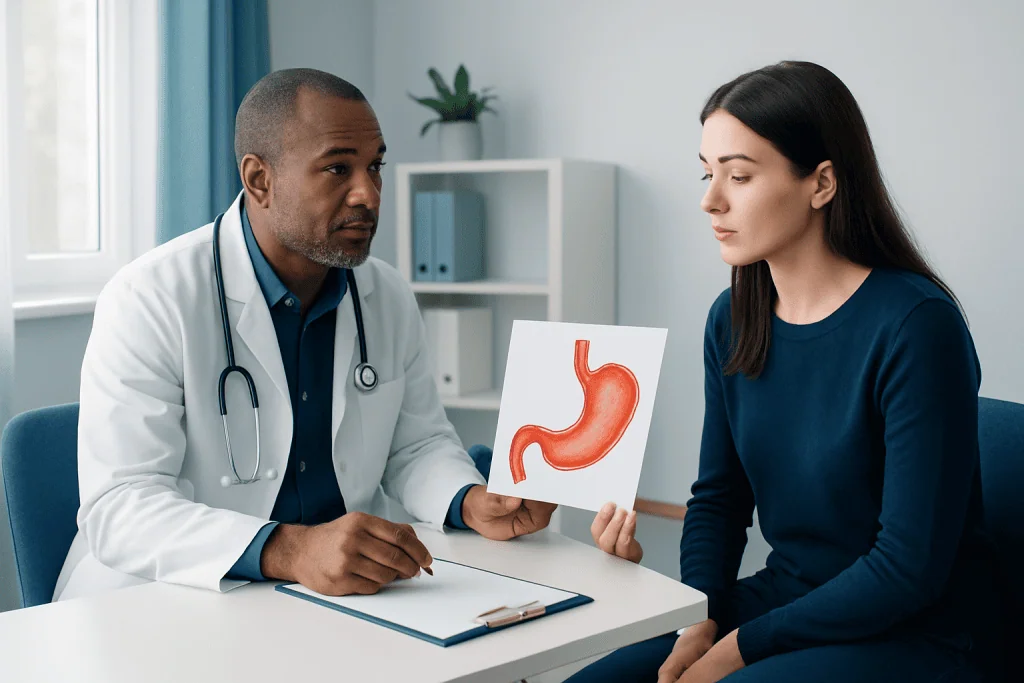
The most common cause of acidic burps is gastroesophageal reflux, often called acid reflux. In reflux, stomach contents move upward because the valve between the esophagus and stomach is not closing effectively or is relaxing at the wrong time. This can cause sour burps, heartburn, throat irritation, or a bitter taste after meals. Persistent reflux may be part of GERD if symptoms are frequent or ongoing.
Food and eating habits can also play a major role. Triggers vary from person to person, but common ones include large meals, fried foods, spicy foods, chocolate, peppermint, caffeine, alcohol, and fizzy drinks. Eating quickly, eating late at night, or lying down soon after a meal can make reflux and burping more likely.
Other digestive conditions may contribute as well. Indigestion, gastritis, peptic ulcer disease, delayed stomach emptying, and infection with Helicobacter pylori can all affect the upper digestive tract and may lead to sour burps or nausea. In some people, swallowing extra air while chewing gum, smoking, or talking while eating increases belching and may make the acidic taste more noticeable.
Risk factors include excess body weight, pregnancy, smoking, certain medicines, and hiatal hernia. Stress does not directly create stomach acid reflux in everyone, but it can worsen symptom awareness, eating patterns, and digestive discomfort. The presence of long-term symptoms is more important than any single trigger.
How doctors evaluate acidic burps
If symptoms are ongoing, a doctor usually starts with a detailed history. They may ask when the burps happen, what they taste like, whether there is heartburn or chest discomfort, what foods trigger them, and whether symptoms occur at night. Questions about swallowing, appetite, vomiting, weight change, and medicines help narrow the possible causes.
A physical examination may focus on the abdomen, throat, and general signs of illness. In many people with mild or occasional symptoms, a careful clinical assessment is enough to suggest reflux or indigestion and guide first-line treatment. Doctors also look for signs that point away from simple reflux and toward another problem.
When symptoms are persistent, severe, or unclear, tests may be recommended. These can include upper endoscopy to look at the esophagus and stomach, pH monitoring to measure reflux, or laboratory tests to check for anemia or infection. Depending on the symptoms, imaging or tests for stomach emptying may also be considered.
This step-by-step approach helps separate occasional harmless symptoms from conditions that need targeted treatment. It also helps avoid unnecessary treatment when diet, timing of meals, or another manageable factor is the main issue.
Treatment options and symptom relief
Treatment depends on the cause. If acidic burps are linked to meals or reflux, the first step is often a combination of food and lifestyle changes. Eating smaller meals, avoiding late-night eating, and identifying personal trigger foods can reduce symptoms significantly in many people.
Doctors may also recommend medicines that reduce acid or protect the digestive lining. Depending on the situation, this may include antacids for occasional symptoms or other acid-suppressing medicines for more frequent reflux. People should use these treatments under medical guidance if symptoms are persistent, recurrent, or changing over time.
If another condition is found, treatment is directed toward that problem. For example, inflammation of the stomach may need a different approach than reflux, and suspected ulcers may need additional testing and treatment. In selected cases where symptoms are severe, hard to control, or linked to structural problems such as a large hiatal hernia, specialist care may be needed, including assessment for reflux surgery.
For international patients who need specialist digestive evaluation, Acibadem International’s multidisciplinary teams in JCI-accredited hospitals diagnose and treat reflux and related digestive concerns with individualized care plans.
Prevention and self-care at home
Many people can reduce acidic burps with practical daily habits. Keeping a simple food and symptom diary can help identify patterns, such as symptoms after spicy meals, coffee, carbonated drinks, or eating too quickly. These patterns are often more useful than following a long list of food restrictions that may not apply to the individual.
Helpful self-care measures include:
- Eating smaller, slower meals
- Avoiding lying down for at least a few hours after eating
- Limiting foods and drinks that trigger symptoms
- Reducing carbonated beverages if they increase belching
- Maintaining a healthy weight if advised by a doctor
- Stopping smoking if applicable
- Raising the head of the bed if nighttime reflux is a problem
It is also wise to review nonprescription medicines and supplements with a clinician or pharmacist, because some can irritate the stomach or worsen reflux. People with frequent symptoms should avoid repeatedly self-treating without knowing the cause, especially if symptoms are new after midlife or are steadily getting worse.
Self-care can be very effective for mild cases, but it should not replace medical advice when red flags are present. The goal is not only to reduce the burping itself, but also to understand why it is happening.
When to seek medical care
Most occasional acidic burps are not an emergency. However, medical review is important if the symptom keeps returning, lasts for weeks, or starts to interfere with eating, sleep, or daily comfort. A doctor should also assess symptoms that do not improve with simple lifestyle measures.
Prompt medical attention is especially important if acidic burps happen with any of the following:
- Trouble swallowing or pain when swallowing
- Unintentional weight loss
- Persistent vomiting
- Black stools or vomiting blood
- Chest pain
- Severe or worsening abdominal pain
- Anemia or unusual fatigue
- New symptoms in an older adult
These features do not always mean a serious condition, but they do raise the need for timely evaluation. Depending on the pattern, a doctor may consider reflux, ulcer disease, gastritis, gallbladder disease, or less commonly another esophageal or stomach condition such as stomach cancer.
Anyone with frequent sour burps and ongoing upper abdominal discomfort may benefit from review by a digestive specialist. In some cases, evaluation in a gastroenterology service helps clarify whether the issue is reflux, inflammation, a motility problem, or another digestive disorder.
Frequently asked questions
Are acidic burps the same as acid reflux?
Not exactly, but they are often related. Acidic burps are a symptom, while acid reflux is a common underlying cause in which stomach contents move upward into the esophagus.
What foods commonly trigger acidic burps?
Common triggers include large or fatty meals, spicy foods, chocolate, caffeine, alcohol, and carbonated drinks. Trigger foods vary from person to person, so a food diary can be helpful.
Can stress cause acidic burps?
Stress may not directly cause acidic burps in every person, but it can worsen digestive symptoms and eating habits that contribute to them. It may also make a person more aware of reflux or indigestion sensations.
When should someone worry about sour burps?
Occasional sour burps are usually not serious. They should be checked if they happen often, last for weeks, or occur with trouble swallowing, vomiting, weight loss, black stools, chest pain, or severe abdominal pain.
How are acidic burps diagnosed?
Doctors usually begin with a symptom history and physical examination. If symptoms are persistent or there are warning signs, they may recommend tests such as endoscopy, reflux monitoring, or selected lab tests.
Do acidic burps always mean too much stomach acid?
No. They can happen because of reflux, irritation of the stomach lining, delayed stomach emptying, swallowed air, or certain foods and habits. The taste may be acidic even when the main issue is not excess acid production.
This article is for general information only and is not a substitute for professional medical advice. Please consult a qualified doctor about your individual situation.
Persistent digestive symptoms? Get evaluated in Turkey
JCI-accredited · board-certified surgeons · reply within 24h
Add us as a Preferred Source to see more of our trusted health content across Google Search, AI Overviews and Discover.

More from the Health Library

Lack of Energy Headaches: Possible Causes and When to Seek Care

Can You Live Without a Liver? Causes, Explanations, and Next Steps

Is HPV Curable? Here Is What the Evidence Says

How to Rid Dead Skin on Face? A Doctor-Reviewed Answer

Is Shrimp Good for You? Here Is What the Evidence Says