What Bones Make Up the Elbow and How Does the Joint Work?
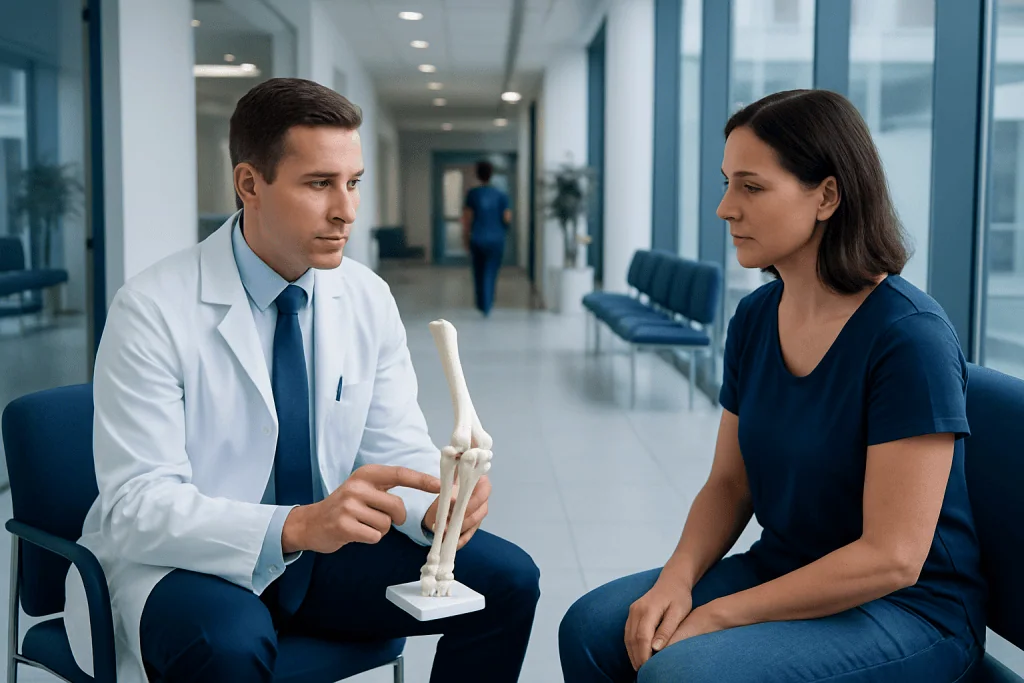
The elbow is formed by the humerus in the upper arm and the radius and ulna in the forearm. It works as a hinge and pivot joint, allowing bending, straightening, and forearm rotation.
Key Takeaways
- The elbow is formed by the humerus in the upper arm and the radius and ulna in the forearm.
- It works as a hinge and pivot joint, allowing bending, straightening, and forearm rotation.
- Cartilage, ligaments, tendons, and muscles help stabilize the joint and support smooth movement.
- Pain, swelling, stiffness, or limited motion may point to injury, overuse, or joint disease.
- Early assessment can help protect elbow function and guide the right treatment.
The elbow is a complex joint made of three bones: the humerus, radius, and ulna. Together with cartilage, ligaments, tendons, and muscles, these structures allow the arm to bend, straighten, and rotate smoothly.
Overview of the Elbow Joint
The elbow is the joint that connects the upper arm to the forearm. Although it is often thought of as a simple hinge, it is actually a carefully coordinated structure made of bones, cartilage, ligaments, tendons, muscles, nerves, and blood vessels. This design allows the arm to perform many daily activities, from lifting and carrying to turning a doorknob or using a keyboard.
Three bones make up the elbow: the humerus, which is the bone of the upper arm, and the radius and ulna, which are the two bones of the forearm. These bones meet in a way that lets the elbow bend and straighten, while also allowing the forearm and hand to rotate. Because of this, the elbow plays an important role in both strength and fine movement.
The elbow is exposed to frequent use in work, sports, and routine tasks. As a result, it can be affected by strains, inflammation, fractures, arthritis, and other conditions. Understanding which bones form the elbow and how the joint works can make it easier to recognize symptoms and know when to seek medical advice.
What Bones Make Up the Elbow?
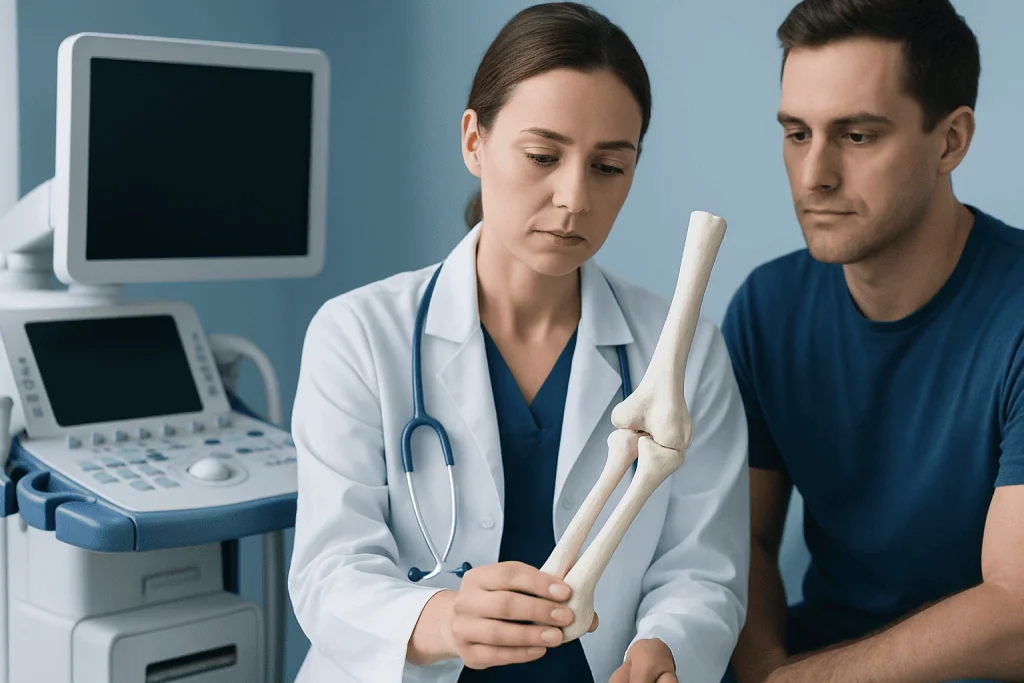
The elbow is formed by three bones. The first is the humerus, the long bone of the upper arm. Its lower end has shaped surfaces that connect with the two forearm bones. The second is the ulna, located on the little-finger side of the forearm. The third is the radius, found on the thumb side of the forearm.
The ulna forms the main hinge part of the elbow with the humerus. A prominent part of the ulna, called the olecranon, creates the pointed tip of the elbow that can be felt under the skin. The radius meets the humerus in a way that helps with both bending and rotating the forearm. This arrangement gives the elbow both stability and flexibility.
The three bony connections within the elbow are often described as one joint complex:
- Humeroulnar joint: mainly responsible for bending and straightening.
- Humeroradial joint: helps with movement and load transfer through the forearm.
- Proximal radioulnar joint: allows the radius to rotate around the ulna.
Together, these parts let the arm perform smooth, controlled motion while remaining strong enough for lifting, pushing, and pulling.
How the Elbow Joint Works
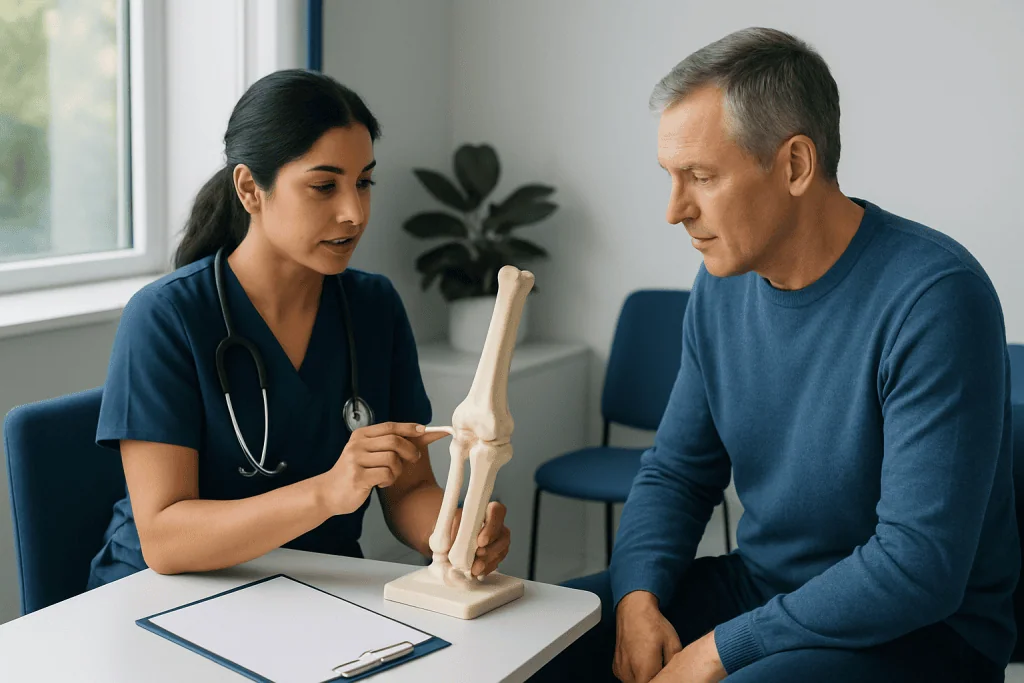
The elbow works through a combination of hinge and pivot movements. The hinge action allows flexion and extension, which means bending and straightening the arm. This is the motion used when bringing a cup to the mouth, reaching for an object, or pushing open a door.
The pivot component allows pronation and supination. These movements turn the palm downward or upward by rotating the radius around the ulna. This is essential for many tasks, such as turning a key, using utensils, writing, or holding tools. Without this rotation, hand positioning would be much more limited.
Movement at the elbow depends on more than bones alone. Smooth motion is supported by cartilage covering the ends of the bones, a joint capsule that surrounds the joint, and synovial fluid that helps reduce friction. Ligaments provide stability, while muscles in the upper arm and forearm generate the force needed to move.
The elbow must balance mobility and stability at the same time. It needs enough freedom for rotation and reach, but also enough support to protect the joint during lifting and impact. This balance explains why even minor injuries or inflammation can sometimes cause noticeable pain or stiffness.
Supporting Structures: Cartilage, Ligaments, Tendons, and Muscles
The ends of the humerus, radius, and ulna are covered with articular cartilage. This smooth tissue helps the bones glide against each other with minimal friction. When cartilage becomes damaged over time or after injury, the joint may become painful, swollen, or stiff, as can happen in arthritis.
Several important ligaments help hold the elbow together. The collateral ligaments on the inner and outer sides of the joint resist side-to-side stress and improve stability. The annular ligament holds the head of the radius in place while still allowing it to rotate. These structures are especially important during throwing, racquet sports, and other repetitive arm movements.
Tendons attach muscles to bone. Around the elbow, the biceps and brachialis help bend the joint, while the triceps straightens it. Forearm muscles also attach near the elbow and control the wrist and fingers. Because many tendons cross this area, overuse can lead to conditions such as tennis elbow, which causes pain around the outer elbow.
Muscles work in coordination to provide both movement and protection. Strong, balanced muscles around the shoulder, arm, and forearm reduce stress on the elbow. This is why rehabilitation exercises often focus not only on the elbow itself but also on nearby muscle groups.
Common Problems That Can Affect the Elbow
Elbow problems can develop suddenly after an injury or gradually through repeated use. Fractures, dislocations, sprains, and tendon injuries may happen after falls, sports accidents, or direct impact. In children, some injuries involve growth areas and should be assessed promptly. In adults, fractures of the radius, ulna, or lower humerus can affect joint alignment and movement.
Overuse conditions are also common. Repetitive gripping, lifting, throwing, or computer work may irritate tendons and soft tissues around the elbow. Tennis elbow affects the outer part of the joint, while golfer’s elbow affects the inner side. Bursitis can cause swelling over the tip of the elbow, and nerve irritation can produce tingling or numbness into the forearm or hand.
Joint disease may also affect the elbow. Osteoarthritis can develop from age-related wear or prior injury, while inflammatory forms of arthritis may cause persistent swelling, pain, and morning stiffness. Sometimes elbow symptoms are linked with nearby problems, including shoulder, neck, or hand disorders.
If symptoms are ongoing or movement is significantly limited, evaluation may include examination by an orthopedic specialist. Depending on the cause, care can range from rest and physiotherapy to orthopedic surgery for more complex injuries or structural damage.
How Elbow Conditions Are Diagnosed
Diagnosis usually begins with a medical history and physical examination. A doctor may ask when symptoms started, whether there was an injury, which movements cause pain, and whether there is numbness, weakness, or swelling. During the exam, the elbow is assessed for tenderness, range of motion, stability, strength, and signs of nerve involvement.
Imaging tests are often helpful. X-rays can show fractures, dislocations, arthritis, or changes in bone alignment. Ultrasound may be used to assess tendons, fluid collections, or some soft tissue injuries. Magnetic resonance imaging is useful when a closer look at cartilage, ligaments, tendons, or occult injury is needed, and may support decisions about MRI evaluation in appropriate cases.
In certain situations, other tests may be considered. These can include blood tests if inflammatory arthritis or infection is suspected, or nerve studies when symptoms suggest nerve compression. The goal is to identify not only where the pain is felt, but also the exact structure involved.
An accurate diagnosis matters because elbow pain can have several causes that feel similar at first. A strain, fracture, tendon problem, arthritis, or nerve issue may all limit movement, but treatment can differ significantly depending on the underlying problem.
Treatment Options and Recovery
Treatment depends on the cause, severity, and duration of symptoms. Many mild elbow problems improve with rest, activity modification, ice, short-term support, and guided exercises. Physiotherapy is often recommended to improve flexibility, strengthen surrounding muscles, and restore normal movement patterns without overloading the joint.
Medicines may be used to reduce pain or inflammation when suitable for the individual. Some conditions may benefit from bracing or splinting, especially during healing or while reducing strain from repetitive activity. For inflammatory problems, treatment may focus on controlling the underlying disease as well as protecting the joint.
More serious injuries, such as unstable fractures, dislocations, major tendon ruptures, or advanced joint damage, may require procedures or surgery. In selected cases, patients may be evaluated for elbow surgery to repair damaged structures, improve stability, or restore function. Recovery time varies widely and depends on the specific diagnosis and the person’s overall health and activity level.
Rehabilitation is an important part of recovery. Returning too quickly to sports, heavy lifting, or repetitive work can delay healing. A structured plan guided by qualified clinicians helps patients regain movement safely while reducing the chance of reinjury.
Prevention, Self-care, and When to See a Doctor
Not every elbow problem can be prevented, but healthy habits can lower the risk. Warming up before sports, using proper technique, avoiding sudden increases in activity, and taking breaks during repetitive work can all help. Strengthening the shoulder, upper arm, and forearm muscles may improve joint support and reduce strain on tendons and ligaments.
At home, early self-care for mild symptoms may include rest, ice, and avoiding movements that worsen pain. Paying attention to posture and workstation setup can also be useful, especially for people who spend long hours typing or using handheld devices. However, self-treatment should not replace medical assessment if pain is severe or persistent.
A doctor should be consulted if there is significant swelling, deformity, inability to move the elbow, weakness, numbness, fever, or pain after a fall or direct injury. Ongoing symptoms that interfere with sleep, work, or normal daily activities also deserve professional evaluation. Early care can prevent stiffness and improve recovery.
For people seeking specialist assessment, Acibadem International’s multidisciplinary teams in JCI-accredited hospitals evaluate and treat elbow conditions for international patients. The most appropriate care plan depends on the exact cause, the structures involved, and the person’s daily needs and goals.
Frequently asked questions
What are the three bones in the elbow?
The elbow is made up of the humerus, radius, and ulna. The humerus is the upper arm bone, while the radius and ulna are the two bones of the forearm. These three bones meet to create the elbow joint complex.
Is the elbow only a hinge joint?
No, the elbow is not only a hinge joint. It acts mainly as a hinge for bending and straightening, but it also includes a pivot function that allows the forearm to rotate. This combination helps the hand turn palm up and palm down.
Why does elbow pain sometimes happen without a major injury?
Elbow pain can develop from overuse, repetitive strain, tendon irritation, inflammation, or arthritis. Everyday activities such as lifting, gripping, typing, or sports movements may gradually stress the tissues around the joint. Symptoms can build slowly even when there has been no obvious accident.
Can a damaged elbow heal without surgery?
Many elbow conditions improve without surgery, especially mild strains, tendon irritation, and some stable injuries. Rest, physiotherapy, bracing, and activity changes are often effective. Surgery is usually considered when there is significant structural damage, instability, or symptoms that do not improve with conservative care.
How do doctors check if an elbow injury is serious?
Doctors look at pain location, swelling, range of motion, strength, and joint stability during an examination. Imaging tests such as X-rays or MRI may be used when a fracture, ligament injury, tendon tear, or cartilage problem is suspected. Serious signs include deformity, severe swelling, loss of motion, numbness, or weakness.
When should someone seek medical help for elbow symptoms?
Medical advice is important if elbow pain is severe, lasts more than a few days, or interferes with daily activities. Urgent evaluation is needed after a fall, if the joint looks deformed, or if there is numbness, marked swelling, or inability to move the arm. Early diagnosis can help prevent complications such as long-term stiffness.
References
- American Academy of Orthopaedic Surgeons
- National Institute of Arthritis and Musculoskeletal and Skin Diseases
- MedlinePlus
- Mayo Clinic
- Cleveland Clinic
This article is for general information only and is not a substitute for professional medical advice. Please consult a qualified doctor about your individual situation.
Joint and spine care in Turkey — expert assessment & treatment
JCI-accredited · board-certified surgeons · reply within 24h
Add us as a Preferred Source to see more of our trusted health content across Google Search, AI Overviews and Discover.