What Causes Hernia? A Doctor-Reviewed Answer

A hernia usually forms when internal pressure acts on a weak spot in muscle or connective tissue. Common contributors include heavy lifting, chronic coughing, constipation, pregnancy, aging, obesity, and prior surgery.
Key Takeaways
- A hernia usually forms when internal pressure acts on a weak spot in muscle or connective tissue.
- Common contributors include heavy lifting, chronic coughing, constipation, pregnancy, aging, obesity, and prior surgery.
- Many hernias cause a soft bulge and mild discomfort, but sudden severe pain or nausea needs urgent evaluation.
- Doctors often diagnose a hernia with a physical exam and may use ultrasound, CT, or MRI when needed.
- Treatment depends on the type, size, symptoms, and risk of complications; some hernias are monitored, while others are repaired.
What causes hernia? In most cases, a hernia develops when pressure inside the abdomen pushes tissue through a naturally weak area or a weakened muscle wall. Many hernias are not immediately dangerous, but some need prompt medical attention, especially if pain, vomiting, or a bulge that cannot be pushed back appears.
Overview: What Causes a Hernia?
A hernia most often happens when an organ or fatty tissue pushes through a weak spot in the muscle or connective tissue that normally holds it in place. In the abdomen, this usually means pressure from inside the belly presses outward through an area that is naturally thinner, stretched over time, or weakened by injury, aging, pregnancy, or previous surgery.
In many people, a hernia is not an emergency. It may first appear as a small bulge that becomes more noticeable when standing, coughing, or straining, and less noticeable when lying down. Even so, a new lump or persistent discomfort should not be ignored, because the type and location of the hernia affect whether it can be safely observed or should be repaired.
The reason this happens is usually not a single event. A person may have a natural weakness in the abdominal wall and then develop symptoms after repeated lifting, chronic coughing, constipation, or weight gain increases pressure in that area. In other words, hernias often result from a combination of weak support tissue and everyday physical strain.
How Hernias Develop in the Body
To understand what causes hernia, it helps to think about two forces working together: weakness and pressure. The weakness may be present from birth, as seen in some groin or belly button hernias, or it may develop later because muscles and connective tissue become less elastic with age. Surgical cuts can also leave a lasting weak area in the abdominal wall.
Pressure inside the abdomen rises during common activities such as coughing, sneezing, laughing, lifting, bending, and having a bowel movement. Usually, the body tolerates this well. But if pressure is frequent or strong enough, and there is already a vulnerable spot, tissue can start to push outward and create a hernia.
Different hernias form in different places. Inguinal hernias appear in the groin and are among the most common, while femoral hernias occur slightly lower in the upper thigh area. Umbilical hernias form near the belly button, hiatal hernias involve the upper stomach moving through the diaphragm, and incisional hernias appear at the site of prior abdominal surgery. A doctor may explain these types in more detail when assessing hernia.
Common Causes and Risk Factors

Several factors can increase the chance that a hernia will develop. Some are mechanical, meaning they raise abdominal pressure, while others affect the strength of muscles and connective tissue. A person may have one risk factor or several at the same time.
- Heavy lifting or repeated physical strain
- Chronic cough, including from smoking or lung disease
- Constipation and frequent straining during bowel movements
- Obesity or rapid weight changes
- Pregnancy
- Aging and natural weakening of tissues
- Previous abdominal surgery
- Family history or congenital weakness in the abdominal wall
- Fluid buildup in the abdomen
Some hernias seem to appear suddenly after lifting or straining, but the weak spot is usually already there. The activity may simply be the moment the bulge becomes visible or symptoms start. This is why two people can do the same task and only one develops a hernia.
Smoking is also relevant because it can contribute in two ways: ongoing coughing raises abdominal pressure, and smoking may affect tissue quality and healing. For incisional hernias, surgical wound healing, infection, and repeated pressure on the scar can all play a role.
Symptoms That May Suggest a Hernia
The most familiar sign of a hernia is a bulge or swelling that may come and go. It can become more noticeable when standing, lifting, coughing, or straining, and may flatten when lying down. Some people feel only pressure or heaviness, while others notice tenderness, burning, or aching in the area.
Symptoms vary by type. A groin hernia may cause discomfort in the lower abdomen or groin, especially after activity. An umbilical hernia may look like a soft swelling around the belly button. A hiatal hernia does not usually create an external bulge; instead, it may be linked with heartburn, regurgitation, chest discomfort, or trouble swallowing, sometimes overlapping with gastroesophageal reflux disease.
Not every abdominal or groin lump is a hernia, and not every hernia causes obvious pain. Muscle strain, enlarged lymph nodes, cysts, or other conditions can seem similar. That is one reason medical assessment matters if symptoms persist, change, or interfere with daily life.
When to Seek Medical Care
Medical review is important for any new or recurring bulge in the abdomen, groin, or around a surgical scar, even if it is not very painful. A doctor can confirm whether it is truly a hernia, identify the type, and estimate the risk of complications. This helps guide whether watchful waiting, lifestyle changes, or repair is the safest next step.
Urgent care is needed if the bulge becomes suddenly painful, firm, red, or cannot be gently pushed back in, or if symptoms are accompanied by nausea, vomiting, fever, severe belly pain, or abdominal swelling. These warning signs can suggest that tissue is trapped or that blood flow is affected, which needs prompt evaluation.
People should also seek care sooner if symptoms are worsening, daily activities are limited, or there is a history of recent surgery, pregnancy, or significant straining. Early assessment can often make treatment planning clearer and more straightforward.
How Doctors Diagnose a Hernia
Doctors often diagnose a hernia with a careful history and physical examination. They may ask when the bulge appears, whether it changes with coughing or lifting, whether it can be pushed back in, and what symptoms come with it. During the exam, the doctor may ask the person to stand, cough, or strain gently to make the hernia more visible.
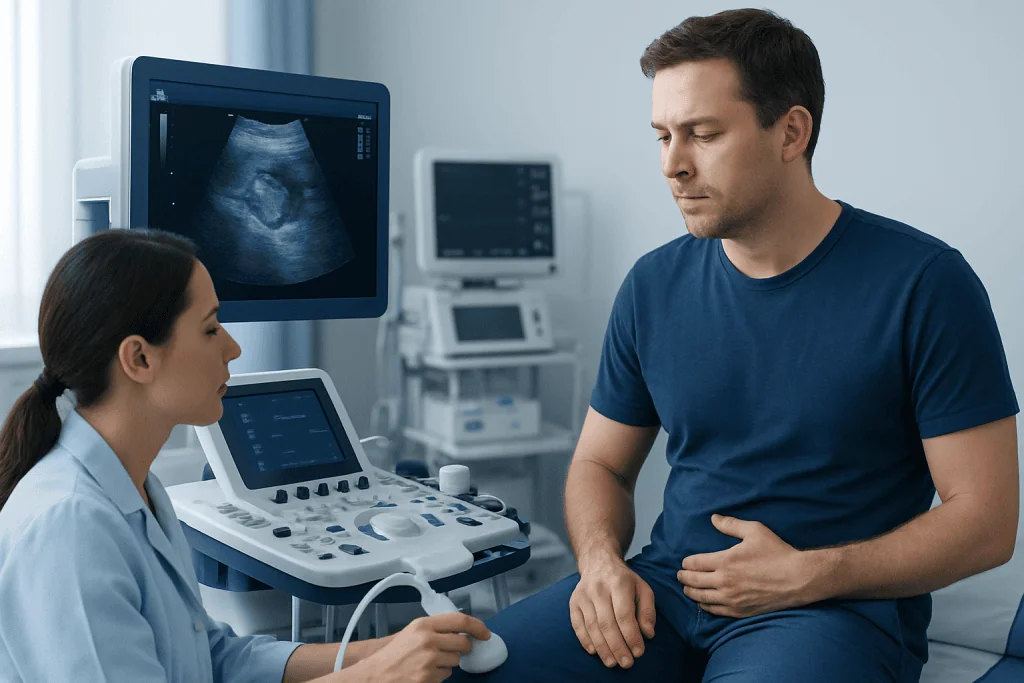
Imaging is not always necessary, but it can be very helpful when the diagnosis is uncertain, the hernia is small or not easily felt, or surgery is being planned. Depending on the location and symptoms, the doctor may use ultrasound, CT, or MRI. In suspected hiatal hernia, endoscopy or contrast imaging may also be considered to look at the upper digestive tract.
The goal of diagnosis is not only to name the condition but also to judge its size, contents, and risk. This helps determine whether symptoms may improve with monitoring and self-care or whether referral for hernia surgery is more appropriate.
Treatment Options and Self-Care
Treatment depends on the type of hernia, the severity of symptoms, the person’s general health, and the chance of complications. Some small hernias that cause minimal symptoms can be monitored over time, especially when a doctor has confirmed that urgent repair is not needed. Monitoring does not mean ignoring symptoms; it means regular review and attention to any change.
When a hernia causes pain, enlarges, interferes with daily activities, or carries a higher risk of becoming trapped, repair may be recommended. Hernia repair can be performed using open or minimally invasive techniques, depending on the case. Some patients may be candidates for laparoscopic surgery, while others need a different approach based on anatomy, previous operations, or the type of defect.
Self-care focuses on reducing strain and managing symptoms. Helpful measures may include treating constipation, avoiding unnecessary heavy lifting, using proper lifting technique, managing chronic cough, reaching a healthier weight if advised, and stopping smoking. For people with reflux symptoms related to a hiatal hernia, doctors may also suggest measures commonly used in gastroenterology care, such as adjusting meals and body position.
Near the end of the care pathway, some people choose assessment at specialized centers. Acibadem International’s multidisciplinary specialists and JCI-accredited hospitals diagnose and treat hernia conditions for international patients when further evaluation or treatment planning is needed.
Frequently asked questions
Can a hernia be caused by heavy lifting alone?
Heavy lifting can trigger symptoms or make a hernia more noticeable, but it is usually not the only cause. Most hernias happen when lifting or strain acts on an area that is already weak or vulnerable.
Does a hernia always cause pain?
No. Some hernias cause a visible bulge with little or no pain, while others create pressure, aching, or burning discomfort. Pain level does not always reflect the size of the hernia or the need for medical review.
Can a hernia go away without treatment?
A true hernia usually does not heal on its own because the weakness in the tissue remains. Symptoms may stay mild for a time, but the bulge can persist or gradually enlarge.
Are hernias dangerous?
Many hernias are not immediately dangerous and can be evaluated in a routine medical visit. However, sudden severe pain, vomiting, redness, or a bulge that cannot be pushed back may signal a complication and needs urgent care.
Who is more likely to get a hernia?
Risk is higher in people who lift frequently, have chronic cough or constipation, are pregnant, have obesity, or have had abdominal surgery. Age, family history, and naturally weaker connective tissue can also increase the chance.
How do doctors confirm what type of hernia someone has?
Doctors usually start with symptoms and a physical exam, often checking the area while the person stands or coughs. If the findings are unclear or surgery is being considered, imaging such as ultrasound or CT may be used.
References
- National Institute of Diabetes and Digestive and Kidney Diseases
- American College of Surgeons
- Mayo Clinic
- National Health Service
- Society of American Gastrointestinal and Endoscopic Surgeons
This article is for general information only and is not a substitute for professional medical advice. Please consult a qualified doctor about your individual situation.
Explore treatments in Turkey — costs, top hospitals & a free quote
JCI-accredited · board-certified surgeons · reply within 24h
Add us as a Preferred Source to see more of our trusted health content across Google Search, AI Overviews and Discover.