What Causes Pancreatic Cancer? Smoking, Genetics, and Other Risks

Smoking is one of the strongest modifiable risk factors for pancreatic cancer. Family history and inherited gene mutations can increase pancreatic cancer risk.
Key Takeaways
- Smoking is one of the strongest modifiable risk factors for pancreatic cancer.
- Family history and inherited gene mutations can increase pancreatic cancer risk.
- Chronic pancreatitis, obesity, diabetes, and older age are also linked to higher risk.
- Having a risk factor does not mean a person will definitely develop pancreatic cancer.
- There is no guaranteed way to prevent pancreatic cancer, but healthy lifestyle steps may help lower risk.
- People with strong family history or concerning symptoms should speak with a qualified doctor.
Pancreatic cancer develops when cells in the pancreas grow abnormally, and in many cases several risk factors may play a role. Smoking, inherited genetic changes, chronic inflammation, metabolic conditions, and age are among the most important known contributors.
Overview
Pancreatic cancer is a disease in which abnormal cells form in the tissues of the pancreas. The pancreas is an organ located deep in the abdomen, behind the stomach. It helps with digestion by making enzymes and supports blood sugar control by producing hormones such as insulin.
When people ask about pancreatic cancer causes, the answer is usually not a single factor. In most cases, the disease develops through a combination of influences over time, including age, lifestyle, chronic inflammation, and inherited genetic changes. Sometimes no clear cause can be identified, even after careful medical evaluation.
Understanding risk factors is important because it can help people make informed health choices and know when to seek medical advice. Risk factors do not guarantee that pancreatic cancer will occur, but they can raise the chance that abnormal changes may develop in pancreatic cells.
Symptoms and Why Early Disease Can Be Hard to Notice

Pancreatic cancer often causes few or no symptoms in its earliest stages. Because the pancreas sits deep inside the body, a small tumor may not be felt or seen, and symptoms may appear only when the cancer becomes larger or affects nearby structures.
Possible symptoms can include pain in the upper abdomen or back, unexplained weight loss, loss of appetite, jaundice (yellowing of the skin or eyes), dark urine, pale stools, nausea, fatigue, or new-onset diabetes. Some people may also notice itching or digestive discomfort.
These symptoms can happen for many reasons besides cancer, including gallstones, hepatitis, ulcers, or pancreatitis. Still, persistent or unexplained symptoms should not be ignored. A doctor can assess whether testing is needed and whether another digestive or pancreatic condition may be involved.
- Early symptoms may be mild or vague.
- Jaundice can occur if a tumor blocks the bile duct.
- Back pain or abdominal pain may develop as the disease progresses.
- New diabetes in an older adult can sometimes prompt further evaluation.
Smoking and Tobacco Use
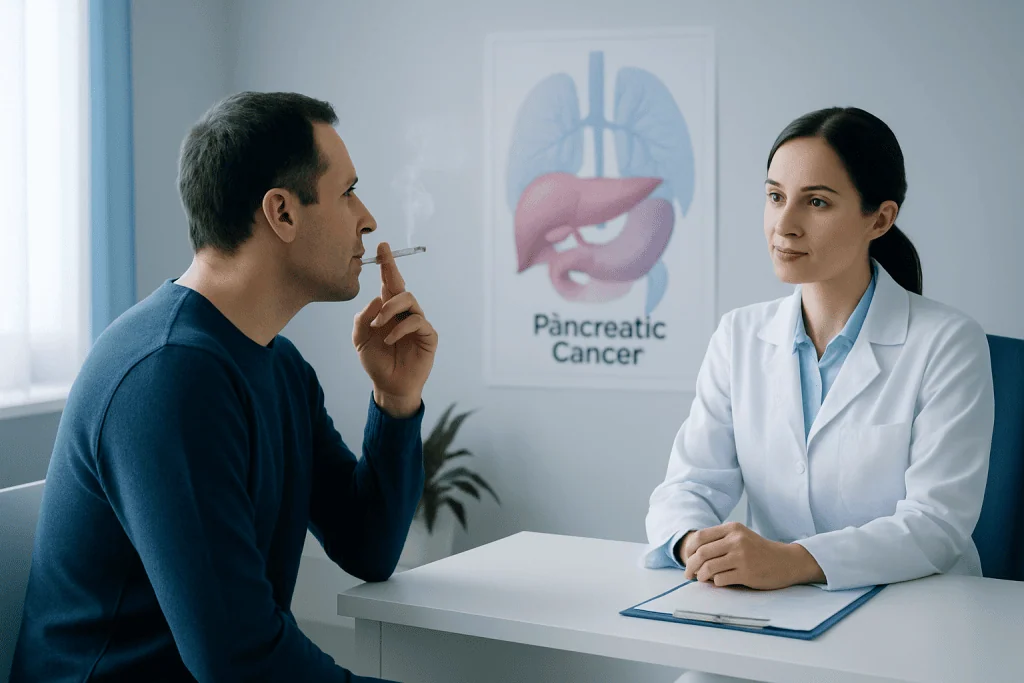
Smoking is one of the most clearly established pancreatic cancer risk factors. Tobacco smoke contains many harmful chemicals that can damage DNA and promote changes in cells throughout the body, including the pancreas. This repeated exposure can contribute to the development of cancer over time.
People who smoke cigarettes have a higher risk of pancreatic cancer than those who do not smoke. The risk may increase with long-term or heavy tobacco use. Other forms of tobacco may also be harmful, and exposure to secondhand smoke is not considered healthy for pancreatic or overall health.
The encouraging news is that quitting smoking can help lower risk over time. While the risk may not return to baseline immediately, stopping tobacco use benefits many organs and can also improve general health before, during, or after treatment for pancreatic cancer. Support from a doctor, smoking cessation programs, counseling, or approved medications can make quitting more achievable.
Genetics, Family History, and Inherited Conditions
Genetics can play an important role in some cases of pancreatic cancer. A person may have a higher risk if close family members, such as a parent, sibling, or child, have had pancreatic cancer. Family history can suggest a shared inherited mutation, shared environmental exposures, or a combination of both.
Several inherited syndromes and gene mutations are associated with increased pancreatic cancer risk. These may include changes in genes such as BRCA1, BRCA2, PALB2, CDKN2A, STK11, ATM, and genes linked to Lynch syndrome. Not everyone with one of these mutations will develop pancreatic cancer, but the risk may be higher than average.
Genetic counseling and testing may be considered for people with a strong family history of pancreatic cancer or a known cancer syndrome in the family. A genetics professional can help explain what testing may show, what it cannot show, and whether other relatives might also benefit from evaluation. In selected high-risk individuals, doctors may recommend surveillance with imaging or endoscopic assessment.
Other Risk Factors: Age, Diabetes, Obesity, and Chronic Pancreatitis
Age is an important pancreatic cancer risk factor. The disease is more common in older adults, and risk rises with advancing age. This may reflect the gradual buildup of genetic damage in cells over many years.
Metabolic health also appears to matter. Obesity is linked with a higher risk of pancreatic cancer, and long-standing type 2 diabetes has been associated with the disease as well. In some people, diabetes may be a risk factor; in others, new-onset diabetes may be a possible early sign that leads doctors to investigate the pancreas more closely.
Chronic pancreatitis, which is long-term inflammation of the pancreas, can increase pancreatic cancer risk. Repeated inflammation may damage tissue and contribute to abnormal cellular changes. Heavy alcohol use can contribute to pancreatitis in some individuals, although alcohol is more directly connected to pancreatitis than to pancreatic cancer itself. Certain occupational exposures and diets associated with poor overall metabolic health may also play a role, but these links are generally less strong than smoking, family history, and chronic pancreatic disease.
- Older age increases risk.
- Obesity and inactivity may contribute indirectly through metabolic effects.
- Long-standing diabetes is associated with higher risk.
- Chronic pancreatitis is an important risk factor, especially when persistent.
How Doctors Evaluate Risk and Make a Diagnosis
Doctors diagnose pancreatic cancer by combining a person’s symptoms, medical history, family history, physical examination, lab tests, and imaging results. If pancreatic cancer is suspected, tests may include blood work, abdominal ultrasound, CT scan, MRI, or endoscopic ultrasound. These help show whether there is a mass in the pancreas and whether nearby structures are involved.
In many cases, a biopsy is needed to confirm the diagnosis. During a biopsy, a small tissue sample is removed and examined under a microscope. This is often done with endoscopic ultrasound guidance. Doctors may also use specialized imaging such as PET-CT scanning in selected situations to assess the extent of disease.
Risk evaluation may include questions about smoking, weight changes, diabetes, pancreatitis, and family history of pancreatic or related cancers. Some patients may also benefit from genetic testing, especially if the cancer appears at a younger age or there are multiple cancer cases in the family. If cancer is confirmed, staging helps guide treatment planning and may involve collaboration among specialists in gastroenterology, oncology, surgery, radiology, and pathology.
Treatment Options and Why Cause Still Matters After Diagnosis
Treatment depends on the type of pancreatic cancer, its stage, the person’s overall health, and whether the tumor can be removed surgically. Main treatment options may include surgery, chemotherapy, radiation therapy, targeted therapy, or supportive care to manage symptoms and maintain quality of life. Some people receive more than one treatment approach.
Surgery may be possible when the cancer is localized and can be removed safely. In other cases, doctors may recommend medical oncology care such as chemotherapy, or radiation therapy to shrink the tumor, control symptoms, or reduce the risk of recurrence. Treatment plans are usually tailored by a multidisciplinary team.
Understanding the cause or risk background can remain important even after diagnosis. For example, inherited mutations may influence treatment decisions, eligibility for certain targeted therapies, and whether relatives should consider genetic counseling. Near the end of the care pathway, some international patients may seek evaluation at centers such as Acibadem International, where multidisciplinary specialists in JCI-accredited hospitals diagnose and treat pancreatic conditions and cancers.
Prevention, Self-care, and When to See a Doctor
There is no guaranteed way to prevent pancreatic cancer, but some practical steps may help reduce risk. Avoiding tobacco is one of the most important actions. Maintaining a healthy body weight, staying physically active, and managing conditions such as diabetes may also support pancreatic and overall health.
People with chronic pancreatitis or a strong family history should keep regular medical follow-up. A doctor may recommend individualized screening or monitoring for some high-risk people, especially those with inherited cancer syndromes. Healthy eating patterns that emphasize vegetables, fruits, whole grains, and balanced nutrition can also support general well-being.
A person should see a doctor if they have persistent abdominal or back pain, unexplained weight loss, jaundice, pale stools, dark urine, ongoing loss of appetite, or new diabetes without a clear reason. Prompt evaluation does not always mean cancer is present, but it can help identify the cause and allow timely care. If a specialist assessment is needed, doctors may use advanced imaging or procedures such as endoscopic ultrasound to examine the pancreas more closely.
Frequently asked questions
What is the main cause of pancreatic cancer?
There is usually no single main cause of pancreatic cancer. Instead, it often develops through a combination of risk factors such as smoking, age, chronic pancreatitis, obesity, diabetes, and inherited genetic changes. In some people, no clear cause is found.
Does smoking really increase the risk of pancreatic cancer?
Yes, smoking is one of the strongest known modifiable risk factors for pancreatic cancer. Tobacco exposure can damage DNA and promote abnormal cell growth over time. Quitting smoking can help reduce risk and improve overall health.
Can pancreatic cancer run in families?
Yes, pancreatic cancer can run in families, especially when several close relatives have had it or when there is a known inherited cancer syndrome. Certain gene mutations, including BRCA-related changes, may raise risk. Genetic counseling may be helpful for people with strong family history.
Does diabetes cause pancreatic cancer?
Diabetes does not directly mean a person will develop pancreatic cancer, but long-standing type 2 diabetes is associated with increased risk. In some cases, new-onset diabetes can also be a clue that leads doctors to examine the pancreas more carefully. A doctor can help decide whether further evaluation is needed.
Can pancreatic cancer be prevented?
Pancreatic cancer cannot always be prevented, especially when inherited factors are involved. However, avoiding tobacco, maintaining a healthy weight, staying active, and managing chronic health conditions may help lower risk. Regular medical care is especially important for people with family history or chronic pancreatitis.
Who should talk to a doctor about pancreatic cancer risk?
Anyone with a strong family history of pancreatic cancer, known inherited gene mutations, chronic pancreatitis, or concerning symptoms should speak with a doctor. Persistent jaundice, unexplained weight loss, abdominal pain, or new diabetes in later life deserve medical attention. Early evaluation can help identify the cause and guide next steps.
References
- World Health Organization
- National Cancer Institute
- American Cancer Society
- National Comprehensive Cancer Network
- Centers for Disease Control and Prevention
This article is for general information only and is not a substitute for professional medical advice. Please consult a qualified doctor about your individual situation.
Pancreatic Cancer in Turkey — costs, top hospitals & a free quote
JCI-accredited · board-certified surgeons · reply within 24h
Add us as a Preferred Source to see more of our trusted health content across Google Search, AI Overviews and Discover.