What Does a Contraction Feel Like? Here Is What the Evidence Says

Contractions are commonly described as tightening, cramping, pressure, or back pain that comes and goes in waves. Braxton Hicks contractions are usually irregular, milder, and often improve with rest or hydration.
Key Takeaways
- Contractions are commonly described as tightening, cramping, pressure, or back pain that comes and goes in waves.
- Braxton Hicks contractions are usually irregular, milder, and often improve with rest or hydration.
- True labor contractions tend to become more regular, stronger, longer, and closer together over time.
- A doctor may assess timing, symptoms, cervical changes, and the baby's well-being to determine whether labor has started.
- Immediate medical advice is important for heavy bleeding, fluid leakage, severe pain, fever, reduced fetal movement, or preterm contractions.
What does a contraction feel like? For many pregnant people, it feels like the uterus tightening in waves, often with lower abdominal cramping, back pressure, or a firm belly that eases between episodes. In many cases, irregular tightening is harmless, but regular painful contractions, fluid leakage, bleeding, or reduced fetal movement should be assessed by a clinician.
Overview: what contractions usually feel like
For many people, contractions feel like the abdomen tightening and then relaxing in a repeating pattern. The sensation may begin as menstrual-like cramps, low back discomfort, pelvic pressure, or a firm, hard feeling across the uterus. Some describe it as a wave: it builds, reaches a peak, and then fades.
Just as importantly, many contractions during pregnancy are not a sign of immediate danger. Occasional tightening, especially later in pregnancy, can happen with dehydration, activity, a full bladder, or normal uterine practice contractions called Braxton Hicks. These are often uncomfortable but are usually irregular and tend to settle with rest, fluids, or a change in position.
What makes the experience confusing is that contractions do not feel exactly the same for everyone. One person may mainly notice belly tightening, while another feels more pressure in the pelvis or aching in the lower back. In early labor, the sensation can be subtle. As labor progresses, the pattern often becomes more noticeable, more intense, and harder to ignore.
Because there is a wide range of normal, the most useful clues are not only how a contraction feels, but also whether it becomes regular, stronger, longer, and closer together. These changes help distinguish harmless tightening from the start of true labor.
Common sensations people describe
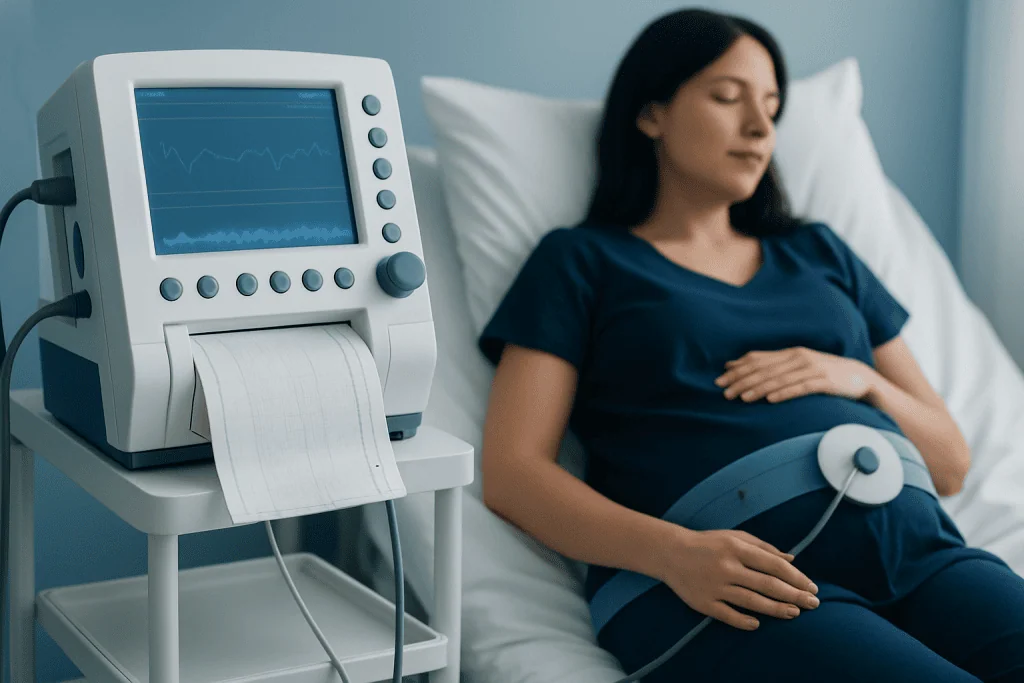
When clinicians ask what a contraction feels like, common descriptions include cramping, tightening, pressure, aching, and a squeezing sensation. Many compare early contractions to period cramps that come and go. Others say the belly becomes very firm for a short time and then soft again.
The discomfort may be felt in different places:
- Lower abdomen or across the whole belly
- Lower back, sometimes wrapping toward the front
- Pelvis, rectum, or upper thighs as pressure increases
- The uterus itself as a hard, tightened band
Contractions also have a timing pattern. They usually start, intensify, peak, and then ease. Between contractions, there is typically a break when the uterus relaxes. This wave-like pattern helps separate contractions from constant pain, which should be medically assessed.
As labor advances, contractions often become more intense and may demand full attention. People may find it harder to talk through them, and the pressure can feel deeper and more persistent. Even so, intensity alone does not always tell the full story; the pattern over time is often the clearest sign.
Braxton Hicks vs. true labor contractions

Braxton Hicks contractions are common in pregnancy and are sometimes called practice contractions. They are usually irregular, unpredictable, and do not steadily get closer together. They may feel like a brief tightening or mild cramp, often more annoying than painful.
True labor contractions are more likely to follow a pattern. They gradually become stronger, longer, and more frequent, and they tend to continue even with rest, hydration, or a change in position. They may also be accompanied by other signs of labor, such as cervical change, pelvic pressure, or rupture of membranes.
A simple way to think about the difference is that Braxton Hicks often come and go without progress, while true labor usually shows progression. For example, practice contractions may stop after drinking water or lying down, but labor contractions typically persist and become more organized over time.
If there is uncertainty, especially before 37 weeks of pregnancy, medical advice is important. Preterm contractions can sometimes feel similar to ordinary tightening at first, so it is safer to check. Conditions such as premature birth may need prompt evaluation when contractions are regular or accompanied by pressure, fluid leakage, or bleeding.
What can trigger contractions or tightening
Not all uterine tightening means labor has begun. Several everyday factors can make the uterus temporarily irritable. Dehydration is a common one, because the uterus may contract more when fluid intake is low. Physical activity, sexual activity, a full bladder, and stress can also bring on short-lived tightening.
Later in pregnancy, the uterus is more responsive, so even normal movement may be noticed more clearly. Some people also become more aware of contractions at night, when they are quiet and paying closer attention to their body. These episodes can be normal if they remain irregular and settle down.
However, contractions may also occur with medical issues that need review. Infection, placental problems, rupture of membranes, and true preterm labor are examples. In some cases, abdominal pain can be confused with contractions when the real cause is another condition, such as digestive upset, urinary symptoms, or less commonly ectopic pregnancy early in gestation.
Because the causes vary, the safest approach is to look at the whole picture: gestational age, timing pattern, associated symptoms, and fetal movement. A clinician can help determine whether the contractions are a harmless response to normal triggers or a sign that labor or another problem is developing.
When to seek medical care
Many episodes of tightening are harmless, but some symptoms should prompt medical review. It is important to contact a maternity clinician or go to urgent care if contractions become regular and increasingly painful, especially if they occur before 37 weeks. Regular contractions with low back pressure, pelvic pressure, or a feeling that something is changing may suggest labor.
Medical attention is also needed for fluid leaking from the vagina, vaginal bleeding, fever, severe or constant abdominal pain, or reduced fetal movement. These symptoms are not typical of simple practice contractions and should not be ignored. If the baby seems to be moving less than usual, assessment should be arranged promptly.
Doctors also advise urgent evaluation for severe headache, visual changes, sudden swelling, chest pain, or shortness of breath during pregnancy. While these symptoms are not contractions themselves, they can indicate pregnancy complications that need immediate care. If there is any concern about a true emergency, it is safest to seek urgent help without delay.
Near the end of pregnancy, some people are advised to time contractions and call when they are coming at regular intervals. The exact guidance can differ based on whether it is a first pregnancy, how far along the pregnancy is, and the person’s medical history. If there has been a prior cesarean birth or other high-risk factor, the care team may recommend earlier assessment.
How doctors evaluate contractions
When someone seeks care for contractions, the evaluation usually starts with clear questions: how far along the pregnancy is, when the contractions began, how often they occur, whether they are getting stronger, and whether there is bleeding, fluid leakage, or reduced fetal movement. This history helps clinicians judge whether the pattern fits practice contractions, latent labor, active labor, or possible preterm labor.
A physical examination may include checking vital signs, feeling the abdomen, and monitoring the baby’s heart rate and the frequency of uterine activity. Depending on the situation, a pelvic examination may be done to see whether the cervix is thinning or opening. Cervical change is one of the most important differences between true labor and contractions that are uncomfortable but not progressing.
Additional tests may be used when needed. Ultrasound can help assess the baby’s position, placental location, and amniotic fluid. If membranes may have ruptured, the care team may examine fluid from the vagina. If there are signs of infection or other concerns, laboratory tests may also be recommended. In some cases, assessment of the pregnancy may involve ultrasound imaging or closer fetal monitoring.
The goal of evaluation is not only to confirm whether labor has started but also to make sure both parent and baby are well. This stepwise approach is reassuring because it relies on pattern, examination findings, and fetal assessment rather than a single symptom alone.
What happens if labor is confirmed
If the contractions are part of true labor, treatment depends on the stage of labor, the gestational age, the baby’s well-being, and the person’s medical needs and birth plan. In early labor, support may focus on comfort, hydration, movement, breathing techniques, and observation. In active labor, monitoring becomes more structured as contractions intensify and cervical dilation progresses.
Pain relief options vary and may include non-drug techniques or medical methods, depending on individual preference and clinical circumstances. If labor is progressing normally, the main aim is safe support through birth. If the care team identifies a complication, the plan may change to protect the parent and baby.
For example, some pregnancies may require normal delivery care with routine monitoring, while others may need interventions for slow progress, fetal distress, or abnormal presentation. In selected situations, delivery by cesarean section may be recommended. The right approach depends on real-time clinical findings.
Near the end of the care pathway, some patients seek support at centers experienced in complex obstetric assessment. Acibadem International’s multidisciplinary specialists and JCI-accredited hospitals diagnose and treat pregnancy-related conditions for international patients when further evaluation or delivery planning is needed.
Self-care, tracking, and practical tips
When contractions or tightening are mild and there are no warning signs, practical self-care can help. Drinking water, emptying the bladder, lying on the left side, or changing activity level may reduce Braxton Hicks contractions. Gentle breathing and a calm environment can also make the sensations easier to manage.
Timing contractions can provide useful information. It helps to note when each contraction starts, how long it lasts, and how much time passes before the next one begins. A pattern that becomes regular and closer together is more suggestive of labor than random tightening throughout the day.
It is also helpful to pay attention to associated symptoms. Questions such as “Is the pain coming in waves?”, “Can I still talk through it?”, “Is there back pressure?”, and “Is the baby moving normally?” may help organize what is happening before calling a clinician. Even when the sensations turn out to be harmless, this information supports better triage and advice.
Most importantly, no one needs to decide alone whether a contraction is normal. If there is uncertainty, especially in a first pregnancy or before full term, contacting a maternity care professional is appropriate. Reassurance and timely assessment are both part of safe pregnancy care.
Frequently asked questions
Do contractions always hurt?
No. Some contractions, especially Braxton Hicks or very early labor contractions, may feel more like tightening or pressure than pain. As labor progresses, they often become more intense and harder to ignore.
Can contractions feel like period cramps?
Yes. Many people describe early contractions as menstrual-like cramps in the lower abdomen, lower back, or both. The main difference is that contractions usually come in waves and may develop a more regular pattern over time.
How can someone tell the difference between Braxton Hicks and real labor?
Braxton Hicks contractions are usually irregular and may improve with rest, hydration, or a change in position. True labor contractions typically become stronger, longer, and closer together, and they are more likely to continue despite self-care measures.
Is back pain a normal way to feel contractions?
Yes. Some people feel contractions mainly in the lower back, sometimes with pain wrapping toward the abdomen. If the pain is severe, constant, or paired with bleeding or fluid leakage, a clinician should assess it.
When should contractions be checked before 37 weeks?
Any regular contractions before 37 weeks should be discussed with a healthcare professional. Urgent review is especially important if they are becoming more frequent or are accompanied by pelvic pressure, vaginal bleeding, fluid leakage, or reduced fetal movement.
Do all contractions mean labor is starting?
No. Pregnancy often involves harmless uterine tightening, especially later on. Labor is more likely when contractions show a clear pattern and are associated with cervical change or other signs such as ruptured membranes.
References
- American College of Obstetricians and Gynecologists
- National Institute for Health and Care Excellence
- World Health Organization
- Royal College of Obstetricians and Gynaecologists
This article is for general information only and is not a substitute for professional medical advice. Please consult a qualified doctor about your individual situation.
Explore treatments in Turkey — costs, top hospitals & a free quote
JCI-accredited · board-certified surgeons · reply within 24h
Add us as a Preferred Source to see more of our trusted health content across Google Search, AI Overviews and Discover.