

What Does a Neuropsychologist Do? Roles, Referrals, and When to See One

Neuropsychologists assess memory, attention, language, problem-solving, mood, and behavior in relation to brain function. They help diagnose and monitor conditions such as dementia, stroke, traumatic brain injury, epilepsy, and developmental or learning difficulties.
Key Takeaways
- Neuropsychologists assess memory, attention, language, problem-solving, mood, and behavior in relation to brain function.
- They help diagnose and monitor conditions such as dementia, stroke, traumatic brain injury, epilepsy, and developmental or learning difficulties.
- A neuropsychological assessment does not usually involve surgery or scans, but it often works alongside neurology, psychiatry, and imaging results.
- Referral may be helpful when there are unexplained changes in cognition, school or work performance, behavior, or daily independence.
- Assessment results can support treatment planning, rehabilitation, school accommodations, and family education.
A neuropsychologist is a specialist who evaluates how the brain affects thinking, behavior, emotions, and everyday functioning. They use interviews and cognitive testing to help clarify diagnosis, guide treatment, and support patients and families.
Overview: what a neuropsychologist does
A neuropsychologist is a clinical specialist who studies the relationship between the brain and behavior. In practical terms, this means evaluating how brain function affects memory, attention, language, learning, planning, emotions, and day-to-day abilities. Their work helps explain why a person may be having difficulties and what kind of support or treatment may be most useful.
Neuropsychologists commonly work with children, adults, and older adults. They may see people with known neurological conditions, such as stroke, epilepsy, traumatic brain injury, brain tumors, Parkinson’s disease, or dementia. They also assess people whose symptoms are less clear, for example when there are concerns about forgetfulness, concentration, school performance, decision-making, or changes in personality or mood.
Unlike a neurologist, who diagnoses and treats disorders of the nervous system and may prescribe medication, a neuropsychologist focuses on detailed assessment of thinking and behavior. Unlike a psychiatrist, they do not usually prescribe medication. Instead, they use structured interviews, standardized tests, and clinical interpretation to understand strengths and difficulties and to guide the next steps in care.
Common roles and responsibilities
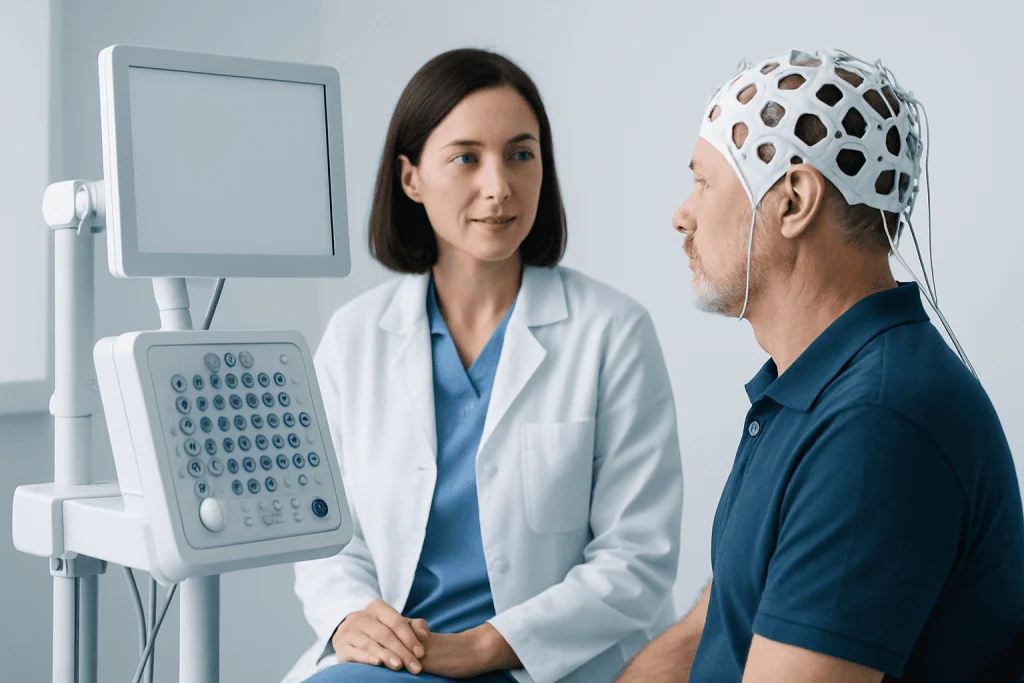
One of the main roles of a neuropsychologist is to perform a neuropsychological assessment. This is a detailed evaluation designed to measure cognitive abilities such as attention, memory, language, visual-spatial skills, processing speed, reasoning, and executive functions such as planning and impulse control. The assessment can also explore emotional well-being and behavior, because mood, stress, sleep, and anxiety can affect cognitive performance.
Neuropsychologists help answer important clinical questions. For example, are memory changes part of normal aging, depression, or a neurodegenerative condition? Is a child’s academic struggle related to attention, language, learning differences, or emotional factors? Has a concussion or stroke affected a person’s ability to return to school, driving, or work safely? Their findings can make the picture clearer for both patients and the wider medical team.
They also contribute to treatment planning and rehabilitation. Assessment results may guide cognitive rehabilitation, psychotherapy, school support, occupational therapy, speech and language therapy, or further medical evaluation. In some cases, the neuropsychologist repeats testing over time to monitor recovery or progression and to help families prepare for future care needs.
- Clarifying diagnosis
- Establishing a cognitive baseline
- Monitoring changes over time
- Supporting return-to-work or return-to-school planning
- Advising on daily coping strategies and family education
Who may be referred to a neuropsychologist

People are referred for many different reasons, and referral does not automatically mean a serious brain disorder is present. Sometimes the goal is simply to understand symptoms better. A person may be referred after a head injury, seizure, stroke, infection affecting the nervous system, or brain surgery. Others are referred because of ongoing concerns about memory, concentration, planning, communication, or behavior.
Children and adolescents may be referred when there are concerns about learning, attention, developmental progress, social communication, or changes after illness or injury. Adults may be referred if work performance has changed, if they are struggling after cancer treatment, or if they have trouble with multitasking or decision-making. Older adults are often referred to help distinguish mild cognitive changes from conditions such as Alzheimer’s disease or other causes of cognitive decline.
Referral can also be helpful in complex cases where several factors may be affecting cognition at once. For example, pain, poor sleep, depression, anxiety, medication side effects, and neurological disease can overlap. A neuropsychological assessment can help separate these influences and identify the most likely contributors to a person’s symptoms.
Signs it may be time to see a neuropsychologist
It may be time to see a neuropsychologist when thinking or behavior changes are affecting school, work, relationships, or independence. Examples include new or worsening forgetfulness, getting lost more easily, trouble following conversations, difficulty organizing tasks, slowed thinking, or reduced judgment. In children, signs may include a clear drop in learning, attention problems, or social and behavioral changes.
Referral is also reasonable when symptoms continue after a known neurological event. Someone recovering from stroke or a concussion may appear physically improved but still have less obvious cognitive difficulties. In these situations, testing can identify hidden challenges and support a safer, more realistic recovery plan.
Behavioral and emotional changes can also be important clues. Increased irritability, impulsivity, apathy, reduced insight, or sudden changes in personality may reflect stress or psychiatric illness, but they can also be linked to brain dysfunction. When the cause is uncertain, a neuropsychologist can provide a structured evaluation that helps doctors and families understand what is happening more clearly.
What happens during a neuropsychological assessment
A neuropsychological assessment usually begins with a detailed clinical interview. The neuropsychologist asks about current symptoms, medical history, medications, education, work, emotional health, sleep, and day-to-day functioning. Input from a family member or caregiver may also be useful, especially if there are concerns about memory, insight, or behavioral change.
The testing part of the assessment involves standardized tasks designed to measure different aspects of cognition. These may include remembering words or stories, solving problems, naming pictures, copying shapes, focusing attention, switching between tasks, or responding to questions under time limits. The tests are not school exams to pass or fail; they are tools that help map a person’s cognitive profile and compare performance with what is expected for age and education.
After testing, the neuropsychologist interprets the results in the context of the person’s health and life circumstances. The final report often explains strengths, weaknesses, possible diagnoses, and practical recommendations. Depending on the findings, the person may be referred for neurology care, rehabilitation, mental health support, or additional investigations such as MRI imaging when clinically appropriate.
How neuropsychology helps with diagnosis and treatment planning
Neuropsychological findings are often most valuable when combined with other parts of the medical picture. Brain imaging, neurological examination, blood tests, and psychiatric assessment each provide different information. Cognitive testing adds another layer by showing how symptoms are affecting real-world thinking and functioning. This can be especially helpful when scans look normal but a person is still struggling, or when imaging findings do not fully explain the severity of day-to-day difficulties.
Assessment can support diagnosis in many conditions, including dementia, attention-deficit/hyperactivity disorder, learning disorders, epilepsy, multiple sclerosis, brain tumors, and the effects of traumatic brain injury. It may also help distinguish between neurological and non-neurological causes of symptoms, although there is often overlap. The goal is not to label people unnecessarily, but to give them a clearer understanding of their challenges and strengths.
Treatment planning becomes more specific when the cognitive profile is understood. Some people benefit from cognitive rehabilitation, memory strategies, structured routines, assistive tools, or therapy for mood and adjustment. Others may need support for school or workplace accommodations. In more complex cases, a multidisciplinary team may include neurosurgery or other specialties, depending on the underlying cause. Near the end of the care pathway, centers such as Acibadem International may provide coordinated assessment and treatment through multidisciplinary specialists in JCI-accredited hospitals for international patients.
Preparing for the appointment and supporting everyday brain health
Before an appointment, it can help to bring previous medical records, school reports, scan results, a medication list, and examples of the difficulties noticed at home, school, or work. If symptoms involve memory or behavior, a family member’s observations can be very helpful. Patients are usually encouraged to get adequate sleep, wear glasses or hearing aids if needed, and ask in advance whether to take regular medicines as usual.
Although brain health concerns should always be assessed individually, some everyday habits can support cognitive function. Good sleep, regular physical activity, social engagement, stress management, treatment of hearing or vision problems, and management of conditions such as high blood pressure or diabetes all matter. Limiting alcohol misuse and avoiding head injury are also important protective steps.
Self-care does not replace assessment when symptoms are persistent or progressive. If a person notices meaningful changes in memory, attention, language, or behavior, it is sensible to seek professional advice rather than assuming it is only stress or aging. Early evaluation can provide reassurance when symptoms are benign and can help timely planning when they are not.
When to seek medical advice
A person should speak with a doctor if they or their family notice ongoing or worsening problems with memory, concentration, communication, judgment, or behavior. Medical review is also important if symptoms begin after a head injury, seizure, stroke, serious infection, or surgery. A primary care doctor, neurologist, psychiatrist, pediatrician, or rehabilitation specialist may decide that neuropsychological assessment is the next useful step.
Urgent medical attention is needed if cognitive changes come on suddenly or are accompanied by severe headache, weakness, facial drooping, loss of consciousness, new seizures, confusion, fever, or trouble speaking. These symptoms may signal an emergency and should not wait for routine testing. In non-urgent situations, keeping a simple symptom diary can help make the consultation more productive.
Seeking help early is often beneficial. Even when symptoms are mild, an assessment can establish a baseline, explain what is happening, and identify practical ways to protect safety and quality of life. For many patients and families, understanding the pattern of strengths and challenges is the first step toward a more confident care plan.
Frequently asked questions
Is a neuropsychologist the same as a neurologist?
No. A neurologist is a medical doctor who diagnoses and treats disorders of the brain, spinal cord, and nerves, often using medicines and medical procedures. A neuropsychologist specializes in how brain function affects thinking, behavior, emotions, and daily functioning through detailed assessment.
Do neuropsychologists diagnose dementia?
They can play an important role in evaluating suspected dementia by measuring memory and other cognitive abilities in a structured way. Diagnosis usually considers the full medical picture, including history, examination, and sometimes brain imaging or laboratory tests.
How long does neuropsychological testing take?
The length varies depending on the reason for referral and the person’s needs. Some assessments are relatively brief, while others may take several hours and may be split across more than one session.
Can children see a neuropsychologist?
Yes. Pediatric neuropsychologists assess children and adolescents with concerns related to development, learning, attention, behavior, epilepsy, brain injury, or other neurological and medical conditions. The testing approach is adapted to the child’s age and stage of development.
Does neuropsychological testing involve brain scans?
Usually, no. Neuropsychological testing focuses on interviews and standardized tasks that measure cognitive and behavioral functioning. If needed, the referring doctor may also request imaging or other medical tests separately.
Can anxiety or depression affect test results?
Yes. Mood, stress, sleep problems, pain, and fatigue can influence attention, memory, and processing speed. A neuropsychologist takes these factors into account when interpreting results so the conclusions are as accurate and useful as possible.
References
- American Psychological Association
- National Institute of Neurological Disorders and Stroke
- National Institute on Aging
- Centers for Disease Control and Prevention
- World Health Organization
This article is for general information only and is not a substitute for professional medical advice. Please consult a qualified doctor about your individual situation.
Explore treatments in Turkey — costs, top hospitals & a free quote
JCI-accredited · board-certified surgeons · reply within 24h
Add us as a Preferred Source to see more of our trusted health content across Google Search, AI Overviews and Discover.

More from the Health Library


Related Specialists

Dr. Ayşe Esra Sırmagül
Physical Medicine & Rehabilitation
Prof. Dr. Cihan Aksoy
Physical Medicine & Rehabilitation
Prof. Dr. Murat Aksu
Neurology
Dr. Ahmet Doğan
Emergency Service