What Does an Interventional Neuroradiologist Do?

An interventional neuroradiologist treats disorders of the brain, spine, and blood vessels using imaging-guided procedures. Common treatments include stroke thrombectomy, aneurysm coiling, and embolization for abnormal blood vessels.
Key Takeaways
- An interventional neuroradiologist treats disorders of the brain, spine, and blood vessels using imaging-guided procedures.
- Common treatments include stroke thrombectomy, aneurysm coiling, and embolization for abnormal blood vessels.
- These procedures are usually performed through a small catheter inserted in the wrist or groin.
- Interventional neuroradiologists work closely with neurologists, neurosurgeons, and stroke specialists.
- Not every patient is a candidate, so careful imaging and specialist assessment are essential.
An interventional neuroradiologist is a doctor who uses advanced imaging and catheter-based techniques to diagnose and treat conditions affecting the brain, spine, and blood vessels of the head and neck. Their work often offers a minimally invasive alternative to open surgery for selected patients.
Overview: What an Interventional Neuroradiologist Does
An interventional neuroradiologist is a physician with specialized training in diagnosing and treating diseases of the brain, spinal cord, head, neck, and their blood vessels using minimally invasive techniques. Rather than making large surgical incisions, this specialist guides very thin tubes called catheters through the blood vessels while watching detailed real-time images on a monitor.
This field is also called interventional neuroradiology or neuroendovascular therapy. It combines knowledge from radiology, neurology, and neurosurgery. The goal is to reach areas deep inside the body safely and treat certain conditions from within the blood vessels or spinal spaces.
Interventional neuroradiologists often care for people with urgent conditions such as stroke, as well as people with planned treatment needs such as brain aneurysms or vascular malformations. Their role includes evaluating scans, deciding whether a minimally invasive approach is appropriate, performing procedures, and helping guide recovery together with a multidisciplinary team.
Which Conditions They Commonly Treat
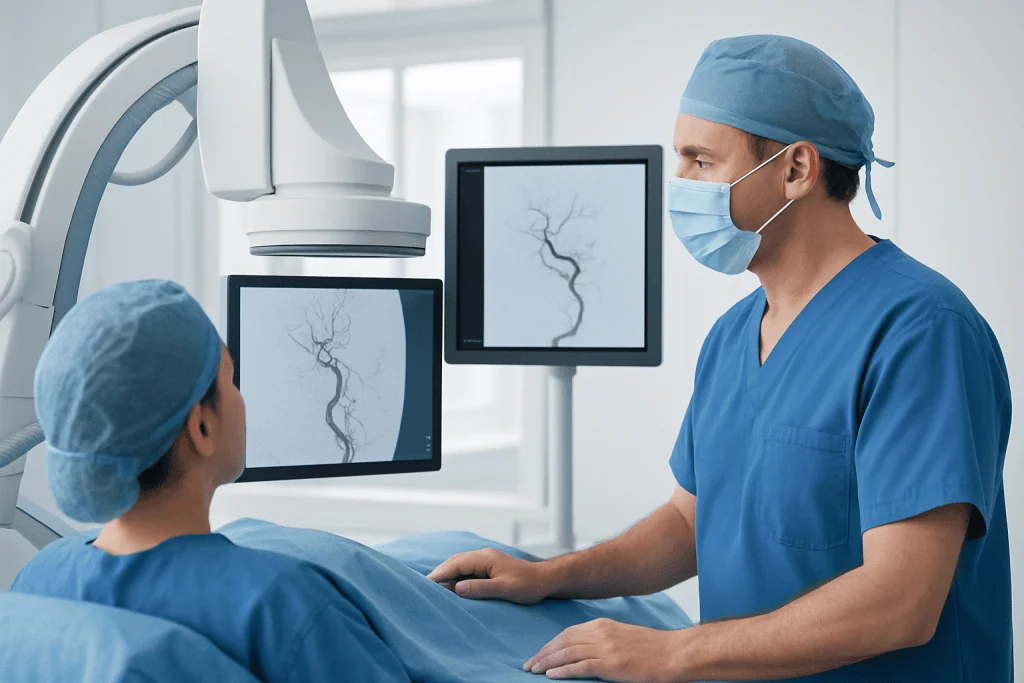
Interventional neuroradiologists treat a range of vascular and structural conditions involving the central nervous system. One of the best-known emergencies they manage is acute ischemic stroke, where a clot blocks blood flow to part of the brain. In selected patients, they may perform clot retrieval to restore circulation quickly and reduce brain damage.
They also treat brain aneurysms, which are weak areas in a blood vessel wall that can bulge and sometimes rupture. Using minimally invasive techniques, they may block off an aneurysm from the inside to lower the risk of bleeding. Another important area is the treatment of arteriovenous malformations and dural arteriovenous fistulas, which are abnormal blood vessel connections that can cause bleeding, headaches, seizures, or other neurological symptoms.
Other conditions may include narrowing of certain arteries, spinal vascular malformations, some causes of pulsatile tinnitus, and selected tumors that benefit from preoperative embolization. Depending on the case, patients may be referred for treatment of brain aneurysm or urgent care related to stroke.
- Acute ischemic stroke caused by large vessel blockage
- Brain aneurysms
- Arteriovenous malformations and fistulas
- Carotid or intracranial vessel narrowing in selected cases
- Spinal vascular abnormalities
- Certain head, neck, or spine lesions requiring embolization
How These Procedures Work
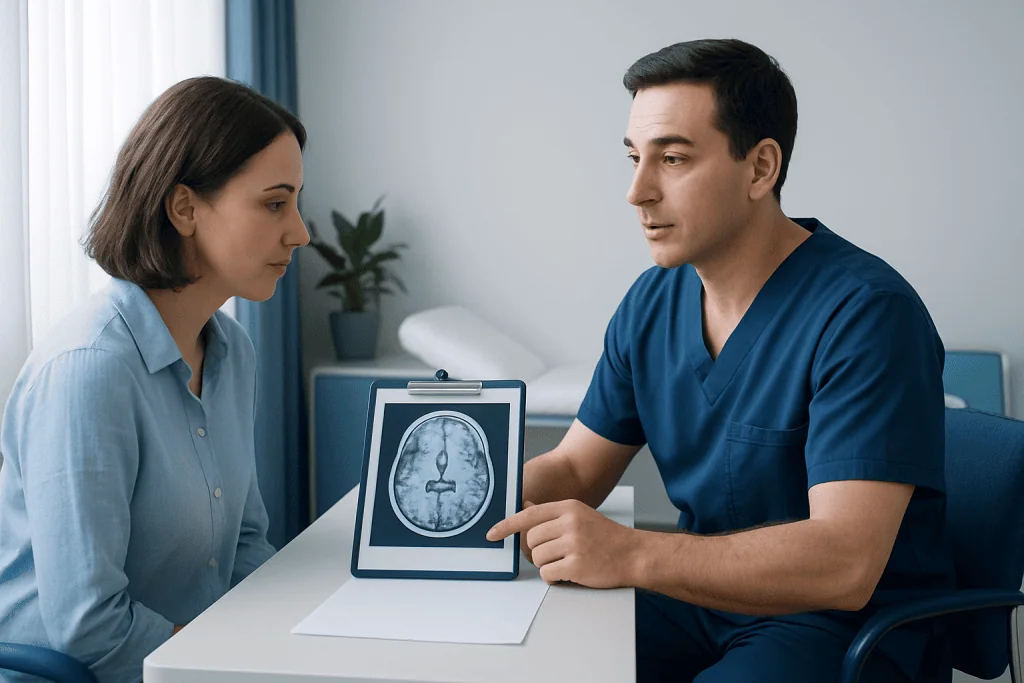
Most interventional neuroradiology procedures begin with detailed imaging, such as CT, MRI, or angiography, to map the problem precisely. During treatment, the doctor usually inserts a catheter through an artery in the wrist or groin and carefully guides it to the affected area using X-ray imaging. This approach helps avoid open surgery in many situations.
Once the catheter reaches the target, the specialist can deliver treatment directly. For example, they may remove a blood clot, place tiny coils into an aneurysm, insert a stent to support a vessel, or inject embolic material to block abnormal blood flow. Because the treatment is highly targeted, surrounding tissues are often affected less than they would be with a larger operation.
The exact procedure depends on the diagnosis. Common examples include mechanical thrombectomy for some strokes and embolization treatment for abnormal blood vessels or to reduce blood supply to certain lesions. Some patients may also need aneurysm treatment as part of a personalized care plan.
Procedures may be performed under local anesthesia with sedation or under general anesthesia, depending on the urgency, complexity, and patient condition. Afterward, patients are monitored closely for neurological changes, bleeding at the access site, and blood pressure control.
Training and Teamwork
Becoming an interventional neuroradiologist requires many years of medical and specialty training. Although pathways differ by country, these doctors typically complete medical school and then advanced training in radiology, neurology, or neurosurgery, followed by focused fellowship training in neurointerventional procedures. This background gives them expertise in both imaging interpretation and catheter-based treatment.
Because the conditions they treat can be complex, interventional neuroradiologists rarely work alone. They usually form part of a team that may include neurologists, stroke physicians, neurosurgeons, anesthesiologists, intensive care specialists, rehabilitation experts, and specialized nurses. Working together helps ensure that the patient receives the right treatment at the right time.
For example, someone with a stroke may first be assessed in the emergency department by a stroke team, then undergo urgent brain imaging, and finally be transferred to the angiography suite if a procedure is appropriate. A person with an aneurysm or vascular malformation may have their case reviewed by several specialists to decide whether observation, endovascular treatment, surgery, or radiosurgery is the best option.
Benefits and Possible Risks
The main advantage of interventional neuroradiology is that it can treat certain serious conditions in a minimally invasive way. Compared with open surgery, catheter-based procedures may involve smaller access wounds, less tissue disruption, shorter hospital stays in some cases, and faster recovery for selected patients. In emergencies such as stroke, rapid treatment can also improve the chance of preserving brain function.
However, minimally invasive does not mean risk-free. As with any medical procedure, there can be complications. These may include bleeding, blood vessel injury, infection, allergic reaction to contrast material, stroke, or recurrence of the treated problem. The level of risk depends on the specific condition, the procedure planned, and the patient’s overall health.
That is why careful patient selection is essential. Before recommending treatment, the specialist considers symptoms, imaging findings, age, other medical conditions, medications, and the expected benefits compared with alternatives. Patients and families are usually guided through the reasons for the procedure, its goals, possible risks, and what recovery may involve.
What Patients Can Expect Before, During, and After Treatment
Before a procedure, patients usually undergo imaging tests and blood work. The care team may ask about allergies, kidney function, blood thinners, and previous surgeries. In emergency cases, decisions may need to be made quickly, but the team still aims to explain the treatment plan clearly whenever possible.
During the procedure, the patient is positioned on a special imaging table. The skin at the catheter entry site is cleaned and numbed, or anesthesia is given if needed. The doctor then guides instruments through the blood vessels while monitoring images continuously. Depending on the treatment, the procedure may take from under an hour to several hours.
After treatment, the patient is observed in a recovery area, stroke unit, or intensive care setting, depending on the condition. Follow-up may include neurological checks, blood pressure monitoring, and repeat imaging. Some people go home within a short time, while others need a longer stay for recovery or rehabilitation.
Long-term follow-up is often important, especially after aneurysm or vascular malformation treatment. Repeat imaging may be recommended to confirm that the treated area remains stable. Patients should follow instructions on medication use, activity limits, and warning signs that should prompt urgent medical attention.
When to Seek Specialist Care
Some problems treated by an interventional neuroradiologist are emergencies. Sudden weakness, facial drooping, speech difficulty, severe unexplained headache, sudden loss of vision, or collapse need urgent medical evaluation. Fast assessment is especially important when stroke is suspected, because some treatments are time-sensitive.
Other referrals are not emergencies but still deserve specialist review. A person may be referred after a brain scan shows an aneurysm, after symptoms suggest an abnormal blood vessel connection, or when a doctor wants an expert opinion on whether a minimally invasive treatment is possible. Persistent pulsating sound in one ear, repeated unexplained neurological symptoms, or spinal vascular concerns may also lead to consultation.
Patients may wish to ask the specialist what condition is being treated, what the goals of the procedure are, whether there are noninvasive alternatives, and what follow-up is needed. This can help them make informed decisions and feel more prepared.
In specialized centers, interventional neuroradiologists collaborate with multiple departments to plan individualized care. Acibadem International’s multidisciplinary specialists and JCI-accredited hospitals diagnose and treat neurovascular conditions for international patients when advanced evaluation and minimally invasive treatment are needed.
Frequently asked questions
Is an interventional neuroradiologist the same as a neurosurgeon?
No. A neurosurgeon is trained to perform open operations on the brain, spine, and nerves, while an interventional neuroradiologist specializes in imaging-guided, catheter-based treatments. In many cases, both specialists work together to decide which approach is best.
What procedures does an interventional neuroradiologist perform?
They commonly perform procedures such as clot removal for certain strokes, aneurysm coiling, stent placement, angiography, and embolization of abnormal blood vessels. The exact procedure depends on the patient's diagnosis, symptoms, and imaging findings.
Are interventional neuroradiology procedures considered surgery?
They are usually described as minimally invasive procedures rather than open surgery. They still require careful planning, sterile technique, and specialist monitoring, but they are often performed through a small puncture in the wrist or groin instead of a large incision.
When is an interventional neuroradiologist involved in stroke care?
This specialist is often involved when imaging shows a large blood vessel blockage that may be treated with mechanical thrombectomy. Because timing matters in stroke, rapid emergency evaluation is essential to determine whether this treatment is appropriate.
Do all brain aneurysms need treatment by an interventional neuroradiologist?
No. Some aneurysms are monitored rather than treated right away, depending on their size, shape, location, and the person's overall risk. When treatment is needed, the care team may consider endovascular treatment, surgery, or another approach based on individual factors.
What is recovery like after a neurointerventional procedure?
Recovery varies by procedure and by the condition being treated. Some patients recover quickly after a planned procedure, while others need longer monitoring, rehabilitation, or follow-up imaging, especially after emergency treatment such as stroke intervention.
References
- World Health Organization
- American Stroke Association
- Radiological Society of North America
- Society of NeuroInterventional Surgery
- National Institute of Neurological Disorders and Stroke
This article is for general information only and is not a substitute for professional medical advice. Please consult a qualified doctor about your individual situation.
Joint and spine care in Turkey — expert assessment & treatment
JCI-accredited · board-certified surgeons · reply within 24h
Add us as a Preferred Source to see more of our trusted health content across Google Search, AI Overviews and Discover.
Check your numbers in seconds
BMI, calories, due date, blood pressure and 30+ more clinical calculators — free, instant, doctor-reviewed ranges.

Neurosurgery
Surgical treatment of the brain, spine and nervous system, including minimally invasive and functional procedures.
70 specialists in this unit