What Does Poop Look Like with Diverticulitis? Here Is What the Evidence Says
Stool may stay normal even during diverticulitis, so appearance alone is not diagnostic. Possible changes include constipation, diarrhea, mucus, narrower stool, and sometimes blood.
Key Takeaways
- Stool may stay normal even during diverticulitis, so appearance alone is not diagnostic.
- Possible changes include constipation, diarrhea, mucus, narrower stool, and sometimes blood.
- Red flags include severe or worsening abdominal pain, fever, vomiting, heavy bleeding, or black stool.
- Doctors usually diagnose diverticulitis based on symptoms, examination, blood tests, and often a CT scan.
- Persistent stool changes should be medically reviewed because other digestive conditions can look similar.
What does poop look like with diverticulitis? Often, stool looks normal, and bowel changes alone do not confirm diverticulitis. Some people notice constipation, diarrhea, mucus, narrower stools, or blood, but these findings need to be interpreted alongside pain, fever, and a doctor’s assessment.
Overview: What stool changes can happen with diverticulitis?
When people ask, “what does poop look like with diverticulitis,” the most accurate answer is that it may look completely normal. Diverticulitis is inflammation or infection involving small pouches in the wall of the colon, and the most important symptom is usually abdominal pain rather than a distinctive stool pattern. In many cases, a temporary change in bowel habits is harmless and may settle as inflammation improves.
That said, some people do notice stool changes during a flare. These can include constipation, diarrhea, passing less stool than usual, stools that seem narrower than usual, or mucus mixed with stool. Blood may appear in some cases, but visible bleeding is more classically linked to diverticular bleeding than to uncomplicated diverticulitis itself.
Because these changes can also occur with infections, irritable bowel syndrome, hemorrhoids, inflammatory bowel disease, or colon cancer, stool appearance should not be used on its own to diagnose diverticulitis. The overall pattern matters: where the pain is felt, whether there is fever, whether bowel habits have changed suddenly, and whether symptoms are getting worse.
What poop may look like with diverticulitis
There is no single “diverticulitis stool.” Instead, several patterns are possible. Some people become constipated and pass hard, dry stools in small amounts. Others develop loose stools or diarrhea because inflammation can temporarily disrupt normal bowel function.
Mucus may sometimes be seen as a clear, white, or yellowish coating or stringy material mixed with stool. Some people describe stools as thinner or more ribbon-like than usual, especially if inflammation causes spasm or swelling in the bowel. This is not specific to diverticulitis, but it can happen.
Blood can range from a small streak of bright red blood on the stool or toilet paper to maroon-colored stool. Black, tar-like stool suggests digested blood from higher in the digestive tract and needs prompt medical review. If blood is noticed, the cause should be checked rather than assuming it is due to diverticulitis.
- Possible stool patterns: normal stool, constipation, diarrhea, mucus, narrower stool
- Possible concerning findings: visible blood, black stool, persistent change lasting more than a few days
- Symptoms that matter alongside stool changes: left lower abdominal pain, fever, nausea, bloating, tenderness
Why diverticulitis can change bowel movements
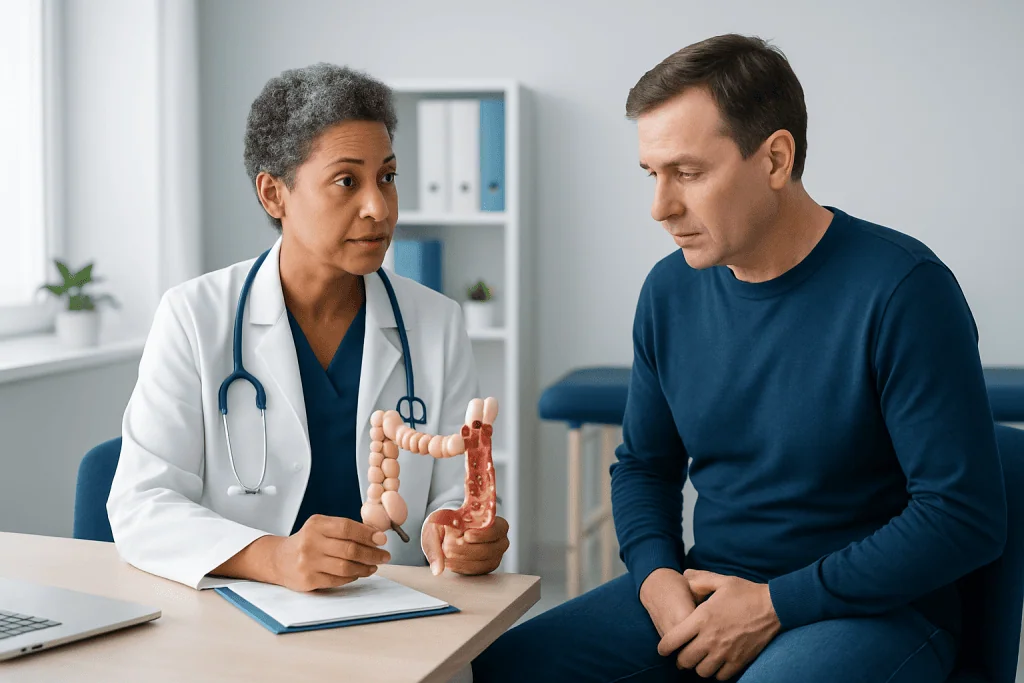
Diverticulitis develops when diverticula, small pouches in the colon lining, become inflamed or infected. This most often affects the lower part of the large intestine. Inflammation can change how the colon contracts and moves waste, which helps explain why bowel movements may become less frequent, harder to pass, or looser than usual.
Pain may also cause a person to eat and drink less, which can contribute to constipation or smaller stools. Some people use pain relievers or temporarily change their diet during a flare, and these factors can further affect stool appearance. In other words, the stool change may reflect the body’s response to illness, not just the bowel inflammation itself.
Other symptoms often provide stronger clues than stool appearance. Typical features include steady abdominal pain, commonly on the lower left side, tenderness, bloating, fever, nausea, or loss of appetite. If symptoms are recurring, a doctor may also consider related colon conditions such as diverticulitis or other inflammatory disorders.
Red flags that should not be ignored
Most short-lived changes in stool are not an emergency, but some symptoms need medical attention. Severe or worsening abdominal pain, especially with fever, can suggest significant inflammation or a complication such as an abscess. Inability to keep fluids down, marked weakness, or signs of dehydration also deserve prompt assessment.
Visible blood in the stool should be evaluated, particularly if it is recurrent, heavy, or accompanied by dizziness. Black, tarry stools are another important warning sign because they may indicate bleeding from higher in the digestive tract. Persistent constipation with abdominal swelling, inability to pass gas, or repeated vomiting may suggest a blockage and requires urgent care.
It is also wise to seek review if bowel habits remain changed after the pain settles, or if weight loss, anemia, or fatigue develop. These features do not automatically mean something serious, but they do mean the cause should be clarified rather than attributed to diverticulitis without testing.
How doctors tell whether stool changes are due to diverticulitis
Doctors do not diagnose diverticulitis by looking at stool alone. They usually start with the story of the symptoms: where the pain is located, how long it has lasted, whether there is fever, whether bowel movements have changed, and whether there has been any bleeding. A physical examination helps assess tenderness, bloating, and signs that more urgent treatment may be needed.
Blood tests may show signs of inflammation or infection. If diverticulitis is suspected, a CT scan of the abdomen and pelvis is commonly used because it can show inflammation in the colon and check for complications such as abscess, perforation, or obstruction. Stool tests may be used if infection causing diarrhea is a possibility.
Colonoscopy is generally not done during an acute flare because the inflamed bowel needs time to settle. It may be recommended later to look for other causes of symptoms and to make sure the picture is not due to another condition. Depending on the case, doctors may also use colonoscopy or CT imaging as part of the broader evaluation after the acute episode has improved.
Treatment and self-care: what helps the bowel recover
Treatment depends on how mild or severe the diverticulitis is. Mild cases may improve with rest, fluids, a temporary diet adjustment, and close follow-up. Some people need antibiotics, while others do not; current treatment decisions are individualized and based on the severity of symptoms and overall risk profile.
If symptoms are significant, if there is fever, or if complications are suspected, hospital care may be needed. This can include intravenous fluids, pain control, antibiotics when appropriate, and monitoring. More complicated cases sometimes require drainage of an abscess or surgery, though this is not needed for most people.
Once the acute inflammation settles, a doctor may advise gradually returning to a balanced, higher-fiber eating pattern if appropriate, drinking enough fluids, staying physically active, and avoiding constipation where possible. In selected situations, specialists may discuss procedures such as colon surgery if there are repeated attacks or complications. For international patients, Acibadem International’s multidisciplinary specialists in JCI-accredited hospitals diagnose and treat digestive conditions with individualized care plans.
When to seek medical care
Medical review is appropriate if stool changes happen together with new lower abdominal pain, fever, nausea, or tenderness. It is especially important to be checked if symptoms are new, severe, or different from usual bowel habit changes. Prompt assessment helps distinguish uncomplicated bowel upset from diverticulitis or another condition that needs treatment.
Urgent care is important for heavy rectal bleeding, black stool, fainting, severe belly pain, a rigid abdomen, repeated vomiting, or inability to pass stool or gas. These symptoms can point to bleeding, obstruction, or another serious abdominal problem. They should not be managed at home without guidance.
Even without emergency symptoms, persistent changes in stool shape, ongoing blood, unexplained weight loss, or symptoms that keep returning deserve a planned medical evaluation. A gastroenterologist can help identify the cause and decide whether additional testing is needed, including assessment for conditions that can mimic diverticulitis.
Frequently asked questions
Can diverticulitis cause thin or narrow stools?
It can, but this is not specific to diverticulitis. Inflammation or bowel spasm may temporarily change stool shape, but persistent narrow stools should be evaluated because other colon conditions can also cause this pattern.
Is blood in stool common with diverticulitis?
Blood can occur, but stool bleeding is not the main feature used to diagnose diverticulitis. Bright red, maroon, or black stools should be medically reviewed because hemorrhoids, diverticular bleeding, ulcers, and other bowel conditions can also cause bleeding.
Can stool look normal during diverticulitis?
Yes. Many people with diverticulitis do not notice any obvious change in stool appearance. Doctors rely more on symptoms such as abdominal pain, tenderness, fever, and imaging findings than on stool appearance alone.
How long do bowel changes last with diverticulitis?
This varies from person to person and depends on how severe the inflammation is. Some people improve within days, while others may have bowel habit changes that continue for longer and need follow-up to rule out another cause.
Does diarrhea mean it is not diverticulitis?
No. Although constipation is often discussed, some people with diverticulitis have diarrhea instead. Diarrhea can also happen with infections and other digestive disorders, so the full symptom pattern matters.
Should a person watch stool after a diverticulitis flare?
Yes, but in a balanced way. It is reasonable to note ongoing blood, black stool, persistent mucus, or changes that do not settle, and then discuss them with a doctor rather than trying to self-diagnose from appearance alone.
References
- National Institute of Diabetes and Digestive and Kidney Diseases
- American College of Gastroenterology
- National Health Service
- Mayo Clinic
- American Gastroenterological Association
This article is for general information only and is not a substitute for professional medical advice. Please consult a qualified doctor about your individual situation.
Diverticulitis in Turkey — costs, top hospitals & a free quote
JCI-accredited · board-certified surgeons · reply within 24h
Add us as a Preferred Source to see more of our trusted health content across Google Search, AI Overviews and Discover.

General Surgery
Open, laparoscopic and robotic surgery for a broad range of abdominal and soft-tissue conditions.
120 specialists in this unit