What Happens at a Neurosurgery Consultation?

A neurosurgery consultation does not automatically mean surgery will be recommended. The visit usually includes a symptom review, medical history, physical and neurological examination, and discussion of scans or test results.
Key Takeaways
- A neurosurgery consultation does not automatically mean surgery will be recommended.
- The visit usually includes a symptom review, medical history, physical and neurological examination, and discussion of scans or test results.
- Bringing prior imaging, medication lists, and a summary of symptoms can make the appointment more useful.
- Many patients are advised to consider non-surgical treatment, observation, or further testing before any procedure.
- Questions about benefits, risks, recovery, and alternatives are an important part of the consultation.
A neurosurgery consultation is a detailed specialist visit focused on the brain, spine, and nerves. It helps clarify symptoms, review imaging, and discuss whether treatment may include monitoring, medication, therapy, or surgery.
Overview: What a Neurosurgery Consultation Is
A neurosurgery consultation is a medical appointment with a specialist who evaluates conditions affecting the brain, spine, spinal cord, and peripheral nerves. People may be referred for concerns such as back or neck pain with nerve symptoms, a herniated disc, spinal stenosis, brain tumors, head injury complications, nerve compression, or abnormalities seen on imaging. Some people also seek a second opinion after being told they might need surgery.
The main purpose of the consultation is to understand the patient’s symptoms, review test results, perform an examination, and decide on the safest and most appropriate next step. In many cases, that next step is not surgery. A neurosurgeon may recommend monitoring, medication, rehabilitation, pain management, or additional tests before considering an operation.
Neurosurgeons are trained to diagnose and manage complex neurological and spinal conditions, including both surgical and non-surgical care. A consultation is therefore best seen as an expert evaluation, not a commitment to a procedure. The visit is an opportunity for the patient and specialist to discuss concerns clearly and develop a treatment plan based on symptoms, imaging, daily function, and overall health.
Why Someone May Be Referred to a Neurosurgeon
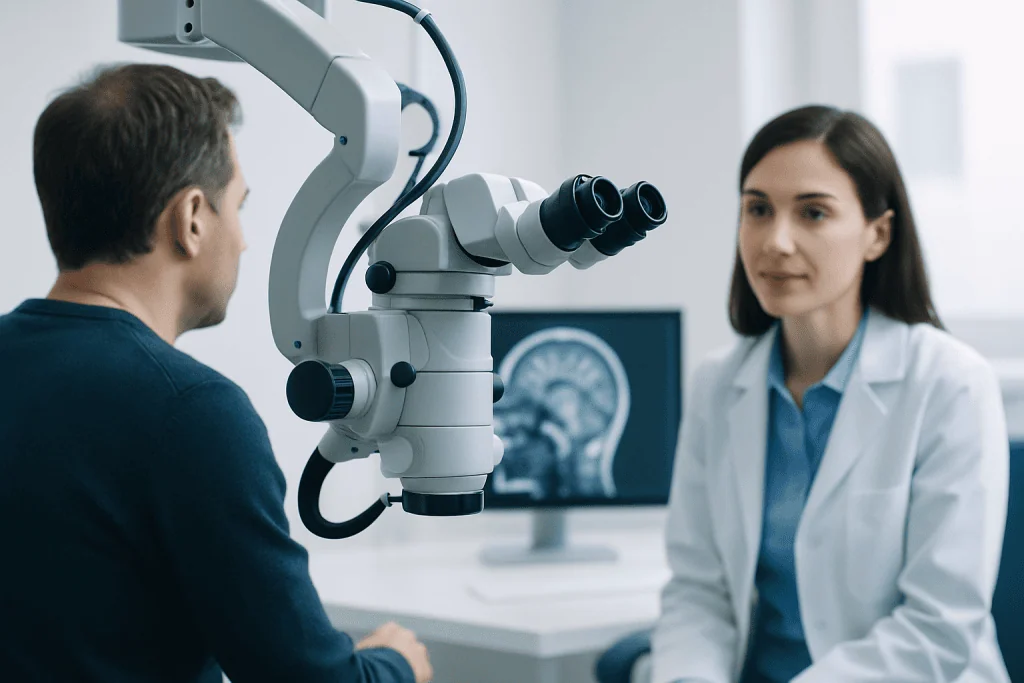
Patients are commonly referred to neurosurgery when symptoms suggest a structural problem involving the nervous system. Examples include persistent neck or back pain with numbness or weakness, pain radiating down an arm or leg, balance problems, changes in coordination, severe headaches linked to abnormal imaging, seizures, or tumors involving the brain or spine. Some referrals happen after emergency care, while others come from family doctors, neurologists, orthopedic specialists, or pain physicians.
A referral may also happen when imaging tests such as MRI or CT scans show a condition that needs specialist review. This does not always mean the finding is dangerous or that an operation is necessary. Some scan results are incidental, meaning they are discovered by chance and may simply need follow-up. The neurosurgeon helps interpret whether the imaging finding matches the patient’s symptoms.
In some cases, the consultation is about planning treatment for a known condition such as a brain tumor or a spinal problem that has not improved with conservative care. In others, the goal is to clarify the diagnosis, especially when symptoms are complex or there are multiple possible causes.
How to Prepare Before the Appointment

Preparation can help the consultation run more smoothly and make the discussion more productive. Patients should bring any recent imaging studies, such as MRI, CT, or X-rays, along with written reports if available. If the scans were done at another hospital, it is often helpful to bring the images on a disc or through an approved digital transfer system. Previous surgery notes, test reports, and referral letters can also be useful.
It helps to prepare a clear summary of symptoms before the visit. Useful details include when the symptoms began, whether they are getting worse, what makes them better or worse, and whether they affect walking, sleep, work, hand function, bladder or bowel control, vision, or balance. A list of all current medications, allergies, and other medical conditions is also important.
Many patients benefit from writing down questions in advance and, if possible, attending with a family member or trusted companion. A second person can help remember details, ask practical questions, and provide support. Wearing comfortable clothing may make the physical examination easier, especially if the neck, back, or limbs need to be assessed.
What Happens During the Consultation
The consultation usually begins with a detailed conversation about the patient’s symptoms and medical history. The neurosurgeon may ask when the problem started, whether it came on suddenly or gradually, and how it affects daily life. Questions often cover pain, numbness, weakness, headaches, dizziness, balance, memory, seizures, walking changes, and bowel or bladder symptoms. Past illnesses, prior surgeries, and family history may also be discussed.
A physical and neurological examination is typically an important part of the visit. Depending on the reason for referral, the neurosurgeon may assess strength, sensation, reflexes, coordination, gait, range of motion, cranial nerves, speech, and cognitive function. This examination helps determine whether the nervous system is being affected and whether the symptoms match the location of a problem seen on imaging.
The specialist will also review available scans and test results. These may include MRI, CT, angiography, nerve conduction studies, or blood tests, depending on the condition. If the current information is incomplete, the patient may be advised to have further tests. These may include advanced imaging, neurophysiological studies, or a consultation with another specialist such as neurology, oncology, rehabilitation, or pain management.
By the end of the visit, the neurosurgeon usually explains the likely diagnosis, how certain that diagnosis is, and what treatment options are available. If surgery is being considered, the discussion may include the goal of the operation, alternatives, possible risks, expected recovery, and the likely benefits and limitations.
Possible Outcomes and Treatment Options
One of several outcomes may follow a neurosurgery consultation. Some patients are reassured that no surgery is needed and are advised to continue observation or symptom management. Others may be referred for physical therapy, rehabilitation, medication adjustment, or interventional pain procedures. Further testing may be recommended if the diagnosis is uncertain or if more information is needed before making a treatment decision.
When symptoms are clearly linked to a structural problem, surgery may be one possible treatment. This can be relevant in selected cases of spinal nerve compression, brain tumors, hydrocephalus, vascular abnormalities, or traumatic injury. The exact procedure depends on the condition. For example, patients with specific spinal disorders may discuss options such as microdiscectomy or spinal fusion when conservative treatment has not helped and imaging findings support surgery.
For some brain conditions, the consultation may lead to planning for specialized surgery, such as brain tumor surgery, or to a broader care plan involving oncology, radiation therapy, or close follow-up imaging. The neurosurgeon will usually explain not only what can be done, but also what is most appropriate for the individual patient based on symptoms, age, overall health, and expected quality-of-life outcomes.
A careful consultation also addresses uncertainty. In medicine, there is not always a single perfect answer. Some patients are encouraged to monitor symptoms over time, seek a second opinion, or think about treatment choices before deciding. This is a normal and valuable part of specialist care.
Questions to Ask the Neurosurgeon
Patients often feel more confident when they know what to ask. Helpful questions may focus on the diagnosis, whether the symptoms and imaging findings match, and what could happen without treatment. It is also reasonable to ask whether the condition is urgent, stable, or likely to progress slowly over time.
If surgery is being discussed, patients may want to ask about the purpose of the operation, expected benefits, possible risks, alternatives, and recovery timeline. Questions about hospital stay, anesthesia, pain control, rehabilitation, return to work, and activity restrictions can also be useful. Some patients also ask how much symptom relief can realistically be expected, especially if pain or weakness has been present for a long time.
A practical way to organize the discussion is to ask about:
- What the diagnosis is and how certain it is
- Whether more tests are needed
- What non-surgical treatments are available
- Why surgery is or is not recommended
- What warning signs should prompt urgent medical attention
- How follow-up will be arranged
Clear communication is an important part of a good consultation. Patients should feel able to ask for explanations in simpler language or request written instructions if anything is unclear.
After the Visit: Next Steps and Follow-Up
After the consultation, the next steps depend on the specialist’s findings and recommendations. Some patients leave with reassurance and a follow-up plan, while others are scheduled for additional imaging, neurological testing, or preoperative assessment. If a non-surgical treatment plan is recommended, this may involve physical therapy, medication review, posture or activity guidance, and coordination with other specialists.
If surgery is advised, there is usually a separate process for planning the procedure. This may include pre-anesthesia evaluation, blood tests, updated scans, and discussion of informed consent. Patients should make sure they understand how to prepare, which medications to stop or continue, and what support they may need at home during recovery.
It is important to seek urgent medical attention after the consultation if new or worsening neurological symptoms develop. These may include sudden weakness, loss of sensation, severe worsening pain, new difficulty speaking, confusion, seizures, or problems with bladder or bowel control. These symptoms do not always mean an emergency, but they should be assessed promptly.
For international patients seeking specialist assessment, Acibadem International’s multidisciplinary teams and JCI-accredited hospitals provide diagnosis and treatment for complex brain, spine, and nerve conditions. Even so, the best treatment plan always depends on a careful, individualized evaluation by a qualified doctor.
Frequently asked questions
Does a neurosurgery consultation mean surgery is definitely needed?
No. A neurosurgery consultation is an expert evaluation, and many patients are advised to try observation, medication, rehabilitation, or other non-surgical approaches. The main goal is to understand the problem and recommend the most appropriate treatment.
What should be brought to a neurosurgery appointment?
It is helpful to bring imaging studies and reports, referral notes, a list of current medications, allergy information, and a summary of symptoms. If possible, patients should also bring records of previous surgeries or related treatments. Writing down questions beforehand can make the visit more productive.
Will there be a physical examination?
Usually yes. The neurosurgeon often performs a neurological and physical examination to assess strength, reflexes, sensation, coordination, walking, and other functions. This helps determine whether the symptoms match a problem seen on imaging.
How long does a neurosurgery consultation usually take?
The exact length varies depending on the complexity of the case and whether imaging needs detailed review. Many consultations take enough time to cover history, examination, scan interpretation, and discussion of options. More complex conditions may require a longer visit or additional follow-up.
Can someone get a second opinion from a neurosurgeon?
Yes. Second opinions are common in neurosurgery, especially when surgery has been suggested or the diagnosis is unclear. A second opinion can help patients better understand their options and feel more confident about treatment decisions.
What happens if more tests are needed?
The neurosurgeon may recommend further imaging, nerve studies, blood tests, or consultation with another specialist. This does not necessarily mean the condition is worsening. It often means more information is needed to make the safest and most accurate treatment plan.
References
- World Health Organization
- National Institute of Neurological Disorders and Stroke
- American Association of Neurological Surgeons
- National Health Service
- Mayo Clinic
This article is for general information only and is not a substitute for professional medical advice. Please consult a qualified doctor about your individual situation.
Neurosurgery in Turkey — costs, top hospitals & a free quote
JCI-accredited · board-certified surgeons · reply within 24h
Add us as a Preferred Source to see more of our trusted health content across Google Search, AI Overviews and Discover.

Neurosurgery
Surgical treatment of the brain, spine and nervous system, including minimally invasive and functional procedures.
70 specialists in this unitMore from the Health Library



Related Specialists

Dyt. Ceren Güven
Nutrition & Diet
Fzt. Ahsen Ercan
Physical Medicine & Rehabilitation
Dt. Türkan Subaşıoğlu
Oral & Dental Health
Prof. Dr. Abdullah Zorluoğlu
General Surgery