What Is a Facial? A Doctor-Reviewed Answer

A facial is a skin treatment that commonly includes cleansing, exfoliation, extractions, masks, and moisturizing. Different facials are designed for concerns such as dryness, acne-prone skin, uneven texture, or signs of aging.
Key Takeaways
- A facial is a skin treatment that commonly includes cleansing, exfoliation, extractions, masks, and moisturizing.
- Different facials are designed for concerns such as dryness, acne-prone skin, uneven texture, or signs of aging.
- Most mild redness after a facial settles quickly, but severe pain, swelling, blistering, or signs of infection need medical review.
- People with sensitive skin, rosacea, eczema, or active acne may need gentler approaches and professional guidance.
- A doctor may evaluate skin type, current products, and any underlying skin condition before recommending treatment.
A facial is usually a non-medical skin treatment designed to cleanse, exfoliate, and moisturize the face. Most facials are harmless when matched to a person’s skin type, but persistent irritation, infection-like symptoms, or worsening acne should be assessed by a qualified doctor.
Overview: What is a facial?
A facial is a skin treatment for the face that usually combines cleansing, exfoliation, hydration, and targeted care for common concerns such as dryness, clogged pores, dullness, or uneven texture. In simple terms, it is a structured skincare session performed at home, in a spa, or in a medical setting, with the goal of improving how the skin looks and feels.
For many people, facials are harmless and mainly cosmetic. A standard facial often includes skin assessment, cleansing, steaming or warm towels, exfoliation, extractions if appropriate, a mask, and moisturizing products chosen for the person’s skin type.
Not all facials are the same. Some are gentle and focused on comfort and hydration, while others use stronger techniques such as chemical exfoliation, devices, or acne-focused extractions. That is why the safest facial is one that is suited to the person’s skin, current symptoms, and medical history.
When there is ongoing redness, painful breakouts, scaling, or a rash, a facial should not replace medical care. In those situations, a dermatologist can help identify whether the problem is simple irritation or an underlying condition such as eczema or acne.
What happens during a facial?
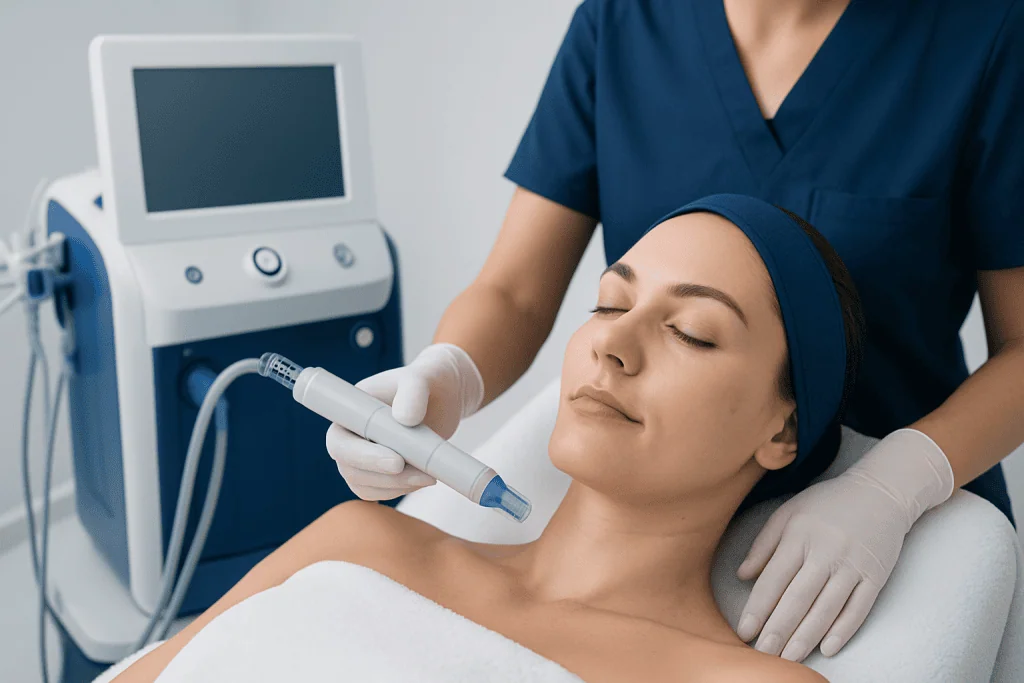
A typical facial begins with a review of the skin and any concerns, such as sensitivity, acne, dryness, pigmentation, or oiliness. The skin is then cleansed to remove makeup, sunscreen, and surface oils. This helps prepare the face for the next steps and allows products to be applied more evenly.
Exfoliation is commonly used to remove dead skin cells and improve skin texture. This may be done with gentle scrubs, enzyme products, or mild acids. Some facials also include steam or warm compresses to soften the skin, although these steps may be avoided in people with easily irritated skin or visible facial blood vessels.
Extractions may be performed when blackheads or clogged pores are present, but they should be done carefully to reduce the risk of skin injury or scarring. Many facials also include a mask chosen for the person’s needs, followed by serums, moisturizer, and sunscreen if the treatment takes place during the day.
In some clinics, a facial may be combined with more advanced skin treatments. Examples can include chemical peel treatment for controlled exfoliation or laser skin resurfacing for texture and pigment concerns. These are not routine spa facials and generally require a medical assessment.
What are the benefits of a facial?

The main benefits of a facial are cleaner skin, temporary improvement in softness and brightness, and support for a regular skincare routine. Many people find that facials help remove buildup from the skin surface, reduce the feeling of congestion, and improve the application of moisturizers and other products.
For dry skin, a facial may restore comfort by improving hydration and reducing roughness. For oily or acne-prone skin, carefully selected exfoliation and extraction steps may help reduce clogged pores. Some facials are designed to support smoother texture or a more even-looking complexion, although results vary depending on the skin concern and the products used.
There can also be an educational benefit. During a professional facial, a trained clinician or skincare professional may identify habits that are contributing to irritation, such as over-exfoliating, combining too many active ingredients, or skipping sun protection.
It is important to keep expectations realistic. A facial may improve the appearance of the skin, but it does not cure chronic skin disease, erase all signs of aging, or replace evidence-based treatment for persistent acne, rosacea, or severe pigmentation. When longer-term change is needed, doctors may discuss options such as dermatology care or procedure-based treatment in addition to daily skincare.
Who may benefit most, and who should be cautious?
People who may benefit most from a facial are those with generally healthy skin who want support for dryness, mild congestion, dullness, or routine skin maintenance. A well-chosen facial can also be helpful before an event, after seasonal weather changes, or when a person wants guidance on skin-friendly products.
At the same time, some people should be more cautious. Those with very sensitive skin, active rashes, sunburn, recent cosmetic procedures, or a history of reactions to skincare ingredients may not tolerate a standard facial well. Skin that is already inflamed can become more irritated with scrubbing, steaming, or multiple active products.
Extra care is also sensible for people with rosacea, eczema, active acne cysts, or a tendency to post-inflammatory dark marks. In these cases, the skin barrier may already be stressed, and treatments that seem gentle for other people may trigger burning, redness, or worsening breakouts.
Pregnant patients or those using prescription skin medicines should also mention this before a facial. Some ingredients and procedures may need to be avoided or modified, making individualized advice especially important.
Possible side effects and red flags
Mild redness, short-lived sensitivity, and a feeling of tightness can occur after a facial, especially if exfoliation or extractions were included. In many cases, these effects settle within hours to a day or two with gentle skincare, moisturizer, and sun protection.
Problems are more likely when the treatment is too aggressive for the skin type or when the skin barrier is already damaged. Side effects can include prolonged redness, stinging, increased dryness, peeling, new breakouts, bruising from forceful extractions, or pigment changes after irritation. Some people may also develop an allergic or irritant reaction to fragrances, preservatives, acids, or botanical ingredients.
Signs that need more attention include severe swelling, intense pain, blistering, oozing, crusting, pus, spreading rash, or fever. These symptoms are not typical after a routine facial and may suggest significant irritation, infection, or another skin problem that should be assessed by a doctor.
Although uncommon, people with a history of cold sores may develop a flare after skin procedures that irritate the face. Anyone with recurring facial infections or delayed healing should tell the treating professional before undergoing any skin treatment.
How doctors assess skin problems after a facial
If the skin reacts badly after a facial, a doctor will usually begin by asking what was done during the treatment and what products were used afterward. They may ask about scrubs, acids, peels, extraction methods, masks, retinoids, essential oils, and any home products used in the days before and after the facial.
The doctor will then examine the skin closely to look for patterns that suggest irritation, allergy, acne flare, infection, rosacea, or another underlying skin condition. The timing of the reaction matters. For example, immediate burning may suggest irritation, while itching and rash can point more toward contact dermatitis.
In most cases, diagnosis is clinical, meaning it is based on history and examination rather than complex testing. If infection is suspected, swabs or other tests may occasionally be needed. If an allergic trigger is unclear and reactions keep happening, patch testing may be considered later.
This medical review is important because not every post-facial flare is simply “sensitive skin.” Some symptoms can uncover an underlying issue that benefits from professional treatment and a more tailored skincare plan.
Safe treatment choices and self-care after a facial
When the skin is calm, treatment after a routine facial is usually simple: gentle cleansing, bland moisturizing, and daily sunscreen. It is often wise to avoid harsh exfoliants, strong acids, retinoids, and fragranced products for a short period unless a doctor or qualified clinician advises otherwise.
If irritation occurs, the first step is usually to stop the products that may be triggering the problem. A doctor may recommend a simplified skincare routine and, in some cases, short-term medical treatment depending on whether the issue is irritation, allergy, acne flare, or infection. Persistent or severe symptoms should not be managed with repeated self-treatment alone.
For people seeking more intensive skin improvement, medically supervised options may be more appropriate than repeated standard facials. Depending on the concern, doctors may discuss treatments such as microneedling or targeted dermatology-led plans. The goal is to match the treatment to the skin condition rather than using the same facial for every concern.
Near the end of the care pathway, some people may choose evaluation in a specialist center. Acibadem International’s multidisciplinary specialists and JCI-accredited hospitals assess skin concerns and guide suitable treatment options for international patients when medical review is needed.
When to seek medical care
Most people do not need medical attention after a facial, especially if the only effects are mild redness or temporary sensitivity. Still, professional advice is important if symptoms are strong, unusual, or do not settle as expected.
A person should seek medical care if there is severe burning, marked swelling, blistering, pus, increasing pain, spreading redness, or signs of infection. Medical review is also sensible if the skin darkens after inflammation, if acne suddenly worsens, or if a rash keeps returning after skincare treatments.
It is also worth seeing a doctor before having a facial when there is active eczema, rosacea, inflamed acne, recent facial surgery, a new unexplained rash, or a history of severe reactions to cosmetic products. Early assessment can help prevent avoidable irritation and guide safer choices.
When in doubt, it is safer to pause all active skincare products and ask a qualified healthcare professional for advice rather than continuing treatments that may worsen the skin barrier.
Frequently asked questions
What is a facial in simple terms?
A facial is a skincare treatment for the face that usually includes cleansing, exfoliation, and moisturizing. Some facials also include extractions, masks, or device-based steps depending on the skin concern.
Are facials good for the skin?
Facials can be helpful when they are appropriate for the person’s skin type and done gently. They may improve hydration, smoothness, and the appearance of clogged pores, but they are not the right solution for every skin problem.
Can a facial cause breakouts?
Yes, some people notice breakouts after a facial, especially if the treatment was too heavy, irritating, or involved forceful extractions. Breakouts can also happen when products clog pores or when underlying acne is already active.
How often should someone get a facial?
There is no single schedule that suits everyone. Frequency depends on skin type, goals, sensitivity, budget, and whether a doctor has recommended a specific treatment plan.
Who should avoid a facial?
People with sunburn, open wounds, active skin infections, severe irritation, or a new unexplained rash should usually avoid a facial until they have been assessed. Those with rosacea, eczema, or very sensitive skin may still be candidates, but they often need a gentler and more individualized approach.
What should someone do if their skin feels irritated after a facial?
They should stop harsh products, keep skincare simple, use a gentle moisturizer, and protect the skin from sun exposure. If there is severe pain, swelling, blistering, oozing, or symptoms that do not improve, they should seek medical advice.
References
- American Academy of Dermatology
- National Institute for Health and Care Excellence
- British Association of Dermatologists
- Mayo Clinic
- World Health Organization
This article is for general information only and is not a substitute for professional medical advice. Please consult a qualified doctor about your individual situation.
Explore treatments in Turkey — costs, top hospitals & a free quote
JCI-accredited · board-certified surgeons · reply within 24h
Add us as a Preferred Source to see more of our trusted health content across Google Search, AI Overviews and Discover.